Summary

... Read More

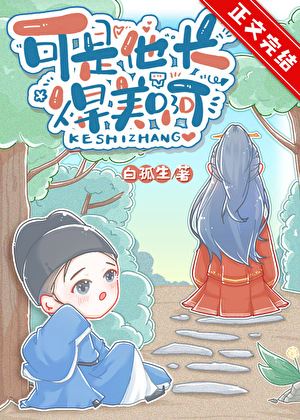
Mo Songyan, a popular Xiangsheng performer from the 21st century, dies in a traffic accident and transmigrates into the body of an identical man in ancient times. The original owner was the eldest son of Shopkeeper Mo, a wealthy teahouse owner, who was bullied by his stepmother and younger brother after his mother’s early death. Upon waking in this new reality, Mo Songyan finds himself in the middle of a public confrontation where his stepmother accuses him of falsely claiming her favored younger son, Mo Songqian, has feelings for his mute husband, Xiao Changyu. In reality, Mo Songqian had locked Xiao Changyu in a room, leading to a violent altercation where the original owner beat his brother and subsequently suffered a head injury that merges with Mo Songyan’s consciousness.

Instead of succumbing to anger, Mo Songyan uses his wit and performance skills to turn the tables. He publicly claims that Mo Songqian is actually obsessed with their stepmother, shocking the crowd and forcing the stepmother and her son into a defensive posture. This maneuver allows him to separate from the toxic household, taking only his mute husband, Xiao Changyu, with him. The two find refuge in a dilapidated, rumored-haunted temple. Xiao Changyu reveals he is not truly mute but suffers from a severe stutter that he hid by pretending to be silent to avoid ridicule. Despite his eloquent exterior, Mo Songyan struggles with basic survival tasks like cooking and fetching water, relying on Xiao Changyu’s quiet competence.

Realizing he needs income, Mo Songyan decides to introduce Xiangsheng, a comedic storytelling art form that does not yet exist in this dynasty. He performs on the street, initially facing skepticism and mockery from passersby who mistake it for begging. However, through persistence and engaging with the crowd, he begins to generate interest. After failing to find housing with their limited funds, Mo Songyan returns to his father’s teahouse to demand a fair division of family property. Shopkeeper Mo, aware of his son’s mistreatment but unwilling to disrupt family peace openly, proposes a scheme: he will secure a house for them through a friend but requires them to sign an IOU for five hundred taels of silver.

Recognizing the predatory nature of the debt, Mo Songyan counters with a high-stakes challenge. He agrees to the IOU but adds a condition: if he repays the five hundred taels within one year, Shopkeeper Mo must pay him five thousand taels as a reward. His father, confident in his own business acumen and underestimating the difficulty, accepts the terms, and the agreement is filed with local authorities. Mo Songyan moves into the new home with Xiao Changyu, marking the beginning of their independent life. Despite the daunting financial goal, Mo Songyan remains optimistic, planning to use advertising and performances to build a career in this unfamiliar era while gradually deepening his bond with his husband.

Latest Release
DateGroupRelease
2026-09-26knoxt c7
2026-09-26knoxt c6
2026-09-26knoxt c5
2026-09-26knoxt c4
2026-09-26knoxt c3
2026-09-26knoxt c2
2026-09-26knoxt c1

Community Reviews

Rating(4.2 / 5.0, 48votes)
5 stars
21(44%)
4 stars
15(31%)
3 stars
12(25%)
2 stars
0(0%)
1 stars
0(0%)

Popular reviews

... Read More
I need to talk about how efficiently this sequence moves. The author could have spent three chapters on the father-son confrontation alone. There is so much dramatic potential in Shopkeeper Mo trying to manipulate his son and Mo Songyan fighting back with wits. But instead, the author gives us something much more interesting — a protagonist who is tired. Really tired. He signed the agreement, went to the government, filed the papers, and by the time he gets back, he is just staring at the sky wondering if any of this is real. The pacing here is deliberately exhausting. We feel the weight of those two days pressing down on Mo Songyan's shoulders. And the structure mirrors that exhaustion perfectly. The negotiation scene is fast and sharp, full of dialogue and counterattacks, and then suddenly — silence. Just two people standing in an empty house looking at stars. That tonal shift is massive. It is the narrative equivalent of someone finally sitting down after running a marathon. Then the author drops this line: 'Life after marriage is really wonderful...' and it is Xiao Changyu thinking it, not Mo Songyan. Two different people, same thought, completely different meanings. For Xiao Changyu, marriage meant survival. For Mo Songyan, this whole arrangement was a transaction that got him a house and a debt. The pacing also handles the exposition beautifully. Instead of explaining the economic system through dialogue, the author lets Mo Songyan reflect on it internally while he is already in the middle of the conflict. 'Five hundred taels... this IOU cannot be signed' comes first as panic, then later transforms into analysis: 'It really is that the well-fed will never know how the starving suffer.' That is not just a character realization, that is the theme of the entire novel announcing itself. And the chapter ends on the most ordinary possible note — hunger. No cliffhanger. No revelation. Just stomachs growling. Which is somehow more powerful than any cliffhanger could have been.
... Read More
There's this recurring motif in these chapters that I can't shake—fire. Xiao Changyu is the one who makes fire. He's the one who knows how. Fire is warmth, survival, civilization, domesticity. And Mo Songyan, who has all this performative energy and words, can't even light a fire correctly. He's been reading about it, theorizing about it, but when it comes to actually creating something warm and sustaining, he fails. Meanwhile the one who barely speaks is the one keeping them alive. I think the author is building something really intentional here about the difference between appearing capable and actually being capable, between performance and substance. The Xiangsheng performance goes even further into this theme—Mo Songyan is trying to create something meaningful through words alone, and the crowd rejects it because it feels like empty performance. 'You just talk and want us to pay?' The ultimate irony being that Mo Songyan's attempt at art is judged the same way the crowd would judge his earlier silence. Everyone is performing something, and everyone is being judged for it. And the temple itself—broken down, habitable but barely—feels like a metaphor for both of these characters. Damaged, patched together, holding on.
... Read More
The plot mechanics in this section are honestly brilliant. Let me unpack why because I need to process this again. Shopkeeper Mo sets a trap—to test whether this is really his son or some impostor. But Mo Songyan, having inherited the original owner's memories, sees right through it. So he doesn't just deflect—he counter-attacks with an elaborate performance of grievance. The fake tears, the theatrical headache, the whole 'I was bullied by your second wife' act—it's Xiangsheng-level performance art. His master trained him to read audiences and adjust on the fly, and he's applying that skill to his OWN FATHER. But then the real plot twist hits: the house deal. Five hundred taels. An IOU with a blank lender section. An old friend who conveniently sells at a discount. Three things accomplished at once—the father gets face, the son gets housing, the second wife gets nothing to investigate. It's so elegant I almost respect the man. And then—the brush trembles. The final stroke of 条 curls into a tail. Why? Because Mo Songyan just calculated in his head that five hundred taels equals five hundred thousand copper coins. That's not just shock at the price. That's the quantum of wealth hitting him like a truck. The plot device isn't just 'they get a house'—it's a revelation about scale, about how much his new life is worth, about the gulf between what he had and what he now has. The cliffhanger with that cut-off sentence? Chef's kiss.
... Read More
The stakes escalation here is unhinged and I love it. Let me walk through the ladder: Level 1: Social scandal. Mo Songqian accidentally admits his mother might not have been pregnant under legitimate circumstances. The crowd turns on them. His reputation is potentially destroyed. This is gossip-level danger—embarrassing but survivable. Level 2: Physical violence. Mo Songyan shows up with blood on his head. We don't know exactly what happened yet, but he was fighting someone—his brother, apparently—and lost. This raises the stakes from social to bodily harm. Level 3: Financial desperation. 250 coins for medicine, 50 in pocket. The medicine is already prepared and non-refundable. Two large men are blocking the exit. This is a classic trapped-scenario setup. What's clever is that ALL THREE layers are happening simultaneously or in close succession. The Mo family's internal power struggle (mothers throwing out inconvenient children) created the conditions for Mo Songyan to end up in this situation. His brother's schemes led to physical confrontations. Getting cast out of the mansion meant having no resources. The personal and the political are COLLAPSING into each other. And the cliffhanger—the thugs, the unpaid bill, the imminent confrontation—is perfectly timed. We need to know if Mo Songyan fights his way out, if Xiao Changyu does something unexpected, or if this resolves in a completely different direction. The suspense works because the author has made us CARE about Mo Songyan (he's funny, he's trying his best) and about Xiao Changyu (he's kind in a world that rewards cruelty). When danger approaches, we're genuinely worried about both of them.
... Read More
I need to talk about the atmosphere in these chapters because it's quietly incredible. The broken-down temple isn't just some generic backdrop—it's lived in. You can tell they've been there a while because there's that wing room Xiao Changyu cleans out 'without leaving a trace,' which tells you something about his personality before we even know his full story. The fire-making scene is so specific and tactile—you're literally watching him scrape the grooves on the flint, see the sparks catch, and then watch Mo Songyan completely fail at the same task because he's been reading historical articles instead of doing practical stuff. That contrast between book knowledge and real survival is such a sharp worldbuilding detail. It tells you everything about these two characters' backgrounds without a single exposition dump. And then the street scene—this feels like a real ancient Chinese marketplace, not some fantasy wasteland. People are gathered around, they have opinions, they argue with each other, someone mentions having wives and children. This is a functioning society with norms and expectations, and Mo Songyan's completely outside of them. The cymbals, the bamboo clappers, the fast-paced Xiangsheng format—it all feels authentically rooted in a specific cultural tradition rather than made up on the spot.
... Read More
I need to talk about how the pacing in these chapters operates because it's genuinely impressive control. The scene opens at maximum tension—suspicision, testing, a father trying to trap his son. Every line is sharp, every interruption timed. Mo Songyan cutting off his father before the trap is sprung. The table slam. The ear-covering. It's rapid-fire, almost suffocating. Then—it pivots. The father's internal relief ('that's right, this is his son') drops the bomb that recontextualizes everything. We were watching a confrontation but it was actually a verification. The reader and Mo Songyan both realize simultaneously that they've been playing a deeper game than they thought. And then the emotional beat hits with the ear description. The pace literally slows down. We go from slammed tables and shouting to the texture of an earlobe. This is the author using pacing as an emotional tool—not just managing when things happen but controlling HOW FAST we feel them. Then back to business. The IOU scene moves quickly again, almost comically fast—the father laying out his plan, Mo Songyan applauding sarcastically, the price reveal. But that final moment—the trembling brush, the curved stroke, the internal calculation of five hundred thousand coins—slows everything down to a single heartbeat. The chapter ends mid-sentence. Not a neat bow. A cut. I immediately opened the next one. This is how you keep someone hooked without being cheap about it.
See all reviews

Custom lists

See all custom Lists