Summary

... Read More
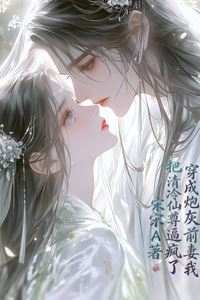
Shen Shiqing, the only daughter of the late Grand Scholar Shen Shao, married into the prestigious Ning'an Lord Manor at age fifteen while still in mourning for her parents. For seven years, she has endured a life akin to that of a widow, neglected by her husband Xie Feng'an, who spends his time with concubines and his childhood sweetheart, Miss Feng, a wealthy widow. The Xie family, led by the calculating Xie Wen Yuan, has systematically isolated Shen Shiqing, eventually forcing her into exile at a remote estate after she refuses to accept Miss Feng as a co-wife. When the matriarch of the Xie family orders Shen Shiqing to kneel in the ancestral hall to copy sutras as a test of her virtue, she realizes there is no escape from their schemes. In a moment of desperation, she stabs herself with a hairpin and sends blood letters to her allies, hoping to survive the betrayal. Simultaneously, in the imperial palace, Emperor Zhaode, Zhao Su Rui, a young and ambitious ruler who has expanded the empire through military conquest, is consumed by rage over bureaucratic inefficiency and censorial opposition. In a bizarre twist of fate, his soul transmigrates into the body of the dying Shen Shiqing. He awakens in the West Garden, confused and furious, only to discover he is now trapped in the frail body of a woman on the verge of death. Meanwhile, Shen Shiqing’s soul awakens in the Emperor’s body, finding herself surrounded by fearful eunuchs and stacks of memorials. She quickly realizes the immense power she now wields and decides to maintain the Emperor’s tyrannical facade to survive, mimicking his handwriting and demeanor to deceive the court officials. In the estate, Zhao Su Rui, inhabiting Shen Shiqing’s body, assesses his dire situation. He identifies the incompetence of the original owner and the immediate threats from the Xie family. Rather than cowering, he takes decisive action, ordering the execution of the matrons who attacked him and consolidating control over the estate’s guards and resources. He recognizes that the Xie family’s power is built on hollow titles and debts, and he begins to plot their downfall from within his new identity. He trains the estate guards, secures the financial accounts, and prepares for the inevitable confrontation, understanding that his only path to safety is to gain enough influence to negotiate or destroy his enemies. As the two souls navigate their swapped lives, Shen Shiqing, now the Emperor, faces the complex web of court politics. She must balance the Emperor’s ruthless reputation with her own need to maintain control, all while hiding the truth of the transmigration. The Grand Secretaries and censors, already wary of the Emperor’s erratic behavior, begin to notice subtle changes in his demeanor. Shen Shiqing uses her knowledge of court affairs, gained from her father’s teachings, to navigate these challenges, issuing edicts that assert imperial authority while avoiding direct confrontation with powerful factions. The core conflict escalates as the Xie family, unaware that Shen Shiqing has changed, sends more envoys to pressure her into a divorce. Zhao Su Rui, leveraging his imperial experience, outmaneuvers them, turning their own schemes against them. He also begins to investigate the political connections that support the Xie family, seeking to dismantle their influence from the outside. Meanwhile, Shen Shiqing, as Emperor, discovers evidence of corruption and mismanagement that could implicate the Xie family’s allies, giving her a powerful weapon to protect her new identity. The story reaches a critical juncture when the Xie family attempts to force Shen Shiqing’s divorce publicly, hoping to marry Miss Feng as the legitimate second wife. Zhao Su Rui, however, has already secured the loyalty of key estate personnel and begun to build a network of support. He prepares to return to the capital, not as a defeated wife, but as a player in the political game. The narrative sets the stage for a dramatic clash between the Emperor’s court and the Ning'an Lord Manor, with both Shen Shiqing and Zhao Su Rui fighting to survive and reclaim their respective lives in a world where power and identity are fluid and dangerous.

Latest Release
DateGroupRelease
2026-08-11shanghai fantasy c200
2026-08-11shanghai fantasy c199
2026-08-11shanghai fantasy c198
2026-08-11shanghai fantasy c197
2026-08-11shanghai fantasy c196
2026-08-11shanghai fantasy c195
2026-08-11shanghai fantasy c194
2026-08-11shanghai fantasy c193
2026-08-11shanghai fantasy c192
2026-08-11shanghai fantasy c191
2026-08-11shanghai fantasy c190
2026-08-11shanghai fantasy c189

Community Reviews

Rating(4.5 / 5.0, 6votes)
5 stars
4(67%)
4 stars
1(17%)
3 stars
1(17%)
2 stars
0(0%)
1 stars
0(0%)

Popular reviews

... Read More
The dialogue in these chapters is a goldmine. Zhao Su Rui's voice is so distinct—it's the voice of a military commander who's captured enemy princes, now forced to navigate the constraints of a woman's body and a patriarchal society. His internal monologues are where the humor lives: comparing his past glory to his current predicament, internally rolling his eyes at Shen San Fei's uselessness, mentally clicking his tongue at the scholar-officials who pretend to disdain imperial relatives. The contrast between his internal voice and his external speech is brilliant. Externally, he's "Shen Shiqing"—calm, misty-eyed, fragile. Internally, he's the Zhaode Emperor plotting his next move. And the dialogue between characters reveals so much. Madam Liu's lines are full of genuine emotion but also reveal her limitations—she can cry and plan a scene, but she can't imagine a woman living without bearing children. Tu Nan's quiet bow and saying "Thank you for your instruction, my lady" when she finally understands Zhao Su Rui's meaning about the estate guards is a perfect moment—she gets it, and he's surprised. The concubines' arrival dialogue is chaotic and hilarious, each one wailing their own grievance, and Zhao Su Rui's response—"Close the gates!"—is the funniest two words in the book.
... Read More
The atmosphere in these chapters is incredible. Let me start with the Zhuangzi scenes—the autumn wind howling through the woods, leaves rustling, the steaming mutton dumplings. There's this wonderful contrast between the cold, calculating political maneuvering and the simple, warm domestic details. Zhao Su Rui eating dumplings while plotting to take over an estate, brushing hair from his forehead while discussing the destruction of enemies. The visual of the osmanthus trees at Zhaohua Yuan in the palace is also striking—trees painstakingly transplanted from Jiangnan, their sweet fragrance drifting through the cool autumn night. And then there's the scene with the concubines arriving: beautifully dressed women in silk robes clutching jewelry and valuables, weeping and wailing, faces streaked with tears and heavy with cosmetics. It's almost comedic in its chaos, a swarm of silk and tears rushing toward the one person who just wants to close the gates. The author has a gift for making settings feel alive—the estate isn't just a backdrop, it's a character. The woodshed where the manager is confined, the courtyard where Pei Feng returns with the account books, the wen chair where Madam Liu collapses. Every location has texture.
... Read More
There's so much going on beneath the surface in these chapters. The recurring motif of meat is fascinating—Zhao Su Rui promises the guards meat as reward, eats dumplings while plotting, and the guards literally kowtow over the prospect of food. It's a commentary on power and control: whoever controls the resources controls the people. The estate itself is a symbol—originally belonging to the Xie Family, now claimed by Zhao Su Rui. When he says "From now on, this will be our own Zhuangzi. Take good care of our money bags," he's not just managing property, he's building a power base from nothing. The gates are another powerful symbol. Closing them is an act of defiance, a boundary drawn against the Xie Family's encroachment. And the body swap itself is deeply symbolic—Zhao Su Rui, the most powerful man in the empire, rendered physically powerless in a woman's body. Shen San Fei, the most powerless woman, gains access to the emperor's body. The story is fundamentally about who has power and who doesn't, and how fragile the distinction really is. Zhao Su Rui's realization that "to control them, one must make them fear" instead of blaming Shen San Fei for not bearing children—that's the thematic core. The Xie Family acts because they desire to, because they face no consequences. Power isn't about status or gender; it's about the willingness to act and the ability to enforce consequences.
... Read More
I have so many feelings about Shen San Fei's situation. The text makes it clear she's been driven to the absolute edge—stabbing herself, writing a blood letter, being exiled to a suburban estate. Her mother died weeping after her father's death in the Huai River, her father dedicated his life to the people and died tragically, and now she's being squeezed by a family that would rather divorce her than protect her. The Xie Family's cruelty is methodical: they can't kill her outright because Xie Feng'an won't observe the mourning period (he needs her alive to marry into the Feng clan for military merits), so they're slowly breaking her instead. It's chilling how calculated it all is. And then there's Madam Liu—her scene with Shen San Fei absolutely wrecked me. She's genuinely trying, she's crying, she's planning to make a scene at the Left Censor-in-chief's mother's birthday. But her worldview is so limited. "What long-term prospects does a woman have besides bearing children?" She genuinely can't imagine another path. That's the tragedy of Shen San Fei's world— even the people who love her are trapped by the same constraints.
... Read More
Okay so let me just say this plot twist had me wheezing. Zhao Su Rui, the Zhaode Emperor, captured three enemy princes in the northern deserts, the whole nine yards—and now he's stuck in Shen San Fei's body, a woman so frail she can barely throw off an aunt's hug. The dramatic irony is absolutely delicious. He's internally monologuing about his military glory while physically being manhandled like a doll. And the body swap is working both ways apparently—Shen San Fei is using HIS body in the palace. That means the emperor is literally running the empire from inside a woman's body while she's trapped in his. The plot mechanics here are tight. Every character action serves the central conflict: the Xie Family wants to get rid of Shen San Fei, Zhao Su Rui refuses to go down without a fight, and the estate becomes his first battlefield. The concubines arriving at the end? Chef's kiss. The Grand Marshal of Dayong, defeated northern tribes, executed chieftains—his response is two words: "Close the gates!" I need to sit down.
... Read More
The pacing here is absolutely masterful. The author knows exactly when to slow down and when to accelerate. We start with the quiet, almost mundane scene of training house guards—Zhao Su Rui eating dumplings, discussing account books, managing an estate. It's calm, almost cozy. Then Madam Liu arrives and the emotional weight ramps up significantly. Her monologue about Shen San Fei's tragic fate, her tears, her inability to comprehend what's really happening—it's heavy. And just when you think the chapter is going to stay in this melancholic register, BAM, the concubines show up. The pacing shift is so sharp it's almost jarring in the best way. The author also uses the body swap premise to create constant tension. We know Zhao Su Rui is the emperor, but other characters don't. We know he's capable of grand strategy, but they see a fragile woman. This dramatic irony creates a ticking clock—how long can he maintain this disguise? How long until the Xie Family's next move catches him off guard? And the palace subplot with Shen San Fei in his body adds another layer of urgency. Two stories running simultaneously, both building toward inevitable collisions.
See all reviews

Characters

See all characters

Custom lists

See all custom Lists