Summary

... Read More

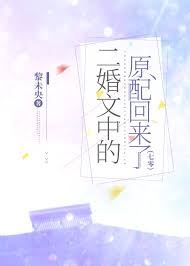
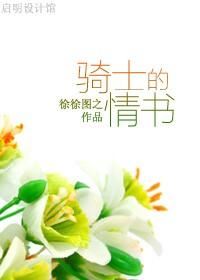
Shen Lingzhen, the beloved only daughter of Duke Ying and Princess Zhenguo, faces an unwelcome imperial decree arranging her marriage to Huo Liuxing, the crippled second son of the former rebellious Huo family. Despite the union being politically strategic, Shen Lingzhen is abducted by the White Infant Sect shortly before the wedding. She is rescued by a mysterious armored warrior who saves her life and leaves behind a bloodstained cloak and a silk handkerchief embroidered with a poem in her handwriting. Upon awakening, she learns her betrothed’s courtesy name is Yu, matching the character on the handkerchief, sparking initial confusion about the connection between her savior and her fiancé.

After recovering, Shen Lingzhen departs for Qingzhou to marry Huo Liuxing. During the journey, she observes that her supposed cripple husband moves with surprising agility and speaks with a voice that eerily resembles her rescuer’s. Upon arrival at the Huo estate, she discovers a household marked by underlying tension. Huo Liuxing’s stepmother, Yu Wanjiang, maintains a polite facade while his impulsive eldest stepsister, Shuyi, harbors open hostility toward the political alliance. Shen Lingzhen navigates these dynamics with grace, earning the respect of the household staff and showing kindness to the younger family members.

Her suspicions regarding Huo Liuxing’s identity deepen when she recognizes his distinctive sword in the estate storeroom—a weapon identical to the one carried by her savior. Convinced he is hiding his true condition, she attempts to find a scar beneath his collarbone to confirm her theory. Her covert efforts lead to a comedic confrontation where she is caught searching for the mark, forcing both parties to acknowledge the unspoken truths between them without breaking the surface tension of their arranged marriage.

The narrative introduces further complications as border tensions rise and political intrigue surrounding the Huo family’s past looms. Shen Lingzhen’s investigation into her abduction reveals connections to powerful figures in the capital, including her own uncle, the Emperor. As she settles into her role, Shen Lingzhen begins to uncover the reality behind Huo Liuxing’s apparent disability and the deeper reasons for the Emperor’s insistence on this union. The story sets the stage for a partnership that balances domestic challenges with the broader stakes of loyalty, survival, and the reclamation of lost territorial glory.

Latest Release
DateGroupRelease
2026-09-25knoxt c26
2026-09-25knoxt c25
2026-09-25knoxt c24
2026-09-25knoxt c23
2026-09-25knoxt c22
2026-09-25knoxt c21
2026-09-25knoxt c20
2026-09-25knoxt c19
2026-09-25knoxt c18
2026-09-25knoxt c17
2026-09-25knoxt c16
2026-09-25knoxt c15

Community Reviews

Rating(4.1 / 5.0, 144votes)
5 stars
49(34%)
4 stars
56(39%)
3 stars
39(27%)
2 stars
0(0%)
1 stars
0(0%)

Popular reviews

... Read More
Let me just list what everyone is hiding from whom because this is the most intense information asymmetry I've ever seen in a romance plot: - Huo Liuxing hides his disabled legs from EVERYONE - Shen Lingzhen hides that she remembers something from 'before' and may be piecing together his secret - She hides who actually saved her (Duke Ying and the Princess Royal sealed it) - Jian Jia and Bailu are completely in the dark about the savior - Kongqing and Jingmo suspect Shen Lingzhen might already know - Huo Liuxing orders an investigation into Peach Blossom Valley because he's suspicious And the stakes keep climbing. Every chapter someone nearly slips up. She sees a scar → he reveals he cut it out himself → she mentions the sword → he gets flustered → she asks him not to hide things → he deflects into a walk → behind her back, his men are diagnosing her behavior like she's a puzzle to be solved. The tension is suffocating and I love it. The author doesn't let ANY character have full knowledge, which means every single interaction is charged with unspoken meaning. And the external stakes — the Western Qiang prisoner camp, the brand, the nearly fatal wound in Bianjing — keep reminding us that this man survived things that would have killed anyone else. So now what happens when she FINDS OUT about the legs for real? I'm bracing myself.
... Read More
The dialogue in this batch is *chef's kiss* and I need to dissect why. First, the mother-son conversation between Yu Wanjiang and Huo Liuxing. It's pure political chess played through implication. "Two hawks pecking at the dragon, surely that would hasten the fall." This line alone tells us everything about the power structure without explaining it. And then his pitch to his mother—offering her a counter-strategy to her beauty trap. The way they speak to each other is layered with decades of shared history. They don't need to explain their relationship; the dialogue does it for them. Then the Shen Lingzhen/Huo Liuxing exchange. The beauty of their dialogue is in what's NOT said. When she asks "Is it not improper for me to treat you like someone I can summon and dismiss at will?"—she's testing the boundaries of their marriage, wondering if she's overstepped. His internal reaction ("His legs were his own, who exactly was being summoned and dismissed?") is hilarious because it reveals the truth: SHE called HIM over. But he lets the misunderstanding stand because it's softer than correcting her. The mirror scene dialogue is masterclass in subtext. Every line operates on two levels: "That's not what I meant." = I didn't mean to hurt your feelings. "I'm going to bed," she said, turning toward the bed. = Please don't be mad at me. "Turn around. Let me see." = I need to fix this. "So I'll be ugly for a whole month." = I'm still upset and also fishing for reassurance. And Huo Liuxing's responses are always slightly off-kilter, never quite hitting the emotional note she needs but landing somewhere else that's almost as good. "Other young ladies worry about their looks because they're afraid they won't get married. But you're already married, what's there to fear?" He's addressing the wrong anxiety entirely—he thinks she's worried about the marriage market when she's actually worried about losing HIS attention. The misalignment is adorable and tragic. The narration itself has this wonderful dry humor woven in. "He was a full decade older than her, and often saw her as a child playing dress-up in adult clothes. Her features were delicate and youthful, she looked even younger than her age. To harbor any romantic thoughts toward such a girl felt improper, even vulgar." This internal monologue from Huo Liuxing is SO honest it's painful. He's telling himself he can't desire her because she's too young-looking, but the reader knows he's lying to himself. And Jingmo's report shifts the tone instantly—terse, urgent, factual. No subtext, just crisis. The author knows how to modulate voice by character and situation.
... Read More
The contrast the author builds between Bianjing and Qingyang is so quietly effective. Remember how Shen Lingzhen's family has strict etiquette rules — no talking during meals — and then contrast that with the elaborate spread they had to prepare for her? Braised lamb, pan-fried quail, bamboo shoots, triple-crunch soup, pork bone broth. All because 'a noble lady had entered their household' and the Huo family's frugality suddenly couldn't apply. The worldbuilding here tells you everything about class, expectation, and how out of place she is. And then the night walk — she asks about the night market and the author literally tells us Bianjing is 'a city that never sleeps' while Qingyang barely qualifies as having one. This is a woman who has been displaced from her entire world and is now trying to find normalcy in somewhere that doesn't even have lights. But then there's also the courtyard itself, the meditation rooms, the medicinal soaks, Kongqing doing acupuncture to seal meridian points every night so Huo Liuxing's legs stay hidden... the domestic details are so specific and grounded that every scene feels like a real place you could walk through. Even the simple detail of her changing into 'a cross-collared narrow-sleeved ruqun that was easy to move in' tells us she's preparing for something active, for a night walk, and that shift from proper dining attire to practical clothes is its own kind of intimacy.
... Read More
There's something so quietly cinematic about the bedtime sequence in this chapter. After all the political maneuvering and danger talk, the scene just... shrinks down to two people in a room with a short candle, and suddenly the whole world feels intimate. Shen Lingzhen nervously wheeler herself to the bedside, glancing around for shadows, and Huo Liuxing watches her do this with obvious fondness. The detail about him snuffing out the oil lamp and leaving only a short candle burning is one of those small visual choices that makes the scene feel so grounded and real. The eavesdropping moment was also brilliantly staged—they freeze like statues for half a stick of incense, and you can practically feel the tension in that silence. Then Shen Lingzhen giving Huo Liuxing this little wink like "are they gone?" and him nodding back—these tiny gestures communicate so much about their dynamic without any exposition. The author has a gift for making the physical space feel alive. The room itself becomes a character: walls that might have ears, windows that could be watched through, the narrow path from wheelchair to bed that becomes this whole dramatic moment. It's not elaborate description, but every detail serves the mood. The world here feels real because the stakes are personal—even in a secret room with spies possibly listening, what matters is whether he can carry her to bed without her tripping.
... Read More
I keep coming back to the unpainted nails detail and I think it's the thematic keystone of this entire passage. When Lingzhen covers Liuxing's mouth, her unpainted nails catch the candlelight and trigger a memory of their wedding night. Why unpainted? Because in a world where noble women display their status through elaborate grooming—painted nails, perfumes, silks—Lingzhen's bare nails are a quiet statement of resistance, of simplicity, of refusing to play the game. The author contrasted this directly earlier: this place couldn't compare to Bianjing's grand entertainment quarters, but for Lingzhen, stepping onto the street wasn't descending from luxury—it was ascending to simplicity. Her few outings had always been from inside a carriage, never walking freely. The unpainted nails and the unpaved street are the same symbol. And then there's the sugar figurine—something beautiful and sweet and temporary, made by an artisan on the roadside, which Zhao Xun leads them straight past. The blacksmith's shop next, with its heat and smoke and hammering iron—hard, utilitarian, dangerous. Lingzhen stands between these worlds, exhausted, torn between the sweetness she wanted and the hard reality she's being pulled toward. Her leg ache at the end isn't just physical—it's the cost of existing in a space that was never designed for her.
... Read More
Shen Lingzhen is one of the most tragic figures in this novel, and this chapter reveals why with such quiet devastation. She comes to Huo Liuxing with something raw and honest—she's been hurt, she's confused, and she's been too polite to ask directly. The fact that she trusts him with this vulnerability, that she blushes and stammers and apologizes for presuming, makes her so painfully human. And Huo Liuxing—God, he's trapped. He sees her innocence like a mirror reflecting his own family's guilt. The moment he realizes she doesn't know about the Princess Royal killing his brother changes everything about their relationship. Before this, he may have harbored resentment or at least suspicion. Now? How do you resent someone who is softer than cotton? Jingmo's perspective is equally heartbreaking. He sees both sides perfectly and chooses silence, which is its own kind of love. He worries for his master, not just about the secret that could destroy their marriage, but about the moral impossibility of telling Lingzhen the truth without breaking her. The three-way dynamic between Huo Liuxing, Lingzhen, and Ji Momo by the end is extraordinary. Ji Momo kneels and basically asks: will you love her despite what her mother did? And Huo Liuxing's quiet laugh tells us everything. He's not angry anymore. He's something far more complicated.
See all reviews

Custom lists

See all custom Lists