Overflowing Raflia - Reviews

Overflowing Raflia
+Add to Custom List
Sort
Add review
... Read More
Let me just sit with this for a second. Raflia enters this chapter with some semblance of stability—she has a home (however strained), she has connections, she has a plan. By the end of it, she has been: 1. Propositioned by the Duke's secretary into a marriage she didn't want 2. Kicked out of her employer's house with zero warning 3. Harassed on the street by a predatory reporter 4. Physically assaulted (her suitcase used as a weapon against her) 5. Mugged by children 6. Told by a Deputy Commissioner that everyone expects her to marry the Duke WHAT STAKE DOES SHE EVEN HAVE LEFT? The external conflicts are piling up like a avalanche—this reporter won't stop, she has nowhere to sleep, she's been branded a scandal, and the social circle is already writing her story. But the INTERNAL conflict is what's killing me. She keeps telling herself "Tomorrow, I'll wake up from this foolish dream" and yet each time she "wakes up," the nightmare gets worse. The moment that broke me was when she's wandering through Banton Bridge, completely disoriented, thinking: "Where should I go? Will that man chase me and try to put me in jail? Would I be deported if a foreigner causes a disturbance? Why am I suffering through this in the first place?" She doesn't even know WHY anymore. That's when I knew this story wasn't going to let her off easy.
... Read More
Let's talk about how the author controls the tempo here. We open with Raflia's backstory—a full chapter of exposition, really—and instead of dragging, it flows like a memory being pulled from somewhere deep. She speaks, we listen, and theHenwood incident unfolds naturally like stories do when someone's really thinking. Then we cut to the hunting scene. Gunshots, birds flying away, Duke Bronski's complicated mood. Quick, sharp, almost jarring. The obituary drops like a bomb—Bottom Herriot dead, engagement over, inheritance chaos. And just like that, we're back to the library with Future cutting flowers, snip snip, the sound echoing. This contrast is genius. The external violence of the hunt mirrors the internal violence happening in Future's life—her sister's stress, the forced marriage looming, the Duke coming to claim his bride. Every cut of those scissors sounds like a threat. When Future throws the flower down and says “such an ugly flower won't make mother happy,” I heard the ticking clock getting louder. And Kate Gaskell's entrance? Perfect timing. Just as Raflia tries to comfort Future, just as the bouquet is arranged, just as there's a moment of peace—footsteps on the stairs. The mistress wants to see Miss Rozantin. Not both of them. Just Raflia. The author never rushes. She lets scenes breathe, lets silence speak, lets the weight of unspoken things build until you can feel it in your ribs. Then she cuts to black or transitions smoothly, and you're left aching for more.
... Read More
I need to talk about Bunny. What a character. She refused to eat or attend classes for two full days because an old man was going to be fired—an old man who smelled musty and looked gruff, the kind of person society discards without a second thought. And then Raflia joined her. Both of them, the school's “most exemplary students,” reduced to delinquents for having a conscience. That scene where they follow the caretaker around during suspension, helping him plant flowers and fix furniture? This is where the author shows us what real friendship looks like. It's not about grand gestures—it's about showing up when someone's being treated unfairly. Bunny's line about “the price of my silence would have fallen on my beloved family and friends” hits so hard. She wasn't just being brave; she was understanding the collateral damage of cowardice. And now look at Future. She's cutting flowers like their stems are being severed from their roots. Rain taking out her stress on Penny, Mrs. Raihenders looking the other way—this family is fracturing. Future and Raflia's connection is different though. There's something tender in how Raflia arranges those damaged flowers and tells Future her work is “amazing.” Future stroking Penny afterward? That's the first peaceful moment in pages. Meanwhile, Duke Bronski is haunted by a woman he barely knows—remembering her fragrance, her contemptuous gaze. He calls it “meager compassion” but clearly it's eating at him. Violence led to violence, and now he's wondering if he should “do drugs.” Chilling.
... Read More
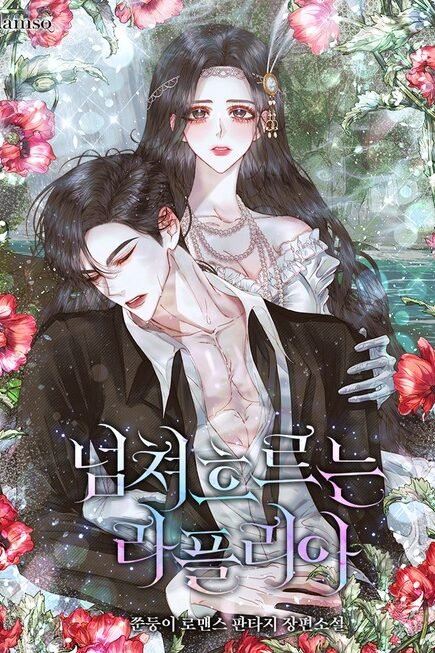
I need to talk about Lesion because WOW. First of all, the way this author writes him is just… chef's kiss. He's introduced at the party literally leaning against a wall, observing everyone with this detached, almost animal-like gaze. Nobody else is doing that. While everyone's appraising Raflia like livestock, he's just… watching. And later, when he saves her, it's not some heroic moment. It's brutal. It's ugly. He's kicking a man who's already down, who's begging, who's offering him money. And the worst part? The author makes it CLEAR that Lesion isn't doing this for justice or heroism. When Raflia approaches him and says 'excuse me,' his first response is basically 'if you have nothing to say, I'll continue.' He was in the MIDDLE of possibly killing the guy. And then she says 'he might die at this rate, don't you think?' and his brow furrows like—wait, what? Like her concern is somehow more confusing than the violence he just committed. But then the moment that absolutely wrecked me: he asks her 'Have I seen you before?' And she says no, and she's lying because obviously she knows exactly who he is. But she doesn't dare look up because of his gaze—that 'gaze that seemed ready to devour her.' The author writes: 'Instinctively, she shrank back when she saw it.' This man scared her so deeply that her BODY reacted before her mind could. And then when she realizes WHO he is—the Duke Bronski, the man whose victory burned her home to the ground—her expression shifts from shock to sadness to anger to DISGUST. And Lesion notices. He notices EVERYTHING. He sees it. And instead of confronting it, instead of asking what's wrong, he just… scoffs. 'Where was her fear now, replaced by such intense disgust?' He's wounded, but he masks it with cruelty. 'It was no longer Lesion's concern.' The line that killed me was when he tells her to go to a church. Not 'let me help you.' Not even 'are you alright?' Just 'that's the only place that will take you in if you appeal to their mercy.' He gives her advice but refuses to be the one giving it. He walks away. Torio calls from the carriage, freezing, and Lesion just says 'Get in. We'll take you as far as we're going.' He offers her a ride and she refuses, and he leaves without another word. This man is so painfully written. He saves her life but can't stay for thank you. He asks if he's seen her before—was that genuine? Or was it just curiosity? And that scent the author keeps mentioning—'that unidentifiable fragrance suddenly wafted toward him'—the nostalgia thing. Something about her triggers him on a level he can't explain. I'm OBSESSED with where this goes.
... Read More
The flower imagery throughout these chapters is devastating in its precision. Future cutting lisianthus until the stems droop, leaves falling away—she's describing herself without saying it. A girl being trimmed of her roots, forced to survive on beauty alone. When Raflia arranges the flowers and says “if we do it like this, look, it's plenty beautiful,” she's offering hope through composition. You can still be arranged meaningfully even after being severed. The old caretaker planting flowers season after season—that's resistance. In a world that wants to fire him because he's gruff and smells musty, he continues creating beauty. Meanwhile, the principal fires people for being useless, Bunny and Raflia get punished for kindness, and Duke Bronski treats women as objects to possess. Even the sunlight symbolism works on multiple levels. The abandoned school bathed in golden light—memory as sanctuary. The library with “bright sunlight streaming in,” white chiffon curtains floating—domestic peace that's fragile and temporary. The Duke remembering “that strange, sweet fragrance that had mingled with cigarette smoke when the wind blew in the garden that night”—even his violence is filtered through aesthetic memory. And what about nobility itself? The war created “too many bastards who go around bragging about their wealth.” Being noble has become currency, shield, performance. Raflia's “noble” background gets thrown around by Rain and Kate, but she's actually a maid now—yet she carries herself with more dignity than either of them. The message is clear: true nobility isn't inherited. It's what you do when no one's watching.
... Read More
I cannot STOP thinking about this line: 'Because it's not my fault,' she replied. THAT'S IT. THAT'S THE TWEET. The elderly gentleman basically tells her she should know better than to be an illegitimate child—like her very EXISTENCE is some kind of social faux pas—and she just... owns it. She doesn't cry, she doesn't beg, she lays out her entire tragic backstory like she's reading a grocery list. 'My parents weren't there from the time I was born.' 'Being sent here like merchandise to pay off a debt follows the same logic.' She turns her own humiliation into a WEAPON and uses it to walk out with her dignity INTACT. Meanwhile the men are losing their minds, the father is collapsing, and Raflia is over there dropping philosophical truth bombs like she's hosting a TED Talk on suffering. And Lesion? He hears about this through a report from Benderson and his response is a single snort. A SNORT. Not words, not action, just a sound that basically means 'oh, you have GOT to be kidding me, I like her.' The contrast between Raflia's articulate devastation and Lesion's gruff silence is EVERYTHING.
... Read More
I NEED to talk about Duke Lesion Bronski because this man is a VIBE in the most dangerous way possible. Here's the setup: he's described as 'the darkness of Buleco and the hound of the reservoir,' which already sounds like someone who eats children for breakfast, and yet the narration literally calls him 'her enemy and her only savior.' ENEMY AND SAVIOR. Do you understand the tension potential HERE? But wait, it gets better. While all this drama is unfolding at the Herriot party, where is our Duke? He's in a DIMLY LIT ROOM PLAYING CARDS WITH HIS BOIS, completely checked out, calling everyone 'idlers,' bored to tears. And then he casually wanders outside for fresh air and WITNESSES THE ENTIRE SCENE of Raflia being humiliated. His exact reaction? He smokes his cigarette, thinks 'such a little thing, yet so outspoken,' and then walks away in the OPPOSITE DIRECTION while sighing 'still, it was regrettable.' REGRETTABLE. He watched a woman get destroyed and he's REGRETTING that he didn't intervene more? This man is going to be the death of me.
... Read More
There are these tiny details throughout the chapter that I keep thinking about, and I think the author is doing something really clever with them. The streetlamp outside the Raihenders mansion—"unlike elsewhere, it was emitting a dim light." Deveron points it out like it's nothing, but it's the last thing Raflia sees at that house. The light is already fading before she even knows she's being cast out. Poetry, honestly. Then there's the cup. Merhen warms her milk, Raflia drinks it with both hands, the warmth seeping into her palms. She finishes it, stands at the sink, rinses the cup, dries it, puts it BACK in the cupboard. She doesn't just leave it—a foreigner in a strange house doesn't leave messes. This small act of tidying up her own dishwashing before being thrown out... it says everything about who she is. She's dignified even when no one is giving her dignity. And the newspaper at the end—the girl hands it to her as an apology, refuses her money. The newspaper is what the world will read about Raflia, but the girl gives it for FREE, treating her like a person instead of gossip fodder. The contrast between Barnald Harper using newspapers to destroy her and this girl using one to help her? That's the theme right there. And that ending hollow laugh—"Ha"—after Resford rides off. Is it resignation? Is it anger? Or is it the sound of someone who has nothing left to lose?
... Read More
The spatial design of this chapter is so deliberate it could be a film storyboard. You have the grand banquet hall first — candles, chandeliers, desserts, wine, the glittering surface of high society. Everyone performing happiness. Kate in diamonds, Rain playing the blushing ingenue, the Crown Prince publicly courting Kate while everybody cheers. It's almost too bright, too perfect, and the text makes you feel that through Raflia's eyes: "The jewels the women were wearing so lavishly, the light reflecting off them seemed to painfully stab Raflia's eyes." Then — darkness. Raflia leaves the light and wanders into corridors that grow increasingly empty and shadowed. The palace isn't just a backdrop here, it's an organism. The smaller rooms further from the hall become spaces where things happen unseen, where Future gets isolated, where Raflia opens door after door like she's checking for pulse points in a dying body. And the final room — acrid cigarette smoke, a man leaning against a chair by the fireplace, Future on the sofa smiling faintly in the dimness. The contrast between the ball's music and singing and this quiet room with its tension and chemical smell is masterful. You can literally hear the muffled orchestral music from somewhere else, distant and irrelevant. Even the aside about Lord Bermon and Miss Ferrell in the previous room — two people having an affair, unaware they've been observed — adds another layer. The palace is full of hidden dramas, and nobody is safe from being watched or set up.
... Read More
I need to talk about Deveron's dialogue because this man is the WORST and also somehow the most entertaining character in this entire scene. "You usually have to experience something to understand it." — Said with the confidence of a man who has never once considered that maybe, just maybe, Raflia might have her own thoughts on the matter. The arrogance is OFF THE CHARTS. He adjusts his glasses, smiles the whole time, and basically says "That's how it will be" like he's predicted the future, not coerced a woman into a marriage proposal. The dialogue writes HIM so perfectly—I could picture him smugly getting into that carriage and adjusting his glasses the entire ride away. And then there's Barnald Harper, the reporter. "Governess who seduces her employer's man... Governess Warning! Or how about this?" This man is writing HEADLINES IN REAL TIME while harassing a woman on the street. His dialogue is so casually predatory, like he's not even aware he's the villain. "Is adultery... hereditary?" WITH THE SUBTITLE — the third woman so enchanting that she sent the second wife to a mental hospital?! Who even thinks like this?? But the line that got me was Raflia's response to Lord Resford: "There's a limit to playing with people. I clearly refused, so how..." She trails off because she can't even finish the sentence. She's exhausted, furious, and barely holding it together—and yet she still finds the words to push back. That single interrupted sentence says SO MUCH about her character.
... Read More
The pacing in these chapters is absolutely RIDICULOUS in the best way. We open at FULL THROTTLE—wedding bells, trembling bouquet, internal screaming—and then the author just YANKS the carpet out from under us with that '* * *' transition. One minute we're at a cathedral wedding and the next we're at a gaudy nouveau riche mansion and I had to re-read twice to make sure I wasn't losing my mind. And then the escalation is just relentless: the maids' pitying advice, the public humiliation, Raflia's calculated revelation, the sons' outrage, and then—she's just THROWN OUT into the cold night with her luggage tumbling down the stairs. No fanfare, no last-minute rescue, just a girl in a white dress disappearing into a carriage while a Duke watches from the shadows and crushes a cigarette under his shoe. The author doesn't even give us a moment to breathe before cutting to Lesion's private reflection. It's brutal and beautiful and I swear every scene transition felt like getting punched in the stomach and I couldn't look away.
... Read More
The atmosphere in this section is absolutely palpable. The author doesn't just describe a ball; they make you feel the weight of it. Remember the corridor? 'The scent of the woman trapped in his arms rose strongly. It was a seductive and appetizing fragrance that made him want to bite, lick, and worship her.' That's not just worldbuilding; that's immersion. You're right there in the dimly lit room with the candelabra shadows, the new-clothes smell, the cigarette smoke. Then you burst out into the garden, where Future is being dragged away, and the air feels thick with conflict. And the fireworks scene? 'Small white sparks bloomed all over the night sky. Like a bouquet of lily of the valley.' The visual shift from the dark, oppressive interior spaces to this vast, open, glittering sky mirrors the emotional shift perfectly. Later, in the carriage, the mood tightens again. 'A cold sensation seeped in' against the window. The contrast between the warm, chaotic celebration and the cold, clinical exposition from Deveron is masterful. Every setting feels alive and serves the story. The palace isn't just a backdrop; it's a character full of secrets, perfumes, and hidden agendas.

Leave a comment

You must be logged in to leave comments. or
