Overflowing Raflia
Novel Info
  • Author:
  • Status:Ongoing

Summary

... Read More

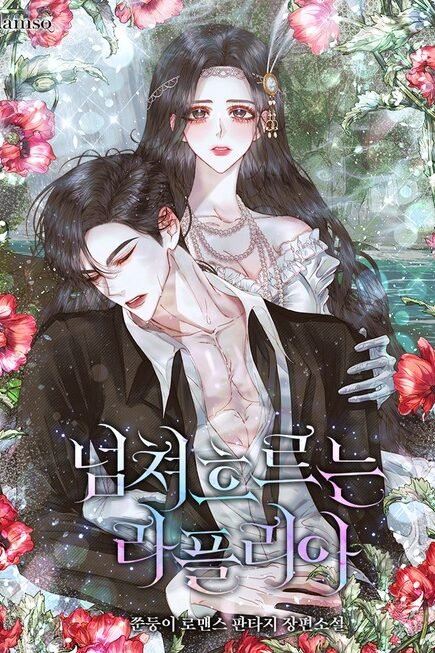
Raflia Rozantin is an illegitimate daughter of a impoverished Corantian noble family, sold by her relatives to pay off debts. She is initially sent as a substitute bride to elderly nouveau riche Bottom Herriot, posing as a legitimate noblewoman at his engagement party. When Raflia refuses to lie about her true status, exposing herself as an illegitimate child, she is humiliated and cast out into the cold night. During her flight, she is attacked by Herriot’s eldest son, who intends to sell her or assault her. Lesion Bronski, a decorated war hero and Duke known as the "Darkness of Buleco," intervenes brutally, beating the attacker unconscious. Despite his violent nature and his reputation as a womanizer with two failed marriages, Raflia recognizes him as the man responsible for burning her hometown during the war between Buleco and Corantia. She confronts him with open contempt, rejecting his offer of help before leaving for the capital.

Arriving in Petre, Raflia secures a position as a governess for the Raihenders family, prominent nouveau riche pharmaceutical magnates. The household consists of Rublia Raihenders, her ambitious eldest daughter Rain, and her younger daughter Future, who suffers from mental infantilization following a childhood accident. Raflia bonds with Future, earning her trust and affection through kindness and patience. However, the family’s social ambitions drive them to manipulate Raflia into promoting Duke Lesion Bronski to Future, as Queen Xenia has arranged for Future to marry the Duke. This union is a political maneuver to secure the heiress a wealthy but disgraced husband while elevating the Raihenders' status.

Lesion Bronski, recently divorced and legally cleared, finds himself plagued by memories of Raflia’s scent and her scornful gaze. He visits his psychiatrist, Dr. Belliard, at the Ever Green mental hospital, where he also discovers information about a fugitive magician named Yunes Frodi. Lesion uses intimidation to extract details from the doctor, revealing his control over the criminal underworld and his role as the King’s shadow operative. His father, King Henry III, is dying of cancer and has assigned Lesion dangerous missions while denying him recognition. The Queen seeks to further disgrace Lesion by forcing him into marriage, planning to later court-martial him for wartime atrocities.

At a social gathering, Raflia publicly dismantles Kate Gaskell’s attempt to force her into praising the Duke, exposing the Raihenders’ plan to sacrifice Future to Lesion. This act endangers her employment, as Mrs. Raihenders furiously berates her for interfering in matters above her station. Despite the hostility, Raflia remains steadfast in protecting Future. Meanwhile, Lesion becomes increasingly obsessed with Raflia, dismissing the arranged marriage to Future. He begins to investigate the Raihenders household, intrigued by the woman who dared to despise him. The narrative sets the stage for a collision between Raflia’s quest for independence and Lesion’s complicated entanglement with her, as both navigate the treacherous political landscape of the Buleco court.

Latest Release
DateGroupRelease
2026-10-03dusk blossoms c37
2026-10-03dusk blossoms c36
2026-10-03dusk blossoms c35
2026-10-03dusk blossoms c34
2026-10-03dusk blossoms c33
2026-10-03dusk blossoms c32
2026-10-03dusk blossoms c31
2026-10-03dusk blossoms c30
2026-10-03dusk blossoms c29
2026-10-03dusk blossoms c28
2026-10-03dusk blossoms c27
2026-10-03dusk blossoms c26

Community Reviews

Rating(0 / 5.0, 30votes)
5 stars
0(0%)
4 stars
0(0%)
3 stars
0(0%)
2 stars
0(0%)
1 stars
0(0%)

Popular reviews

... Read More
The pacing in this chapter is absolutely BRUTAL and I need to discuss it. It opens with a slow, suffocating carriage ride—Deveron talking, Raflia internally screaming, the streets passing by. It feels like you're trapped in that carriage with her. Then BAM, she's home and Merhen is quietly living her life like nothing happened. The fireplace scene is almost domestic, almost peaceful—until Mrs. Raihenders opens her mouth and everything shatters. The eviction scene itself is surprisingly SHORT. No long dramatic confrontation. Just "sit down," "you're an illegitimate child," "please leave," "I'm fine, ma'am." It's over in what feels like minutes. That's what makes it hurt more—the speed of it. Then the chapter EXPLODES. The reporter appears out of nowhere, escalates FAST, and Raflia's reaction is immediate violence. No hesitation scene, no internal debate—we just go from walking to SUITCASE TO THE FACE in one beat. Then she's RUNNING through the streets, and the prose matches her panic with shorter, choppy thoughts. "Where should I go? Will that man chase me? Would I be deported?" And then—respite. Lord Resford appears like a deus ex machina, but instead of helping, he just adds MORE pressure. His dialogue is calm, measured, almost reasonable. Which makes his words hit even harder because they're so delivered so casually. The chapter ends with a girl, a newspaper, and a wallet full of holes. No resolution. No comfort. Just... the next problem waiting. And I need the next chapter RIGHT NOW.
... Read More
Okay so this opening hit me like a truck. We start IN MEDIA RES with a wedding, right? Raflia walking down the aisle, internal monologue going wild—'Should I run away now?'—and then the Duke lifts her veil and BAM, she transforms into the perfect blissful bride in two seconds flat. The contrast between her inner panic and outer performance is chef's kiss. And then the text literally just cuts to '* * *' and we're NOT at that wedding anymore. We're at some other event, some engagement party for an 80-year-old nouveau riche guy. I was completely disoriented for a second and then it clicked—this IS the backstory leading up to the wedding we just saw.
... Read More
The conversations in this chapter are NOT casual. Every line is a pass at someone's throat. Kate's exchange with Rain about Baron Hobbit is the kind of dialogue that reads like a fencing match where both participants are smiling. "Baron Hobbit is still Miss Rain's fiancé" — said with enough sweetness to pass as innocent, but everyone at that table knew exactly what it meant. And then Kate turning to Future with a serious voice and leading her away for a "private conversation" is literally the moment the trap gets triggered. Her dialogue is always layered. Always performative. Rain is nastier in a different way. When she says "She's probably holed up somewhere enjoying herself with some man... ignorant young girls sometimes do that" — that's not a question, that's an accusation dressed as speculation. She's projecting and deflecting at the same time, and it's brilliant villain writing. But the most devastating lines aren't in dialogue at all. They're in Raflia's head: "They want you to marry Duke Bronski." Four words from Raflia and Future's world collapses. Meanwhile Bronski's internal monologue — "The young lady had been babbling nonsense all along as if he were some harmful villain" — shows he's been reading the situation completely differently this whole time. Three characters, three versions of what's happening, and none of them are wrong.
... Read More
Dialogue is where this author absolutely shines. Listen to how Kate Gaskell speaks: "Would you like a cookie? Have you ever had one before?" She's not offering kindness—she's performing condescension while smiling. And the worst part? Raflia just says “No, thank you” and keeps her dignity. That restraint says everything. Compare that to Bunny's voice when she explains why she protested: "I was afraid. But if I had remained silent, I would have regretted it for the rest of my life." That's not dramatic monologue—that's a teenager speaking truth with the clarity only young people have. No embellishment, just honesty. And Raflia's narration has this beautiful rhythm. When she describes the caretaker: "The old man was quietly managing the school for the students more than anyone else. Planting flowers with each season, chasing away neighborhood boys who approached the school, fixing broken furniture, collecting garbage…" She doesn't praise him directly. She just lists what he did, and that's somehow more powerful. The Duke's internal voice is another masterpiece: "Does she know? That unintentionally, she's been wandering around in my head. Like a mosquito in a dark room, making an irritating buzzing sound." Violent man, yes, but also someone aware of his own contradictions. That self-awareness makes him terrifying and human simultaneously. Even Future's clipped, frustrated lines work: "Such an ugly flower won't make mother happy." She's not talking about flowers. She's talking about herself.
... Read More
There is something deeply unsettling about how seamlessly the author weaves personal destinies into political machinery. Raflia's backstory alone is a mini-novel—abandoned by family, expelled after the war, surviving as a maid while clinging to education through night school. The Henwood incident with Bunny and the caretaker is a perfect microcosm of the story's larger conflict: authority figures arbitrarily punishing kindness, and loyal friends paying the price. That suspension for defending an elderly man? Brutal. And now we're seeing the same patterns repeat with Future being drawn into this royal matchmaking scheme. The dual timeline structure is working brilliantly here. We have Raflia's past (school days, friendship with Bunny) contrasting sharply with the present (the Queen's banquet invitation, Duke Bronski's arrival). Meanwhile, the hunting scene with Duke Bronski and Lord Resford sets up his character before we even meet him in person—a man whose violence is casually discussed like weather. The obituary about Bottom Herriot dying “p peacefully in his sleep” right after his disastrous engagement? Darkly perfect irony. What I love is how the plot keeps pulling threads. The Queen wants a bride. Rain is being positioned for something. Future might end up with Duke Bronski. And Raflia's “noble” background gets thrown around as both shield and weapon. Every conversation feels like it's building toward an explosion. When Kate Gaskell offers Raflia a cookie and asks if she's ever had one before? That wasn't kindness—that was humiliation wrapped in sugar.
... Read More
The pacing here is a wild ride, and I mean that in the best way. We start at high velocity — Future crying, Raflia dragging her out, the frantic search for gloves. It's breathless. Then we have this long, tense, almost slow-motion confrontation between Raflia and Lesion in the adjoining room. The author lets the silence stretch, lets the dialogue simmer. 'She was stuck in the mud just like him, yet she acted like a noble swan.' That pause for reflection breaks the panic beautifully. Then, just as we think it's a standard romantic standoff, BAM — Kate and the mob show up in the garden. The tempo spikes again. The accusatory dialogue is sharp, fast, almost comedic in its cruelty until Raflia realizes the truth. And then the Duke intervenes, pulls her away, and suddenly we're dancing. The fireworks provide a natural crescendo, a moment of awe that slows everything down. It's the calm before the storm. And then the final scene in the carriage? Total tonal whiplash. One moment it's post-adrenaline confusion, the next it's a complete narrative pivot. The pacing never drags; it surges and recedes like the sea. Every transition feels intentional, guiding the reader from one emotional state to another without ever losing momentum.
See all reviews

Custom lists

See all custom Lists