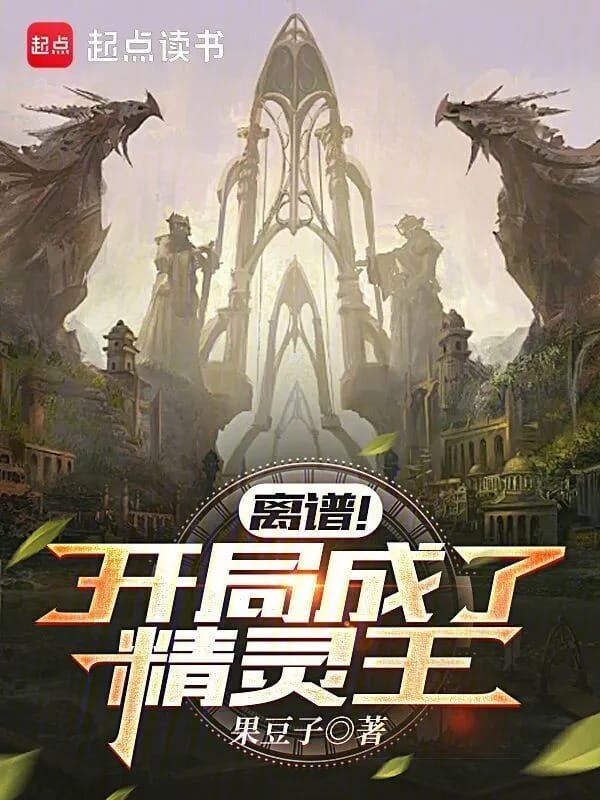
Outrageous! Starting as the Elf King
+Add to Custom List
Novel Info

Summary

... Read More

Lin Yi, a transmigrator with the rare bloodline of a Sun Elf, awakens in the Forgotten Swamp within the Dark Continent, a world dominated by demons and evil races. He discovers an ancient ruin that was once the capital of the Elf Empire, where the dying Old Tree, the last remnant of the race, reveals his destiny. The Old Tree proclaims Lin Yi as the destined Elf King and tasks him with reviving the Elf Empire by finding the legitimate Elf Queen and uniting the scattered elf populations. Before perishing, the Old Tree bestows upon him the seed of the Tree of Life, instructing him to cultivate it and build a new faction.

Upon receiving the seed, Lin Yi is contacted by a territorial system that offers him the path of a lord. He chooses to plant the seed immediately, summoning a new, vibrant Tree of Life that replaces the withered ancient one. This tree serves as the core building of his territory, capable of nurturing Wisps and resurrecting fallen elves. The system issues quests requiring him to gather one thousand combat troops and clear the ruins of high-level monsters. Recognizing the urgency of his situation, as the protection barrier has collapsed and evil creatures now roam freely, Lin Yi begins hunting magical beasts to gather Energy Crystals, the essential resource for development.

Lin Yi’s early progress is swift due to his innate fire magic talent and Sun Elf bloodline, which grants him immunity to fire and enhanced magical power. He defeats swarms of Vampire Mosquitoes and undead legions that threaten his territory at night. After completing the initial quest, he unlocks the War Treant, a building that allows him to train elf troops. He creates his first army of Elf Swordsmen and Elf Archers, all female high elves who swear loyalty to him as their king. With his forces growing, he upgrades the Tree of Life to increase his daily breeding capacity and later unlocks the Mana Spring, which produces Elf Spring Water to restore mana and heal injuries.

As his territory expands, the power dynamics in the ruins shift. High-level undead, including Necromancers and Undead Knights, begin to emerge from the shadows, resurrecting fallen creatures and posing a greater threat than the low-level monsters Lin Yi initially faced. He encounters a powerful Magic Plant that commands thousands of vampire mosquitoes, forcing him to rely on his growing magical prowess to defeat it. This victory yields valuable resources, including magic cores and a Heart of Life, and propels Lin Yi to the ninth tier of mage.

The narrative reaches a critical juncture as Lin Yi’s army grows to one thousand troops, unlocking the Mana Spring and triggering a new quest for ten thousand troops. He expands his military composition by training specialized units such as Elf Mages and Elf Huntresses, who provide magical support and reconnaissance. Meanwhile, in the City Lord's Mansion, a gathering of high-level undead leaders, including a towering zombie king, signals the rising power of the evil factions. Lin Yi resolves to continue clearing the inner city ruins, aiming to secure the ancient treasury and establish a stronghold strong enough to confront the encroaching darkness and eventually fulfill his destiny as the ruler of the Elf Race.

Latest Release
DateGroupRelease
2026-10-01lightnovelasia c284
2026-10-01lightnovelasia c283
2026-10-01lightnovelasia c282
2026-10-01lightnovelasia c281
2026-10-01lightnovelasia c280
2026-10-01lightnovelasia c279
2026-10-01lightnovelasia c278
2026-10-01lightnovelasia c277
2026-10-01lightnovelasia c276
2026-10-01lightnovelasia c275
2026-10-01lightnovelasia c274
2026-10-01lightnovelasia c273

Community Reviews

Rating(3.8 / 5.0, 24votes)
5 stars
5(21%)
4 stars
9(38%)
3 stars
10(42%)
2 stars
0(0%)
1 stars
0(0%)

Popular reviews

... Read More
I just finished these chapters and I need to talk about how the plot shifted so neatly from 'building a kingdom' to 'oh crap, the undead are getting smarter.' Let's be real for a second—when Lin Yi burns that magical plant and pulls out the Heart of Life, you're already feeling that sweet, sweet progression fantasy satisfaction. You want him to win, you want him to gather those crystals, you want to see the numbers go up. And they do! He spends ten thousand just to upgrade the Tree of Life, and suddenly he's training a thousand Wisps a day. It's glorious. It's exactly what this genre promises. But then, right when you think the path is smooth, the plot drops a curveball that actually changes the rules. The Old Tree dies—or weakens, at least—and the ancient suppression over the ruins lifts. What does that do? It doesn't just bring back more zombies; it brings back organized, high-level undead. Dozens of Tier 7 to Tier 9 Undead Knights show up and casually slaughter hundreds of Swamp Rats like they're nothing. And then the Necromancer appears. Just when I was getting comfortable with the day-by-day loop of hunt-crystal-build, the story suddenly has teeth. The subplots are weaving together nicely, too. Lin Yi is already thinking ahead about the City Lord's Mansion because he wants the treasury. That's not just loot-greedy protagonist behavior; that's strategic plotting. He knows he can't stay in the swamp forever. The demons are out there. The holy angels got defeated. The world feels big and dangerous beyond his little elf base. This escalation—the shift from grinding low-level mobs to facing capable, magical undead—is what keeps the main storyline from becoming a repetitive chores simulator. It asks a new question: can he build fast enough before the threats outpace his army? And honestly, that's way more interesting than just watching crystal counts tick up.
... Read More
Okay, I have to talk about this one moment that hit me differently than I expected. When the resurrected elves appear in the square and they all kneel before Lin Yi—there's this line, "Their previous deaths did not affect them; on the contrary, their gazes towards Lin Yi were filled with even more intense fervor and reverence. To die and be resurrected. Wasn't this a different kind of immortality?" And I just... sat there. That's it. That's the post. What blew my mind isn't even the loyalty angle, it's the implication that these elves DIED for him and came back and their response wasn't trauma or hesitation—it was deeper devotion. Like, death didn't diminish their bond, it intensified it. That's not typical vassal-ruler energy, that's something almost cultish but in a genuinely moving way. The author doesn't over-explain it. Doesn't make it creepy. Just presents it as natural, and somehow it works. And then Lin Yi's response—just a slight hand raise, "Rise," with a genuine smile. He's not abusing this devotion. He's not treating them like disposable units, even though the game-like interface makes it easy to see them that way. The fact that the narration emphasizes their beauty and valor, calls them valiant and heroic, not just "troops"—that shows Lin Yi actually sees them as people. Or at least, the narrative wants us to believe he does. But here's what keeps nagging at me: is this genuine care or is it the calculated behavior of someone who understands that loyal subordinates equal a stronger territory? Because Lin Yi absolutely thinks strategically—"the enhancement function of the Temple of Divine Grace, the more troops there are, the greater the benefit." That's not pure sentiment, that's an owner assessing assets. And yet, when he watches their faces and smiles? Something in me wants to believe that's real too. Maybe that ambiguity is the point. Maybe the most interesting relationships in this story won't be between two people who declare their feelings, but between a ruler who may or may not truly care and subjects who care devastatingly deeply. And I am HERE for it. Also, the Huntress who reports to him—"Reporting to Your Majesty"—every single time. Formal, respectful, but never cold. There's warmth underneath the hierarchy. I can't quite name it but it feels like the foundation of something the story will either build into something beautiful or dismantle cruelly. Either way, I'm invested.
... Read More
I'm going to be honest with you—I came for the system mechanics and the army building, and I stayed because of one fucking smile. "Looking at the delicate and beautiful faces before them, the smile on his face became even brighter." That's it. That's the entire sentence. Lin Yi is surrounded by over two thousand elves—some recently resurrected, all of them kneeling in devotion—and the narration zeroes in on his facial expression like it matters. And it DOES matter, because up until this point, Lin Yi has been pure calculation. Upgrade costs, troop ratios, crystal allocation, quest requirements. He's been a CEO running a military startup. And then he looks at their faces and SMILES. Not a smirk, not a satisfied grimace—a smile that BECOMES brighter. Why does this hit me? Because in a genre where characters are often reduced to their stats and strategies, this moment insists that Lin Yi is CAPABLE of genuine emotional response. He's not faking it. The text doesn't suggest performance here. His elves are beautiful and valiant and he finds joy in that. Simple as that. But what makes it emotionally complex is the context around it. These are people who DIED for him. Who were brought back. Who look at him with "intense fervor and reverence." His smile exists inside a web of power dynamics that would make anyone uneasy—if he's truly happy to see them, that's touching. If he's happy because they're useful and loyal, that's managerial. The text holds both possibilities without resolving them, and that uncertainty is where the emotional weight lives. The other moment that got me was quieter: "Bathed in the natural and life-giving light emanating from the Tree of Life. The fatigue in his body and mind quickly dissipated." There's vulnerability here. He's tired. He's carrying the weight of a growing territory, a quest that might be impossible, a magic system he's struggling to master. The Tree doesn't just heal his body—it heals his MIND. This is a character who has no one to decompress with, no peer, no equal. The Tree is his confidant as much as his resource. That's lonely, even if it's necessary. And the excitement when he learns about Treants—"Lin Yi suddenly felt invigorated, completely awake"—that's the thrill of possibility. After chapters of budgeting and calculating and delaying gratification, something OPENs up. The Ancient Tree building. Forest Giants. These aren't just units; they're DREAMS. The Old Tree's stories gave him something no system notification ever could: wonder. "The Old Tree had told him many stories about the glorious achievements of the Treant Race." Stories. Not data. Not stats. NARRATIVES. This is how humans build meaning, and the author reminds us that Lin Yi is still a human inside all this power. The Fire Dragon Roar test brings it full circle: "Lin Yi was overjoyed." After the anxiety of investment, the wait, the uncertainty—success. Pure, unfiltered joy. Not satisfaction, not relief. JOY. And then immediately after, back to work. "Looking at the remaining energy crystals"—the joy is real but it's brief, because the territory doesn't stop needing him. That's the emotional rhythm of this book: moments of genuine feeling punctuating an endless cycle of responsibility. It's exhausting to watch and utterly compelling.
... Read More
"With this much Elf Spring Water, it's enough for 100,000 elves, let alone 10,000, to use for a long time." That is Lin Yi talking to the Elf Huntresses and honestly it sounds like a guy doing inventory management at a grocery store. Which is exactly the voice the author gives him for most of this chapter, and I love it. He is not being dramatic. He is not giving speeches to his troops. He is checking building information, calculating upgrade costs, wondering if 100,000 energy crystals is too steep a price. "Just one more upgrade, and the Mana Spring will be maxed out." "It's just that the consumption is a bit high." This is the voice of a player-character who treats his kingdom like a strategy game, and it is deliberately grounded. It makes the emotional beats land harder because they arrive as shock to the system. When he says "Rest assured, I will become the Sun Elf King of this era," it is the first time in the entire chapter that his voice shifts from practical to profound. The author uses that contrast like a knife. You get this casual internal monologue—"Damn demons and evil races. Even leaving me a few broken fragments would have been good!"—and then suddenly you are in a sacred cavern with dead elves and everything changes. The system dialogue is another thing worth noting. It is pure utility. No personality, no snark, just facts. "Repairing it would require 300,000 energy crystals." The ellipsis before it. The silence after it. The system refuses to comment on whether that is a good idea or a bad one, and that refusal is its own kind of voice. Lin Yi rolls his eyes at the cost, and I rolled my eyes too because obviously nobody can afford 300,000 energy crystals on a whim.
... Read More
Let's talk about the single most tense paragraph in this entire passage, and it's not even a battle scene. It's right here: "Five thousand energy crystals. It's not a lot, but it's not a small amount either. His Elf Legion could easily obtain ten times that amount in a single day of hunting. But from another perspective, these energy crystals could train a hundred Elf Archers or Elf Swordsmen, so it's hardly a small amount." Pause. Breathe. That is PURE stakes compression. In roughly sixty words, the author makes you feel the weight of every single crystal. Lin Yi is holding his entire army's future in one decision. Spend five thousand and he gains a King Rank magic that could define battles—don't spend it and those crystals become a hundred soldiers who might keep him alive. There is no wrong answer here, which is what makes it genuinely agonizing. And this is the genius of how the author builds tension throughout these chapters: every system notification, every cost breakdown, every quest requirement is a stone added to the scale. The Temple upgrade needs 10,000. The enhancements need 50,000 each. The quest demands ten thousand High-Level monsters. The Mana Spring upgrade requires 1,000. Each number is a wall, and Lin Yi is constantly measuring whether he has enough momentum to clear it. The Fire Dragon Roar test scene is where the stakes pay off visually: "a pit with a diameter of nearly a hundred meters was left in the center... turning a two-hundred-meter radius into a sea of fire." That's not just cool imagery—that's the answer to the earlier tension. Five thousand crystals bought him something that can level a battlefield. The investment was real. The return is terrifying. But here's what keeps the suspense alive: Lin Yi immediately faces the NEXT constraint. His magic mastery will take two weeks minimum without crystal expenditure. He'll be promoted to Transcendent level before he's even comfortable with King Rank. The system is accelerating faster than his organic growth can support. Every solution creates new problems—that's clean conflict design. The Swamp Rat threat adds another layer: "Last night's battle seems to have disturbed the rat population... roaming among the ruins in astonishing numbers." The ecosystem itself is reacting to his actions. He's not just fighting monsters; he's disrupting a balance and now having to manage the consequences. The "magic traps near the plaza" order shows he's thinking three moves ahead, but also that he knows he can't control everything. "I'm afraid there aren't even that many High-Level monsters in the entire Inner City Ruins"—this admission is crucial. The quest might be impossible in its current location. He has to expand outward, which means more danger, more uncertainty. The author never lets us settle into comfort. And that final line about the Mana Spring refilling immediately after upgrade? It's a tiny moment but it establishes a rule: progress here is cyclical, not linear. You solve one problem and the system rewards you while quietly presenting the next. That's what makes reading this feel like being pulled forward rather than pushed.
... Read More
This chapter is a masterclass in escalating stakes without a single battle actually happening yet. Let me break it down. First layer: the Blood Moon Calamity arrives every three months and turns magical beasts into bloodthirsty Demonized Creatures. Simple enough. Second layer: the Old Tree is gone, which means the Inner City — Lin Yi's home base — is no longer protected. The rat tide that previously stayed in the Outer City will now flood inward. Third layer: the Lizardmen are already reinforcing their walls outside. They know it's coming too. Fourth layer: Lin Yi has to face both the monster horde AND the outer city forces, and he's still only King Rank, not yet a Demigod. And the scariest part? The Abyssal Power description. "Countless intelligent creatures and Magical Beasts and monsters were eroded by the Abyssal Power, turning into bloodthirsty and violent Demonized Creatures, directly providing the Demon Race with a terrifyingly large army." This isn't just a weather event. This is apocalyptic-scale stuff. Ancient Demon Gods forcibly descended upon this world with their true bodies. This whole civilization was nearly destroyed once, and it could happen again. But Lin Yi isn't cowering. He's building walls. "I want to turn this ancient city ruins into my base, and city walls are naturally essential." He's thinking about magic barriers too — because walls alone won't stop flying threats. The preparation scene with five hundred elves carrying rubble, the flatbed carts, the Elf Mages shaping earth magic into fortifications — there's this beautiful tension between the looming apocalypse and the mundane, determined work of survival. "It will be in these two or three days!" The countdown is ticking. And honestly? I'm terrified and thrilled at the same time.
See all reviews

Custom lists

See all custom Lists