Summary

... Read More

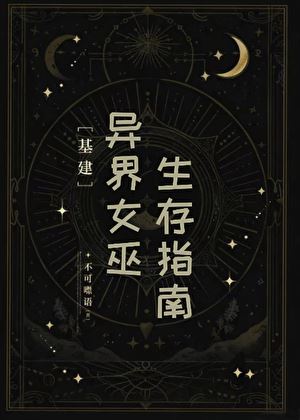
Yun Ying, a modern woman with no apparent magical abilities or special lineage, finds her mundane existence abruptly interrupted when she wishes aloud for the ability to transmigrate into another world. Her casual desire is immediately granted through a bizarre accident involving a coin and a sudden transformation of her attire into a black silk gown adorned with a sunflower sigil. She wakes in a dilapidated stone chamber within a place called Demon King’s City: Crimson Cliff. A system interface announces that she has inherited the legacy of her great-great-great-great-great-grandmother, known as the Daystar Witch. The system tasks her with rebuilding the ruined town by expanding housing, paving roads, and constructing public facilities. Yun Ying is informed that upon reaching Town Level 100, she can return to her original world, though the system’s ominous references to her role as the Ashen Witch guiding lost lambs toward the Abyss contrast sharply with its reassurances that this is merely a temporary assignment.

The new environment is hostile and desolate, characterized by endless darkness, rotting air, and hazardous ruins. Yun Ying’s initial attempt to explore yields no immediate threats but reveals the poverty of her inheritance: a crumbling house in a wasteland. The system directs her to use the Wishing Pool to improve her living conditions. With limited starting points, she draws once and receives a Northeastern-style floral quilt, which the system later awkwardly modifies into a thin summer blanket after Yun Ying’s deadpan protest. Despite the absurdity of the rewards, Yun Ying maintains a pragmatic demeanor. She manually constructs a simple wooden bed from scattered debris, demonstrating her resourcefulness. Upon completing this basic shelter, the system erroneously declares the town thriving and unlocks construction tasks, pushing Yun Ying to venture outside despite the terrifying darkness and unsettling sounds of movement in the wasteland.

While completing a task to clear abandoned bricks, Yun Ying encounters the Demon King, the town’s designated agent. He is depicted as a massive, shadowy figure with silver-gray eyes and jet-black spiral horns, initially hiding in fear due to his instability caused by contact with an Unnameable Chaotic Entity. Despite his monstrous appearance, he appears vulnerable and hungry. Yun Ying offers him food in exchange for labor, proposing that he build her a sturdy house. The Demon King accepts, using shadow tendrils to rapidly construct a solid brick residence with professional precision. His performance earns Yun Ying significant praise, which visibly flusters him, causing his shadow tendrils to turn pink. In a moment of dark humor, Yun Ying teases the Demon King about eating those who cry, further startling him into compliance. The Demon King pledges to work hard, primarily driven by a desperate desire not to be eaten, marking the beginning of an uneasy partnership. This interaction establishes the core dynamic between the pragmatic witch and the mentally fragile demon ruler, setting the stage for their collaborative effort to rebuild Crimson Cliff from the ground up.

As the narrative progresses, the focus remains on the practical challenges of town management mixed with the supernatural elements of the Demon King’s powers. Yun Ying’s goal is strictly utilitarian: survive, build, level up, and return home. However, the system’s lore hints at deeper conflicts involving the Abyss and her ancestral legacy. The Demon King, once a supreme ruler, now serves as her subordinate, his immense power channeled into menial construction tasks under the threat of consumption. This reversal of roles adds a layer of irony to their situation. The story unfolds through a series of tasks that test Yun Ying’s ability to manage resources and navigate the strange laws of this world. The relationship between the two protagonists evolves from one of necessity and fear to a tentative alliance, bound by the shared objective of restoring the town. Yun Ying’s calm acceptance of the bizarre circumstances allows her to navigate the dangers of Crimson Cliff, while the Demon King’s eagerness to please stems from his instabilities and his fear of Yun Ying’s seemingly capricious nature. The path ahead involves overcoming environmental hazards, attracting residents to populate the empty town, and uncovering the secrets of the Daystar Witch’s past, all while Yun Ying counts down the days until she can return to her normal life.

Latest Release
DateGroupRelease
2026-09-25knoxt c1

Community Reviews

Rating(0 / 5.0, 8votes)
5 stars
0(0%)
4 stars
0(0%)
3 stars
0(0%)
2 stars
0(0%)
1 stars
0(0%)

Popular reviews

... Read More
There's a lot going on beneath the surface of this chapter if you actually pay attention to the imagery. The most striking symbol is the Demon King's shadow tendrils turning pink when he's praised. Shadows in literature almost always represent the hidden self—the parts of us that lurk beneath the surface, untamed and dark. But here, the Demon King's shadows literally react to emotional validation the way a blushing person's face would. He's a fallen supreme being whose psyche has been shattered by contact with something nameless and unknowable, and the only thing that can make him feel safe enough to express warmth is a casual compliment from someone who could probably eat him. That's not just cute—that's devastating. The house he builds is also deeply symbolic. A broken mind, trying to reconstruct something stable and solid from scattered pieces. Brick by brick, seam by seam, the shadow tendrils 'repairing every corner,' aligning, smoothing, cleaning. This is literally what trauma recovery looks like, rendered in fantasy imagery. And Yun Ying's role as the 'Lady Witch of Ashes'—ashes being what remains after destruction—feels intentional. She's the one who can emerge from ruin and build something new alongside someone else who's been reduced to rubble. The irony of the Demon King begging 'don't eat me' while simultaneously asking for food is the kind of thematic layering that makes this story worth rereading.
... Read More
Let me just say — the worldbuilding in these first four chapters is *impressive*. We're talking about a setting that feels genuinely alive, not just a generic fantasy backdrop with a system slapped on top. From the very first sentence, something feels 'wrong,' and then BAM — you're in a dilapidated stone chamber where 'old wooden shelves creak, threatening to collapse' and the air is 'heavy with rot and dampness.' The author doesn't just tell us this town is abandoned; they make you SMELL it, HEAR it, feel the dread of standing in absolute darkness outside a single lit room. The flickering lights, the endless wasteland, the rubble stretching into the distance — all of this paints a picture of a place that WAS something once, and the system even confirms it: 'once a prosperous town.' But the prose does the heavy lifting. You don't need the system to tell you this place is dead. The imagery screams it. The visual contrast is what really got me though. Inside the house: warm oil lamp light, a handmade wooden bed, that absolutely unhinged northeastern floral blanket. Outside: pitch-black wasteland, insect chirps, crunching leaves, and a creature made of shadow. The author balances the cozy and the terrifying so well — it's like the house is a fragile bubble of warmth in an ocean of darkness, and that tension makes every scene feel precious. And the Wishing Pool scene! A chubby blue star falling from the sky, rolling twice, getting dusty inside and out — replacing a magical item with literal dust. That's the kind of detail that makes you laugh out loud. The system even has to 'swapping out the northeastern big quilt for a thin blanket' because apparently it's summer. The attention to comedic worldbuilding alongside the dark atmosphere is chef's kiss. The system's interface itself is also worldbuilding — the blue transparent displays, the mission prompts, the point system. It grounds the fantasy in something that feels gamified but not impersonal. Every piece of information comes with personality, like when the system plays 'Friendship Comes First' in the background while nervously turning up the volume.
... Read More
The pacing in this section is genuinely smart. It opens with the system dump—which is dense, information-heavy, and establishes the core stakes—then immediately cuts to a stomach growl. That shift from cosmic dread to animal hunger is the kind of structural beat that tells me the author knows exactly what they're doing. Don't linger on the exposition. Move to the human moment. Then the pacing slows down for the house-building sequence, which is the longest continuous scene in the chapter. It lingers on details: the tendril-by-tendril brick laying, the mortar smoothing, the dust wiping. This deliberate slowing is what makes the payoff land. When Yun Ying finally praises him, we've earned that moment because we watched the work happen. Then the author speeds right back up with the dialogue exchange—rapid fire threats and counter-threats about eating him. By the time we hit the 'Don't eat me' plea and the flustered response, the chapter has already completed one full emotional arc: tension, labor, reward, and then a new, darker tension. The structure is basically: setup → action → emotional climax → punchline → lingering unease. And the translation credits at the end? Those are obviously extraneous metadata, but their presence at the very tail of the chapter is a sharp reminder that this is serialized fiction, which changes how the pacing feels because you're always waiting for the next batch.
... Read More
Okay so let's talk about THE moment. You spend four chapters getting acclimated to this whole transmigration nonsense — Yun Ying is basically just vibing, making wooden beds, complaining about the system's absurd praise of her 'thriving' town — and then BOOM. The door bursts open and there's this MASSIVE shadow creature crouched by the bricks. My heart actually skipped. The description alone is enough: 'silver-gray eyes clouded with confusion,' horns that are 'grace and monstrosity coexisting.' And the way he shrinks from the light? That's not a Demon King. That's a scared kid wearing the worst PR team in history. Then the system casually drops 'the one playing with mud beside you is him.' MUD. The terrifying beast lurking in the ruins is playing with DIRT next to her while she's over here sweating through an oil lamp. The dissonance is hilarious AND oddly sweet. What kind of dynamic is this going to be? Yun Ying just got here, she can barely manage one house, and now she's apparently responsible for a traumatized Demon King who hides from light? Also can we appreciate Yun Ying's energy throughout? She wakes up in a witch outfit, the system threatens her with endless town management, she gets a NORTHEASTERN CHINESE FLORAL QUILT of all things, and her immediate reaction is just... fine. 'Pleasure doing business.' She doesn't scream. She doesn't panic. She literally just builds a bed and goes to work. That's the kind of main character I want to follow. Pragmatic. Unfazed. The system is clearly terrified of her because she won't even react dramatically. But that final scene with the Demon King — 'his silvery pupils were coated with a watery glaze' — that hit different. Something about the contrast between his terrifying exterior and this fragile, almost childlike vulnerability made me genuinely emotional. What happened to him? What happened to this city? I need to know NOW.
... Read More
Okay so this chapter had me doing a double take because it sets up this genuinely creepy premise—a Demon King who contacted an Unnameable Chaotic Entity and lost his mind—and then immediately pivots to 'his stomach growled and now he needs a house.' That tonal whiplash is either incredibly bold or deeply unhinged, and I am here for it. The story establishes Yun Ying as someone who is completely unfazed by cosmic horror stuff. When the system tells her she might need to save this broken Demon King, her response is basically 'sure, whatever,' and then she immediately negotiates him food like she's training a pet. And honestly? It works. The plot doesn't waste a single moment on exposition about how the Demon King became mentally unstable—we just see the results of it in real time, in his twitchy ears and the way his shadow tendrils panic when he gets scolded. The house-building scene is such a funny touch too. Here's this terrifying being who once made the Abyss sharpen its claws, and all he can do is lay bricks. It's almost tragic, but also sort of adorable. And then the praise scene—when Yun Ying tells him 'you all did very well' and his tendrils turn translucent pink and retreat shyly—this was genuinely the best moment in the whole chapter. Like, the story takes this moment of softness and then immediately undercuts it with 'I like eating the ones who cry.' The emotional whiplash is real, but it's also what makes the relationship feel unpredictable and alive.
... Read More
On the surface, the stakes are cosmic: the Demon King is broken, an Unnameable Chaotic Entity got involved, and apparently only a Lady Witch of Ashes can fix it. But the actual tension in this chapter—the stuff that made me lean forward—is far more personal and immediate. Will Yun Ying eat the Demon King or not? That's the question hovering over every line of dialogue after the house scene. The system frames it as a grand quest, but Yun Ying frames it as a negotiation. 'Are you in?' she asks, and he nods. Then she pats his shoulder like he's a dog. The stakes shift from 'save the world' to 'please don't be lunch,' which is somehow more compelling because it's so much more intimate. The Demon King's fear isn't abstract—he's terrified in a very specific, very vulnerable way. His voice grows softer with each sentence. Tears are 'trembling on the verge of falling.' And then Yun Ying delivers the most chillingly casual threat in the chapter: 'I eat the ones who don't cry too.' That's not a joke. That's a power move wrapped in a joke, and the Demon King knows it. His eyes go wide, his lip trembles, and he stops crying only because he's suddenly terrified of doing something else wrong. The external conflict—the system, the entity, the quest—is there, but the internal conflict is where the real drama lives: can this broken god trust someone who holds all the power, and can she choose to protect rather than consume?
See all reviews

Custom lists

See all custom Lists