One Month Before The Return Of The Natural Disaster, Billions Still At Stake
+Add to Custom List
Genres:
Novel Info

Summary

... Read More

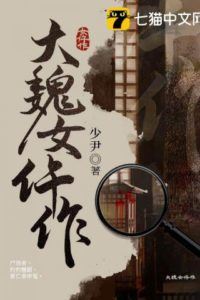
Su Yu, a brilliant researcher specializing in zombie virus cures, dies in a laboratory explosion after failing to save her zombified mother and watching her father succumb to despair during the apocalypse. She awakens reborn ten years in the past, on August 10, 2023, exactly one month before Earth’s order is destroyed by extreme heat, floods, and subsequent zombie outbreaks. With memories of the coming disaster intact, Su Yu resolves to change her family’s tragic fate. She approaches her father, Su Mu’an, a wealthy real estate tycoon, and requests ten billion yuan. Without hesitation, he transfers the funds, trusting his daughter implicitly. Su Yu immediately begins executing a comprehensive survival plan, leveraging her knowledge of future events to prepare for the inevitable collapse.

Her first move is securing a safe residence. She purchases ten fully furnished apartments on the 26th floor of Mingyue Huafu, a high-end complex located on higher terrain with low occupancy. She reinforces the units with military-grade security doors, one-way vision glass, and thermal insulation coatings, ensuring the location is defensible and comfortable during the coming climate disasters. Simultaneously, she visits her mother, Qin Qin, a dual PhD in biology and chemistry working at a research institute. Su Yu reveals the truth about the apocalypse to her parents, who, despite the initial shock, choose to believe her due to her detailed knowledge of future events. The family unites, deciding to survive together. Su Yu learns that her mother’s future infection stems from a leaked biochemical virus at her workplace, prompting the family to distance themselves from the institute’s dangerous research.

To gain a supernatural advantage, Su Yu seeks to activate her spatial ability, which she possessed in her previous life. She discovers that the rescue serum JJ001, currently in early development at her mother’s institute, is the key. Her father secretly steals the reagents, and Su Yu tests them on monkeys. The serum proves safe and effective, granting her an infinite spatial dimension that freezes stored items and can be upgraded by adding new categories of goods. One monkey mutates into a highly intelligent golden snub-nosed monkey named Su Wukong, who learns to speak and acts as a companion. Su Yu injects herself and later her parents with the serum. Her father awakens x-ray vision, while her mother gains a healing ability that can restore vitality to living things. These powers become crucial assets as the disaster approaches.

The bulk of the narrative focuses on Su Yu’s massive stockpiling efforts. Using her family’s wealth, she buys tens of thousands of tons of water, meat, vegetables, grains, and beverages. She purchases luxury cooked meals, snacks, ice cream, and milk tea to ensure dietary variety. Daily necessities, including hygiene products, skincare, clothing, and medical supplies, are bought in enormous quantities. She also acquires weapons, including firearms, ammunition, crossbows, and melee weapons, through underground channels. Construction materials, generators, solar panels, and fuel are secured to maintain power and infrastructure. Su Yu’s spatial ability upgrades multiple times, unlocking features like oxygen supply, farmland, duplication, and miniaturization, allowing her to store virtually unlimited resources.

As the extreme heatwave begins, society starts to fray. Power rationing leads to city-wide blackouts, and temperatures soar to lethal levels. People suffer from heatstroke, and panic sets in as supplies run short. Su Yu’s family, protected by their fortified apartment and abundant resources, remains comfortable and safe. They encounter hostile neighbors and thugs who attempt to rob them, but Su Yu and her father repel the attacks with ease, showcasing their combat skills and new abilities. The story follows their transition into a post-apocalyptic lifestyle, where they must rely on their preparations and powers to survive the escalating natural disasters and the eventual zombie outbreak. Su Yu’s primary goal remains clear: protect her family and endure the apocalypse with minimal suffering, using her spatial powers and strategic foresight to navigate the chaos.

Latest Release
DateGroupRelease
2026-08-11shanghai fantasy c130
2026-08-11shanghai fantasy c129
2026-08-11shanghai fantasy c128
2026-08-11shanghai fantasy c127
2026-08-11shanghai fantasy c126
2026-08-11shanghai fantasy c125
2026-08-11shanghai fantasy c124
2026-08-11shanghai fantasy c123
2026-08-11shanghai fantasy c122
2026-08-11shanghai fantasy c121
2026-08-11shanghai fantasy c120
2026-08-11shanghai fantasy c119

Community Reviews

Rating(3.8 / 5.0, 5votes)
5 stars
1(20%)
4 stars
2(40%)
3 stars
2(40%)
2 stars
0(0%)
1 stars
0(0%)

Popular reviews

... Read More
The opening detail about it being October but feeling like midsummer hit me like a truck. "Looking at the rising temperatures day by day… Her parents finally experienced what a true natural disaster felt like." This is such a quiet way to establish the apocalypse without any zombies or explosions. Just… heat. Relentless, impossible heat. The author builds this world through atmosphere rather than exposition dumps, which is honestly so much more effective. Think about the contrast the author sets up: inside the Su apartment, it's a cool 22°C with air conditioning running, Su Yu eating a mint popsicle, Su Dad reading magazines, Su Mom lounging. Outside? People collapsing from heatstroke, ambulances flooding hospitals, the entire city's power grid buckling under demand. That juxtaposition isn't just worldbuilding—it's a statement. The world is ending, but this one family is going to be just fine. The scene where Su Yu goes to take out the trash and finds the basement parking lot filled with people is such a brilliant little detail too. It shows the early stages of social breakdown without any dramatic confrontation. People are already desperate enough to invade private spaces. And the generator scene—the soundproof room, the anti-vibration stand, the noise-reducing screens—this is the kind of logistical detail that makes the world feel lived-in and real. You can actually picture this apartment complex. It's not some generic apocalypse setting; it's a specific place with specific problems and specific solutions. The author clearly put thought into how a high-end residential building would function (or fail to function) when society collapses. That's the kind of attention to detail that separates good apocalypse fiction from great apocalypse fiction.
... Read More
"Daughter, I was too cowardly in our last life. I didn't stay by your side to the end. This time… let us be responsible parents, okay?" I need a minute. That line right there. That's the kind of moment that just wrecks you in the best way. Like, Su Dad isn't just asking to get stronger—he's admitting guilt from a past life he doesn't even remember living, and he wants to make it right. And Su Mom? She's this gentle scientist type who could've just stayed home, but no—she wants to be able to protect their daughter too. The whole family unit just radiates this warmth that's honestly rare in apocalypse novels. Usually it's all drama and betrayal, but here it's just… them. Choosing each other. Even the monkey gets it. "I'll be a responsible monkey too! (Houhou!)" The little creature doesn't understand the conversation but knows the vibe. That's the kind of detail that makes you feel something. And then Su Yu's internal monologue about how good it feels to have a family united, all acting for each other—like, this is a girl who lived ten years of survival hell alone, and now she gets this? It's almost unfair how wholesome this is. The healing ability reveal for Su Mom was the second punch to the feels. Of course she gets the rarest ability. Of course. Because the family deserves every advantage. I'm just sitting here like… why are fictional families this perfect when real ones are a whole different story. But also, I'm not mad about it. This is the comfort food version of apocalypse fiction and I am here for it.
... Read More
There's something deeply symbolic about the entire water theft sequence that I can't stop thinking about. The fat man displays fifty-plus cases of water like they're trophies, and in doing so, he essentially paints a target on his own back. It's almost like a fable—hubris before the fall. He has the resource, he flaunts it, and then he loses it all because he couldn't keep his mouth shut or his truck windows tinted. Water in this story isn't just a survival resource; it's a symbol of power, and the moment you reveal you have power, you become vulnerable. The Su family's approach to the same situation is the opposite philosophy. They move quietly, they take what they need without fanfare, and they leave just enough to avoid immediate detection. It's not about having less—it's about knowing when to be invisible. And then there's the healing ability Su Mom awakens, which is honestly the ultimate symbol of what this story values. In a world tearing itself apart over resources, the rarest and most powerful ability isn't combat or destruction—it's restoration. The fact that the mother, not the protagonist, gets the healing power feels significant. It suggests that nurturing and rebuilding are just as vital as surviving. The x-ray vision is interesting too—seeing through walls, through barriers, through deception. It's a power of truth in a world where everything is becoming opaque and uncertain. And the little monkey, who just wants bananas and to be part of the family—maybe that's the simplest symbol of all. Not power, not survival, just… belonging. These thematic layers are woven so naturally into the plot that you barely notice them until you step back and realize how much depth there actually is beneath the surface.
... Read More
Okay so let me just say this—the scene where Su Yu casually steals forty cases of water right in front of those idiots is absolutely peak fiction. Like, the fat man literally yells for help to move fifty-plus cases of water, puts it all on display, and Su Yu is over there like "hold my hand" and just *takes* forty of them while walking past the van. The fact that she left ten because she didn't want them to notice immediately? That's not even mercy, that's just tactical patience. And then Huzi shows up with his crew and finds literally nothing? I nearly fell out of my chair. The surveillance camera scene was the cherry on top—those tinted windows saving Su Yu's ass because of course they did. The whole thing is so satisfyingly tight. No loose ends, no evidence, just pure poetic justice for people who were basically begging to get robbed. The author really understood that the best revenge is theft with zero consequences. But here's what's got me wondering—how long before these two actually figure out what happened? The sharp-tongued woman was already planning to report them. What happens when she realizes the footage shows nothing? Does she spiral into paranoia, or does she start connecting dots she shouldn't?
... Read More
I need to talk about the group chat messages because honestly they're a masterclass in how people actually communicate during a crisis. "Why is everyone stocking water? There's no water outage." followed immediately by "In this heat, who dares go to work? If you don't store water, what will you drink when shops close?" This is literally how panic spreads in real life—through these tiny exchanges where someone says something reasonable and someone else escalates it. The dialogue between Su Dad and Su Mom about injecting the serum is also genuinely good. It's not overly dramatic or theatrical. They're just… having a conversation. A very serious one, but still a conversation. "Xiao Yu, your dad and I plan to inject the serum," Su Mom said softly. That's it. No grand speech, no trembling voice, just a quiet statement of intent. And then Su Dad's line about being a coward in the last life—delivered with such matter-of-fact emotional weight. The author clearly understands that the most powerful dialogue isn't the loudest. Even the fat man's dialogue does its job efficiently. "Huzi, get a few guys over here to help me move stuff. Money's not an issue." Three lines and we know everything we need to about this character. He's loud, careless, and about to get absolutely destroyed. Meanwhile Su Yu barely speaks at all and she's the most dangerous person in the scene. The contrast between how much the antagonists talk and how little Su Yu says is honestly a narrative choice I deeply appreciate. The monkey's dialogue is the only thing that borders on silly, but it works because it's played straight—"I'll be a responsible monkey too! (Houhou!)"—and that sincerity is what makes it land instead of falling apart.
See all reviews

Characters

See all characters

Custom lists

See all custom Lists