Always on Call
+Add to Custom List
Novel Info
  • Author:
  • 谙桥
  • Status:Completed

Summary

... Read More
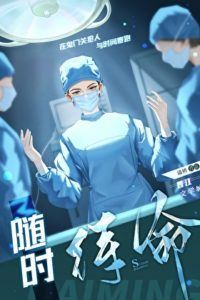
Tang Feiwang is a thirty-year-old attending physician who recently returned to Shuchuan City after completing her cardiology specialization at Heidelberg University in Germany. Despite her advanced training, she chooses to work in the high-pressure emergency department of the Second Affiliated Hospital, specifically joining the newly formed Critical Care and Severe Trauma Group led by Deputy Director Lin Ye. The narrative opens with Tang Feiwang’s first day, where she demonstrates immediate clinical competence by successfully resuscitating a middle-aged man suffering from cardiac arrest on her commute to work. Her professional arrival coincides with a deeply personal complication: Lin Ye is her former romantic partner. The two women shared a relationship for several years during their medical training before breaking up five years ago, leading to a period of separation that has lasted eight years in total. Upon entering the department, Tang Feiwang is assigned to Lin Ye’s team, creating an atmosphere of professional tension and unspoken history. Lin Ye maintains a cold, distant demeanor, treating Tang Feiwang as a mere colleague and refusing to acknowledge their past. Tang Feiwang, however, struggles to hide her lingering feelings and the shock of learning that Lin Ye has moved on. The emotional turning point occurs when Tang Feiwang overhears Lin Ye speaking affectionately to her daughter, Yangyang, on the phone. This revelation shatters Tang Feiwang’s hope that Lin Ye might still be single or that there was a chance for reconciliation. She realizes that Lin Ye has built a family, adopting a child after years of dedicated work and personal sacrifice, including a stint providing medical aid in Xinjiang. The story balances these personal emotional conflicts with the rigorous demands of emergency medicine. Tang Feiwang and Lin Ye are frequently paired on critical cases, forcing them to rely on their deep professional understanding and tacit cooperation. In one instance, they successfully diagnose a delayed splenic rupture in a patient who initially presented with chest pain, showcasing their seamless clinical synergy. In another, they collaborate on the resuscitation of an elderly professor with multi-organ failure. Although the patient ultimately passes away despite their twenty-two-minute effort, the experience highlights the emotional toll both women endure. Lin Ye’s compassion and refusal to give up, even in hopeless cases, contrast with Tang Feiwang’s more pragmatic approach, yet both are bound by their shared dedication to saving lives. As the narrative progresses, Tang Feiwang attempts to suppress her emotions and focus on her career, but encounters are unavoidable. She sees Lin Ye picking up her daughter from kindergarten, witnessing the warmth of the family life she has lost. Meanwhile, Lin Ye’s best friend, Lu Yuqing, suspects that Tang Feiwang has returned to win Lin Ye back, creating external pressure and misunderstanding. Lu Yuqing’s own romantic entanglement with a traffic officer, who turns out to be Jiang Mu, adds a layer of social complexity when Jiang Mu meets Tang Feiwang for a family dinner arranged by Tang Feiwang’s mother. The story concludes with Tang Feiwang navigating the dual challenges of her professional responsibilities in the emergency department and her unresolved emotional attachment to Lin Ye, who remains steadfastly committed to her role as a mother and doctor, leaving the future of their relationship uncertain.

Latest Release
DateGroupRelease
2026-08-11shanghai fantasy c18
2026-08-11shanghai fantasy c17
2026-08-11shanghai fantasy c16
2026-08-11shanghai fantasy c15
2026-08-11shanghai fantasy c14
2026-08-11shanghai fantasy c13
2026-08-11shanghai fantasy c12
2026-08-11shanghai fantasy c11
2026-08-11shanghai fantasy c10
2026-08-11shanghai fantasy c9
2026-08-11shanghai fantasy c8
2026-08-11shanghai fantasy c7

Community Reviews

Rating(3.6 / 5.0, 26votes)
5 stars
5(19%)
4 stars
8(31%)
3 stars
10(38%)
2 stars
3(12%)
1 stars
0(0%)

Popular reviews

... Read More
I need to talk about this one moment. Tang Feiwan is standing behind Lin Ye at work, watching her scroll through documents, and the narration just stops everything for a second: "Just like ten years ago—on a late night before final exams—when she sat in the front row of a lecture hall, afraid to disturb her. Whenever she lifted her tired eyes, she felt as if a warm hand had gently touched her weary heart." TEN YEARS. This isn't a crush. This is a devotion that has been quietly building since they were essentially strangers in a classroom. Tang Feiwan has been in love with Lin Ye for a decade, and she's only now making a move. That is simultaneously the most romantic and the most nerve-wracking thing I have ever read. And the scene where Tang Feiwan offers bubble tea? My heart literally broke a little. She's so excited, she just found out Lin Ye is single, she's basically floating, and then she asks if Lin Ye wants bubble tea and gets a flat "No, thanks, Dr. Tang." The way the narration describes it—"her previously bubbling heart doused in cold water"—I felt that. I actually felt it. But then Tang Feiwan notices the UNTOUCHED coffee cup and gives herself permission to feel better anyway. That's the thing about this character—she's resilient. She takes rejection and finds a way to keep going. And the neighbor reveal at the end, when Lin Ye bumps into her with the trash and Tang Feiwan says "we'll be not only colleagues but also neighbors from now on, please give me some guidance"—Lin Ye's response is just "Yeah, okay." Polite. Distant. But she didn't walk away immediately. She stayed for a beat. That's something, right? That's got to be something.
... Read More
The pacing in these chapters is absolutely ruthless and I love it. We go from a relatively slow diagnostic puzzle — Tang Feiwai researching cases, eating instant noodles, noticing a girl sleeping on a bench — to a full-blown emergency where Zhou Wenyun is having ventricular fibrillation and nearly dies, all within the span of a few paragraphs. The nurse literally runs in yelling and suddenly everything changes. And then, almost immediately after the rescue, we're back to dealing with the family. Zhou Wenyong wants to transfer his kids. Tang Feiwai loses her temper. The countdown bluff. It's like the author knows exactly when to pull the rug out from under you. What's clever is how the diagnostic process itself drives the pacing. Each new piece of information — the normal white blood cell count for the daughter, the elevated cardiac enzymes, the ventricular fibrillation — creates a mini cliffhanger. You're constantly waiting for the next revelation. And the mNGS test discussion adds this layer of tension around money versus survival that keeps things grounded even during the medical drama. The chapter endings are also well-timed. We get the diagnosis confirmed, treatment started, and both patients improving — but it ends on this quiet note of Tang Feiwai organizing records, preparing for the next crisis. No big cliffhanger, just the sense that the hospital never stops. Which, honestly, is more realistic and kind of more haunting.
... Read More
The bird imagery in this section is so layered and I can't stop thinking about it. Zhou Wenyun's entire portfolio is filled with bird sketches. She was drawing at the hospital, half-asleep on a bench, clutching this portfolio like a security blanket. And those drawings — they're what crack the case wide open. Tang Feiwai bumps into them, they scatter on the floor, and suddenly all these bird images are everywhere. It's almost cinematic. Then we learn their mother took her to the flower and bird market to sketch half a month ago. And the mother, when asked on day one whether she kept birds or had contact with them, said no. Completely forgot. The illness is hiding in plain sight, connected to something beautiful that she didn't even recognize as dangerous. There's also that ridiculous but brilliant detail from the respiratory doctor about the patient who "liked the smell of duck feathers" and "liked to watch people kill ducks." It's grotesque and funny and somehow both characters — the obsessive sketcher and the feather-obsessed patient — are connected by this weird relationship with birds that borders on the uncanny. The title "ornithosis" itself means bird-related disease. So the whole story is built on this idea: something that seems harmless, something you might even find beautiful, becomes the vector for something deadly. The sketches represent creativity and care — Zhou Wenyun drawing while her mother suffers — but they also represent the invisible thread that connects them to the disease. Everything is connected in ways we don't see until it's almost too late.
... Read More
The dialogue in this section is incredible because of what it DOESN'T say. Let me give you the best example. When Tang Feiwan moves into the new apartment and runs into Lin Ye with the trash, here's the entire exchange: "You?" "Director Lin, we'll be not only colleagues but also neighbors from now on, please give me some guidance." "Yeah, okay." That's it. Two lines from Lin Ye across the whole encounter. And yet, the narration tells us Tang Feiwan saw "ripples in Lin Ye's eyes." Lin Ye's "Yeah, okay" is described as "even, polite enough, but also distant enough." The author is using silence and minimalism as a storytelling tool, and it works perfectly. Compare that to Tang Feiwan's dialogue—she's chatty, she over-explains, she sends long WeChat messages to her dad trying to justify her move. Her dad's voice is also distinct: he nags, he teases, he says things like "When are you going to be so decisive about finding a partner? Your mom and I will go to the temple to burn incense." That's such a specific, lived-in parental voice. You can hear him. And Chief Gao! "You young people always use the same excuse. Xiao Lin said the same thing five years ago—'seeing someone'—yet five years later, she's still single. Now she's 34." This is comedy gold. The man has been trying to set people up for YEARS and has a whole file on Lin Ye's romantic history. His voice is warm, slightly meddling, and completely unaware that he's just handed Tang Feiwan the most important information of her life. The narrative voice itself is also worth noting—it's intimate, almost confessional, like Tang Feiwan is thinking out loud. The author lets us into her head in a way that feels natural, not forced.
... Read More
I need to talk about the emotional whiplash of these chapters because honestly it left me shaken. Zhou Wenyun goes from sleeping on a bench, exhausted but alive, to having ventricular fibrillation and nearly dying — all within minutes of each other. Tang Feiwai's reaction is what got me. After the code is resolved and she steps outside the ward, takes off her mask, and takes a deep breath... that moment of silence after chaos is so powerful. And then Lin Ye hands her a bottle of water. Just water. No words of comfort, no "you did great." Tang Feiwai takes it, says "thank you" softly, and her mind is still entirely on the patient inside. That restraint — that inability to process her own emotions because there's always another patient, another crisis — it's heartbreaking. The sister-brother relationship between Zhou Wenyun and Zhou Wenyong also tugs at something. He's terrible, absolutely, but he paid 20,000 yuan for her drawing classes. He's arguing about ICU costs while simultaneously investing in his daughter's dreams. It's complicated love, the kind that doesn't know how to express itself except through money and anger. And Tang Feiwai's own history — Lin Ye recognizing her younger self, the memory of Lin Ye telling her to eat — there's this quiet thread of care running between these two women that doesn't need to be stated outright. It's in the water bottle. It's in following behind her when she rushes out. It's in knowing exactly when to speak and when to stay silent.
... Read More
I keep coming back to the atmosphere of this hospital and how vividly it's rendered. The EICU waiting area with Zhou Wenyun curled up on a bench, drowsy, clutching her drawing portfolio — that image is so specific and haunting. The cleaning lady patting her shoulder, telling her she can't sleep there. The girl opening her eyes, red-rimmed and glazed, saying just "Okay" and then closing her eyes again. You can feel the exhaustion in that scene. It's not dramatic; it's quiet and devastating. The consultation room is another great detail — a designated space in the emergency department specifically for private conversations with families. It's these small institutional details that make the world feel lived-in. And Tang Feiwai's office, with the snack cabinet and instant noodles — it humanizes the clinical environment. She's a doctor who stays up until 2 PM not eating, surviving on convenience food, still remembering Lin Ye telling her years ago that "food is fuel." These small moments of routine make the hospital feel like a real place where real people spend their lives. The isolation ward, the conference room where the multidisciplinary consultation happens, the observation room where they check Zhou Wenyun's temperature — each space has its own texture and function. The author doesn't over-describe; they just place you in the room and let the details accumulate.
See all reviews

Characters

See all characters

Custom lists

See all custom Lists