Omega Allergy - Reviews

Omega Allergy
+Add to Custom List
Sort
Add review
... Read More
I need to sit with this for a minute because the dynamic between Fang Shiyan and Gu Shaoqing is... something else. Here are two people who are polar opposites on paper—Fang Shiyan is all instinct and impulse, Gu Shaoqing is cold analysis and tactical precision—and yet they BOTH experience the exact same "sense of unease without warning" at the exact same time. That is NOT a coincidence. That is two people who understand each other on a frequency that has nothing to do with words. Fang Shiyan cuts the communicator because he knows, with absolute certainty, that Gu Shaoqing would follow him into a death trap if given the chance. And he's right. Gu Shaoqing is described as someone who "rarely trusts the so-called intuition"—and yet here he is, unable to let reason prevail because his gut is SCREAMING. The fact that Fang Shiyan understands this about him better than Gu Shaoqing understands it himself? That's devotion wrapped in frustration. And then there's Fang Shiyan's internal monologue about Gu Shaoqing—his silver hair, the mole under his lip, the mocking smile, the way he deliberately held back his grades so he wouldn't overshadow Fang Shiyan. These details aren't just description. They're someone who has been watching the other person their entire life, memorizing every small thing, carrying every image of them being hurt ("pierced by insects" appearing in his dreams). The line 'Gu Shaoqing is the one who should live the most' hit me like a truck. This isn't a partnership. This is a vow.
... Read More
"Bah! Abandoning comrades-in-arms, who are inferior to pigs and dogs, is not qualified for you to excuse them, okay?" That line. I laughed out loud. Fang Shiyan immediately shut down Chu Yu's attempt to be understanding toward the cowards, and it's SO him—no patience for软弱, no nuance when it comes to loyalty. He's the kind of friend who will carry you out of a burning building while simultaneously roasting your life choices. And Gu Shaoqing! The fact that he followed Fang Shiyan specifically because Fang Shiyan predicted Chu Yu would get bullied if he went solo—that's the kind of quiet, observant friendship that doesn't get enough credit in fiction. He didn't announce himself, he didn't need recognition. He just... made sure nobody hurt his friends. Then he sprays disinfectant on Fang Shiyan's wound like it's no big deal while Fang Shiyan is screaming about dying. The contrast between Gu Shaoqing's cold delivery and his gentle hands applying healing powder? Chef's kiss. And the author's little interjection—"Shen Jingheng: Reporting, the supporting male role has robbed my hero-saving-the-beauty script"—is pure comedy gold. The meta-humor acknowledges the trope and then deliberately subverts it. Fang Shiyan is the hero here, not some stoic top-tier character. Also can we talk about how Chu Yu's scar became this whole internal monologue about weakness and shame? It's not just a physical wound, it's a psychological marker. He's using it as fuel. That's character growth, not just plot progression.
... Read More
The visual contrast in this chapter is absolutely cinematic and I need to talk about it. First you've got this claustrophobic, wounded trio in a living pod — confined, hurt, vulnerable. Then Gu Shaoqing steps outside and the world EXPLODES into this sea of human-sized insects covered in green slime, acid spraying everywhere, the noise described as 'tens of thousands of locusts crawling.' The author keeps calling it a 'sea' and 'vast' which makes Gu Shaoqing look microscopic against it. His rational mind can't even process it — he keeps reminding himself THIS IS JUST TRAINING like that makes it less horrifying somehow. Then Shen Jingheng appears and the imagery completely flips. White mecha, jet wings, lightsabers with luminous particles — he looks like he fell out of a fantasy painting. The text literally says 'An immortal descending from heavens!' and the insects melt into 'a pool of green water' that evaporates. The cold mechanical beauty of Shen Jingheng's armor against the organic horror of the swarm is such a stark visual opposition. And then there's the smell detail — Chu Yu feels a 'solid embrace' and smells 'faint scent of camellias amid the stench of insect corpses.' That specific sensory detail made me physically feel something. The worldbuilding here isn't exposition-dumping; it's immersive through texture, smell, sound, and scale.
... Read More
There's something really striking about how the author uses physical space and military aesthetics to communicate power dynamics without ever having to explain the hierarchy outright. The Academic Affairs Office is this bureaucratic, rules-obsessed space where the director treats compliance like a moral virtue. You can practically feel the fluorescent lighting and the ticking clock and the smell of stamped paperwork. It's deliberately banal, deliberately stifling — the kind of place that exists to make people feel small. Then Shen Jingheng walks in wearing his uniform and the entire room shifts. The director's mouth twitches. He switches from rigid enforcer to sycophantic smile almost instantly. The author doesn't even describe the uniform in detail — we just know it's authoritative, it commands respect, it makes grown administrators fold. That economy of description is impressive. The clothes do the work. And then there's the contrast with later scenes — Chu Yu going back to class, sitting down, his friends poking his back like nothing happened. The ordinariness of that moment against the enormity of what just transpired creates this weird emotional whiplash that mirrors what Chu Yu himself is feeling. One minute you're being rescued by an interstellar admiral, the next you're sitting in a lecture hall worrying about monthly score thresholds. The world-building here is doing so much quiet work. We learn about the aviation piloting department, the spectating system, the 85-point requirement, the recruit review — all woven into dialogue and action rather than exposition dumps. This feels like a universe that exists beyond these pages.
... Read More
Beneath the surface of this romantic comedy setup lies a rich tapestry of thematic exploration, primarily focused on the nature of perfection and the illusion of control. The central symbol is, of course, the 100% match. In a society that quantifies human worth through genetic compatibility and military prowess, this number represents the ultimate goal—a flawlessness that is mathematically impossible. Yet, it is paired with the ultimate 'flaw': Chu Yu, the lazy, messy, crybaby son of a Marshal. This juxtaposition challenges the theme directly. Is perfection about external metrics, or is it about balance? Shen Jingheng is physically perfect, orderly, and powerful, but he is 'allergic' to the very thing he is matched with. His allergy is a brilliant metaphor. It represents his rejection of chaos, emotion, and the 'softness' that Chu Yu embodies. He cannot tolerate what he does not understand. Chu Yu, described as a 'pile of oddly shaped jelly,' symbolizes fluidity and adaptability. Jelly cannot be forced into a rigid shape; it takes the form of its container. Shen is 'forged iron.' Iron is strong, but it is brittle. It can shatter. The narrative seems to suggest that Shen needs Chu Yu to become whole, just as Chu Yu might need Shen's structure to find direction. There's also the theme of legacy versus individuality. Chu Yu is burdened by his father's reputation as the 'Marshal.' He is expected to be a warrior but has chosen (or been pushed) to be something else. His sleeping in class is an act of rebellion, a refusal to play the role written for him. The society in this galaxy is obsessed with hierarchy and expected outcomes. The public's reaction to the news—'such a result was unexpected,' 'even the Betas and Alphas... started howling'—shows how deeply ingrained these expectations are. But the story is setting up a disruption of this order. The 'bug' in the system is actually a feature. It's humanity breaking through the data. The recurring imagery of screens and tests versus the natural imagery of sunlight and sleep highlights the conflict between a manufactured, controlled existence and the organic, messy reality of being alive. Shen lives by the screen; Chu Yu lives in the sun. The theme is clear: true matching isn't about two perfect iron blocks clashing, but about iron learning to bend, and jelly learning to hold its shape.
... Read More
"—He said with a smile, we will win." I'm still not over this. I read it three times. Three times. And each time it hit me harder. Because think about what happens right before that. Marshal Chu is being torn apart from the inside out. His ribs crack open, wings sprout, his legs turn into worm bellies, his eyes bulge out of his sockets—and through all of that grotesque transformation, he still manages to smile and tell Shen Jingheng they'll win. That is absolutely not okay. That man did not deserve that ending, and honestly, neither does Shen Jingheng have to carry this. What wrecked me most was the contrast between his final moments. First he's making these deeply personal, almost teasing comments — "You won't be able to find an Omega wife like this" and "I really want to see you get married" — and then right before he detonates himself, he says the thing that changes everything. We will win. Not as a battle cry. Not as a speech. Just a quiet, smiling promise from a dying man who'd rather disintegrate than let the Zerg get anything from him. And Shen Jingheng. God, Shen Jingheng just stands there and watches. He wants to close his eyes but forces himself to keep looking. "That man won't just die in vain, he will definitely leave some message." But there's nothing. There's just... nothing. The plasma bomb swallows everything. No ashes. No body. Just white light and then absence. I'm actually upset right now. This author wrote a character death that felt earned and meaningful and then made it absolutely horrific, and I can't look away from it.
... Read More
Okay can we just talk about how Fang Shiyan deliberately severed communication with Gu Shaoqing for literally TWENTY SECONDS of head start? That is not a normal person. That is not a sensible plan. That is a person who looked at the logical outcome—Gu Shaoqing would follow, they'd both walk into a trap, and someone might not come out—and decided to amputate his own support system instead. And honestly? It worked. The plot is setting up this beautiful irony where the impulsive one makes the most calculating sacrifice and the rational one gets left behind by emotion. The structure here is also doing something really clever. You've got the initial mystery (strange signals), the investigation (Fang Shiyan racing toward it), the emotional barrier (the communicator cutoff), and then the payoff—a planet-wide massacre that recontextualizes everything. The Zerg aren't just opponents; they're an extinction-level threat that erased a civilization. When Fang Shiyan realizes the colloids are the locals and that Protoss could end up as corpses scattered across the ground, the stakes just climbed from "battle" to "genocide." And that transition? Brutal. I also love that the narrative doesn't explain everything. The colloids speak in broken fragments, we don't fully understand what happened to their world, and that ambiguity makes it worse. The author trusts us to fill in the blanks.
... Read More
'You oh such a convincing oh, Chu Yu is married, and you pretend to be so calm that I was almost convinced.' GU SHAOQING'S OH IS THE MOST LOUD THING IN THIS CONVERSATION AND I'M NOT OKAY. The dialogue writing here is just *chef's kiss* on every level. Fang Shiyan has this immediate, explosive voice—he punches first and talks afterward (or doesn't talk at all, just 'Shut up. People shouldn't be talking about private matters easily. Are you worthy?'). That line though. That is the kind of dialogue that makes you snort-laugh out loud. Gu Shaoqing's voice is the perfect counterweight—calm, measured, slightly sarcastic. 'Simple-minded with four limbs' is such aGu Shaoqing thing to say. And the way he handles the confrontation with Xue Hao: 'They're just having a friendly discussion, it's time to stop, don't take it to heart' while literally having just grabbed the guy's arm mid-swing. That dissonance between what he says and what he does is hilarious. Chu Yu's voice is his most distinct one here. The stammering, the dramatic declarations to the Academic Affairs director—'the spirit of the admiral infected me!'—it's so unhinged and so perfectly Chu Yu. And the director's internal response: 'I believe you are a ghost.' The narrative voice occasionally slipping into direct comedy like that is a delightful surprise. The author knows exactly what they're doing with tone, bouncing between genuine emotional beats and full-on comedic relief without losing either.
... Read More
I need to address the starnet sequence because this is where the novel's worldbuilding stops being background decoration and becomes an active participant in the story. The idea that the entire galaxy's social media is tied to real-name accounts, and that when the fleet's supreme commander posts a question about his spouse's footwear preferences, it immediately goes viral and becomes the most talked-about thing across the entire star system — this is such a smart way to ground a sci-fi setting in something universally relatable. We've all seen the equivalent of this. Reddit threads. Twitter hot takes. The collective internet losing its mind over mundane celebrity drama. But what elevates this beyond simple modern-parallels worldbuilding is how the novel uses it to show scale. 'Netizens who were surfing the Internet across the galaxy knew that Shen Jingheng had posted a help post.' This isn't just one planet's social media. This is a civilization-spanning network where the admiral's personal life is public knowledge the moment he types his question. The intimacy of his private marital struggles colliding with the vastness of interstellar communication creates this fascinating tension. The comment section itself is brilliantly written — the casual 'hahahaha' spam, the sideways commentary from users who clearly knowchu Yu from elsewhere in the story, the way Major General Pei accidentally becomes a meme while trying to be serious. Each comment feels like it was written by a different person with different relationships to the characters. And then the visual of Pei staring at his light screen, face growing darker with each passing 'hahahaha,' while his subordinate sweats beside him — this is cinema-level scene crafting. The author knows exactly when to zoom in and when to pull back to show the galaxy reacting as one organism.
... Read More
Let's be real—this training scene is a masterclass in escalating stakes. You start with physical exhaustion, bodies crawling through obstacles, people dropping like flies. Then Shen Jingheng picks up a marker gun and turns it on them. Suddenly it's not just about endurance, it's about perception, awareness, survival. And then he eliminates MORE THAN HALF the class in one sweep. Every single person with a chest mark is out. The tension is suffocating because you're watching people try to survive something designed to make them fail. But then Chu Yu appears—one of the last five standing, completely untouched. Not a single bullet mark. And the reveal? He can go invisible. The stakes just went from “can these cadets survive training” to “the entire SCY-II galaxy might be about to shift.” Shen Jingheng's internal monologue spells it out: “This shows that there are people who can use special abilities among the Protoss, and maybe they have a bargaining chip against the Zerg.” A bargaining chip that's been hiding in plain sight as a crying Omega who's supposedly unfit for service. The irony is almost comedic. The stakes are now enormous, and the story hasn't even gotten to the political fallout yet.
... Read More
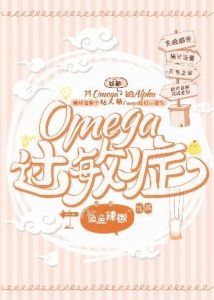
Oh, the character dynamics here are already sparking like static electricity. Let's look at Shen Jingheng first. He is the epitome of controlled, cold perfection. The text describes him as 'expressionless,' 'serious,' and obsessed with order. His adjutant notes that 'every second of Shen Jingheng's life has been planned and arranged by himself in an orderly manner.' This is a man who cannot tolerate anything beyond his control. He's also 'allergic to Omegas,' which in this sci-fi context probably means he finds their presence physically or psychologically repulsive. So, matching with a 100% Omega isn't just a romantic hiccup; it's a personal violation of his entire existence. He reacts not with joy, but with a frown and a command to investigate. He's suspicious. He's offended by the idea that he could be matched with someone imperfect. Then we cut to Chu Yu. Immediately, we get a character sketch that is the absolute antithesis of Shen. He's sleeping in class. He's lazy. He's described as a 'crybaby' who can't take criticism. The physical description is vital: 'silver hair with self-made wool curls,' 'amber pupils gleaming in the sun,' 'beautiful and delicate face.' He's aesthetic, soft, and seemingly frivolous. His relationship with his father, the Marshal, is told through gossip—his father is worried, headache-inducing, and unable to educate him. This makes Chu Yu a tragic figure in his own right; he's the disappointment of a warrior lineage. But look at how he handles conflict. When the instructor screams at him, Chu Yu doesn't crumble immediately. He grins. He says, 'What's wrong, you seem to be a little angry.' There's a resilience there, a sunny disposition that shields him from the harsh world Shen inhabits. Their dynamic is going to be a masterclass in opposites. Shen will try to analyze, order, and control Chu Yu. Chu Yu will likely just sleep through it, confuse Shen with his lack of ambition, and slowly melt that icy exterior with sheer warmth. The adjutant's internal monologue gives us the best summary of their clash: 'Your tofu block is stacked like forged iron, and his is a pile of oddly shaped jelly.' It's not just about personality; it's about fundamental structure. Shen is rigid; Chu Yu is fluid. Can they fit together? The 100% match suggests yes, but the character work suggests it will be painful. Shen needs to learn that perfection isn't control. Chu Yu needs to learn that he's more than a disappointment. I'm already invested in Shen's frustration. Imagine trying to discipline a guy who just yawns at you because you're too loud. That's going to be the core of their relationship journey.
... Read More
Okay so here's the thing that actually caught me off guard — this whole chapter is structured like a mini character arc disguised as a training montage. On the surface it's just Chu Yu and Shen Jingheng trying out a battleship simulator, right? Wrong. The author is doing something really clever with plot mechanics here. Chu Yu enters this pod expecting a lighthearted bonding moment, but by the time they hit the first combat sequence, the whole dynamic shifts. He goes from teasing banter to genuine shock when he realizes the Admiral's reflexes aren't just game-trained — they're battle-hardened. That's when Chu Yu drops the line about being afraid of death, about having no sense of responsibility, and I genuinely felt the story pull back the curtain on something real. The twist nobody talks about? Shen Jingheng isn't just showing off skills. He's testing whether Chu Yu might actually belong in his world. When he offers Chu Yu a spot, it's not casual — it's a genuine invitation into his life, his war, his purpose. And Chu Yu's refusal isn't weakness, it's one of the most honest moments in the entire book. The author also nails the emotional reversal at the end — after Chu Yu's vulnerable confession, both of them just... go quiet. Not angry. Just suddenly aware of how much they don't know about each other yet. The chapter ends on that charged silence, which sets up whatever comes next perfectly. One question though — does Chu Yu eventually have to face what he's running from, or is his fear of war a permanent character trait? Either way, this scene changed everything for them.

Leave a comment

You must be logged in to leave comments. or
