Omega Allergy - Reviews

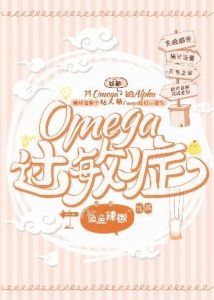
Omega Allergy
+Add to Custom List
Sort
Add review
... Read More
"The firm embrace and the faint scent of camellia instantly gave Chu Yu an infinite and satisfying sense of peace of mind." I've never related to a pheromone description this hard. The camellia isn't just flavor text—it's Chu Yu's emotional anchor point. Throughout the entire novel, every time Shen Jingheng is near, the scent appears. It's become a physiological Pavlovian response that signals safety. Chu Yu, who has spent his life being used as a weapon, who has been thrown between handlers and missions, literally closes his eyes and melts into someone else's chest because the smell tells his body it's okay to stop being armed. Then the kiss happens and it's shy. SHY. Chu Yu, who initiated it, who has been sexually forward since chapter one, describes his own kiss as "shy but sweet." That word choice matters. He's not experienced in tenderness. He knows desire, he knows strategy, but this soft version of intimacy? This is new territory for both of them. And Shen Jingheng—his internal monologue about artists pursuing perfection while looking at Chu Yu's face. Not attraction. Not lust. Art. He sees beauty so intense it triggers something philosophical rather than purely physical. That's the moment I knew this wasn't just a slow burn romance; it's two people who have completely rewired each other's understanding of what connection means.
... Read More
Every character在这里 has a distinct verbal fingerprint. Shen Jingheng speaks in short, definitive statements. 'I'll go first.' 'They are not war machines.' He doesn't waste words on ornamentation or hedging. His dialogue is the language of someone accustomed to being obeyed. The chief instructor, meanwhile, is all formal rhetoric and loaded questions. 'Life is at stake, so what if I make a mistake by disregarding you?' That's not a question seeking answer; it's a rhetorical trap. He's forcing Shen into a corner where any response admits either negligence or exceptionalism. Fang Shiyan's voice is raw and unfiltered. 'No way, I saved your wife first anyway! I am also wounded! Are you so ruthless?!' This isn't diplomatic. This is a friend yelling at another friend while bleeding out. The narrative voice itself is interesting—it slips between omniscient observation and tight third-person intimacy. When it describes Shen touching Chu Yu's face, we're inside his head: 'feeling like a needle had been pricked in his heart, and it hurt.' But when the instructor and Shen debate, the narration pulls back, letting their dialogue carry the weight. The author trusts the words to speak for themselves. Even the subtext is voiced—literally. The deputy instructor's 'strange smile' and refusal to answer says more than any monologue could. It's the silence between lines that carries the heaviest load.
... Read More
Okay can we just talk about the WHOLE energy in these chapters because my heart is NOT okay. Chu Yu waiting in the lounge for a FULL DAY. Not because he was forced to, but because he couldn't stop thinking about WHY the admiral is allergic to Omegas. His curiosity isn't just idle—it's desperate. He needs to understand the person he's about to marry and every door gets slammed in his face. And then Shen Jingheng finally emerges from that sleeping pod and what does Chu Yu do? He immediately bolts toward him. No hesitation, no pretense, just pure gravitational pull. "Admiral—!" And Shen Jingheng pushes him away saying his allergies haven't healed yet. But then—the desensitization therapy conversation. This is where I absolutely lost it. Shen Jingheng explaining it all clinically like "from light exposure to allergens to in-depth exposure to allergens" and Chu Yu's face turning red while he's just sitting there trying to process that his future husband is literally being prepped for physical intimacy with HIM. And then Shen Jingheng just GRABS his hand and drags him onto a light platform to escape the hospital smell while simultaneously lecturing him about not saying "negative distance contact" in front of other people. The man is simultaneously pulling away and holding on so tight his knuckles are probably white. "We are not married yet, we will talk about it after marriage." CHU YU DID NOT GET TO FINISH HIS SENTENCE. The author just... left us there. With a half-spoken threat about post-marriage rules. I am shrieking.
... Read More
"Wait for me to come back." That's it. That's all he says. But you know what, that line broke me more than anything dramatic could have. Because throughout this whole scene—when Chu Yu is on the ground vomiting blood, when Shen Jingheng's hidden psychic power nearly失控s, when they're both recovering from that psychic collision—the way Shen Jingheng immediately dodges over to Chu Yu, holds him, blames himself... it shows everything. He's this stoic, controlled military figure who never loses his temper, and yet here he is, dropping all the composure the second Chu Yu gets hurt. And then the sweet little moment where Chu Yu borrows Professor Song and Shen Jingheng immediately goes "he's not mine, you are"—Fang Shiyan literally saying she's going to vomit from the dog food! Meanwhile, Gu Shaoqing is over there dragging FSY away like "I'll tell him to take his medicine later" because apparently SHY forgets to take his meds and we're just accepting this as normal now. The dynamics in this team are insane. Every character has such a distinct role. And Shen Jingheng punching through that wall at the research institute, knuckles white, arms shaking—not from weakness but from barely contained fury—shows us a side of him we rarely see. The man who swears. Who slams walls. Who can't even hide his pain anymore. For someone who's always been the controlled one, watching him unravel over Chu Yu's father is devastating.
... Read More
"It is like a requiem singing softly into the depths of the soul." Stop. Just stop. I came here for sci-fi romance and I am getting LITERARY PROSE about a beach and I am NOT mad about it. The description of Shisha Beach is almost unfairly beautiful. Pink star sand, light purple transitional zones where sea meets shore, lazy shells shimmering everywhere, the kind of blue that makes you feel insignificant in the best way. And then the author gives you the name of the place — Sea of Time — and you're already wondering what that means thematically before you even get the explanation. "The Protoss had only three opportunities to get close to the sea in their lives, and he could finally see it." — this ONE LINE does so much heavy lifting. The world-building here is absolutely invisible until it hits you: this is a species that has never really seen the ocean, and now Chu Yu is standing there with his mouth open like a child. That constraint alone tells you everything about Protoss society without a single info-dump paragraph. And the whole light platform carrying them through a transparent glass channel in the sky? That's the kind of image that just sticks with you. You can SEE it. It's futuristic but not cold — there's warmth in the pink sand and the breeze and the moisture in the air. This author knows how to make technology feel like part of a landscape rather than just shiny objects. I'm still thinking about that light purple transition zone between sea and sand. It looks like a watercolor painting. I need to go lie on a beach somewhere right now.
... Read More
'He held the crystal shell tightly in the palm of his hand, and there was no rainbow where the sun did not shine.' This line just... I keep coming back to it. It's the most vulnerable moment in the entire chapter and I think that's the point. Shen Jingheng is this untouchable admiral, right? The guy who stares down giant space beetles without flinching. But here he is, asleep, holding onto this stupid pink crystal, and Chu Yu can't even bring himself to touch him because of the allergy thing. That paused hand—stretched out halfway then frozen in mid-air—honestly hit me harder than any confession scene ever has. Because it's not about grand gestures, it's about wanting to reach out and being unable to. Then when he DOES finally wake up and catches Chu Yu in that bathrobe with wet hair and bare chest... the flustered 'please put on some clothes' response? Chef's kiss. The author absolutely LOVES torturing these two. And don't even get me started on the nosebleed scene—that is peak rom-com chaos but somehow it works because it's so genuinely embarrassing and human. These two are built different.
... Read More
I have to mention how interesting the worldbuilding is here. The idea that marriage is the first opportunity for Protoss to see the sea—this is woven into their culture so naturally, it's not some exposition dump, it just exists as part of their identity. And Chu Yu's excitement about it feels genuine. He's read about it in literary works, he's imagined it, and now he actually gets to experience it. That sense of anticipation and wonder is palpable. Then you have the contrast of their living situation—pre-marriage period, sharing one bedroom, one bed. The detail about Shen Jingheng sitting on the edge of the bed with his back straight, turned away, still processing work while Chu Yu is just lying there wanting attention, is such a vivid image. You can picture it like a film scene. The lighting, the tension, the quiet domesticity mixed with military discipline. And the allergy scene itself—Shen Jingheng removing those anti-allergic transparent gloves, the visible physical symptoms playing out in real time, the mask coming out of his pocket like it's always there ready. These details make the world feel lived-in. This isn't just a romance happening in a void. There's technology (gloves, masks), there's biology (pheromones, allergies), there's military structure (barracks life, the Zerg threat), and there's cultural tradition all colliding in this one bedroom. The author also dropped this little note about the Zerg knowing his weakness, and it adds this undercurrent of danger to what otherwise seems like a fluffy pre-wedding scene. His weakness isn't just emotional—it's tactical. And he refuses to let the enemy exploit it. That's a whole layer of worldbuilding happening in one sentence.
... Read More
"Three times. Chu Yu, you have abandoned me three times." I need to sit down. That line from Shen Jingheng just destroyed me. Three times. THREE TIMES. And Chu Yu's internal response—"Not like this. Never had and never will." But he can't even say it out loud because the fact is right in front of him: he's dead, he's a spirit, and he chose this. He chose the insect star over living with Shen Jingheng. He gave up their future and Shen Jingheng interprets it as abandonment every single time. The external stakes are escalating alongside the emotional ones, which is what makes this chapter hit so hard. The cerebral worms from other planets are coming to investigate Meikelifu's death, and this new threat is described as incomparably stronger—Chu Yu's spiritual body is "as fragile as a blank sheet of paper" in front of it. His consciousness gets torn apart. He loses half of himself. And yet, his first thought isn't self-preservation, it's "there must be a way back to him." Then there's the research director's plan—create ghost warriors like Chu Yu to fight the cerebral worms. Chu Yu shuts it down immediately because he knows it would require sacrificing pureblood Alphas as experimental cannon fodder. He won't do it. Not because it's ineffective, but because it's inhumane. This is the same man who became a spirit and devoted himself entirely to scientific research, and still his bottom line holds: no one else is going to die for his goals. The stakes keep rising and Chu Yu keeps making the harder choice instead of the easier one. That's what makes me care so deeply about whether he actually finds a way back.
... Read More
There's this one image that keeps coming back to me: Chu Yu standing on the rostrum as the first Omega admiral, "staring indifferently ahead, as if he was looking at somewhere, and he seemed to be looking at the galaxy beyond the sky." The galaxy. Not the battlefield. Not the victory podium. The GALAXY BEYOND THE SKY. This is someone who literally invented a new branch of the military, who proved that Omegas aren't just decoration but strategic assets, and whose eyes are already fixed on something far beyond what anyone around him can see. The author keeps repeating this motif of Chu Yu looking at distance — at planets, at horizons, at futures — and I think it's saying something profound about people who are forced to be visionaries. You can't just look at what's in front of you when you're the first person to ever do something. Your eyes HAVE to go further, because there's no one behind you to look at for guidance. Then there's the chicken drumstick. Which sounds ridiculous but hear me out — the drumstick represents everything Chu Yu denied himself. The neat, impersonal dorm room that looks like a prison. The nutrient solution he gives Shen Jingheng instead of real food. And then this kid shows up with actual CHICKEN, greasy and warm and alive, andChu Yu can't pretend anymore. That dorm room, described as cold as a prison, is the physical manifestation of a life built entirely on duty and suppression. The drumstick is chaos and warmth and childhood — things Chu Yu had to give up to become an admiral, but things he apparently still needs. And the necklace with the hidden poison needle — how perfect is that as a symbol? Something beautiful and intimate, worn close to the skin, concealing death. That's basically Chu Yu's entire existence compressed into one object.
... Read More
I need to talk about this moment where Chu Yu's heart jumped twice. TWICE. When Shen Jingheng handed him that crystal shell and asked about the story. That's not nothing, that's a whole emotional event. The whole beach scene is built on this contrast between what Chu Yu wants and what he gets. He wants romance, he wants someone who can sit with him and feel the mystery of the sea. Instead he gets a guy who sees pink sand and thinks about cobalt content. It's frustrating, it's adorable, it's exactly the kind of mismatch that makes tension so delicious. But then—the shift. When Chu Yu starts telling the darker legend, the one about the greedy Protoss and the mermaid who gets sealed in crystal. He finishes and smiles, 'How about it? It's not romantic.' That's Chu Yu testing, pushing, seeing if Shen Jingheng gets it. And Shen Jingheng's response about the shell not being 'appropriate' because it's about deception? That's him showing he understands enough to recognize warning signs. The storm comes and suddenly all that emotional buildup becomes physical. Chu Yu covering his ears, head exploding from noise, and Shen Jingheng—not hesitating, not analyzing—just grabs him and holds him. 'I'll take you out of here and hold me tight.' That's the most romantic thing he's said all chapter, and he probably thinks he's being practical. And the author's note at the end—'The beginning of a good relationship is from physical contact' with a dog head emoji? The author knows exactly what they're doing. These two are going to figure this out, one awkward moment at a time.
... Read More
What strikes me most about this chapter is how Shen Jingheng expresses everything through action rather than words, and Chu Yu keeps misreading (or deliberately misreading) those actions as something more. 'I will protect you'—is that romantic or professional? Shen Jingheng frames it as duty, as a husband's responsibility. But the way he says it, the way his hand closes around Chu Yu and pulls him in without hesitation, the genuine worry in his eyes when Chu Yu passes out later—all of it screams something deeper than obligation. He's never been close to anyone. He doesn't know how to process what he's feeling, so he translates it into protector language. It's the only vocabulary he has. Chu Yu, meanwhile, is actively courting confusion. He asks pointed questions about pheromones, demands physical closeness under the guise of waist pain, projects entire fictional romances onto every gesture. He's not being naive—he's being strategic. Or maybe he's just as lost as Shen Jingheng and uses humor as armor. The relationship dynamic here is fascinating because neither person is lying, but both are avoiding the truth. Shen Jingheng says 'I won't lie to you' and means it, which makes it all the more tragic that he hasn't figured out what the truth actually is yet.
... Read More
The dialogue in this batch is genuinely impressive because every character has such a distinct voice and I can tell who's speaking without reading the tags. Fang Shiyan is chaos incarnate—"I'm going to vomit from this dog food" is the kind of thing that makes you laugh out loud in the middle of an otherwise tense scene. Gu Shaoqing is the straight man, the calm observer who pushes his glasses and delivers these almost clinical observations about flame shapes, but then he has this dry humor where he casually mentions telling FSY to take his medicine like it's a normal Tuesday. Chu Yu's dialogue is warm and caring—he's always checking on Shen Jingheng, always putting others first, but there's authority in his voice when he's teaching the soldiers about psychic attacks. Then Shen Jingheng... his lines are so sparse but so loaded. "Wait for me to come back" carries so much weight. And his earlier line about Professor Song being "not mine, you are" has this casual possessiveness that feels very on-brand for him. The author's narrative voice also shifts nicely between the lighter training moments and the darker revelation scenes. When Shen Jingheng gets to the research institute, the dialogue becomes clipped, formal, heavy. Song Junyue's trembling voice delivering the news about no corpse—perfect pacing. And those repeated lines about the Zerg wanting them angry, wanting them to die, wanting them to riot. That repetition works as both narration and psychological horror. The author knows exactly when to let silence speak too.

Leave a comment

You must be logged in to leave comments. or
