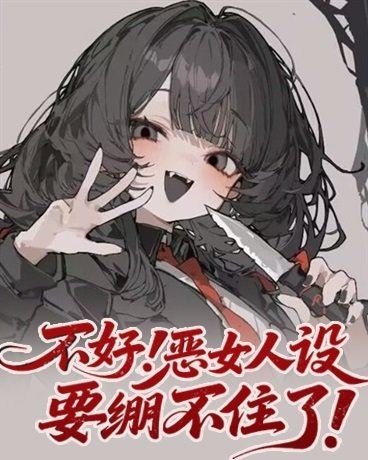
Oh No! I can't keep up my Evil Woman Persona anymore!
+Add to Custom List
Genres:
Tags:
Novel Info
  • Author:
  • Status:Ongoing

Summary

... Read More

Su Li, a passive and conflict-avoidant young woman from the modern world, wakes up in the body of Su Wanli, the villainous heiress of the Su family, one of the most powerful noble clans in South City. A system announces that she must play the role of Su Wanli, the antagonist who bullies the story’s heroine, Meng Wange, to retain her position and earn a reward of twelve billion in assets upon completing her tasks. If her villainy points drop below a certain threshold, she faces penalties or failure. Su Wanli, initially unprepared and unaccustomed to aggression, struggles to maintain her menacing persona while navigating a hostile household and a new rival.

Her first challenge arises when she encounters Meng Wange, the orphan girl whom her father plans to adopt as a goddaughter. In a moment of panic, Su Wanli demands Meng Wange’s only possession, a white hairpin left by her deceased mother, triggering a hidden quest that marks her as a true villainess in the system’s eyes. Rather than fleeing, Meng Wange accepts the humiliation with cold dignity, deepening Su Wanli’s internal conflict between her gentle nature and her forced role. As they prepare for the welcome banquet, Su Wanli, unable to do her own makeup, awkwardly requests Meng Wange’s help. Misunderstanding the situation, Meng Wange nearly strips, leading to a chaotic exchange that further entangles their fates and raises Su Wanli’s villainy score through accidental cruelty.

At the banquet, Su Wanli attempts to sabotage her father’s affection for Meng Wange by behaving rudely, but her efforts are consistently undermined by Meng Wange’s grace and composure. Su Heng, the patriarch, interprets Su Wanli’s outbursts as signs of teenage rebellion rather than malice, inadvertently strengthening his bond with the composed orphan. The meal becomes a series of misunderstandings, including a humorous incident where Su Wanli mistakes sour plum tea for spoiled wine. Despite her best attempts to belittle Meng Wange, the heroine’s politeness and resilience neutralize every insult, leaving Su Wanli frustrated and increasingly confused by her own growing attachment.

As the story progresses, Su Wanli is tasked with disrupting Meng Wange’s tour of the estate. She considers various schemes but finds herself hesitating, aware that her actions are causing genuine distress. Meanwhile, Meng Wange begins to notice inconsistencies in Su Wanli’s behavior, hearing faint whispers that suggest the villainess may not be entirely responsible for her cruelty. The narrative shifts as both characters navigate a complex dynamic where hostility masks underlying curiosity and potential connection. Su Wanli’s journey becomes one of self-discovery, forcing her to reconcile her innate kindness with the monstrous role she must play to survive in this new world.

Latest Release
DateGroupRelease
2026-10-01leaf studio c10
2026-10-01leaf studio c9
2026-10-01leaf studio c8
2026-10-01leaf studio c7
2026-10-01leaf studio c6
2026-10-01leaf studio c5
2026-10-01leaf studio c4
2026-10-01leaf studio c3
2026-10-01leaf studio c2
2026-10-01leaf studio c1

Community Reviews

Rating(0 / 5.0, 48votes)
5 stars
0(0%)
4 stars
0(0%)
3 stars
0(0%)
2 stars
0(0%)
1 stars
0(0%)

Popular reviews

... Read More
Okay so here is the thing about this chapter — the comedy timing is *insane*. Let me walk through it because I need to appreciate the craft. Su Wanli gets thirty minutes to set up a villainous prank on her new 'guest.' Thirty. Minutes. That is the entire premise. And the author stretches every second of it like a rubber band about to snap. First, she hears voices in her own head that sound like HER own anxious monologue. She leans in to whisper at Meng Wange but it turns out to be about STEALING A PIECE OF STEAK. The reader is already confused — is she a villain? Is she just weird? Is she soft? Then we cut to Su Wanli actually trying to execute the prank. Twelve minutes left. She has one idea — a water basin on top of a door. Classic. Timeless. And then the universe laughs at her because her bathroom looks like a department store and there is NO BASIN ANYWHERE. She ends up filling a semi-transparent black perfume bottle with tap water like some kind of desperate villain with a budget problem. The physical comedy of her standing on a sofa, face squished against the doorframe, trying to balance an impossibly narrow perfume bottle on top of it while her hands are full and she's sneezing from the fragrance — I literally said out loud 'oh no she cannot do this' and then she somehow pulls it off. And THEN — just as she's creeping away in triumph — Aunt Zhang starts SHARING STORIES about Miss Su's past villainy directly IN FRONT OF MISS SU. The comedic beat drop is spectacular. Su Wanli had to maintain a wicked smile while being publicly roasted by her own maid. That is peak sitcom energy. The plot here works because every obstacle raises the stakes slightly more than the last. The voice hallucination throws us off. The missing basin throws us off again. The height problem throws us off a third time. And just when you think the prank is set, Aunt Zhang detonates a comedic nuke. The structure is tight. Nothing wasted.
... Read More
There's a moment in this chapter—the evening sunlight filtering through thin mist, dyeing Meng Wange's light brown hair golden—that I read three times because the author painted it like a film director would. Orange-red light, window glass, the haze between inside and outside, and this single figure standing there with a bandaged wrist and an open diary. The room description is surprisingly efficient. Same layout as Su Wanli's but stripped of clutter, two black-and-white floral prints on bare walls, a desk with just textbooks, a coat rack with a single uniform. This is someone who lives with intention. Every object has earned its place. And contrasted against Su Wanli's chaotic energy, it creates this visual tension that speaks volumes about their differences. But the lighting—that's the real star of this scene. Meng Wange ‘winking' with pale-colored eyes, the faint red on the bandage more visible in the sunset, the boxer-waving-to-a-long-lost-lover comparison that Su Wanli's own mind supplies. The author doesn't just describe a room; they construct an entire mood. The fading daylight, the quiet intimacy of a shared space, the way even the alcohol scent from the bandage becomes part of the atmosphere. And then the nosebleed. Right after all that cinematic beauty, Su Wanli just bursts into hemorrhaging embarrassment. The tonal whiplash is intentional and perfect. One moment you're in a period drama, the next you're watching someone flee a bedroom like they've committed a felony by accidentally touching someone's collarbone.
... Read More
The dialogue in this section is absolutely vicious and I love it. Let me start with Meng Wange's masterpiece — the monologue where she offers herself as a tool. "I'll be your best strategist, your most convenient tool, your strongest support. If you want, I can even be your stand-in, your disposable pawn, or... a toy you can play with however you like." Say that three times fast while trying not to combust. The way she trails off at the end like even SHE can't believe she just said that out loud. And then immediately pivots to makeup application like nothing happened. The emotional whiplash IS the character. Su Wanli's dialogue is equally sharp, especially her internal voice. "Damn it, this job sounded easy—just act like a villainess—but doing it is anything but relaxing!" This is pure comedic relief that somehow makes the tension worse because we know she's right. The father's lines are brutally economical. "Some people really don't treat this place like their home, yet they still know how to show up for meals." One sentence and you understand decades of neglected parenting. No monologue, no explanation. Just the tap of a watch and a glare. And the system's voice — cold, robotic, completely unhinged by the situation. "Technically speaking, the banquet will be your first official encounter." Technical. TECHNICAL. You dropped me into a wardrobe accident and deducted my points and you're calling it technical! Every character has a distinct voice. Even the silence between lines speaks volumes.
... Read More
The stakes in this section are layered like an onion that makes you cry, and I mean that in the best way possible. On the surface: Su Wanli needs to maintain her Villainess Rating or face consequences. Simple. But the deeper conflict is that she literally DOES NOT WANT TO BE A BAD PERSON. She took the hair clip to AVOID conflict. She's trying to minimize damage while the system treats kindness like a punishable offense. That's not just external pressure — that's moral torture. Then there's the father conflict, and it's SO much worse than a typical strict dad trope. Su Heng didn't just neglect his daughter — he built an entire parallel family of cultivated girls specifically to replace her. He chose merit over blood and called it investment. And now Meng Wange is sitting at HIS table, and Su Wanli has to perform hatred while knowing her father sees her as obsolete. The birthday banquet adds another layer of stakes — this is supposed to be Meng Wange's welcome, but it's also Su Wanli's first public test as the villainess. Everything they do at that table is performance. Every fork stab, every eye roll, every exaggerated chew is calculated survival. And underneath it all: the system itself is the ultimate antagonist. It doesn't care about morality. It doesn't care that Su Wanli is exhausted, confused, and frankly just trying to get through the day alive. "Understood. I apologize." — the most hollow apology in literary history. The tension never drops. Not for a second. And that mid-sentence cliffhanger at the end? Unforgivable. Absolutely unforgivable.
... Read More
I need to talk about the moment Su Wanli said 'how can someone even look that good while eating?' because my heart literally stopped This girl has been running on pure villain energy this entire chapter—slamming tables, threatening Meng Wange, calculating satisfaction points like she's playing SimCity—but then she catches herself staring at Meng Wange's wine glass with a lipstick mark on it and completely loses her cool. The shift from scheming antagonist to flustered bystander in ONE sentence is adorable and honestly kind of heartbreaking. She's so committed to being the bad guy that she forgets she's just a teenager who's been alone with her thoughts for too long. And Meng Wange—this girl she's supposed to be destroying—responds with grace. 'You're naturally stunning. I couldn't possibly compare.' This is the kind of kindness that actually hurts because it makes your villain persona feel stupid. But then Su Wanli doubles down anyway. She walks behind Meng Wange, leans into her ear, and delivers the line: 'Your surname is Meng—and it'll always be Meng. You'll never be a Su for as long as you live.' And I swear to god I wanted to grab her by the shoulders and shake her because SHE'S ALREADY LOSING. The system shows her villain score climbing back to 95 but her actions feel hollow. She's performing hostility instead of feeling it. And the text makes this painfully clear when it says: 'why did Meng Wange's expression not look like someone quietly enduring humiliation? Instead, it looked... strange?' Strange. Not angry. Not hurt. Just... strange. Like Meng Wange saw right through the performance and found it... endearing? That's the emotional gut punch of this entire chapter. Su Wanli is fighting a war against someone who doesn't even see her as a threat.
... Read More
I need to talk about Meng Wange because this woman is operating on a completely different level than Su Wanli and it's genuinely terrifying how much she enjoys it. Let's start with the moment Meng Wange opens the door. She's wearing a T-shirt with the top button undone, shoulder exposed, just finished ironing, and her first line is ‘I was just about to come find you.' Who does that? Who has that kind of casual confidence while half-dressed? Su Wanli is over there trying to maintain her villainess persona and Meng Wange is out here weaponizing domesticity. Then the wrist scene. Su Wanli wants to play the concerned evil woman, but Meng Wange already bandaged herself—with a BOW. A perfectly tied bow on a medical dressing. This is someone who takes care of herself with aesthetic precision. When she says ‘Did you come because you were worried about me?' she's not asking for confirmation; she's enjoying the game. The smile, the chuckle, the way she lets the silence hang—it's all calculated warmth that somehow feels more dangerous than any villainous threat ever could. But then the diary. And this is where I completely fell apart. Meng Wange just… reads her own trauma aloud like it's nothing. ‘It's just an ordinary diary' she says, but the way she flips to random pages and starts reading with this nostalgic tone—that's someone who has either compartmentalized so deeply that pain became background noise, or someone who trusts Su Wanli enough to show her the raw material. I can't tell which and that uncertainty is what makes this relationship so electric. And then the wardrobe tour. ‘Only four outfits.' The invitation to search, the offer to be searched, the way she guides Su Wanli's hand to her own collarbone. This is either the most manipulative move in literary history or the most vulnerable one. Probably both. Meng Wange is testing Su Wanli and enjoying every second of watching her short-circuit.
See all reviews

Custom lists

See all custom Lists