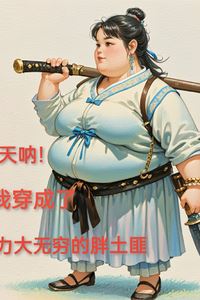
Oh my! I’ve Transmigrated Into a Mighty Super-strong Fat Bandit!
+Add to Custom List
Genres:
Novel Info

Summary

... Read More

Tian Mi, a twenty-six-year-old modern woman and PhD in traditional Chinese medicine, wakes up in the body of an eighteen-year-old fat girl in the Heaven Collapse Dynasty. The era is plagued by a severe drought, famine, and political chaos following the old emperor's death. Her new father, Tian Dabiao, is a strong but simple-minded bodyguard from the Fenwei Escort Agency. After the family’s supplies run low, they join a group that raids a bandit hideout, inadvertently capturing a handsome prisoner named Bai Mucheng. Tian Mi’s father declares her the prisoner’s wife, and in the ensuing chaos, Tian Mi takes advantage of the drugged Bai Mucheng, leading to a humiliating encounter for him.

Realizing the danger of their situation, Tian Mi leads her father’s group, along with several allied families, on a perilous journey to Xingrong County. She possesses a spatial dimension that allows her to store vast amounts of modern supplies, including food, water, and medical equipment. The space contains a spiritual well whose water accelerates healing and strengthens the body, as well as a river that can be used to revitalize the parched land. Tian Mi uses these resources to sustain her group, secretly providing them with better nutrition and water while maintaining a low profile. She also begins to lose weight and improve her martial skills, adapting to the harsh realities of the collapsing dynasty.

During their escape, the group encounters various threats, including corrupt county officials who rob refugees. Tian Mi witnesses the brutal murder of the County Magistrate and his family by the Head Constable, who turns bandit after his master falls from power. The Head Constable’s men also assault and kill several captured women, including Cheng Yuhuan, a relative of the original Tian Mi’s tormentors. Driven by a need for survival and justice, Tian Mi stealthily infiltrates the constables' camp at night. Using surgical knives from her space, she assassinates the entire group, securing their weapons, horses, and a significant amount of silver and treasure, which she stores in her dimension.

Tian Mi reunites with her maternal family, the Xu family, who have also fled to Xingrong County. However, she learns that her grandfather has died from injuries sustained in the crowd, and the family is fractured by greed and conflict. Some relatives have stolen supplies and separated from the main group. Despite the tragedy, Tian Mi continues to use her spiritual water to help the starving refugees along the road, filling wells and providing aid, which gradually earns her a reputation as a benefactor. She navigates the complex family dynamics and the ongoing threat of bandits and corrupt officials, determined to protect her loved ones and survive the catastrophic era.

The story follows Tian Mi’s transformation from a modern woman unprepared for such a harsh world into a capable leader who uses her unique advantages to save lives and secure her family’s future. As she moves deeper into the disaster zone, she faces the moral complexities of survival, the brutality of human nature, and the political upheavals that threaten to destroy the dynasty. Her journey is marked by strategic decisions, combat encounters, and the gradual accumulation of resources and power, setting the stage for her rise in this turbulent new world.

Latest Release
DateGroupRelease
2026-08-11shanghai fantasy c103
2026-08-11shanghai fantasy c102
2026-08-11shanghai fantasy c101
2026-08-11shanghai fantasy c100
2026-08-11shanghai fantasy c99
2026-08-11shanghai fantasy c98
2026-08-11shanghai fantasy c97
2026-08-11shanghai fantasy c96
2026-08-11shanghai fantasy c95
2026-08-11shanghai fantasy c94
2026-08-11shanghai fantasy c93
2026-08-11shanghai fantasy c92

Community Reviews

Rating(3.2 / 5.0, 29votes)
5 stars
4(14%)
4 stars
7(24%)
3 stars
10(34%)
2 stars
8(28%)
1 stars
0(0%)

Popular reviews

... Read More
Okay so I need to talk about how this section quietly pivots the whole story from 'survival cozy' to 'oh wait we're building a fortress.' Like, one minute they're happily gathering chestnuts and Tian Mi is making rabbit hats out of branches, and the next Aunt Yu drops this line about wolves and possible soldiers chasing refugees. And Tian Mi doesn't even flinch—she just pulls out a rock and starts drawing blueprints on the ground. Two walls, inner and outer, fire traps between them. This girl is not playing around. What I love is how the plot layers these threats. It's not just 'hungry, need food, found food, yay.' It's food → wolves → soldiers → fortifications. Each problem immediately spawns the next solution, and Tian Mi is always three steps ahead. The wild boar incident is basically the plot saying 'hey, by the way she's also a combat powerhouse.' She kills two 400-catty boars like they're overgrown hamsters while the women watch in absolute shock. That scene isn't just action for action's sake—it establishes her as the group's protector, which justifies why everyone suddenly treats her like some kind of descended deity. The subplot with the Fengqiu Village people bringing chestnuts as a goodwill gesture is also doing heavy lifting. It's showing that this settlement isn't just a random collection of survivors—they're building community, exchanging resources, forming alliances. The plot is quietly saying: this isn't a lone wolf story, it's a tribe story. But here's what keeps me up at night—those soldiers. Tian Mi mentions them almost in passing, but the imperial court being unstable means trained fighters could show up. And right now their 'defense' is mud walls and bows. The tension between 'we're gonna be fine' and 'we are so not ready' is delicious. I want to know what happens when the wolves actually come knocking.
... Read More
Okay so this section is wild because on the surface it looks like just another day of fleeing, right? But there's actually a really clever subplot about water that's running through everything. Tian Mi has this secret space with well water, and she's carefully doling it out — first mixing it into the rice washing water for the livestock, then later secretly releasing a whole river into the hollow they're staying in. The fact that grass and vegetables start sprouting right where the water touches the cracked earth is such a good detail. It's not just about survival, it's about the land itself recovering. Then you have the encounter with those two men digging for water in the dark — she gives them some from her pouch and they're like 'this water is sweeter than anything we've had.' It's a small moment but it really establishes that Tian Mi is operating on a different level than everyone else. She's not just surviving, she's quietly sustaining people without anyone knowing how. The plot keeps this tension between her secret and the desperate needs of everyone around her, and honestly it's way more interesting than a straightforward chase narrative would be.
... Read More
I need to talk about this moment where Tian Mi goes into her space, turns on the air conditioning, eats watermelon, and then literally feels guilt hit her. Like she's lying on her sofa in a world with AC and milk tea while real people are digging through dirt for moisture. That contrast is brutal and I love it. The author doesn't even let us forget — Tian Mi literally closes her eyes for a long time like she's punishing herself. And then she comes out and tells everyone 'we should eat and drink, we can't be too frugal' which is such a Tian Mi move. She can't just sit in her guilt, she has to do something about it, even if it's just changing the group's behavior rather than revealing her secret. What really got me was her thought about her siblings in the other world — wondering if they'd still pressure her to get married. That tiny detail about missing her old life's annoyances made her feel so real. She's not some perfect heroine, she's a girl who misses complaining about TV plots and is currently very aware that her 250-pound body in hard cloth shoes is suffering. The emotional core of this section isn't romance or friendship, it's guilt and the weight of having power you can't fully use.
... Read More
"All this way, I thought you had become mature and steady, but you're still so silly!" Aunt Bai yelling this while laughing on the ground is THE image of this whole section. It's so vivid I can see it like a movie frame—golden autumn leaves, chestnuts falling like rain, Tian Mi getting bonked on the head, and this older woman wheezing with laughter. The author didn't even try hard, but somehow it just works. The mountain gathering scene is genuinely one of the most alive settings I've read in a while. It's not just 'they went into the forest and found food.' We get wild melons being split open on the spot, kiwis and raspberries and persimmons, and then the chestnut grove which hits different because it's not just a snack—it's survival. The fact that Tian Mi makes branch hats for everyone before shaking the trees shows she's thinking about safety even while being goofy. That contrast is everything. And then there's the valley itself. Stone houses being built, mud being mixed, livestock helping carry things. The world feels like it has its own rhythm—animals that find their own way back to water, groups that don't wander too far, the whole thing operating like a tiny ecosystem. It's primitive but not chaotic. There's order underneath. The lunch scene with the stew is where the worldbuilding really clicks. Chestnuts and wild vegetables and offal simmering together, Tian Mi sneaking spiritual spring water and spices from her satchel, the smell spreading through the air. This isn't just food—it's civilization being cooked in a pot. The porridge being saved as staple while the fancy stew is a treat tells you so much about resource management without a single exposition dump. I also love the detail about the paper and pencil Tian Mi uses for the oven design. She wasn't used to calligraphy brushes so she made do. The world has paper, it has pencils, but the characters adapt. It's a small thing but it makes the setting feel real rather than fantasy-staged.
... Read More
Can we just take a moment to appreciate Aunt Feng's dialogue? The woman is a legend. 'Oh, my dear ancestor! If you pour out that water, we will have a problem with you!' This is a person who has seen enough drought and famine to treat wasted rice water like a capital offense. And then she immediately pivots to 'You can only wash it once.' The sheer specificity of that demand, the no-nonsense tone — it's hilarious and also heartbreaking because it shows how little they have. Then Cui Erhu telling Tian Mi 'wait until your sister loses some weight; then she can match a man' — that's the kind of casual sibling banter that makes their relationship feel lived-in. They grew up together, they roast each other, there's no performance. And Tian Mi's 'I need to lose some weight; I'm exhausted from walking' as an excuse to not eat is such a relatable modern-person-in-ancient-body moment. The dialogue between Tian Mi and the two men digging for water is also great — 'Chubby girl, don't be impulsive' followed by her sharp 'You're the chubby girl, and your whole family is chubby girls!' That's not polite transmigrator behavior, that's a girl who's done with everyone's nonsense. The author's voice throughout is warm and slightly ironic, never taking itself too seriously even when the situation is dire.
... Read More
I keep coming back to this one moment: Tian Mi patting her belly after the kids cheer for meat, wondering if her future baby would dance around like that too. Right after she's just killed two wild boars and right before she's drawing fortress blueprints. The juxtaposition is so deliberate it aches. This story is fundamentally about two kinds of building. One is physical—walls, houses, ovens, food stores. The other is biological and emotional—carrying a child, creating a family, deciding that this life is worth protecting. The chestnuts aren't just calories; they're the future. The walls aren't just defense; they're a cradle. Every tool list and brick mold is an act of faith that there will be someone here to use them. The wolves and soldiers represent the outside world's chaos—the imperial instability, the bandits, the random violence that turned these people into refugees. But the valley is becoming something else. It's not just a hiding place. It's a statement. By building double walls and drying ovens and community feasts, Tian Mi is saying: we are not just surviving, we are deciding what comes next. There's also this recurring motif of food as connection. The chestnuts shared between Fengqiu Village and the refugees, the stew that smells so good it lifts everyone's morale, the piglet offered as gratitude. Food here isn't just fuel—it's diplomacy, it's gratitude, it's the thing that turns strangers into a community. When Tian Mi gives the piglet back to the women who couldn't help, it's not generosity, it's an investment in mutual dependence. And the baby—always the baby. Even when Tian Mi is being tactical about wolf attacks, her hand on her belly grounds everything. This fortress isn't for her alone. It's for someone who hasn't arrived yet but who she's already decided will belong here. That's the real theme, I think. Not survival. Belonging.
See all reviews

Characters

See all characters

Custom lists

See all custom Lists