Obey Your Superior’s Words
Novel Info
  • Author:
  • Status:Ongoing

Summary

... Read More

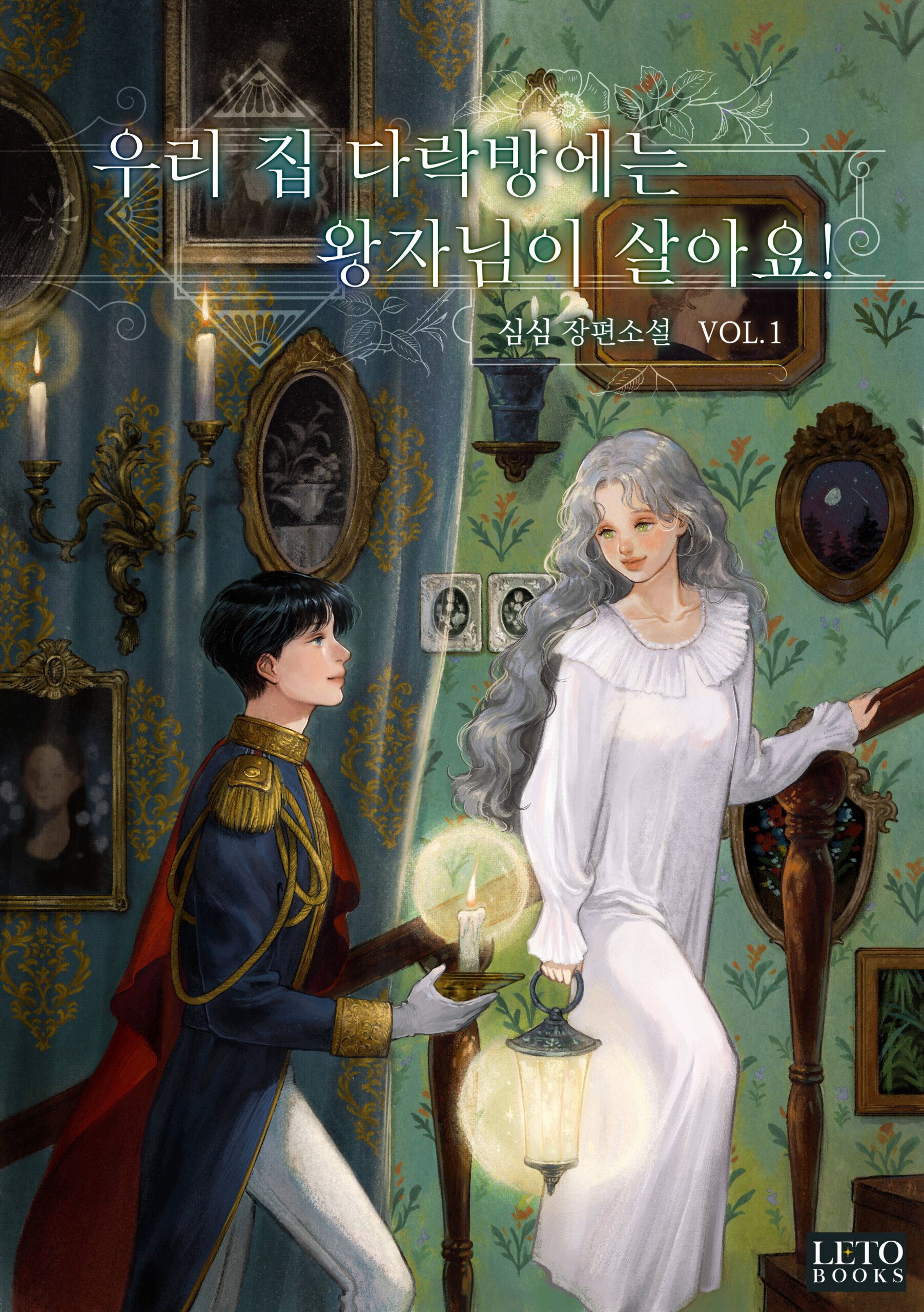
Princess Isolet Lancaster, known throughout the empire as the disgrace of the royal family, spends her youth pining for Theodore Herington, a commoner-born war hero and Awakened with silver hair. Despite her high noble birth, Isolet fails to manifest any Awakening abilities, a flaw that subjects her to relentless ridicule and scorn. Theodore, aware of her devotion, repeatedly brings new fiancées before her, mocking her powerlessness by flaunting their Awakened status. In her previous life, Isolet’s obsession leads her to act as a villainess, interfering in military affairs and ultimately enabling Theodore’s coup. She discovers too late that he plans to assassinate the Emperor and seize the throne, using her death as the catalyst for his rise. Executed on the scaffold while Theodore watches with a smile, Isolet dies screaming her desire to make him kneel before her.

Upon opening her eyes, Isolet finds herself back at age twenty-five, moments after Theodore introduces his new bride-to-be, Solia Florian. Instead of the customary outburst, she responds with a calm, genuine congratulation, shocking Theodore into silence. Realizing she has been reborn, Isolet resolves to sever her ties with him and pursue a new path. During this period, she discovers that she has awakened with a unique and legendary ability called Word Command, which allows her to force others to obey her spoken instructions. This power, which she suspects is linked to her return from death, offers her the agency she lacked in her past life. She decides to enlist in the military, specifically aiming for the northern border, where she plans to investigate the corruption that will eventually destroy the empire and kill her cousin, Silien Isid.

Isolet approaches the Emperor to request a transfer to the military, a move that astonishes her court and nobles who view her as unstable. She boldly requests an audience with Commander-in-Chief Kasimir Kalansa, a mysterious and formidable figure who is present in the royal chambers. Kasimir, known for his strict adherence to honor and disdain for arrogant Awakened, agrees to test her worthiness. Isolet heads to the training ground, where she encounters Leonard Wellington, Theodore’s adjutant, who continues to insult her. Utilizing her new authority and swordsmanship skills, she swiftly defeats him in combat, demonstrating that she is far more than the fragile princess everyone perceives.

Theodore arrives and attempts to defend Leonard, continuing to belittle Isolet’s dignity. Kasimir intervenes, criticizing Theodore’s lack of honor and discipline. Isolet calmly cites military law, asserting that the Imperial Army exists for the Imperial Family, a stance that impresses Kasimir. When Theodore refuses to comply with her commands, Isolet uses her Word Command ability to force him to kneel and then vanish from her sight. The crowd is stunned by her dominance over the war hero. Kalia Spencer, Kasimir’s subordinate, detects the Awakened energy radiating from Isolet but is silenced when Kasimir dismisses her request for a formal test.

Kasimir privately recruits Isolet into the military, recognizing her potential despite her non-Awakened status and her desire to avoid the capital’s political webs. He suspects she has deeper motives related to the northern border incidents but allows her to proceed after she agrees to undergo cadet training. Isolet learns that Theodore will be an instructor for the upcoming training, a fact she accepts without hesitation. Kasimir, intrigued by her transformation and hidden strength, decides to observe the training personally, harboring a secret history with Isolet that she does not yet remember.

As Isolet prepares for cadet training, she reflects on her past mistakes and her determination to prevent the empire’s downfall. She knows the northern border is fraught with danger and monster attacks, but it is also the key to uncovering the conspiracy behind Theodore’s ambitions. Her new goal is not merely survival but dismantling the forces that threatened her life and the stability of the realm. With Word Command as her weapon and her military skills as her foundation, she steps into a new role, leaving her reputation as a lovesick villainess behind. The path ahead is fraught with challenges, but Isolet is ready to face them, no longer the victim of her own desires but the architect of her own destiny.

Latest Release
DateGroupRelease
2026-10-03dusk blossoms c60
2026-10-03dusk blossoms c59
2026-10-03dusk blossoms c58
2026-10-03dusk blossoms c57
2026-10-03dusk blossoms c56
2026-10-03dusk blossoms c55
2026-10-03dusk blossoms c54
2026-10-03dusk blossoms c53
2026-10-03dusk blossoms c52
2026-10-03dusk blossoms c51
2026-10-03dusk blossoms c50
2026-10-03dusk blossoms c49

Community Reviews

Rating(0 / 5.0, 27votes)
5 stars
0(0%)
4 stars
0(0%)
3 stars
0(0%)
2 stars
0(0%)
1 stars
0(0%)

Popular reviews

... Read More
I need a minute. Actually, I need several. The fact that I felt genuinely tearful reading about Solia's death and then even more conflicted about who to root for right after is wild. Theodore. I genuinely, truly thought he was the hero. Raon's reaction hit me like a truck — he couldn't believe his hero had made such a choice. And then Isolet just... loses everything. Her comrades are gone, her mentor has gone full madman, and she's standing there holding Solia's corpse with blood dripping everywhere. The line "Solia is dead. Theodore drove her to her death" — I literally gasped out loud. That sentence did so much damage. But then Kasimir shows up and everything flips. This guy who pretended to be a lowly trainee named Kasar, and suddenly he's the only sane person in a room full of people losing their minds. And Isolet? Her internal monologue when she realizes she feels reassured by someone she barely knows? "How can I feel so reassured when I barely know him?" She immediately tried to rationalize it as fear response. I wanted to shake her. We all want to rationalize feelings we don't want to feel. And Raon. Just sitting there, lost. The three musketeers are falling apart and he's the one who's most broken inside because his entire world view shattered. That hits different when you care about found family dynamics. Also — Ash hitting Kroisen on the head repeatedly. "Why do you keep hitting me!" Dude, same energy I use on myself when I'm spacing out during a crisis. Relatable as hell.
... Read More
The dialogue in this chapter is absolutely stacked. Let me just start with the exchange where Theodore tries to cite Military Law Article 3, Section 15 to defend Leonard's aggression, and Isolet cuts him off with Military Law Article 1, Section 1: "The Imperial Army exists for the Imperial Family." The way the text describes it—"a woman's sharp voice cut off Theodore's words"—you can just hear the echo of that line in an empty hall. And Theodore's rhetoric! The author writes him in this elevated, almost legalistic register that constantly positions him as the authority figure. "Your Highness. This is not a matter for you to get involved in. It's a matter between soldiers—" He's using procedural language to shut her down, to frame her presence as inappropriate. It's gaslighting wrapped in military protocol. And Isolet's response? She doesn't argue emotion. She argues LAW. She speaks his language and wins. Then there's the Word Command sequences: "Shut up." "Kneel. Here. Before me." "Stay like that." Each one is short, imperative, and lands like a hammer. The simplicity is the power. After pages of Theodore circling around with elaborate justifications, these three-word commands are devastatingly clean. The humor is also sharp—Isolet's laughter after Theodore says she came all the way there to see him. "Ah. Such a misunderstanding. Isolet couldn't help but burst into laughter at his words." The narrative voice here has so much personality. It's almost giddy, like the narrator is having as much fun as we are watching this fool get dismantled.
... Read More
This section reads like a perfectly constructed escalator. You start with Isolet arriving at the imperial court — which could've been boring stuff — but the Emperor drops a bomb right away: 'I heard you met Theodore today!' Within three lines we're past the formal greetings and straight into the emotional core. No filler. Then she flips the script by asking to go to the border, which shocks everyone including the Emperor, and immediately pivots to requesting a meeting with Kasimir. Each request escalates the stakes — first the Emperor's approval, then Kasimir's permission. And Kasimir doesn't just agree, he says 'How about this evening?' with a sword duel waiting at the military headquarters. That's ruthless pacing — he's setting her up to fail in front of everyone, but also showing respect by giving her a chance. The transition to the training ground at sunset is where the rhythm shifts from political tension to personal confrontation. The Emperor scene is dialogue-heavy and tense. The training ground scene is sensory and physical. And then Leonard shows up and the whole energy changes again — from grand political maneuvering to this intimate, almost petty bullying dynamic that's been building since Chapter 1. The chapter ends on 'Draw your sword,' which is such a clean cutoff. No cliffhanger explanation, no internal monologue — just the command. I needed to immediately open the next chapter.
... Read More
There's this recurring word that I think the author is using as a thematic anchor — 'honor.' Kasimir's first principle as Commander-in-Chief: 'The most important thing for a soldier is honor.' Then Isolet weaponizes it against him: 'I think it would be dishonorable for a princess to be rejected merely with words.' And 'Shouldn't you also help me maintain my honor as a princess?' The irony is delicious. Kasimir preaches honor. Isolet doesn't consider herself honorable at all — she literally tells him 'She was far from honorable.' She's manipulating his own moral code against him. And somehow it WORKS. The system he built is so rigid that even a princess who's never held a sword properly can slip through its cracks by speaking its language. Then there's the 'Word Command' — Isolet's ability. The name itself is loaded. She uses words as weapons, just like Kasimir built his authority on words ('The most important thing for a soldier is honor'). Two different people, same tool, opposite purposes. Kasimir's words discipline and subordinate. Isolet's words liberate and destroy. Leonard learns this the hard way when she uses nothing but speech to dismantle him before she even draws steel. And the clean hands detail — Leonard's fingers having NO calluses despite being a soldier — that's symbolic too. He's performing the role of a soldier without the substance. Isolet, who's pretending to be a humble princess wanting to serve, is the real one.
... Read More
Okay I need to talk about this scene because my hands are literally shaking. Theodore brings ANOTHER woman in front of her — the second time now — and Isolet just... smiles? Says congratulations? In the past, she turned the entire imperial garden into ruins over this. Now she's stepping aside like it's nothing. That's not calm. That's grief that's so deep it's gone underground and hardened into something else entirely. The flashback sequence hits like a truck. She watches him smiling at her deathbed. Smiling. While she's bound and about to be executed, he lifts her chin and says 'Your death will be just the beginning.' That line alone — that's the moment love curdles into something unrecognizable. And she remembers that feeling all over again, but this time she doesn't break. She just... decides. 'I will make you regret it' was her last thought before dying. Now she wakes up at fifteen and that memory is sharper, colder. Not the hot desperate rage of a girl who loved too hard — something heavier. Something that sounds like steel. The part about her noticing she could still feel the cold blade against her neck even after returning? I got chills. Literal chills. She died and came back and the wound isn't even on her body anymore — it's everywhere. But the ending of this chunk gives me hope. She's looking at her reflection and thinking 'just being alive.' That's such a small, fragile thing to realize but it feels massive here.
... Read More
Let's be real for a second—when Isolet says she wants to go to the northern border simply to avoid the nobles' eyes, NO ONE in their right mind believes that. Especially not Kasimir, who immediately calls her out on it. "Is there a special reason why you want to go to the border?" "That's really all there is to it." "So there is something else you want." The man does not take nonsense. And honestly, neither should we. Every detail about Isolet screams that she has an agenda she's not sharing. She's an Awakened who failed three tests. She has hair that didn't change color when she awakened—which Kalia literally points out is consistent with powerful adult Awakenings like Kasimir himself. She has this strange energy that Theodore couldn't even identify. And now she's desperately trying to get posted to the most remote, least noble-filled border she can find. What is she hiding? What is she looking for? The text drops these breadcrumbs and then cuts off right as Kasimir is about to press further, which is honestly the worst and best thing the author could do. The stakes are already rising on multiple fronts: Isolet's secret Awakening, her unresolved feelings about Theodore, the political tension with people like Theodore who won't take her humiliation lying down, and whatever her real reason is for wanting the northern border. Every scene between her and Kasimir feels like a chess match where both players are slowly realizing the other is more dangerous—and more interesting—than they initially appeared. I'm not breathing until chapter 28.
See all reviews

Custom lists

See all custom Lists