Number One Ugly Husband - Reviews

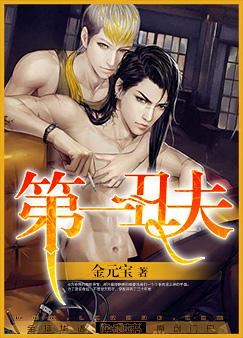
Number One Ugly Husband
+Add to Custom List
Sort
Add review
... Read More
The atmosphere in these chapters is so vivid. The Bone Demon Hotel as a setting keeps coming up, and now there's this imperial city with high-class restaurants serving monster meat dishes that increase spiritual power—the worldbuilding is getting so rich. But the most haunting image is Jie Wu at the door. Thirty years later, she's rumored to be a good, devoted woman, but when she sees her husband with another woman on THEIR bed, she doesn't rage. She doesn't cry. She just... watches. Quietly. From behind a crack in the door. That's not a good woman, that's a controlled woman. Or a dangerous one. The author didn't even need to describe her face—it was just 'half a face exposed in the crack' and I felt chills.
... Read More
Okay so this whole dynamic between Bao Ye and Dong Ling Ce is absolutely unhinged and I cannot stop thinking about it. Like, let's be real here - Bao Ye is a SLAVE. A literal slave with a sarcoma on his face, working construction, getting struck by literal THUNDER from the gods above, and what does Dong Ling Ce do when he gets knocked out? He wakes up and immediately starts pinching Bao Ye's Private Parts as revenge. This man is a DEMIGOD with a god complex and his love language is physical torture mixed with occasional protective barriers. But here's the thing that actually gave me pause - the thunderstorm hits, and Bao Ye sets up a sound-proof barrier around HIS OWN BED while also protecting the other slaves with a defensive barrier. He sleeps like a baby while everyone else is too scared to close their eyes. And then Dong Ling Ce? He blocks the lightning from hitting the dorm where the senior slaves are hiding. I don't understand this man's psychology at all. One minute he's threatening to tear off a kitten's...bits...and the next he's playing hero to people who might not even want his help. Is he protecting them because he genuinely cares, or because he's establishing ownership over his domain? The lip-reading scene is where it really gets interesting though. Dong Ling Ce can't hear Bao Ye because of his barrier, but he watches his lips move and tries to figure out what he's saying. This power imbalance where one person has all the information and the other is just...performing? It's deeply unsettling and I love it.
... Read More
"Weren't we at the construction site? Why are we here?" One second they're standing there furious about nothing, and the next—bam—you're in this forest full of big trees with water droplets sliding off leaf tips, the whole place still wet from the flood receding. I genuinely got chills reading this. Not just because of the teleportation flex (which is impressive, don't get me wrong), but because of HOW the author described it. The water droplets landing on the ground "like it was raining"—that's such a specific, cinematic detail. You can hear it. You can feel the damp air. And then Bao Ye just casually drops "This is the Fallen Forest" like he lives there or something. The name alone is loaded. Fallen Forest—what happened there? Why is it called that? And the fact that he knew exactly where to bring them, knew it was empty enough that no one would know if something happened... that implies he's been here before, or at least knows this place intimately. It adds so much mystery to his character without the author having to explain anything outright. Also the contrast between the two scenes hit hard for me. First you've got this claustrophobic, suffocating construction site with sick slaves dying, barriers going up, bodies being burned. Then suddenly you're in this vast, quiet, dripping forest. It's like the story itself took a breath. The environment shifted from panic to something almost eerie and calm, which actually made it scarier in a weird way. No witnesses, no audience, just Bao Ye and three people who wanted him dead. The setting did so much heavy lifting there.
... Read More
I'm going to be honest — I usually skim dialogue in web novels because a lot of them feel generic or stiff. But the conversations here actually felt alive. The demons speaking in their own language, the patriarch's nervous stammering with Jiu Yin — it all had distinct energy. Gu Bu's casual tone when he's showing Bao Ye around is perfect. He's just a regular demon guy doing his thing, completely unaware that he's helping a human undercover. Lines like "What do you want these two herbs for?" and then the whole exchange about how combining them cures a disease — it's natural, it doesn't feel like exposition dressed up as chat. And Bao Ye's internal monologue moments, like that "...." reaction when the patriarch says the tablet can "curse gods to death" — simple but so effective. The humor lands too. "If they could be cursed to death, he would have cursed them long ago" is genuinely funny and tells us so much about Bao Ye's frustration with the gods without a single info dump. The author has a great ear for how people actually talk.
... Read More
Okay, so let me just sit with this chapter for a second because I keep coming back to the temperature imagery and I think it's doing way more heavy lifting than people might realize on a first read. "Warmth deep in their hearts" — that's the chapter title. Right off the bat, the author is telling you this isn't just about blood. It's about the coldness that has seeped into these people because of their circumstances. Bao Ye literally says it: the slaves have become cold-blooded under persecution. They watch lives die and look away. The plague isn't just a disease — it's a symptom of a broken social order where empathy has been starved out of people. And then the ending. Bao Ye shivering. Feeling like he's in a freezer at minus one degree. If he hadn't had his divine power protecting him, he would have frozen to death. That's not just a physical description, guys. That's a thematic punch. The warmest person in this story — the one giving blood, healing others, running between districts all night — is the one who's actually cold inside. Or maybe the one who feels the cold most acutely because he's the only one still capable of feeling anything at all. The blood itself is such a loaded symbol here. It's literal life force being transferred from one body to another. But it's also communal. Nian Huai asking "who saved us? What's his name?" — they don't even know Bao Ye's full identity yet, and yet they recognize the sacrifice. The blood connects people across districts, across classes, across the boundaries that the slave system tries to enforce. There's also this weird reversal going on where the "master" — Dong Ling Ce — is the one offering rest, while Bao Ye, the one who's supposed to be the servant, is the one actually saving everyone. The power dynamics are so upside-down it makes my head spin. I keep thinking about that line: "saving people is not a bad thing, and it is something they will not regret for the rest of their lives." That's basically the thesis statement of the entire novel, isn't it? Beneath all the political maneuvering and slave plots and disease plots, it's really just about whether humans can choose to be warm toward each other when everything around them says stay cold.
... Read More
Bao Ye's dialogue is genuinely one of the best things about this book. 'Fuck, I just know him. If someone I know is about to be killed, can I not save him?' This is the kind of line that sounds like something an actual person would say at 2am while half-asleep scrolling their phone. It's not polished. It's not literary. It's honest. And then Dong Ling Ce's responses are perfectly calibrated deadpan: 'Do you want your sarcoma to grow down to the neck?' Not even a full sentence, just facts delivered with the emotional warmth of a thermometer. Their banter has this rhythm where Bao Ye is always one step ahead in chaos and Dong Ling Ce is always one step behind trying to contain it. The 'tsundere' exchange is peak comedy but it works because it's grounded in genuine care underneath. And Zisang Yanruo's lines are notably softer—'I can't even reach him' has this quiet desperation that contrasts beautifully against the louder energy around her. Even the minor characters have distinct voices: the intermediate demon's formal 'I will ask you one last time' versus Xia Zong's dismissive 'What is the difference between being imprisoned by you and dying?' These aren't placeholder lines, they're character.
... Read More
I need to talk about the emotional undercurrents in this chapter because they are DELICIOUS. On the surface, this is an investigation scene — Bao Ye is trying to figure out who this Doppelgänger is, why he exists, what his connection to Gongshan Xiang might be. But underneath all that plot mechanics, there's this gorgeous, simmering tension between Bao Ye and Dong Ling Ce that makes my heart do things. Consider the sequence: Bao Ye tears open the fake's clothes, Dong Ling Ce gets visibly upset. Then Bao Ye, ever the chaos gremlin, pushes further — 'you absolutely did not see clearly' — and Dong Ling Ce literally stabs his face with concentrated energy. But here's the thing: he doesn't stop Bao Ye from investigating. He helps. He creates an illusion barrier so they can work in private. He floats the fake into the air so Bao Ye can examine him without touching him directly. He performs the actual inspection with supernatural precision. Every action is simultaneously about solving the mystery AND about managing his own jealousy in the most dramatic way possible. And Bao Ye? He's fully aware of what he's doing. He notices Dong Ling Ce's mood, he reads the room, he knows when to back off and when to tease. The line 'of course... I'll only let you check once more' while Dong Ling Ce is literally about to kill him with his glare? That's not fear. That's trust. That's someone who knows their partner intimately enough to push boundaries and know exactly where the line is. There's also this weird poignancy in Bao Ye searching for someone who looks like his father. The emotional weight of that desire — to find connection, to understand his origins — contrasting with the comedic jealousy scene? The author is weaving deep personal stakes into what seems like a lighthearted moment. Brilliant emotional layering.
... Read More
I need to talk about the road. "The road in the lower world was originally full of potholes, and the road was not repaired with cement. After the game of gods, the road became even worse, with bumps after bumps, which was particularly uncomfortable." Two sentences. Two sentences to tell me this world is BROKEN. The lower world was already rough, and then the gods played their game and made it worse. That's it. No exposition dump about what the game of gods did, no map, no history lesson. Just bumps after bumps after bumps and a man trying to sleep in the back of a truck. The setting does so much work here. This isn't a polished fantasy realm—it's gritty and deteriorating. The forest they arrive at is dense, the hunting team operates like a military unit with strict quotas and zero tolerance for dead weight. Food is scarce enough that withholding it is the ultimate punishment. "For the ugly slave who opens his mouth for food, not giving him food was the greatest pain." And yet Bao Ye stretches in that forest and says he'll hunt for Dong Ling Ce. He's comfortable enough in this harsh world to make promises about roasting meat. "If he is the second best in roasting meat, no one will dare to claim the first place." This man has survived everywhere and he's still joking about his culinary skills. The contrast between the brutal environment and these small moments of warmth—Bao Ye's chin on Dong Ling Ce's head, Zisang Yanruo's pheasants, the promise of roasted meat shared between two people who don't have much—is what makes this world feel lived-in. It's harsh but people still find ways to care.
... Read More
The structural move here is filthy and I love it. You have this entire chapter section dedicated to a single conversation—two people in a dim hall, drinking, talking in circles around the truth. It's languid, almost claustrophobic. Then Dong Ling Ce vanishes into his tent and we get a full nighttime vigil scene, described in just a few lines but carrying the weight of a novel. Dawn breaks. Breakfast happens. Zisang Yanruo's panic about her brother provides comic relief and grounding. Then—boom—hundreds of trucks appear on the horizon. The pacing accelerates from meditative to kinetic without losing emotional continuity. The disguise sequence is where it all converges: preparation as intimacy,化妆 as courtship, tactical necessity as romantic opportunity. The author knows exactly when to linger (the eye contact during makeup application) and when to snap forward (the convoy rolling toward demon territory). Chapter structure here mirrors the emotional arc—slowing down for introspection, then accelerating into action with the characters changed by what they've learned about themselves. The cliffhanger isn't an explosion; it's a question mark hanging over what happens when these disguised figures enter hostile territory with baggage neither has unpacked. Perfect control.
... Read More
There's something almost cinematic about the whole barbecue scene and I need to talk about the atmosphere. You've got this group of survivors—people who are clearly hardened, suspicious, maybe even hostile toward each other—and then Bao Ye just... sets up a grill. The sensory details are doing a lot of heavy lifting here. First it's the sound of the forest, the rustling that makes everyone freeze and grab their weapons. Then the smell hits—"everyone smelled the aroma" and suddenly their hostility gets tempered by basic human hunger. The description of Bao Ye working: cleaning the skin, borrowing water, brushing oil, cutting slits into the meat so it cooks faster and absorbs flavor. These are specific, practical details that ground the scene in reality. It's not just "they ate food"—we see the technique, the care, the almost ritualistic attention to not burning the meat. "This meat definitely can't be burnt. If it is burnt, it won't taste good, and it's not good for your health." He's literally coaching Dong Ling Ce on cooking like a tired parent. And then the payoff—Zi Ruo taking that first bite, eyes lighting up, forgetting all decorum: "Wow, it's so hot, so hot, so delicious." Jin Lingrui declaring it the best meat he's ever eaten. In a world where people are suspicious enough to accuse each other of theft and magic users are throwing tree trunks at people, the simple act of sharing a meal becomes this radical moment of connection. The setting feels lived-in—these people have survival skills, divine power, potions, grills. It's a world where the mundane and the extraordinary coexist without ceremony.
... Read More
I am obsessed with how Bao Ye flipped the entire situation. On paper, this looks like a simple kidnapping scene — Zhou Xiaochuan storms in, grabs the 'ugly slave,' and off they go. But the payoff is everything because we realize Bao Ye orchestrated it. He intentionally wounded Boss Ji so that his own people would come crawling to him. Think about that level of patience and calculation. The text literally spells it out: 'If a smart person like Boss Ji came directly to ask him for help, he would definitely take the opportunity to make various requests.' So Bao Ye removed himself from the negotiating table entirely by making himself indispensable. And the timing! According to his own calculations, they should have come 'a few days later, at least until it was confirmed that he has skill.' But they showed up in less than a day. That's a detail that seems small but it actually opens up a whole subplot thread about Dong Ling Ce spreading the word. Someone else is playing on the board without Bao Ye knowing the full extent of it. I love that the author dropped that casually in the middle of Bao Ye's internal monologue like 'oh by the way, your plan was accelerated by an external factor.' That's a ticking clock disguised as a throwaway line. The moment Bao Ye pokes Boss Ji's wound and black blood oozes out — Liu Fang almost explodes. The tension in that room is thick enough to cut with a knife. Everyone is staring at him warily, and he just calmly starts treating the boss like nothing is wrong. It's the quiet confidence of someone who knows exactly what he's doing while everyone around him is one misstep away from panic.
... Read More
Everyone's talking about Bao Ye as the underdog, and yeah, he's clearly in danger—but let me tell you about Da Chao, because this kid is trapped in the WORST way possible. Da Chao is a MIDDLE-level slave who's won several battles in a row. He's got leverage. He's got a slave owner offering him ANYTHING if he survives. And yet when Bao Ye—someone half his size—shows up, Da Chao CANS'T move. Why? Because he SAW Bao Ye deflect a wind attack earlier. He knows this isn't going to be an easy win. But the slave owner is screaming at him: "Hurry up, Da Chao... If you don't fight now, you won't fight any in future." Translation: win this, or die. It doesn't matter that Bao Ye isn't even fighting back—Da Chao has to make a MOVE or his own life is on the line. This is the beauty of the stakes: it's not just "will Bao Ye survive?" It's "can ANYONE survive this system without becoming a monster?" And Bao Ye's stance—dodging, refusing to kill, standing there calmly while the whole world expects blood—is the most radical act in the entire arena. He's betting his life on his own morality. That's not passive. That's the highest-stakes gamble of all.

Leave a comment

You must be logged in to leave comments. or
