No Such Thing as a Chaste Man! Just Give It Ten Tries! - Reviews

No Such Thing as a Chaste Man! Just Give It Ten Tries!
+Add to Custom List
Sort
Add review
... Read More
I need to talk about how this author uses dialogue—and more importantly, *when they choose not to*. Ephelinus's voice is fascinating because it's layered. He speaks in confessions during the most vulnerable moments: 'It was never my intention to shame you,' 'I shamefully thanked Sol for granting me the opportunity to touch you,' 'how I've longed for this sensation every single day and every single night.' These aren'tpickup lines or declarations. They're raw admissions, spoken almost like prayers. His dialogue during intimacy feels different from how he'd speak in any other context—there's a vulnerability that contradicts his position as High Priest. But the real brilliance is in what goes *unsaid*. When he says 'That insolent mage dared to give you something so depraved,' he's not just angry about the rings. He's saying: I can't believe someone else knew about this desire. I can't believe someone prepared a tool for your pleasure without my knowledge. I am threatened and I don't know how to say that normally. Seo-ah's dialogue is sparse but telling. 'Your Holiness, ah! Too much!' She doesn't have elaborate internal monologues during the physical scenes—the narration carries that weight. But her quieter moments reveal everything: 'Are you planning to continue here?' Practical. Grounded. Trying to reassert control in a situation where she's lost it. The narrative voice itself is remarkable too. It shifts between close third-person (deeply inside Seo-ah's experience) and moments of almost cinematic observation. Like when Ephelinus stands up: 'His imposing, solid build seemed to blot out the night sky behind him.' That's not something Seo-ah would necessarily notice in the moment—that's the *author* commenting through the narration. It adds gravitas, mythic quality to a scene that's otherwise intensely intimate. The contrast between the lyrical physical description and the sharp, sometimes awkward dialogue creates a voice that feels distinctly modern while honoring the romance genre tradition.
... Read More
The pacing in this section is absolutely ruthless and I love it. It moves through three distinct phases like a rollercoaster that only goes up: Phase 1: The Banquet Trap. We spend time with Livo Arsene—his creepy lines, the wine, the hand sliding down her back. The tension is low-key but constant. You feel Seo-ah's calculation: she could break his nose, but she can't. She's trapped in polite society. This section breathes. It lets you feel the suffocation. Phase 2: The Rescue and the Shift. Ephelinus appears, grabs Livo's wrist (that leg movement description—"hidden by his ceremonial robe, moved swiftly"—is such a good detail), drinks the wine, and escorts her away. Quick. Clean. Efficient. But then he takes her to the balcony, and the whole mood changes. The pacing slows down. The moonlight, the silence, the way he wraps the shawl around her shoulders. It becomes intimate in a way that feels dangerous because we KNOW what balconies are for at banquets. Phase 3: The Explosion. Once he asks "what benefit do you get from self-objectifying like this," the pace accelerates rapidly. Each of her responses builds on the last. She goes from defensive to frustrated to raw. The confession about purity drops like a bomb. And then—she's out of words. She says everything she needs to say and there's nowhere left to go. The author controls this perfectly. The early scene lingers on sensory details (the golden wine, his hand on her spine) to make you feel uncomfortable. The middle slows to almost reverent. And the end? It's all momentum, rushing toward that final line where even the narration stops describing and just reports: his eyes froze over. No summary. No reflection. Just the image. That's pacing as emotional weapon.
... Read More
What makes this scene so tense isn't just the physical intensity—it's that EVERY moment carries real consequences. Let me break down what these two are actually gambling with. For Ephelinus, the stakes are enormous. He's a High Priest. His entire identity is built on restraint, discipline, spiritual purity. The opening prayer—"May I never act on emotions that lead to regret"—isn't just a phrase, it's his life's philosophy. And he just shattered it. Not once, but deliberately. The nightgown in his drawer proves this wasn't a single lapse; it was a decision. He knew what he was doing when he invited her into his bed. The conflict here is internal but devastating: he is choosing desire over doctrine, and he is choosing TO REGRET IT. "I couldn't control my desires… and I've hurt you so much." That's not just guilt about sex. That's grief over losing himself. For Seo-ah, the stakes are different but equally high. She's a warrior who has prided herself on control, on adaptation, on never being vulnerable. Here she is utterly powerless—her body trembling, her cries escaping before she can stop them, her walls clenching without permission. "Seo-ah couldn't remember ever feeling so powerless since arriving in Genève. But… there was nothing about this she resented." That but is doing SO MUCH WORK. She's choosing vulnerability. She's choosing to trust someone with the kind of access no one else has ever had. The external conflict is lurking beneath everything too. They're in the Holy Kingdom. She's from Genève. Their union isn't just personal—it's political. Every moment they spend together is a moment they could be caught. And that's what makes the urgency so palpable. They're not just making love; they're making a choice that could cost them everything. The question hanging over every thrust is simple: are they ready for what comes after?
... Read More
I need to sit with the concept of purity in this text for a while because it's everywhere and it's devastating. The summoning ritual requires BOTH the caster and the summoned to be pure. The reverse summoning requires THREE DAYS of fasting and abstinence for everyone involved — the caster, the summoned, and even the offerings. Purity here isn't just a spiritual state, it's a MECHANICAL requirement. It's the lock and key of the entire plot. And Seo-ah's entire strategy to stay in Genève is to deliberately violate that purity condition. She's weaponizing her own body against a ritual that demands she remain untouched. But the deeper question the text is asking is: what does purity even mean? Ephelinus has been fasting, abstaining, maintaining ritual cleanliness for months — not because he wants to send Seo-ah away, but because he genuinely believes it's what's best for her. His purity is an act of love, or at least his understanding of love. Meanwhile, Seo-ah sees her own willingness to dirty herself — to break the ritual through physical means — as an act of love too. Both of them are trying to protect each other and both of their methods are destroying their chances. The food imagery matters here too. Jenny lists her memories — hotpot, macarons, cream-filled pastries, tteokbokki — and Seo-ah's immediate internal response is "That's all just food!" But those aren't just snacks. They're the last tether to the Earth she supposedly wants to return to. The fact that they reduce to mere food in her mind says everything about how detached she's become from her original home. Her mother is dead. Her memories are fading. Genève is now where she's built a life. And Ephelinus, the most pure person in this entire story, is the one who misunderstands her the most. That's the tragedy sitting at the center of it all.
... Read More
So the structure of this entire passage is basically: present-tense obsession â†' flashback to the origin of the obsession â†' present-tense consequences of that origin. And the way it circles back is *chef's kiss*. The opening drops us right into the middle of Ephelinus's nightly ritual with zero context. We're not told who he is, we don't know where we are, we just get this raw, almost violent intimacy with a piece of clothing. Then it peels back to reveal WHY he's doing this, and the reveal is that it started the night she was drugged and came to him seeking comfort. He resisted. He actually resisted. And yet here he is, dependent on the ghost of that moment. What's brilliant is the second reveal—that the summoning itself was a lie. He wasn't chosen for his purity; his father manipulated the whole thing to pass glory onto himself while avoiding the life-force drain. Ephelinus was always a pawn, always obeying, always performing duty. The fact that his first real act of agency—modifying the ritual to protect the summoned person—is also the thing that creates his personal hell? That's irony layered over irony. And the ending? She's gone. She left to fulfill the mission she was summoned for, and he's left in this huge empty house, wondering if she's eating, if she's safe, if she remembers him at all. The plot hasn't even gotten to the dragon yet and I'm already emotionally compromised. The pacing here is deliberate—the author takes their time, lets the scene breathe, lets the silence after she leaves feel heavy. Every word earns its place.
... Read More
There's a moment—like halfway through this chapter—where Seo-ah says "Your Holiness, hmm?" and Ephelinus can't even form a complete sentence. His lips move as if to speak, but nothing comes out. His hand shifts. The wide sleeves of his robe flutter. And then he just… looks past her. That is dialogue as absence. That is the author using what characters DON'T say to communicate everything they feel. And honestly? It's the most effective romantic writing I've read in years. Let's talk about the dance request scene for a second. Seo-ah: "This is my first banquet where I'm not the main attraction. I've always been curious about what it's like to dance with others out there!" This is supposed to be charming, right? Casual. Playful. But read it again. She's performing. She's deliberately creating an atmosphere. She mentions the song he taught her. She talks about how he used to dance with her. She's constructing an entire narrative of intimacy to lure him into this moment. And Ephelinus? He doesn't play along. He doesn't lean into the memory. He just stands there, lips pressed into that firm line, unable to take her hand. The silence IS his response. But here's where the author gets really clever with voice: the flashback dialogue. When we get those moments of them from the past—"Your Holiness…! Look at this. I even had a ceremonial robe made to wear for the next service. It doesn't look strange, does it?"—this is pure Seo-ah. Bouncy. Demanding validation. Teasing. "Are you just relieved you can't see my short pants, is that it?" And Ephelinus's voice in the past: gentle, measured, slightly formal but warm. "Ah… You are indeed a Daughter of Sol that none could deny. Perhaps because of his hair color, this robe looks pure and white as snow." The contrast between past Ephelinus and present Ephelinus is devastating. He USED to compliment her. He USED to engage. Now he can't even take her hand without that sad, refusing look. What I love most is how the supporting characters use dialogue to create counterpoint. The Senate members' formal exchanges with Seo-ah versus the elven lord and dwarven elder's banter—they're both showing different kinds of warmth that Seo-ah is receiving from everyone EXCEPT the person she wants. "Miss Seo-ah, you are dazzlingly beautiful today." "Lady Seo-ah, that dress suits you perfectly." "Haha! Who would've thought our Dame Seo-ah had such seductive beauty?" These lines aren't just exposition—they're ironic commentary on the main tension. Everyone sees her. Everyone wants her. And he's standing three feet away pretending she doesn't exist. The chapter ends with her internal monologue basically becoming the dialogue: "If I had landed covered in blood, you'd all have run off, scared of catching the plague." She's talking to him in her head. He hasn't said anything to her all evening. And yet that's where the real conversation happens.
... Read More
The stakes in this passage operate on three levels and they all escalate beautifully: Level one: personal. Ephelinus is fighting his own body. Every night is a battle between the man he was trained to be and the man she made him want to be. The text is brutal about this—he describes himself as having an "erect pillar of flesh that seemed grotesque in its size" and his own reaction to that description tells you everything. He's disgusted and aroused in equal measure, and the two feelings feed each other in a loop he can't escape. That's the most realistic depiction of obsession I've read. Level two: relational. He changed her life by summoning her. She came here alone, crying for her mother, and he became the closest thing to family she has. Now she's gone on a mission and he's paralyzed by worry. But here's the tension: if he admits how much he needs her, he breaks every vow he's made. If he stays silent, he drowns. The author never lets us forget that every tender memory is tangled up with guilt. Level three: political and existential. The Holy Kingdom is at stake. A dragon is threatening civilization. The summoning was supposed to save everyone. But Ephelinus's father orchestrated the whole thing for power, and the real cost is being paid by two people who didn't ask for any of this. Seo-ah is walking toward a dragon probably expecting to die. Ephelinus is staying behind, unable to follow because of duty, unable to let go because of love. And the dragon? We barely see it but it's the sword hanging over everything. The suspense here isn't "will she survive?"—it's "what will happen to him if she does?" That's a much more interesting question and the author knows it.
... Read More
Let me just say this: the religious imagery in this text is NOT subtle and I am HERE for it. Ephelinus is described as Sol's "masterful creation," a figure blessed by divine light, and yet his inner life is anything but light. The Church preaches purity but he's consumed by impurity. His father built his power on a scandal (consorting with a commoner) and masks it with doctrine. The system is built on hypocrisy and he's the product of it. The text keeps using words like "sinful," "unclean," "shameful" in relation to his desire—and I can't help but think the real sin isn't what he's feeling but the world that gave him no healthy outlet for it. The nightgown is the central symbol and it operates on at least three levels. First: it's evidence. Physical proof of a moment that should never have happened but did. Second: it's a relic. He treats it with the reverence due sacred objects, inhaling it like incense. Third: it's a shroud. It's wrapping around him slowly, suffocating him, and he keeps coming back for more. The fact that it's HER garment—a piece of clothing she wore while vulnerable, while sick, while needing comfort—makes it doubly loaded. He's been intimate with her in ways she may never know about, and that asymmetry is the whole tragedy. Then there's the dragon—Ledaculus, the fell creature succumbed to malice. A dragon that represents corruption, that threatens the sacred. And Seo-ah, the woman who asks about spices and cuts her skirts, is supposed to be the one to kill it. The text keeps building toward this confrontation but keeps pulling us back to the quieter, more intimate battles. The real dragon might be the one living in Ephelinus's chest.
... Read More
There's something deeply symbolic happening in the final moments of this passage that most readers might miss on a first read. Ephelinus is described as having his 'stiff, high collar remain buttoned all the way up'—a image of rigid control, of the High Priest maintaining his sacred composure even in intimacy. But then he 'began unbuttoning his collar' and 'shrugged off his robes entirely.' Each button removed is a layer of his institutional identity stripped away. By the end, 'his imposing, solid build seemed to blot out the night sky.' He's not the High Priest here. He's just a man—exposed, vulnerable, overwhelming. The rings are another symbol worth unpacking. They represent privacy, autonomy, the ability to control how the world perceives them. But Ephelinus destroys them. Is this possessiveness? Insecurity? Or is it something deeper—a rejection of artifice, of manufactured solutions, of anything that stands between him and her? He wants *real*, even if real is dangerous. Nemion's involvement is thematically rich too. A mage—someone associated with transformation, with bending reality—creating tools for secret intimacy. The story is full of people who exist between worlds: Seo-ah between her duty and her desire, Ephelinus between his sacred role and his human needs, Nemion between comedic relief and genuine care. Everyone in this narrative is negotiating boundaries. The setting matters as well. A balcony—neither fully inside nor fully outside. A threshold space. Perfect for a scene about crossing thresholds: physical, emotional, social. They're somewhere in between, literally and figuratively. And the ending image—him standing there, robes discarded, composure barely held together, while she watches—feels like the visual representation of the entire novel's central tension. What happens when sacred roles meet human hunger? The answer, apparently, is messy, dangerous, and absolutely compelling.
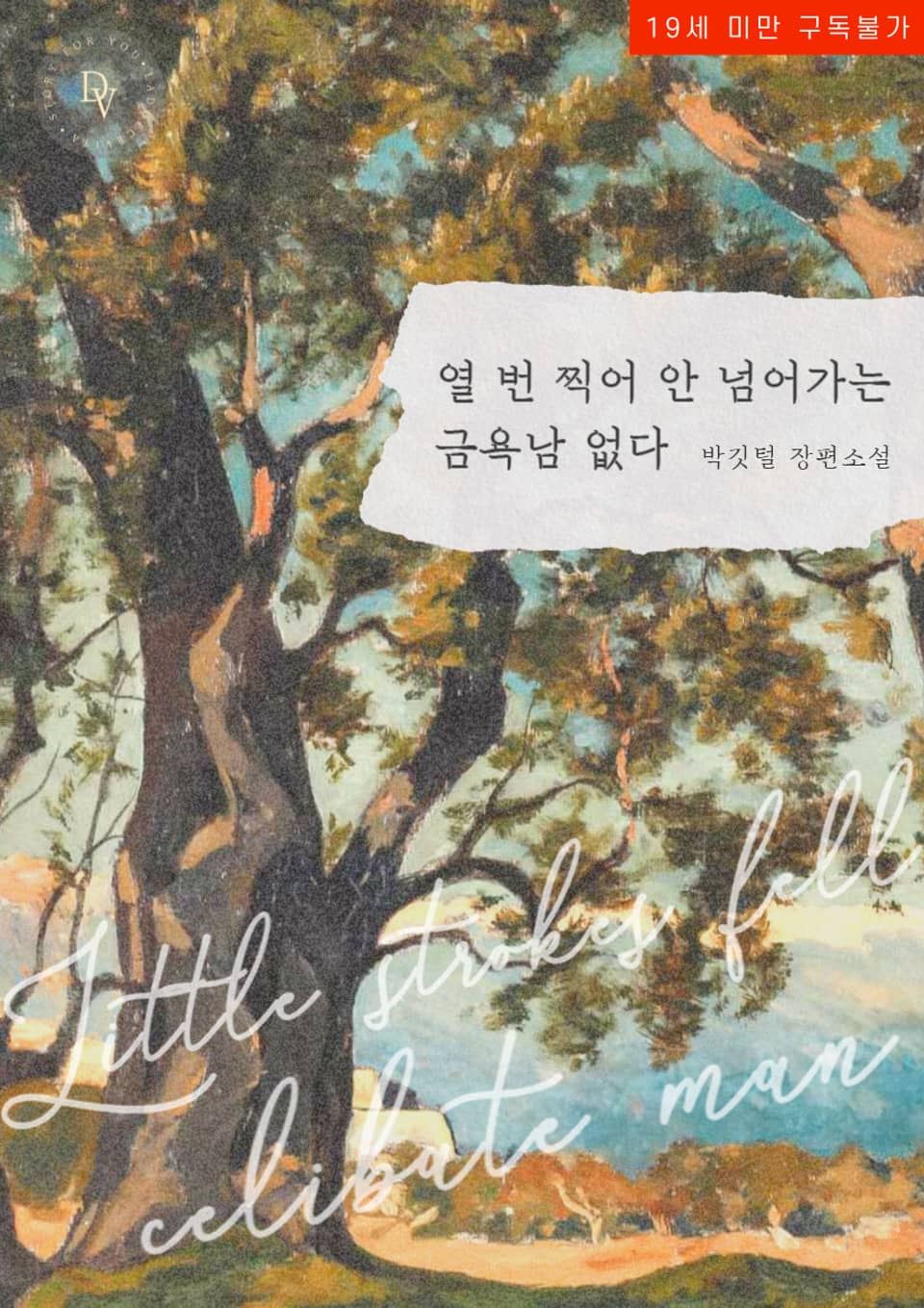
... Read More
I keep coming back to the idea that Ephelinus literally summoned this girl into his life and now he cannot function without her. That has to count for something, right? Think about it: he modified the summoning ritual. He made sure only someone with "no significant ties to their original world, someone feeling deep loneliness" would be called. On paper, he was being compassionate—someone who wouldn't struggle to adapt. But in reality? He pulled a force of nature into his perfectly ordered, sterile, monochrome existence and then had the audacity to be devastated when it was gone. Seo-ah is described as someone who cuts her skirts, asks why everything has to be the way it is, drags him out at midnight to dance under blue skies. She is CHAOS. And he is ORDER. Of course he's wrecked. Their dynamic is built on this fundamental incompatibility that somehow works. He's the one who enforces rules—he tells her she can't skip morning prayer, he mentions unauthorized books get confiscated. But then he ALSO lets her pull him into midnight adventures. Who is he really? The text makes it clear: underneath the Holy Priest exterior is a man who has never had anything unpredictable in his life, and Seo-ah is the first real thing that's ever happened to him. His father used him as a pawn—"I bore the disgrace of consorting with a commoner to grant you this immense power. Now honor Alife's name." This man has never had autonomy over his own body, his own choices, his own desires. And now Seo-ah has cracked him open and he has no idea how to put himself back together. The tragedy is that he doesn't even know if she feels anything like this. She called him her "mom's son" jokingly. Does she even miss him the way he misses her? God, I need to know.
... Read More
Okay, I need to talk about this one scene because it literally made me sit there like ðŸ'€. The way Ephelinus clutches that nightgown—like it's not just fabric but some kind of religious relic? That's the most devastating metaphor I've read this year. Here's the thing: the text says the aroma is "intoxicating, alluring, and embarrassingly intimate" and then it just... spirals. His internal monologue goes from guilt to obsession to pure aching loneliness and I felt ALL of it. But what got me wasn't even the physical part—though wow, the author really does not hold back. What wrecked me was the contrast between what he does in this moment and who he's supposed to be. He's a Holy Priest. He's supposed to be devoted to Sol. And yet here he is, "sentence" to an invisible torment because she exists. The word "sentence" is doing SO much work. It's not just punishment—it's a legal decree, something imposed on him by a higher court. His own body has become the prison. And then the flashback hits: her asking him to sing, her cutting her own skirt because it was too long, her calling him "Your Holiness" like it's both a title and something she's still learning how to say without laughing. These tiny details are what kill you. It's not the grand declarations of love—it's the fact that he misses whether she's eating well, whether she likes the food outside. That's the emotional core and the author buries it under layers of lust and guilt and I respect it so much.
... Read More
Okay so can we just—can we? Talk about Ephelinus for one second? Because I think I just had my heart gently but firmly crushed by a man who couldn't say no. That scene where Seo-ah asks him to dance? The way she tugs his arm, blinking up with those carefully curled lashes, reminiscing about how he used to dance with her when she was complaining about the Holy Kingdom being too quiet? I literally felt my chest tighten. And then—he couldn't take her hand. Couldn't. His lips pressed into that firm line again, and you could see it. The sadness. The loneliness. The regret. Just shimmering in those blue eyes like the ocean itself was crying. But here's what absolutely wrecked me: he wasn't even looking at her anymore. His gaze shifted past her, to someone behind her. And then he said this thing about her being free to enjoy the banquet since she's not the star, but receiving more attention than any star would. So… cautious. Yeah. Just cautious. Not because he was pained. Not because watching her in that cream-colored dress made his throat dry. Not because every compliment she got from other men felt like acid on his insides. No, just cautious. Right. And then he left. Just quietly excused himself while she was surrounded by well-wishers, and she missed the sadness in his voice because she was too busy being charming. I wanted to shake him. I wanted to shake her. I wanted to shake both of them and say JUST TELL HER. JUST SAY YOU'RE JEALOUS. JUST SAY YOU MISS DANCING WITH HER. But instead we get this beautiful, aching thing where he watches her from afar—still playing guardian, still monitoring, still caring in the only way he knows how—and she's over there thinking he doesn't want her to stay, completely missing that he's the only person who never stopped trying to protect her even as he pushed her away. The wine glass getting emptier and emptier. The dryness in her throat. The way she keeps scanning the room for him even though she knows he won't look back. "The one person I want to see this isn't even looking." Oh god. That line. That absolutely destroyed me. And then—the worst part? He's smiling at other women. Warmer. Kinder. Almost tender. The same polite smile he uses to reject her, but directed at people who actually WANT him. And she's watching from across the room, heart bruised from rejection, now adding jealousy to the cocktail, sipping wine she doesn't need because her heart is literally BURNING. I am not okay.

Leave a comment

You must be logged in to leave comments. or
