Summary

... Read More

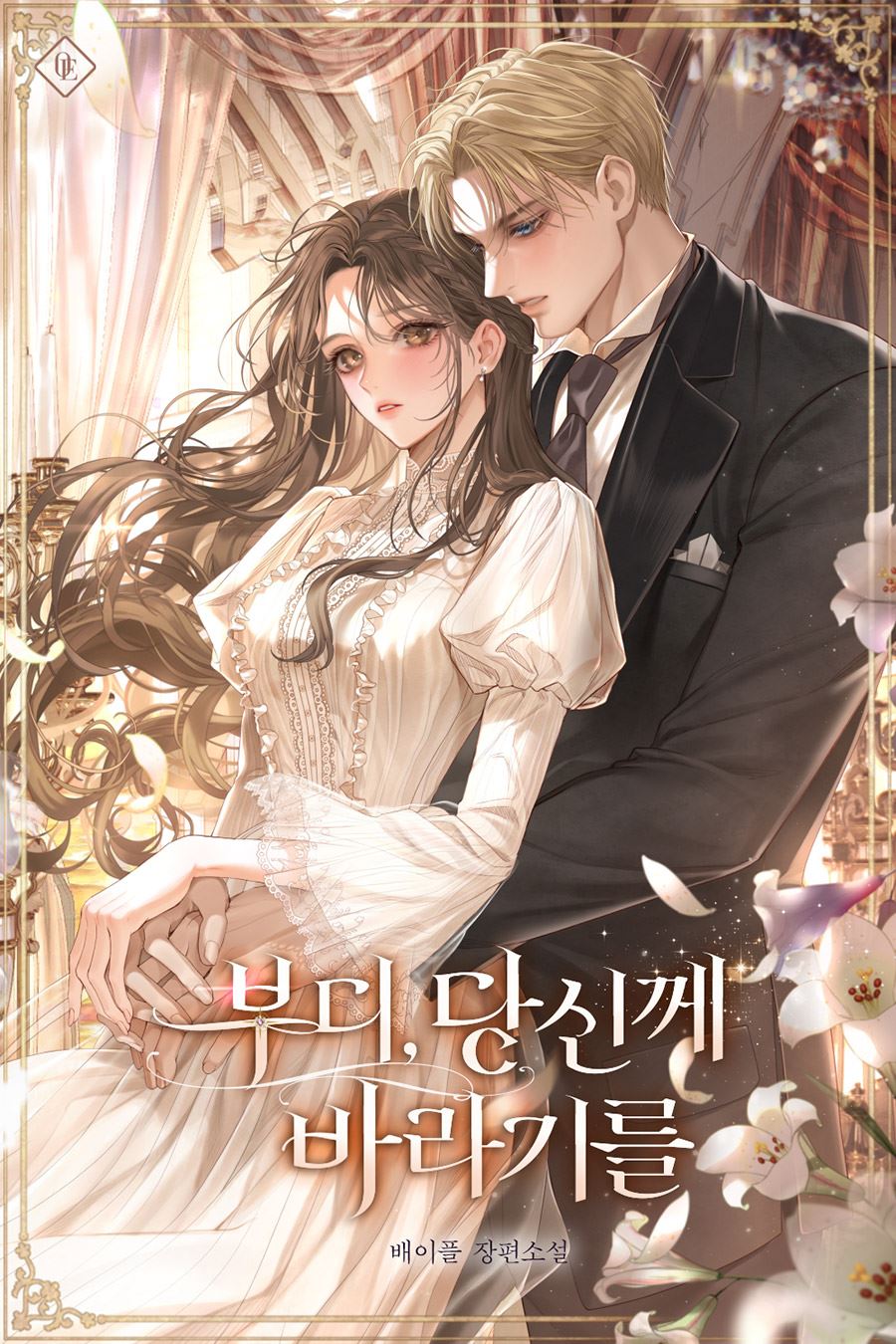
Jang Seo-ah is a South Korean high school student who was summoned to the fantasy world of Genève five years ago to fulfill a prophecy as the Saintess of Sol. She has become a celebrated hero for defeating the black dragon that threatened the continent, yet she remains an outsider bound by her role as a savior. Her closest companions are Jenny, a skilled dwarven alchemist, and Rurina, an elven warrior, with whom she spent three and a half years on a military expedition. Upon their return, the New United Government of Genève honors Seo-ah with the title of honorary regent and offers her the privilege of returning to Earth through a reverse summoning ritual. The primary obstacle to her staying is Ephelinus, the High Priest of the Holy Empire and the son of the Holy Emperor. Ephelinus designed and completed the ritual, believing it is Seo-ah’s duty to return to her own world, a decision rooted in his misunderstanding of her initial grief over her deceased mother.

Seo-ah has no desire to leave Genève, where she has built a life, gained power, and fallen deeply in love with Ephelinus during her five years in this world. Her feelings for the chaste and virtuous High Priest have grown since she first arrived, supported by his constant care and protection. To prevent the reverse summoning, which requires the summoned to maintain physical purity, Seo-ah resolves to seduce Ephelinus and break her virginity with him, thereby disqualifying herself from the ritual. She launches a series of attempts ranging from direct confessions to employing various potions created by Jenny, including a potent aphrodisiac she mistakenly labeled as a beauty potion. Despite the physical intimacy initiated by these schemes, Ephelinus consistently stops short of consummation, treating her advances as medical necessities or emotional outbursts while maintaining his vow of chastity and his determination to send her home.

The central conflict escalates during a grand banquet at the Sun Palace, intended to showcase the unity of Genève’s races. Seo-ah attends in an elegant gown designed to present herself as a potential resident rather than just a temporary hero, hoping to win over public opinion and the Senate alongside her personal efforts. However, Ephelinus publicly rebukes her attire, accusing her of self-objectification and parading like a commodity to please the political elite. He intervenes when a arrogant nobleman, Livo Arsene, attempts to harass her, using a fabricated religious rule about the Saintess’s forbidden courtship to escort her away. On a balcony, their confrontation reveals the deep emotional disconnect between them; Seo-ah tearfully confesses her love and her motivation for abandoning her purity, while Ephelinus remains emotionally stoic, rejecting her not out of indifference but out of a rigid sense of duty.

Seo-ah realizes that pleasing Ephelinus personally may be impossible given his unwavering principles. She shifts her strategy from seduction to political maneuvering, leveraging her popularity among the common people, the support of the Dwarven and Elven elders, and the backing of noble houses like Istel. She threatens to incite public unrest if the Senate forces her return. The story concludes with Seo-ah rejecting Ephelinus’s pity and control, declaring her independence. She prepares to fight the political battle to stay in Genève on her own terms, leaving the future of her relationship with the High Priest uncertain as she transitions from a passive hero waiting for rescue to an active political player demanding her right to remain.

Latest Release
DateGroupRelease
2026-09-27citrus aurora c19
2026-09-27citrus aurora c18
2026-09-27citrus aurora c17
2026-09-27citrus aurora c16
2026-09-27citrus aurora c15
2026-09-27citrus aurora c14
2026-09-27citrus aurora c13
2026-09-27citrus aurora c12
2026-09-27citrus aurora c11
2026-09-27citrus aurora c10
2026-09-27citrus aurora c9
2026-09-27citrus aurora c8

Community Reviews

Rating(3.8 / 5.0, 53votes)
5 stars
16(30%)
4 stars
18(34%)
3 stars
11(21%)
2 stars
8(15%)
1 stars
0(0%)

Popular reviews

... Read More
Let me just say this: the stakes in this sequence are NECK-BREAKING and the author makes you feel it from paragraph one. We start with them escaping a grand banquet where they were nearly caught. Seo-ah's undergarments are already TORN. She's half-dressed, he's barely contained. They're moving through public spaces—ballroom, carriage, palace grounds—with zero cover. One servant, one curious guest, ONE glance from Seo-ah's observant friends—and everything collapses. But the real stakes aren't just get-caught stakes. It's deeper than that. Ephelinus is the High Priest. His entire identity, authority, and possibly his spiritual standing depend on celibacy and piety. The text makes this explicit: "Is it right for me to defile you with such filthy desires? I still… I still don't know if I deserve to…" He's not just risking social scandal—he's confronting the shattering of his entire worldview. And for Seo-ah? She's the one who initiated this. She orchestrated the whole thing. If this goes wrong, she bears the brunt of consequences in a society where a woman's reputation is everything. Yet she goes through with it anyway, crawling out from under his robes in the carriage, reaching for HIS buttons, saying "My seduction worked, didn't it?" That's not just bold—that's someone who has already accepted whatever comes. The physical conflict is equally charged. Her body is protesting. She's in genuine pain—"This internal pain, coming from her most intimate place, was something entirely new." She's asking him to slow down and he can't. Not because he's cruel, but because the stakes of NOT giving in have become higher than the stakes of stopping. His own desire has become a conflict he can't resolve. What I find most tense is that Ephelinus KNOWS he's hurting her and CONTINUES. "Even though I know it pains you, I just… I can't stop." That's the kind of conflict that keeps readers up at night—not will they get caught, but can this relationship survive what they're doing to each other right now?
... Read More
What I love about this chapter is that it's not actually about a dance. It's about three separate conflicts happening simultaneously, and the author layers them so perfectly that you feel all of them at once. First, the political conflict. We're introduced immediately to the Senate members watching Ephelinus with "meaningful glances," eager for answers about whether Seo-ah will return. This isn't background texture—it's the foundation. The reverse summoning spell is the ticking clock. Everything that happens at this banquet exists in the shadow of that spell. When the elven lord and dwarven elder promise to stop the United Government if needed, they're explicitly connecting Seo-ah's personal desire to stay with the larger political stakes. "Every living being in Genève is indebted to you"—this isn't just flattery, it's a statement of political reality. If the humans don't let her stay, the elves and dwarves will make trouble. Second, the romantic conflict. Obviously. But here's what's interesting: it's not just "will they or won't they." It's "can they even acknowledge that they want to?" The stakes aren't just about romance—they're about identity. Seo-ah is trying to become "an ordinary woman" in Genève, but Ephelinus keeps treating her like the girl he protected when she first arrived. His refusal to dance with her isn't just coldness—it's him clinging to the guardian role because it's the only relationship dynamic he knows how to maintain. And third, the personal conflict, which is honestly the most devastating. Seo-ah's realization that she's dressed to seduce THE ONE PERSON who can't look at her. The jealousy when other women get his warmth. The frustration when flirty gazes land on HER instead of the target she was aiming for. "All dressed up to seduce His Holiness, only to attract unwanted flies instead!" This is the moment where the external conflict (the spell, the politics) becomes unbearable because it's happening in the context of personal rejection. The stakes escalate beautifully through the chapter. At the start, it's just a banquet—low tension, social maneuvering. Then the dance request fails. Then he leaves. Then she notices other women approaching him. Then she realizes she's attracting unwanted attention herself. Then the wine starts hitting. By the end, the internal stakes have peaked: she's wondering if she would've been preferred covered in monster blood instead of in a dress designed to make her look like an ordinary woman. What makes this work isn't just that there are multiple conflicts—it's that they INTERACT. The political pressure makes her more desperate to secure her place, which makes the romantic rejection feel more devastating. The romantic rejection makes the political maneuvering feel pointless. The political stakes make the personal costs feel even higher. It's a perfect triangle of tension, and by chapter's end, all three points are pulling in different directions with no resolution in sight. I need the next chapter immediately.
... Read More
Okay, can we talk about how this whole sequence is basically a masterclass in escalating stakes? It starts with what looks like a boring banquet scene and a creepy aristocrat trying to drug a girl, right? Classic setup. You're like 'ugh, just walk away.' But no, because Seo-ah can't just walk away—she's trapped by politics, by appearances, by the fact that one wrong move and she's back on the Earth shuttle. Then Ephelinus shows up and everything shifts. He doesn't just rescue her; he lies for her, drinks the potentially-drugged wine himself (which, iconic), and physically removes her from the situation. And then he takes her to... a balcony. Which, as the narration practically winks at us, is THE spot for scandalous encounters at banquets. Is he setting her up or saving her? The balcony scene is where the plot really detonates. Ephelinus confronts her about her choices—her dress, her behavior, the way she's trying to blend in with nobles who despise her. And then she drops the bomb: she's been deliberately trying to lose her 'purity' because THAT'S the condition to stay in Genève. Every seduction attempt, every scandalous move—it was all calculated sabotage of the reverse summoning ritual. And the ending? "But at those words, Ephelinus's eyes froze over." That's it. That's the chapter. No resolution, no answer, just his face going completely blank after she says she'd lose her purity with anyone if she has to leave. The plot didn't just build tension here—it pulled it until something snapped.
... Read More
I have never laughed this hard at a描写 scene in my life. Picture this: it's the High Priest's bedroom — presumably a place of intimacy, late-night conversations, and emotional vulnerability — and Ephelinus is there in a simple ivory tunic that reaches his knees. NOT a nightgown. NOT sleepwear. THE SAME plain priest's attire he wears everywhere. The text literally says it gives "the illusion of a saintly ceremonial robe" even in his own bedroom. Seo-ah is sitting there having just administered a potion that was supposed to make him lose control and "release the tension" and he's over there looking like he prepared for a church service instead of a potentially scandalous evening. "With that loose fabric draped over his lower body, there was no way for Seo-ah to know what was happening underneath." — I am deceased. The visual comedy here is immaculate. But then the worldbuilding hits you in a completely different way. Genève isn't just some fantasy backdrop — it has a United Elder Council, a Holy Empire, a newGENEVE Union government that literally just declared a new era after defeating the black dragon. There are dwarven clans, elven representatives, spiritual beliefs around Sol, ancient summoning rituals written in sacred language full of metaphors. The expedition team spent three and a half years on a BLACK DRAGON expedition — that's not a weekend trip, that's an epic campaign. The contrast between the grand political machinery (Elder Councils, united governments, prophecy fulfillment) and the tiny intimate space of a bedroom where a woman is desperately trying to seduce the man she loves so she doesn't have to leave — that juxtaposition is what makes this world feel alive. It's not just politics or just romance, it's both crashing into each other in the most dramatic way possible.
... Read More
There's a symbol in this passage that I couldn't stop thinking about. The hair. It comes up three separate times and each time it means something different. First, when he enters her, the text mentions their tangled hair brushing against her stretched entrance. Hair as physical connection—two people literally intertwined at the most basic level. Then later, when he slowly undoes her hair pin by pin and it cascades down in waves, framing his face in glossy black against his silver. This is vulnerability. A warrior letting her guard down. A carefully styled, controlled woman becoming wild and unbound. The maids of Istel had prepared her for a formal occasion, and he's the one who undoes all of that preparation. And then the reversed image at the end—their hair spread across the bed together, mingling. His silver, her black. The contrast that mirrors their difference: High Priest and warrior, Holy Kingdom and Genève, restraint and fire. But tangled together, indistinguishable in the mess. Beyond hair, there's the recurring motif of tears. Ephelinus cries four separate times in this passage. Not once from sadness—three times from overwhelming pleasure and emotion, and once from guilt. Tears as the physical manifestation of something too big for words. This man has spent his life controlling every impulse, every desire, every emotion. And she has reduced him to weeping. His tears are the ultimate symbol of his surrender—not just physically, but spiritually. He has come undone. The sacred texts he remembers mid-coitus are another layer. Religious doctrine weaponized for pleasure. The idea that female pleasure is sacred, that honoring it is an act of devotion. It flips the entire power dynamic of their worlds. The church teaches one thing, but his body learns another—and he's choosing the latter.
... Read More
So I need to unpack this moment because it's genuinely clever writing. Seo-ah produces these rings that Nemion gave her—rings that make you invisible and silent to others—and Ephelinus immediately throws them away in a fit of jealousy. Here's why this matters for the plot: Nemion has been established as a flirtatious, somewhat shameless mage character who's been cheerleading for Seo-ah's seduction attempts. The fact that he *anticipated* she might need privacy for intimate encounters and created a device for exactly that purpose tells us three things. First, Nemion knows more about the developing relationship between Seo-ah and Ephelinus than he's let on. Second, the author is building a world where magical artifacts have practical, personal uses—not just combat applications. Third, and this is the juiciest part: Ephelinus's reaction reveals his emotional state faster than any internal monologue could. He doesn't just feel threatened by another man's involvement—he feels *contaminated*. The word 'depraved' is doing a lot of heavy lifting there. The ring-throwing moment also creates immediate tension. They're still on a balcony, still in a semi-public space, and now they've lost their escape option. This forces the scene toward a reckoning—either they deal with the emotional conflict directly, or they find another way out. The plot is tightening. Also worth noting: the contrast between Seo-ah's practical thinking ('if we each wear two, we could slip out') and Ephelinus's emotional explosion shows how differently they're processing the same situation. She's strategic. He's raw. That gap between them is where the story lives right now.
See all reviews

Custom lists

See all custom Lists