Necromancer Lords are Weak? Watch Me Recruit Fallen Deities! - Reviews

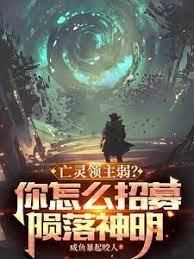
Necromancer Lords are Weak? Watch Me Recruit Fallen Deities!
+Add to Custom List
Sort
Add review
... Read More
I need to talk about Xu He because this guy is genuinely impressive in how perfectly he embodies toxic entitlement. Let me just lay it out: he's been visibly resentful of Shen Chi for THREE YEARS simply because Shen Chi had no family background but still ranked above him. Do you know how much that says about Xu He's own insecurity? His entire identity seems built on the idea that people like him deserve to be on top, and Shen Chi existing at the top without any connections is an affront to his worldview. The moment he finds out about the E-rank awakening, he doesn't just move on—he actively mobilizes his entire faction to destroy Shen Chi's reputation. This isn't jealousy, this is something darker. "After all, with your Talent, you probably cannot even pass the Novice Trial. How could you possibly be worthy of Qingyue?" That line absolutely crystallizes his entire character. He doesn't even see Lu Qingyue as a person—she's a status symbol, and Shen Chi having any claim to her is insulting to his hierarchy. And then Tang Jing. This guy is fascinating. Everyone assumes he's ruthless—"awful temper, hated students talking back"—but he single-handedly dismantles the entire bullying situation and then privately pledges to help Shen Chi. He even mentions he's been investigating Shen Chi's character for a while. What does that tell you? He wasn't blindly punishing people; he was observing, and he chose to intervene. Shen Chi himself is the most interesting character study here. His response to all the mockery is just... cold. Not dramatic, not angry, not even defensive. Just flat, precise statements that dismantle every insult. "What Talent I awakened, what the hell does that have to do with you?" That's not someone who's crushed. That's someone who's already moved on while everyone else is still performing.
... Read More
Okay so I need to talk about this fight scene because holy shit. We go from earlier where Asun basically couldn't break through Minotaur guards to him now completely melting a Level 10 Elite Minotaur Captain with ONE basic attack. Like, one slash, -1824 HP, it's just gone. The narrative actually has Shen Chi reacting to this which is great because it mirrors what I'm feeling as a reader. "A Level 10 Elite Rank Monster was taken out with a single basic attack. Too powerful!" Yes. YES. But the real plot explosion happens when Shen Chi levels up to 7 and unlocks the 【Immortal Body】 trait. This completely changes the game. He can now enter the Ancient Battlefield independently, explore it as a spirit form, and recruit undead directly from there. This is a massive expansion of the power system and the story possibilities. It's not just about building a territory anymore — he now has an entire dead world to scavenge. And then the discovery at the pit: 687 Tier 1 Skeleton Soldiers buried down there. Plus a Tier 4 Wailing Wraith that's literally made from their resentful souls. The Wailing Wraith's skills are insane — 【Bone Hand】 scales with linked skeleton count, so if he links all 687, that's 687 attack bonus. 【Resentful Frost】 ignores 50% defense and doubles damage. That's a game-changing troop type. The Iron Sword scene is also a brilliant plot device — it has the Corrosion trait that stacks a slow debuff up to seven layers reducing movement, attack speed, and defense. But Shen Chi physically can't pick it up because his Immortal Body is intangible. So he has to rely on Asun to retrieve it. This creates a nice dependency dynamic and sets up future scenarios where their roles in the Ancient Battlefield are clearly defined.
... Read More
The visual language in this section is genuinely striking. When the Netherflame Orbs light up the sky, each fireball described as the size of a bowl wreathed in crackling dark blue flames—that's not generic fantasy fire, that's specific enough to paint in your head. The cold mist curse spreading across the battlefield, dozens of golems caught in it, turning into literal frost sculptures before the Ghoul Curses detonate them in chain explosions… you can see the whole thing like a movie. I love how the setting of the ruins itself becomes a character—the stone door swallowing daylight, the spiral staircase leading to shadow, the bookshelves on the second floor with a concealed space behind a partition. The world feels layered. Every floor has a different atmosphere: the open plaza where bone armor clicks onto Shen Chi's body, the dark interior with wooden crates and potion bottles on a long table, the library with its narrow rift of sunlight. Even the Telescope device outside gives us a built-in spectator framework that doubles as worldbuilding—the author doesn't need to tell us this is a game-like world when we see characters using magical observation tools and receiving system notifications. The bone armor scene specifically—Wailing Wraith hovering behind Shen Chi, ice cones and fireballs hitting a defense stat of 1,374 and bouncing off as elemental dust—that moment of visual contrast between the golems' devastating attack and Shen Chi standing completely untouched is the kind of imagery that sticks with you.
... Read More
There's something deeply philosophical about this whole sequence that most readers probably skim right past, and I want to sit with it for a bit. The central image of these chapters isn't a dragon or a magical artifact or even Asun's epic level-up. It's the lamp. This unassuming gray-black lamp that contains an entire Ancient Battlefield—a space where the dead rest, recover, and grow stronger even while not fighting. It's death as infrastructure. Death as home. Shen Chi's talent is Netherworld Monarch, and what does that mean thematically? It means death is not an end but a TRANSIT POINT. His undead troops aren't trapped in death—they have a BASE. They REST. They LEVEL UP. They wait. The 【Journey of the Dead】 isn't just a convenient storage system; it's a statement about what death CAN be when you have the will to redefine it. The contrast with Lin Hongyu is the thematic key here. Lin Hongyu has Flame Mages and Thunder Mages—elements of creation and destruction, living power. But his entire emotional state is defined by COMPARISON and RANKING. He measures his worth against others and finds himself lacking. Shen Chi, meanwhile, has built something from death itself and doesn't need anyone's validation. His power is self-contained. His army rests in a battlefield of his own making. He literally carries his entire civilization in a lamp. Then there's the transformation scene—mage apprentices becoming necromancers. Flesh rotting away to reveal bone. This is the ultimate act of redefinition: taking something living and giving it a NEW purpose. The Skill 【Eternal Night Soul Summoning】 that lets him resummon dead troops is the thematic climax. Death is not final. Loss is reversible. Loyalty outlasts mortality. The recurring symbol of GREEN FLAME is also worth noting—the soul flames in the skeletons' eye sockets. Green, not the typical blue or white of spirits. Green is the color of life, of growth. Even in death, there is vitality. The undead aren't empty shells; they're fundamentally ALIVE in their devotion. This book is about taking what the world discards—death, the dead, the forgotten—and building an empire from it. Not despite death, but THROUGH it. That's a profoundly subversive theme for a progression fantasy, and the author never talks about it directly. It just grows under your feet like bones through soil.
... Read More
The moment the Novice protection shield shatters is the single highest-tension beat in these chapters. Think about it—up until then, Shen Chi has been preparing, gathering, planning. He has agency. He can choose when to fight and how. The second that shield breaks and the system voice announces the three waves, all of that control evaporates. He's committed. There's no logging out, no retreating, no starting over. Four hours. Survive or die. And the stakes are terrifyingly clear: "If the Lord is killed or the core is destroyed, they will be eliminated." Eliminated. Not defeated. Not set back. Gone. The system isn't threatening a penalty—it's threatening erasure. That's a brutal way to frame survival, and it raises every fight to existential weight. What makes the conflict truly nail it though is how the waves escalate from "manageable" to "oh god." Wave one goes smoothly—almost too smoothly, which makes you uneasy. Wave two introduces the harpies and suddenly you're juggling two fronts. And wave three? One hundred goblin warriors with 【Ironclad Defense】 and 【Giant Axe Smash】? Against an army that's already taken casualties? The math is genuinely terrifying. Shen Chi's -11520 critical hits are impressive, but one hit from a goblin warrior could delete a skeleton soldier. The margin for error is razor thin. Asun charging into the fray and dealing ten-thousand-damage crescent slashes helped, sure, but the reader still doesn't know if that's enough. The conflict never quite settles into comfortable dominance, and that's exactly right.
... Read More
The narrative voice here has this wonderful deadpan quality that contrasts perfectly with the chaos on screen. Shen Chi's dialogue is barely there—just a few key commands, and when he does speak, it's surgical. 'Your stone golems are endless, are they?' said almost cheerfully. 'Then let's see whether you have more stone golems or I have more skeletons.' That's not a battle cry, that's a guy making small talk while solving a math problem. The real voice work happens in the narration itself, which adopts this almost sportscaster tone during battles—'Bang! Bang! Bang!' for the shield impacts, 'Whoosh, whoosh, whoosh!' for the spells—simple onomatopoeia that somehow makes the scene more visceral instead of less. Zhao Ziqin's internal monologue is where the personality shines: his thoughts go from analytical to frantic to resigned with this almost comedic honesty. The system notifications ('Experience gained *92', 'You were killed by the Troop Type of Lord Shen Chi') are delivered with cold bureaucratic indifference, which is honestly funnier than any joke writing. And the Wailing Wraith—just hovering there, casting bone armor, no dialogue, no personality needed. It's a supporting character who communicates entirely through action, and that absence of voice is its own kind of voice. The author trusts the reader to understand hierarchy and relationship without having every character announce their feelings.
... Read More
"Give me something good, please, please!" I literally SCREAMED when I read that. Shen Chi clasping his hands together and praying to the system like it's some capricious deity who might or might not bless him with loot is the most genuinely funny line in these entire chapters. And it's not even trying to be funny—it's just Shen Chi being Shen Chi. The narrative voice in this book is one of those things that's really hard to pin down but you KNOW when you see it. It's casual without being slangy, excited without being overwrought, and it has this wonderful ability to shift from pure mechanical description to raw emotion in a single sentence. Take the necromancer transformation scene: "Then it revealed the blood vessels, subcutaneous fat, and muscle fibers. Then Shen Chi watched helplessly as all the flesh rotted away!" The clinical detachment of listing anatomical layers, followed by "watched helplessly"—that's the voice doing incredible work. It's horrified AND fascinated at the same time, which is EXACTTLy how someone who built an undead army would react. This isn't some noble hero recoiling at necromancy; this is a pragmatic man who is simultaneously grossed out and thrilled that his power just scaled up again. The system notifications themselves have a distinct voice too. They're dry, mechanical, almost bureaucratic—which creates this hilarious contrast with Shen Chi's very human reactions. When 【Journey of the Dead】 evolves, the system doesn't even get excited. It just states facts. But Shen Chi goes from "???" to basically losing his mind. The contrast IS the comedy. Asun's dialogue is sparse but purposeful. Every time he speaks it's functional and loyal—"Lord, the General's Order itself has already recorded..." No drama, no embellishment. It fits his character perfectly as a weapon that only awakens for its master. Lin Hongyu's section has a completely different voice—arrogant, self-deceiving, internally monologuing his way through disappointment. The author shifts registers smoothly between perspectives, which is impressive. My only minor gripe: sometimes the internal narration tilts toward info-dump territory. But honestly, for this genre, the voice is among the best I've read. It feels like a real person's brain, not a narrator. "Fuck..." indeed.
... Read More
When Shen Chi first arrives in the Ancient Battlefield and the description hits you, it's genuinely chilling. "The sky was gloomy, making it impossible to distinguish day from night. As far as the eye could see, scorched brown land stretched endlessly in every direction." And then the details pile on: broken flags, decayed war chariots, feathered arrows stuck in the sand with rotten fletching trembling in the wind, and not a single living creature anywhere. This isn't just a spooky aesthetic — it's worldbuilding with history. The author tells us this was the site of a God War involving countless Legendary races, where even the guiding gods were defeated. The landscape itself is a graveyard. Every bone pile, every broken weapon, every wind howl carries the weight of that ancient catastrophe. The scene with the pit full of bones is my favorite moment of atmospheric writing. Yin wind swirling at the bottom, a deep low voice of wind, and faintly, a piercing wail within it. Then the Wailing Wraith emerges from that exact pit — hundreds of resentful souls fused into one entity. The imagery of ghostly green human faces floating up from a bone pile, the wails mixing with the gale, then gradually ceasing as the light specks gather into a humanoid phantom... that's cinematic. That's movie-quality description. And the weapon mountain! A hillock made entirely of piled-up battered, bloodstained armor and swords — hundreds or thousands of suits. It's such a simple image but it communicates the sheer scale of death in this world better than any exposition could. The fact that these weapons have now gained the Corrosion trait from Netherworld power is a nice touch of dark ecology — death here doesn't just end things, it mutates them.
... Read More
Okay so let me just say — the face-slapping in this section? Chef's kiss. Absolutely exquisite. Xu He goes out of his way to publicly humiliate Shen Chi, drags his younger brothers around to smear his reputation, and by the time Tang Jing walks in, every single reader is just BREATHING waiting for the payoff. And then—director doesn't even side with the bullies. He literally REVERSES the whole scene and threatens the kids who started it. The structural symmetry here is SO satisfying. The author sets up this whole false conflict where it looks like Shen Chi is finished, the school has rejected him, his talent is E-rank trash, nobody believes in him... and then immediately undercuts every single one of those assumptions. The Novice Trial entrance is the real turning point though. Shen Chi walks in expecting to struggle, and BOOM — his barracks auto-evolves into Mythic Grade. The twist lands hard because the author spent an entire chapter making us believe he was powerless. That contrast is everything.
... Read More
I have to talk about Wang Bin because his arc in these chapters is honestly peak. This guy spent all this time targeting Shen Chi, going after him relentlessly, and now he's sitting behind a telescope watching Shen Chi casually farm an entire army while muttering about how regretful he is. The moment he thinks to himself 'regret! damn it, regret! run! I'll stay as far away as possible!' and then immediately gets surrounded by the exact skeletons he was observing—that's not just irony, that's the author delivering poetic justice with a smile. Zhao Ziqin is the other side of the coin here. He goes from frenzy and calculation to dumbfounded silence to absolute terror in about six beats. His thought process is almost sympathetic—he's actively trying to analyze Shen Chi's capabilities like a strategist, and every conclusion he reaches gets brutally overturned. 'He only has a few dozen skeletons, right?' Wrong. 'He'll exhaust his combat power eventually?' Wrong. 'I have time to make a move?' Absolutely wrong. The most chilling moment is when he notices the armor and equipment on the skeletons surrounding them match Shen Chi's style exactly—that split-second realization that Shen Chi had been targeting them the entire time while they were just watching him. That's a horror beat disguised as a plot reveal. Meanwhile Shen Chi is just… calm. Sitting down to farm. Smiling. It's not arrogance, it's something worse: it's genuine, unhurried confidence from someone who has already solved the puzzle while his enemies are still reading the instructions.
... Read More
I have to say, the pacing in these chapters is a masterclass in breathing room versus chaos. You spend a solid chunk of time in the Ancient Battlefield just sorting through weapons, checking panels, thinking about strategies—and honestly? I was not ready for that. I wanted to get to the fighting immediately. But then the trial hits and it doesn't stop. Three waves, no commercial break, and by the time you realize the third wave includes armored goblin warriors with actual skills, you're already committed. The transition from preparation to combat is what gets me though. One moment Shen Chi is doing logistics, the next the protection shield shatters and suddenly everything is "Clang clang clang" and damage numbers flying everywhere. That shift is so abrupt it almost gave me whiplash, and I loved it. The author doesn't warm you up for the battle—they just drop you into it, which mirrors exactly how a real Novice Trial would feel. You don't get a montage. You get a warning and then you're fighting for your life. My only minor complaint: the level-up distribution after wave two felt a touch rushed. Everything happens in rapid succession—prayer points dumped, stats inflated, skills upgraded—and I wanted to sit with that victory moment a bit more before the third wave hit. But then again, the genre doesn't really allow for that luxury, does it?
... Read More
This chapter is an exercise in deliberate pacing disguised as a loot run. The author could have rushed through the entire Mage Tower sequence in a few paragraphs: find books, fight skeleton, get big spell, leave. Instead, we get the full experience—the shrinking space on the third floor, the suffocation, the collapsed ceiling, the carpet, the dust, the coughing fit. 『Cough, cough, cough...』 That cough is doing structural work. It's the physical consequence of rushing into an ancient, sealed space. It grounds the fantasy in bodily sensation before the puzzle-solving begins. The trapdoor mechanism is where the pacing really earns its keep. Shen Chi tries to open it himself, fails, then has an inspired thought, calls the Skeleton Scholar over, and... waits. The text explicitly notes he fiddles with the mechanism for half a minute before the skeleton solves it. That waiting period matters. It's the narrative equivalent of holding your breath. Then the clicking sounds. The trapdoor descends. The reveal. After that, the chapter shifts gears into production mode. Forging, analyzing, material gathering, mass-production setup. This isn't the slow, contemplative pacing of the tower exploration—it's kinetic, efficient, almost industrial. The clanging of the forge replaces the silence of the buried room. The tempo accelerates. The chapter ends on a cliffhanger of sorts—not danger, but anticipation. "Shen Chi planned to continue exploring the Ancient Battlefield!" The reader knows something is down there, something worth investigating, and the chapter cuts before we see it. Classic structure: satisfy one desire (the tower loot) while opening another (the battlefield mystery). The pacing works because it respects the time investment. Every discovery feels earned through a sequence of observation, hypothesis, and trial. Even the 【Fall of the Stars】 reveal follows this rhythm—dusting off the carpet, finding the trapdoor, descending, opening the chest. The reward comes after the labor.

Leave a comment

You must be logged in to leave comments. or