My Wife Is Trying to Betray Me
+Add to Custom List
Genres:
Novel Info
  • Author:
  • Status:Ongoing

Summary

... Read More

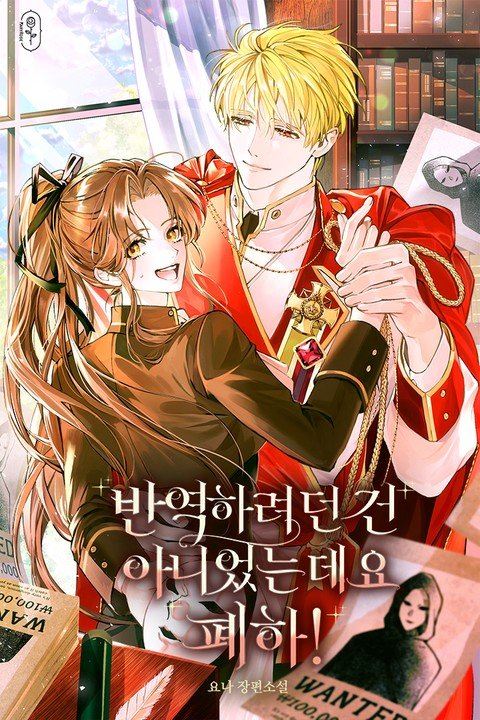
James Ashton, a self-made banker who built Roycobs Bank into a prominent institution through cold logic and sharp judgment, discovers his wife Eliza is selling the jewelry he gifted her. Believing she is betraying him, he confronts the reality of her secret life, only to find she is planning to buy a house without him. Unbeknownst to James, Eliza is not merely an obedient wife but Lim A-young, a woman who died in a previous life after being betrayed by her boyfriend and then reborn into this body. Having read a novel detailing her tragic fate as Eliza Ashton, she remembers everything: her marriage to James, her friendship with Lorina Winclaire, and her eventual death by poisoning after James abandoned her to Lorina. Determined not to repeat her past mistakes, Eliza decides her only path to survival is to escape.

Eliza’s new life begins with a fever-induced collapse that serves as her turning point. When James returns home, he finds his routine disrupted; Eliza no longer presses his shirts or waits for him with submissive grace. Instead, she coldly dismisses his mistress-to-be, Lorina, when the noblewoman visits to gloat over Eliza’s misfortune. Eliza realizes that her previous devotion was weakness, and she resolves to sever all ties with James and Lorina. She identifies a critical flaw in her situation: divorce is impossible in their society, and running away would likely lead to her death at Lorina’s hands. To avoid this, she devises a plan to become the villain in her own story by stealing James’s fortune and fleeing, ensuring he views her as a criminal rather than a wronged wife.

The core conflict deepens as Eliza navigates her final days before her escape. She visits the safe in James’s study, using the combination 0329—the date they first met—which she once believed was a symbol of his love. She realizes now that it was merely a number from a past emotion, void of meaning. Inside, she finds cash, gold bars, and jewelry, which she decides to take as compensation for her suffering. Simultaneously, James notices Eliza’s drastic behavioral changes. Her refusal to serve him domestically and her sudden independence intrigue and irritate him. He becomes obsessed with understanding the woman who used to be entirely devoted to him, unaware that she is plotting to leave him.

A key turning point occurs when James returns home unexpectedly early due to delayed shipping documents regarding a lucrative investment with the Kingdom of Silomon. He finds Eliza in a state of undress, leading to a tense encounter where their physical chemistry remains despite her emotional detachment. Eliza struggles with the contradiction of her body responding to James while her mind despises him. Afterward, she reads the newspaper and learns of the typhoon that will delay the ship, realizing she has little time before James’s success makes him even more desirable to Lorina’s family. She understands that if she waits, James will rise higher in society, making escape harder.

Eliza proceeds with her plan, sending a telegram to James demanding he leave for three days so she can execute her getaway. During this time, she wanders the city, experiencing a sense of freedom she never knew before. She encounters Marquis Aedrin Phelin, a nobleman Lorina had previously rejected, and observes his interest in her. This interaction highlights her new agency; she is no longer the passive object in others' schemes. Meanwhile, James, convinced of her hidden passion, plans to pursue her aggressively after his business duties are complete, misinterpreting her actions as flirtation rather than preparation for abandonment. The story ends with Eliza preparing to empty the safe and vanish, setting the stage for a collision between her calculated rebellion and James’s possessive ambition.

Latest Release
DateGroupRelease
2026-10-03dusk blossoms c56
2026-10-03dusk blossoms c55
2026-10-03dusk blossoms c54
2026-10-03dusk blossoms c53
2026-10-03dusk blossoms c52
2026-10-03dusk blossoms c51
2026-10-03dusk blossoms c50
2026-10-03dusk blossoms c49
2026-10-03dusk blossoms c48
2026-10-03dusk blossoms c47
2026-10-03dusk blossoms c46
2026-10-03dusk blossoms c45

Community Reviews

Rating(0 / 5.0, 43votes)
5 stars
0(0%)
4 stars
0(0%)
3 stars
0(0%)
2 stars
0(0%)
1 stars
0(0%)

Popular reviews

... Read More
I need to talk about Lorina because my feelings are complicated. On one hand, she's clearly a villain—she's having an affair with her best friend's husband, she poisoned someone's tea in a past life apparently, and she has zero moral qualms about manipulating situations to her advantage. But on the other hand, watching her interaction with Eliza after the boutique incident was genuinely fascinating. She shows up ready to either apologize or manipulate, whichever works better, and Eliza just... doesn't give her the satisfaction. That moment when Lorina realizes Eliza isn't going to play along? Her composure completely cracks. She hurriedly leaves to avoid James, and the narration says something so damning: 'To Lorina, it seemed there was no difference between the wicked desire to steal another woman's husband and the flutter of being in love.' I'm shook. Meanwhile, the Aedrin subplot adds another layer—he's genuinely smitten with Lorina but smart enough to be cautious, and Eliza is essentially matchmaking her friend with a guy she knows could be useful. The power dynamics in this scene between the three of them (well, four if you count James who's present but not in the room) are chef's kiss.
... Read More
I keep coming back to the sensory details in this chapter—the click of Eliza's tongue inwardly, the deliberate way she lowers her gaze to her teacup, the floral patterns on the wallpaper that Lorina stares at while dreaming of her wedding. The author builds this world through micro-details rather than grand descriptions. Atherm society isn't explained; it's felt in the weight of a calling card, the space between seats at a table, the unspoken rules about who may sit where. When Lorina enters Eliza's home, there's this fascinating tension between public propriety and private territory. The sitting room becomes a battlefield, but it's fought with politeness and implications. I love how the mundane activities—making tea, reading newspapers, preparing dinner—carry enormous emotional weight. Even Marie's silent question about whether to prepare an extra serving tells us everything about household hierarchy. The carriage scene at the beginning where Aedrin witnesses Eliza greeting Lorina establishes the entire social web in one glance. This is worldbuilding through behavior, not exposition. The reader understands Atherm's rigid class structure because they watch characters navigate it, stumble over it, weaponize it. The atmosphere is suffocating precisely because everyone is always performing—polite smiles hiding sharp edges, every interaction a calculated move in a game where the stakes are social survival.
... Read More
I need to talk about the scene where James walks into her bedroom and finds her pretending to sleep. This is some of the most tightly written tension I've read in forever and the visual imagery is insane. The author starts with sound — "Thud. Thud." His footsteps. Just two words but you can feel the vibration of them approaching down the hallway. Then the door opens and Eliza's reaction is so human: she pulls the blanket up to just below her eyes and squeezes them shut. She's caught between wanting to hide and needing to perform normalcy, and she fails at both. Then James enters and the description of him is almost overwhelming. "His blue eyes, so resolute, felt like a deep mire. As if they held a kind of magic that made it impossible for others to freely assert their own will." This is the same man who looks at her with those predatory eyes and yet she's the one trembling. The power dynamic is so beautifully twisted. And the scent! "A heavy, refined scent clung to him." You can practically smell it through the page. Combined with the visual of his damp jawline from shaving, the white shirt barely concealing his physique — the author paints him like a Renaissance painting of a dangerous man. Elegant, composed, devastating. But what makes the scene work so well is the contrast between Eliza's internal chaos and James's exterior calm. She's internally screaming, heart racing, cold sweats, while he's just... standing there. Observing. Testing. Reaching out to check her forehead like it's a business transaction. The physical intimacy of his warm hand on her forehead versus the emotional distance of his words — that gap is where all the tension lives. And it lingers on her skin long after he leaves. "The lingering warmth of his hand on her forehead — slightly tingling, almost burning — refused to fade." That's not just description. That's the body remembering what the mind is trying to escape.
... Read More
I keep coming back to the Lorina-Eliza relationship because it genuinely made me sad. On the surface, they're best friends. Lorina shops with Eliza, confides in her, expects her to drop everything for her. But reading between the lines, this friendship has always been fundamentally asymmetrical. Lorina uses Eliza as an emotional dumping ground and a social accessory, while Eliza plays along because she has no choice—or at least, that's what it seemed like until now. The boutique scene changed everything. Lorina ran off and left Eliza to deal with the aftermath of... whatever that was. And her first instinct wasn't to check on Eliza, it was to frame herself as the victim who couldn't help. When she shows up at Eliza's door, she's prepared to manipulate her way back into grace, not actually apologize. And Eliza—cold, calm Eliza who spent the last chapter systematically dismantling her old life—doesn't even rise to the bait. The most heartbreaking line might be the simplest: 'As I mentioned, Miss Winclaire already has everything she could possibly want.' Eliza is literally congratulating herself on securing Lorina's happiness while plotting her own freedom from her. There's no love left in that friendship, only strategy and a strange, exhausted pity.
... Read More
There's a line early in this section that keeps echoing in my head: Eliza resolves to remain exactly what they believe her to be — a faint presence, a woman too insignificant to be taken seriously. The word 'faint' does so much heavy lifting here. It means weak, yes, but it also means barely visible, like a ghost or a shadow. She's weaponizing invisibility. And that connects to this idea running through the whole text about masks and performance. James's way of 'communicating' — the text explicitly flags this phrase in quotes, which is the author basically winking at us — is about to become his greatest weakness. Translation: his assumptions about Eliza are going to undo him. The red dress is another symbol I can't ignore. Red evening gown, displayed alone on a headless mannequin, pearls worth more than most people earn in a lifetime. Eliza reaches for it not because she wants it, but because it's the most dangerous option available. It's the visual embodiment of her transformation — loud, bold, impossible to ignore, even when she's trying to play the fragile girl who apologizes for taking up space. And then there's Lorina's desertion. Walking out and shutting the door without a word. It's such a small action but it symbolizes everything about the social world Eliza is trapped in — status and reputation override human loyalty, and the people who benefit from that system will abandon you the moment it becomes inconvenient. Rose Silmera represents something different entirely. A divorced woman, returned from abroad, unapologetic, wealthy on her own terms. She's what Eliza might become if she keeps shedding the roles she's been assigned.
... Read More
Okay so this chapter is basically where everything finally snaps into place. The whole notebook thing—Eliza burning those pages because James might find them? That's not just a throwaway detail. It's the moment where the entire power dynamic shifts under our feet. She wasn't just passively suffering anymore. She was gathering information, building her own plan, and James had no idea. The confrontation with Lorina is masterclass tension-building. Lorina comes in all sweet and condescending, offering to buy her dresses like it's some kind of bribery disguised as generosity, and Eliza almost lets it work—the old Eliza would've crumbled. But this time? She just smiles and says "I forgive you." Not "oh no, Lorina, don't say that" or whatever simpering nonsense she used to spout. She actually WITHHOLDS forgiveness. Lorina's face literally freezes. That single line is worth more than ten dramatic confrontations. And then James gets home and the interrogation begins. He catches her mentioning the rainy season in Silomon—something no one outside his inner circle should know—and you can practically see him piecing it together. The flashback to how they met cuts right through the middle of that tension, which is a bold structural choice. Instead of resolving the scene, the narrative pulls us back three years to the moment her life diverged from its original path. It makes you recontextualize everything. The most brutal plot beat though? Eliza burning the notebook knowing James walks in seconds later. That's not just suspense—that's the author daring you to hold your breath.
See all reviews

Custom lists

See all custom Lists