My Widowed Sister-in-Law Coaxes Me - Reviews

My Widowed Sister-in-Law Coaxes Me
+Add to Custom List
Sort
Add review
... Read More
The author's scene craftsmanship in these chapters is absolutely elite. Let me start with the ancestral shrine — it's not just a backdrop, it's practically a character. "Walking behind the farthest wooden shelf, a black curtain hung down, concealing everything so that nothing unusual could be seen under normal circumstances." A hollowed-out wall behind a shelf in a storeroom. This is a family that has been living in hiding, in shadows, and the setting reflects that perfectly. The memorial tablets aren't on display in a grand hall — they're concealed, like the truth about Wei Chengyi's family. Then there's the contrast of that crescent moon and the dim yellow lamp outside, versus the cold, blood-stained secrets hidden inside. The visual of Wei Chengyi's forehead bleeding while he kowtows under moonlight — it's almost cinematic. And later, the gloomy overcast morning, the damp chilly frost, the scorched yellow sycamore leaves swirling in the wind. The weather mirrors Shen Lingyi's internal state perfectly: oppressive, heavy, but with something cold and sharp stirring beneath. The orange cat too — small detail, but it matters. That frail stray she fed into a "plump, delightfully charming cat" is basically Shen Lingyi herself in miniature. Nurtured through hardship into something beautiful.
... Read More
The visual contrast in this novel is striking, and I want to talk about how the author uses setting to separate two completely different worlds. Yangzhou feels warm, crowded, alive. The Junwei Restaurant has two floors, customers coming and going, the sound of abacus beads clicking, the smell of food. Shen Lingyi wears a dress the color of "a lingering mist" with a white jade hairpin — these details paint her as elegant but grounded, someone who belongs in this bustling marketplace world. The street scenes with Mrs. Wang causing a scene, pedestrians stopping to watch, the regular customer Lu Yunqi paying his bill — it all feels like a living, breathing city. Then you cut to the northern frontier and the entire palette changes. Dark iron armor. Wheat-colored skin stained with blood. A military surgeon frowning over a barbed arrow. The tent, the army cot, the bugle sounding at night. The moonlight revealing falling dust. Haystacks flanking the enemy commander's tent. This world is harsh, cold, violent — and the descriptions match that tone perfectly. One scene that really stuck with me: Wei Chengyi throwing on his blood-stained armor despite his fresh wound, his ponytail swaying in the wind, those "captivating peach-blossom eyes" that are also "as deep as a cold abyss." The image of him striding forward with the wind at his back, still bleeding but already planning his next move — that's cinematic. I could see this as a film. The ruined temple from the flashback is another vivid image: a storm, a frail fifteen-year-old girl shielding a crying boy, the red ribbon in her hair. It's a single moment but it carries the emotional weight of the entire backstory. I also appreciate that the author doesn't over-describe. The settings are rendered with just enough detail to feel real without slowing down the narrative. Every scene has a purpose, and the visual language is consistent — warm tones for Yangzhou, cold and dark for the frontier.
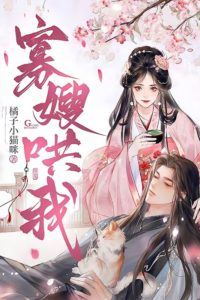
... Read More
The pacing in this batch is absolutely relentless and I am here for it. Chapter 34 opens with Wei Chengyi's internal turmoil — that inexplicable irritation, the magnolia scent, the deliberate distance his sister-in-law is creating. It's quiet, almost suffocating. Then BAM — he's kowtowing, bleeding, confessing. The emotional intensity ramps up so fast you don't see it coming. And then Chapter 11 — "Severing Ties" — the title alone tells you what's coming. The chapter starts with that oppressive weather description, then Shen Shiyu and Shen Wenyuan appear like ghosts from the past. The confrontation escalates scene by scene: first the polite coldness, then the demands, then the father's cruel justification, and finally — the sickle. The author doesn't rush this. They let the tension build through dialogue, through Shen Lingyi's increasingly desolate questions, until that final slash feels both shocking and completely inevitable. Then Lu Yunqi appears right after, offering a moment of breathing room — and dropping the silk handkerchief clue about the capital. Perfect structural choice. Just when you're emotionally drained, the plot moves forward again. The chapter ends with both Wei Chengyi and Shen Lingyi heading toward the capital, setting up the next arc. No drag, no filler — every scene pushes either character development or plot forward.

Leave a comment

You must be logged in to leave comments. or
