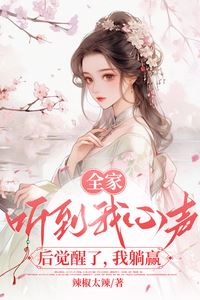
My Whole Family Woke Up After Hearing My Thoughts, and I Won Effortlessly
+Add to Custom List
Genres:
Novel Info

Summary

... Read More

Lin Yuxin, a transmigrator who had read the novel this world was based on, finds herself in the body of the true daughter of the Minister's Manor. She was mistakenly swapped at birth and raised in a remote village. Upon her return to the capital, she expects the tragic fate of the original character: being abandoned by her family in favor of the fake daughter, Lin Qianqian, and eventually driven to death. However, the plot diverges immediately. During the carriage ride home, her third brother, Lin Shaoyang, discovers he can hear her inner thoughts. He realizes her mind is filled with sharp critiques and plans for escape, yet he pretends ignorance. When they arrive at the manor, the expected drama unfolds differently. Lin Qianqian fakes an injury to garner sympathy, but Lin Yuxin’s internal monologue reveals that the woman is likely her father’s illegitimate daughter. Zhao Hanya, the birth mother and daughter of a General, hears these thoughts and shifts her allegiance. Instead of rushing to the fake daughter, she protects Lin Yuxin, exposing the family’s corruption and rejecting her husband’s disdain.

The core conflict centers on Lin Yuxin’s struggle to survive in a hostile environment while secretly altering the story’s trajectory. Her ability to predict future events, derived from her knowledge of the novel and a mystical space containing books and medicinal herbs, becomes her primary weapon. The Lin family is rife with betrayal. Her father, Lin Xiongan, is revealed to be a scheming man who used underhanded tactics to marry Zhao Hanya for her dowry and status. He has been conspiring with his mistress, Wang Siqin, and their daughter, Lin Qianqian, to manipulate the family’s assets and power. Lin Yuxin’s brothers also face dire fates in the original story: the second brother is exploited by his father’s schemes, and the third brother is framed for a scandal that ruins his life. Through her telepathic interactions with her brothers, Lin Yuxin warns them of these dangers, causing them to distance themselves from their father’s influence.

A significant turning point occurs during a poetry gathering where Lin Yuxin encounters Li Xiaochen, the Prince Regent. She internally critiques his tragic fate in the novel, revealing that she knows his future. Li Xiaochen, who also possesses the ability to hear her thoughts, becomes intrigued and suspicious of her. This connection establishes a powerful alliance, as the Prince Regent is the most formidable figure in the capital, second only to the Emperor. Later, Lin Yuxin is framed for theft by her father’s mistress, but she outsmarts the beggar involved and leaves a fake pouch behind. Li Xiaochen observes this and orders his subordinate to assist her, further cementing his interest in her capabilities.

The story escalates at a banquet hosted by the Prime Minister. Lin Yuxin identifies that the event is a trap designed to steal military power from her eldest brother, Lin Chenglie, by using the Prime Minister’s daughter, Bai Weiwei, as bait. Bai Weiwei is secretly involved with the Crown Prince. Lin Yuxin intervenes by drugging the Crown Prince and Bai Weiwei, causing them to be caught in a compromising position by the gathered nobility. This scandal destroys the Crown Prince’s plans and saves her brother from a lifetime of misery. The incident draws the attention of the highest powers in the land, including the Prince Regent and the Emperor. Zhao Hanya, empowered by her daughter’s guidance, begins to systematically dismantle her husband’s control over the household, reclaiming her dowry and exposing the servants loyal to Lin Xiongan.

The narrative direction shifts from passive survival to active retaliation. Lin Yuxin is no longer just avoiding her tragic fate; she is actively reshaping her family’s destiny. She uses her knowledge of future events to protect her brothers from their impending disasters and to undermine her father’s political ambitions. The family dynamic transforms as the brothers, now aware of their father’s treachery through their sister’s thoughts, unite with their mother. They form a cohesive unit against the external threats posed by the Crown Prince, the Prime Minister, and the internal rot of the Lin household. Lin Yuxin’s unique position as both an insider with foreknowledge and an outsider with transmigration experience allows her to navigate court politics with a confidence that unsettles her enemies. The story moves toward a confrontation where the Lin family, led by a strengthened Zhao Hanya and supported by the Prince Regent, will likely clash with the royal factions that sought to exploit them.

Latest Release
DateGroupRelease
2026-08-11shanghai fantasy c200
2026-08-11shanghai fantasy c199
2026-08-11shanghai fantasy c198
2026-08-11shanghai fantasy c197
2026-08-11shanghai fantasy c196
2026-08-11shanghai fantasy c195
2026-08-11shanghai fantasy c194
2026-08-11shanghai fantasy c193
2026-08-11shanghai fantasy c192
2026-08-11shanghai fantasy c191
2026-08-11shanghai fantasy c190
2026-08-11shanghai fantasy c189

Community Reviews

Rating(3.4 / 5.0, 32votes)
5 stars
5(16%)
4 stars
10(31%)
3 stars
10(31%)
2 stars
7(22%)
1 stars
0(0%)

Popular reviews

... Read More
"Our fates should be in our own hands. It's time we took responsibility for the dirty work." This line hit me harder than I expected. I went in expecting another generic noble family drama, but Zhao Hanya's conversation with her three sons is genuinely touching. These aren't just political tools—they're a family. Lin Chenglie's response about his sister helping him and how he won't resent Yuxin because she chose the Crown Prince? That's real growth. The author doesn't make it overly sentimental, but the subtext is clear: these brothers genuinely care about their sister, and they're willing to get their hands dirty for her. And then there's the moment when the two brothers are hiding on the wall watching Yuxin run away. Lin Shaoyang is worried, but Lin Chenglie lets her go because he understands she needs a break. That's sibling love in its most practical form—not dramatic declarations, but silent protection from the shadows. Meanwhile, Yuxin's relationship with her mother is this beautiful complicated thing. Zhao Hanya is clearly scheming, manipulating, preparing for war—but she also notices when her daughter is suffering under etiquette lessons and lets her run away. She even assigns Xue Ying to protect Yuxin secretly. The mother-daughter bond here isn't warm and fuzzy, but it's real in its own sharp-edged way. And Yuxin's internal monologue about her brothers—"Mother, Eldest Brother, Second Brother, Third Brother, I'm sorry. I'm going out for a few days. I'll come back when I've had enough fun"—she knows they're watching, she knows they care, and she's not afraid to take a break because she trusts them. That's the emotional core of this whole chapter, honestly. Family loyalty disguised as political maneuvering.
... Read More
There's this recurring image in the text that I can't stop thinking about. Zhao Hanya is described as an eagle trapped in a tiny cage. That's Yuxin's words, but it applies to the whole dynamic here. The jewelry that gets stripped from Wang Siqin is symbolic on multiple levels. On the surface, it's just a comedic scene where the fake daughter gets robbed blind. But think about what those accessories represent — they're gifts from Lin Xiongan, symbols of his affection and favor. When Yuxin takes them, she's not just being petty, she's reclaiming what belongs to her family. Every hairpin, every earring is a piece of power that was being given to the wrong person. The servants being 'sold off' is another symbol that hits hard. Zhao Hanya mentions they were disloyal — betraying their master. But the narrative makes it clear these were the servants Wang Siqin bribed. The purge isn't just discipline; it's a cleansing of the household's corruption. The old guard that enabled the mistress's influence is being removed. And then there's the jade pendant with the personal space — a relic from Yuxin's previous life that becomes a tool in this one. It represents continuity, the idea that nothing is truly lost, that skills and knowledge transcend worlds. The herbs that regrow after being dug up? That's basically the whole theme of this story right there — resilience, renewal, the ability to rebuild. Lin Xiongan's inability to see what's happening around him is the ultimate symbol of toxic patriarchy. He thinks everything belongs to him — his wife's martial arts skills, his wife's dowry, his mistress's beauty, his daughter's obedience. When he tries to slap Yuxin, he's not just losing a fight, he's losing control of a household that was never his to dominate in the first place.
... Read More
Beneath all the face-slapping and revenge plotting, this story is actually asking a really interesting question: what makes a family real? Lin Yuxin was physically separated from her blood family for years, raised by strangers in the countryside. Lin Qianqian was raised as the daughter of the household, loved and protected, but she's actually the illegitimate child of the father and someone else. So which one of them actually belongs? The novel keeps flipping this question through every interaction. The jewelry scene is a perfect example. When Zhao Hanya gives Yuxin the box of treasures, Yuxin's immediate internal reaction is pure greed—'I've struck gold!'—but the external action is a demure refusal. The jewelry symbolizes everything the legitimate daughter was denied: wealth, status, recognition. But it's also a test. Can Yuxin accept love without suspicion? Can she let herself be cared for? Her struggle between wanting to believe and not daring to is the emotional core of the whole story. Then there's the table-smashing scene, which is basically the physical manifestation of the family's broken foundation. Lin Xiongan built his career on a lie—marrying into the general's family through manipulation and drugged wine. The table he sits at represents all of that false structure. When Zhao Hanya destroys it, she's not just having a temper tantrum; she's literally breaking the symbol of his fraudulent authority. And the mind-reading element itself is symbolic. Yuxin's thoughts are always her most honest self—the greedy, violent, sarcastic, vulnerable parts she can't show outwardly. The fact that her brother and mother hear these thoughts and accept her anyway suggests that true family isn't about perfect behavior or polite facades. It's about being seen, even the ugly parts, and still being chosen.
... Read More
The dialogue in this chapter is sharp, but the real star is Yuxin's inner voice. Let me just quote one thing because it perfectly captures her personality: "Ugh!!! Why is there no escaping studies? Nooo! Save me!!!" This girl is a modern person trapped in a historical setting and her internal screaming is EVERYTHING. The contrast between her composed exterior and her chaotic inner thoughts is where the humor lives. When Lin Qianqian tries to provoke her about being an imposter, Yuxin's external response is calm and dismissive, but internally she's running full tactical analysis. The dialogue between the brothers and their mother is also noteworthy—Zhao Hanya's speech patterns are formal, measured, always testing. Her sons respond with equal formality but there's warmth underneath. Lin Chenglie's line "How could I resent her? Besides, since she chose the Crown Prince, she is no longer the person I once held in my heart" is delivered with such quiet certainty that it hits different. And then there's the brothel keeper's dialogue—flirtatious, professional, slightly theatrical. Each character has a distinct voice. The author doesn't make everyone sound the same. Even the minor characters like the brothel woman who says "Are we not beautiful enough?" has personality. But honestly, Yuxin's narrative voice is what makes this read so enjoyable. She's cynical, strategic, occasionally horrified, and always entertaining. The author's choice to use bracketed inner thoughts as a running commentary is a smart technique—it lets us in on her real feelings without breaking the scene's external tension.
... Read More
Okay so I need to talk about this scene because it is literally the turning point of the entire chapter. Zhao Hanya kicking Lin Xiongan across the room?? I screamed. Like, this woman had been holding it together for chapters, playing the obedient wife, and then BAM — when he raises his hand to slap their daughter, she snaps. Full transformation moment right there. The setup was brilliant too. Remember how Wang Siqin came in all fake-concerned about Lin Qianqian? The whole thing was a trap disguised as a visit. Zhao Hanya saw through it immediately — her line about Siqin looking more concerned than a biological mother would is chef's kiss. And then Lin Yuxin, this tiny genius, weaponizes her own tears and strips that woman completely bare. I love how the plot layers work: Siqin thinks she's manipulating, but really she's being manipulated by her own desperation. Then Lin Xiongan shows up and immediately sides with the mistress over his own wife and daughter. Classic scumbag move, but it's what finally pushes Zhao Hanya over the edge. The plot twist here isn't just the confrontation though — it's what happens AFTER. Zhao Hanya sits down and makes a silent decision to divorce him. That's the real plot move. She's been gathering information from Yuxin, she's been patient, and this moment is when she decides to stop being patient. The fact that she has martial arts training from her grandfather and literally went to battlefields? That's a detail the author planted early that pays off perfectly here. The plot is saying: this woman was never weak, she was just restrained by social expectations and a bad marriage. And then there's the Mid-Autumn Palace Banquet hanging over everything. The assassination attempt that's supposed to happen, the foreign envoys — the original plot is clearly shifting because Yuxin exists now. I'm genuinely curious whether the original author planned for Zhao Hanya to become this fierce warrior-mother figure or if the transmigration is rewriting her arc entirely. Either way, the tension is immaculate.
... Read More
Let me just say this upfront: I read chapters one through seven in one sitting and I am not proud of it. The opening hook is brilliant. We start in a carriage with the classic 'you've suffered all these years, don't worry, we'll cherish you' line, but then the protagonist's inner monologue immediately undercuts it. She's already analyzed the situation, knows the genre, and is mentally preparing for the worst. That instant irony between what's said and what's thought creates tension from paragraph one. Then the pacing accelerates. They arrive at the manor, the fake daughter 'accidentally' injures herself, and within the first chapter we already have the mother discovering the truth and pivoting. In a typical novel of this type, this setup alone might take three chapters of misery before anything changes. Here, the first major turning point happens before chapter two ends. The structure between chapters also keeps shifting gears. Chapter one is setup and revelation. Chapter two is the confrontation with Lin Qianqian. Chapter three is the dinner scene that completely flips the power dynamic. Chapter four introduces the father's backstory and Yuxin's wild internal plans. Each chapter ends on a note that makes you immediately want the next one—the mother collapsing, the father's shameless excuse, Yuxin's violent (but funny) revenge fantasies. What really works is how the author uses Yuxin's meta-awareness as a pacing device. When she keeps expecting the original plot to unfold, the reader also gets momentarily confused, then pleasantly surprised when it doesn't. That creates a rhythm of anticipation and subversion that keeps you turning pages. The pacing never drags because there's always either external conflict (the fake daughter's schemes, the father's disdain) or internal comedy (Yuxin's thoughts being overheard) driving things forward.
See all reviews

Characters

See all characters

Custom lists

See all custom Lists