Summary

... Read More

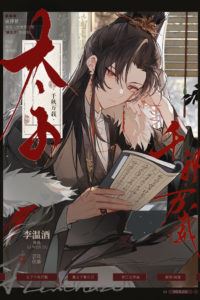
Xie Jingci is a cultivator who spent a year trapped in a series of minor worlds, forced by a mysterious system to play the role of a malicious demoness in each realm. Upon completing her final mission, she awakens in her original body in the cultivation world, only to discover that her fiancé, Pei Du, has fallen from grace. Once a celebrated genius and the pride of the Pei family, Pei Du was betrayed by his own kin. Framed for colluding with demons after a ambush at the Ghost Mound, he was stripped of his status, had his meridians shattered, and was cast out to die. When Xie Jingci finds him lying bloody and broken in the Ghost Mound, hunted by bandits who once served the Pei family, she intervenes. She had been expecting to annul their engagement, but instead chooses to save him, driven by a mix of professional courtesy, disdain for the Pei family’s treachery, and a personal code that insists only she is allowed to defeat him.

During the confrontation, Xie Jingci reveals herself as the renowned swordswoman from the Xie family of Yunjing. Despite being severely injured from a year-long coma, she displays formidable combat skills, swiftly defeating the bandits who had been tormenting Pei Du. Her actions confuse Pei Du, who harbors a secret, unrequited love for her and believes she has come only to dissolve their betrothal now that he is no longer useful to the Pei family. As she tends to his wounds in a remote cave, the proximity forces an intimate dynamic between them. Pei Du, humiliated by his broken body and dependent on her care, struggles with shame while simultaneously feeling a rare sense of warmth from her unexpected kindness. Xie Jingci, however, treats him with a teasing arrogance, often breaking character as the system warns her about destabilizing plotlines.

The couple is then pulled into the Ghost Realm through a spatial rift before the official opening of the Ghost Gate. They find themselves in a snowy, isolated landscape that offers temporary safety but cuts them off from the outside world. Xie Jingci leaves Pei Du in a cave to scavenge for supplies and information, eventually stumbling upon the town of Wucheng. There, she discovers a martial arts hall where cultivators compete in illusionary duels. Seeking to restore her weakened cultivation and earn money, she enters the arena under an alias. Her prowess shocks the local cultivators, including the hall master Zhou Shen, a legendary figure known as the Sword of the Nether Prison. While battling, Xie Jingci inadvertently uncovers discrepancies in the local legends, realizing the history of the Ghost Realm differs from the records she studied.

Meanwhile, Pei Du recovers under the care of Zhou Shen, who takes a liking to the outsiders. As Pei Du regains some strength, he begins to reassess his relationship with Xie Jingci, noting that her cold exterior hides a protective nature. The core conflict shifts from survival against external enemies to the looming political and familial threats waiting at the Ghost Gate. The Pei family, who orchestrated Pei Du’s downfall, remains a significant danger, as does the broader conspiracy surrounding the stability of the Ghost Realm. Xie Jingci’s goal evolves from simply surviving to helping Pei Du reclaim his dignity and expose the truth behind his framing, all while navigating her own unstable return to power and the enigmatic rules of the system that binds her fate.

The narrative sets the stage for a revenge-driven journey. Pei Du, though currently physically compromised, retains his sword intent and strategic mind. His dynamic with Xie Jingci transitions from one-sided admiration to a partnership forged in vulnerability and mutual reliance. As they prepare to exit the Ghost Realm, the stakes rise with the knowledge that the demonic energy still lingers in Pei Du’s body, potentially making him a target for those who wish to exploit his condition. Xie Jingci’s presence serves as both a shield and a catalyst, pushing Pei Du toward redemption while she confronts the consequences of her past transgressions in the minor worlds. The story moves forward as a tale of restoration and retribution, centered on two exceptional cultivators challenging a corrupt establishment.

Latest Release
DateGroupRelease
2026-09-26akknovel c73
2026-09-26akknovel c72
2026-09-26akknovel c71
2026-09-26akknovel c70
2026-09-26akknovel c69
2026-09-26akknovel c68
2026-09-26akknovel c67
2026-09-26akknovel c66
2026-09-26akknovel c65
2026-09-26akknovel c64
2026-09-26akknovel c63
2026-09-26akknovel c62

Community Reviews

Rating(0 / 5.0, 48votes)
5 stars
0(0%)
4 stars
0(0%)
3 stars
0(0%)
2 stars
0(0%)
1 stars
0(0%)

Popular reviews

... Read More
"...You can touch." There it is. Sandwiched between a jagged centipede scar and a fingertip hovering a quarter-inch away. He says it like he's handing over a cup of water. No drama. No buildup. Just two words, rasped out, and the narrative treats them like a door opening in an empty house. And the way the author writes the touch—she doesn't press. She hovers. "Her fingertip hovering over one particularly jagged scar." The word is *jagged*. Not "healed" or "faded" or "scary." Jagged. Like a fence. Like a warning. And then her finger lands and the itch isn't physical, it's in his veins, "surging recklessly through his veins, teasing at his nerves." He says "No" when she asks if it hurts, and that "No" is doing double duty because it's also "No, I don't get to be in pain with you, I don't get to be the soft one, I am the sword hand, I am the one who practices until dawn so you notice me." And she just presses a little harder. Matter-of-fact. "Does this hurt?" Like she's checking a tire. What kills me is the candlelight. "The candle's golden glow bathed his cool, fair skin in a soft radiance, illuminating every scar and contour of muscle with stark clarity. Leaving him nowhere to hide." The cave scene earlier was moonlight, murky, he could get away with half-truths. Now it's a bedroom, it's warm, it's close, and every mark is lit up. He has no darkness to retreat into. And she's examining him the way you'd examine a really old letter you found in a drawer, curious but not *moved*. She notices the bruising is worse. She moves to his legs. He gets stiff. "Fine." Again. Two words. He is made of two-word sentences when she's in the room. I keep thinking about the feeding-medicine bit. She offers it, casual, "If not with hands, then how else could it be done?" And he looks at her lips. "Still glistening from the water she'd just sipped, her lips bore a faint, dewy sheen." He's watching the wetness on her mouth and calculating the distance and whether she's actually going to do it, and she catches him looking and *teases* him. "What is it? Is there something on my mouth?" Innocent. Guileless. She's playing the card she was dealt. He's playing the card she doesn't know she holds. And the system is chittering in the background like a cartoon bird, completely oblivious that one of its participants is falling in love while bleeding on a guest bed. It's sweet and it's not. It's not sweet enough. Not yet. He's not sweet enough for this scene. He's too quiet, too broken, too grateful for being allowed in the radius of her attention. And she's too light, too unbothered. I need them to stop being so different in how they feel this. I need her to lose a piece of her carelessness for a second. I need Pei Du to say more than "Nothing" and "Fine." I know he can't yet. I know the author needs him at this depth before the shift. But god, it's a long climb for him.
... Read More
The dynamic between these two is so much more complicated than 'rivals who are also engaged.' Let me unpack this: Pei Du has spent years admiring Xie Jingci from what he considers the lowest rung of her world. He describes her as 'always laughing with careless arrogance, yet hiding razor-sharp edges beneath, standing at heights he could never reach.' That's not just admiration — that's someone who has internalized his own inferiority so deeply that he can only see her as untouchable. And then she appears and offers to help him get revenge? His whole framework for understanding their relationship just cracks. But here's what's really interesting: Xie Jingci isn't doing this out of pure charity either. She's a transmigrator who knows how this story ends if she doesn't intervene. She's trying to rewrite the original plot where Pei Du loses everything. So part of her motivation is strategic — she needs him strong to change the ending. But the line 'I came here specifically for you' doesn't sound purely calculated. It sounds like the moment where strategy and genuine care start merging. They're both performing versions of themselves around each other — she's the thick-skinned troublemaker who doesn't feel awkward, he's the polite, accommodating man who never leaves room for error. And neither performance is holding up anymore.
... Read More
So I kept trying to picture the cliff base and what I get is all wet rock, scattered blood, the stench of iron, and this specific quality of moonlight that hits differently when you're at the bottom of a place you shouldn't be. The author doesn't describe the landscape in any grand 'sweeping vista' way. It's all close, tactile, sensory. Jagged rocks. The young man moving 'like a splitting bamboo.' The longsword 'whistling through the air like a dragon plunging into the sea, letting out a mournful cry.' And that last phrase—the mournful cry of the sword—is doing something I can't quite articulate but it made me feel like the weapon itself was in pain. Like the act of cutting through the air in THIS particular moment, in THIS particular world, sounded like a funeral dirge. I don't know why but I stayed in that image for a long time. The spiritual energy returning to Xie Jingci's body is described as 'a parched riverbed suddenly blessed with rain, seeping drop by drop into the cracked fissures.' And that's the image that actually got me. Not the combat. Not the power surge. The RIVERBED. She's been dry for years. In those minor worlds, her spiritual energy was sealed, her techniques locked away. She's been a cracked, empty channel and now the rain is coming back and she's just... standing in it and feeling it. 'Xie Jingci quietly savored the sensation of this power coursing through her.' The word 'savored' is doing so much work. It's not ecstasy. It's not triumph. It's the quiet relief of a person who's been starving and finally takes a bite of bread. Small. Humbling. Intimate. The Ghost Tomb itself I haven't seen much of yet, just references to it growing restless, the demon gates emerging, the Pei family gathering there. But the way it's treated as a CHARACTER rather than a location—it's 'growing restless' like a sleeping animal about to wake up—makes me think when we actually get the full Tomb scenes, they're going to be terrifying in a very specific, claustrophobic way. Not open battlefield horror. The dread of something underground stirring. Of the earth itself being wrong. I want that. I want the author to make the Ghost Tomb feel like a throat. And the pastries. She brings a BOX OF PASTRIES to a cliff-side sword fight. I don't know what to do with that information. It makes the world feel so oddly specific and lived-in that I trust every other detail by osmosis.
... Read More
I need to talk about Xie Jingci's internal voice because it is *excellent*. The system conversations are where her personality really shines — she's sharp, defensive, and hilarious when she's talking to herself versus when she's performing for other people. > "[The young master's so easy to fluster—but why are you blushing too? What kind of seductress gets shy?]" That system voice is my new favorite character honestly. It's observant, sarcastic, and completely unimpressed by Xie Jingci's attempts at maintaining composure. And her response — "Shut up" — while her ears are actively burning red? Iconic. Her dialogue with Pei Du is different though. When she drops the act and gets real — "Everyone says you've fallen to demonic cultivation... But I don't believe it" — that's when you hear the real her. No performance, no audience. And Pei Du's voice is so restrained it almost hurts. He can barely say three sentences without self-correcting or pulling away. The contrast between her loud, confident exterior and his quiet, controlled devastation creates this tension that's honestly exhausting to read (in the best way).
... Read More
There's a stretch in this chapter where the setting basically takes over the narration, and I keep finding myself pausing on the sensory details. 'The blade gleamed coldly under the moonlight, its edge reflecting a sharp, icy light. Yet the blood staining its tip was a vivid crimson.' Cold steel, hot blood, white moon. The whole scene is running on temperature contrasts and the author is just so relaxed about it. It's not showy. It's not 'the moon blazed like a molten coin above the desolate vale.' It's just: moonlight, blood, steel, sandalwood. Small anchors. And they work because they're grounded in *her* perception. She's the one processing the scene, so the details filter through what she notices first — the gleam, the blood, the way his hair is disheveled, the missing ribbon, the torn robes exposing his collarbones. It's almost forensic. Clinical. And then it breaks when 'Amid the haze of blood, Pei Du caught the scent of sandalwood clinging to her.' And suddenly we're not in a battlefield anymore. We're in a *room* with a smell. Intimate. Close. The violence of the first half gets swallowed by the quiet of the second half so fast that I felt physically pulled forward in my seat. Ghost Vale as a location is still underdeveloped at this point — we know it's where the massacre happened, it's moonlit, it's quiet enough that 'the rustle of fabric was unmistakable' — but that's actually a strength. The author isn't trying to sell the environment. The environment is just the canvas, and what's being painted on it is two people in a very small radius of moonlight, one standing and one on the ground, and the distance between them is measured in inches but feels like years. I keep thinking about how the blood on his jaw, smeared by her blade, is still there when she touches his throat. She's not cleaning him up. She's working *over* the violence. And that's a small detail that tells me the world has a logic to it, a texture, and I'm comfortable letting the author hold the rest of the landscape in the background while I stare at these two. The 'eerie yet strangely captivating contrast' line basically said it for me. I'm not asking for a worldbuilding essay. I'm asking for the *smell of sandalwood* on a blood-soaked night, and I got it.
... Read More
Okay so I just kept going back to that one moment where Zhou Shen's pupils go from circles to squares to trembling hexagons. That's not just a metaphor, right? That's the author telling us something is fundamentally broken in how this world works. One second he's in the dojo, the next his entire perception has shifted, and the author just... drops it. No explanation. No slow build. Just "pupils morphed." And the whole room goes silent. I've been staring at my ceiling for ten minutes trying to figure out if this is a foreshadow for something bigger or if the author just likes weird visual beats. Probably both. What I did like is how the Ghost Realm subplot slots in here. You'd think otherworldly spirit lands are supposed to be hostile, but the author had them be... helpful? Xie Jingci gets two guest rooms, a doctor shows up overnight. It's almost suspicious in a good way, like the world is telling you "don't worry too much about the scenery, focus on these two characters lying in adjacent rooms bleeding out." The kindness of the Ghost Realm inhabitants actually makes the tension between Pei Du and Xie Jingci sharper because the external threat is temporarily defused. It's a breather that doubles as a pressure cooker for their dynamic. And then there's the System. The "Demoness's Playbook" dialogue prompts. This is a running gag by now, I think, but in this chapter it lands differently because Xie Jingci is actually using it while someone is dying. The system chirps congratulations, she's got a canned line ready, and then Pei Du swallows his pill and the whole script falls apart. The author is very aware that the comedic timing of a game mechanic colliding with genuine human pain is where the real story lives. It's not just "oh look funny prompt." It's "here's a girl who has to perform cheerfulness while the man she cares about (does she care?) is losing blood on the bed next to her." The system becomes this little reminder that she's still in the role, still playing a part, even in private. That's actually pretty dark for a xianxia with a cute UI. Zhou Shen's horror at the beginning still hasn't resolved though. I'm three chapters in from wherever that beat was planted and I'm still waiting for the payoff. The dojo went silent, his face did the hexagon thing, and then we just... left. Cut to the Ghost Realm. I'm not saying the author is bad, I'm just saying my brain keeps replaying that image like a buffering video. What did he see? What did he do? Is he dead? Did the needle—wait, who had a needle? I missed that detail two pages back. Gonna have to re-read. Ugh. But good re-read. Exciting good re-read.
See all reviews

Custom lists

See all custom Lists