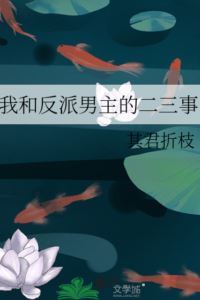
My Story with the Villainous Male Lead
+Add to Custom List
Genres:
Tags:
Novel Info

Summary

... Read More

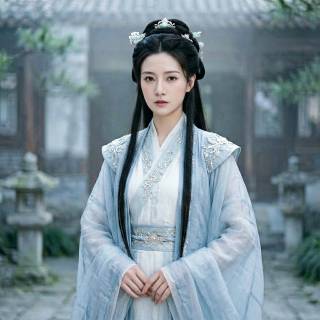
Shen Wei, a thirty-something Chief Operating Officer from the twenty-first century, dies in a car accident after a heated argument with her mother and immediately transmigrates into the body of a woman with the same name. She awakens in the Rongguo Duke Mansion in Bianliang City, finding herself in the role of the cannon fodder main wife from a novel she read on a flight. The original Shen Wei was a proud, pampered young woman who discovered her husband, Duke Lu Buwei, had fathered an illegitimate son, Lu Qihuai, before his death on the border. Devastated and feeling betrayed, the original Shen Wei fell into a coma, during which time her mental state deteriorated, leading the household maids to suspect possession. Upon regaining consciousness, the modern Shen Wei quickly comprehends her situation and realizes that in the original story, she would be sent to a nunnery and die a wretched death after Lu Qihuai rises to become a powerful and ruthless minister.

Determined to survive and live a peaceful life, Shen Wei adopts a strategy of emotional detachment and calculated kindness. When summoned by the matriarch, Old Madam Xie, she learns that Lu Buwei was drugged by friends in his youth, resulting in the conception of Lu Qihuai, whom he hid to protect Shen Wei from pain. Rather than reacting with the rage the original character would have displayed, Shen Wei calmly agrees to bring the fifteen-year-old boy into the household. She recognizes Lu Qihuai not as a threat to be bullied, but as the future pivotal figure whose favor she must secure. She treats him with dignified courtesy, inviting him to share a meal and providing him with proper servants, a stark contrast to the abuse he suffered in the novel.

The household is fraught with internal conflict. Wang Shi, the wife of the Second Master and an illegitimate daughter of the Wang family, views Shen Wei with open hostility and jealousy. She schemes to undermine Shen Wei’s authority, particularly regarding the distribution of household resources and the status of Lu Qihuai. Meanwhile, Lu Qihuai himself is initially timid and submissive, playing the role of a frail, bullied orphan to lower the guards of those around him. However, Shen Wei observes that his outward appearance of weakness masks a sharp, noble intelligence. She privately instructs him that as a member of the Lu family, he must never accept bullying without retaliating severely, a lesson that begins to shift his demeanor.

When Lu Qihuai is harassed and nearly pushed into a frozen lake by the sons of the Second Master, Lu Qi Xuan and Lu Qi Yan, Shen Wei intervenes decisively. She does not merely scold them but enforces strict punishments, confining the boys and making them kneel in the ancestral hall. This display of firm authority shocks the household, particularly Wang Shi, who had expected Shen Wei to be either hysterical or weak. Wang Shi attempts to manipulate her husband, Lu Buyang, by claiming Shen Wei is hoarding power and favoring the illegitimate son to secure her own position in the absence of a male heir. Lu Buyang, however, remains cold and dismissive of his wife’s schemes, prioritizing family stability during the mourning period.

Shen Wei also uncovers corruption within the estate, discovering that the steward of the accounts office is secretly siphoning resources to support Wang Shi’s extravagant collection of rare orchids. Despite Mo Qi, her loyal maid, urging her to confront the issue aggressively, Shen Wei maintains a calm exterior while quietly planning to rectify the accounts. Her interactions with her half-sister-in-law, Chu Fuyun, reveal that Shen Wei’s change in personality is noticeable but carefully managed. Chu Fuyun notes that Shen Wei no longer speaks of the late Duke with grief or anger, suggesting a profound emotional shift that confuses those who knew the original Shen Wei. As the snow melts and the political landscape of the Lu family begins to realign, Shen Wei establishes herself as a capable matriarch, securing her position by nurturing the very person destined to shape the city's future.

Latest Release
DateGroupRelease
2026-08-11shanghai fantasy c164
2026-08-11shanghai fantasy c163
2026-08-11shanghai fantasy c162
2026-08-11shanghai fantasy c161
2026-08-11shanghai fantasy c160
2026-08-11shanghai fantasy c159
2026-08-11shanghai fantasy c158
2026-08-11shanghai fantasy c157
2026-08-11shanghai fantasy c156
2026-08-11shanghai fantasy c155
2026-08-11shanghai fantasy c154
2026-08-11shanghai fantasy c153

Community Reviews

Rating(3.9 / 5.0, 37votes)
5 stars
9(24%)
4 stars
17(46%)
3 stars
9(24%)
2 stars
2(5%)
1 stars
0(0%)

Popular reviews

... Read More
Let me just say this: the pacing in this section is absolutely ruthless and I love it. The author takes us on this rollercoaster where every scene escalates the tension without a single moment of breathing room. It starts slow—Shen Wei having breakfast with Old Madam Xie, a quiet morning scene. Then Yi Nan returns empty-handed and everything shifts. The tension builds as Old Madam Xie examines the account books, and you're sitting there thinking, oh no, oh no, it's all coming out. Then Steward Li gets dragged away screaming, and for a second you think, okay, that's the climax, we're done. But no. The author pivots hard to the Western Courtyard, where Wang Shi is still sitting there happily wearing stolen jewelry, completely oblivious. And then An Xiang comes running in with the news, and Wang Shi's face—"twisted from anger." And then Lu Bu Wei walks in. And then the real explosion happens. The structure is basically: discovery → punishment → obliviousness → revelation. Each act is shorter than the last, and each one hits harder. The chapter ends with Lu Bu Wei delivering what is essentially a character assassination wrapped in a marriage speech, and it leaves you completely breathless. There's no soft landing, no comfort. Just the cold truth landing on Wang Shi like a hammer. The author also uses these little section breaks—"After Shen Wei left" and "In the Western Courtyard" and "Not long after"—to create this sense of simultaneous action, like we're watching different threads of the same catastrophe unravel at once.
... Read More
These chapters operate on two different clocks. The first clock is the slow, deliberate pace of daily life in an aristocratic household — trimming orchids, serving tea, selecting maids, exchanging polite greetings with sister-in-laws. The author lets these moments breathe. There's a whole chapter dedicated to a single dinner. Another chapter is mostly conversation between two women. But the second clock is ticking underneath, and it's a bomb timer. Wang Shi's plotting at the very beginning. The mention that 'the Duke's title is still hanging.' The original story's events that Shen Wei is consciously avoiding. The Lü Fu subplot that's been carefully sidestepped but not resolved. The pacing choice that hit me hardest is the ending of Chapter 4. Everything has been slow and measured up to that point — Lu Qi Huai's timid behavior, the polite dinner, the careful goodbyes. And then: 'A dark gleam flashed in his deep eyes.' In one sentence, the entire tone shifts. The slow burn suddenly has fire at the end, and it completely recontextualizes everything that came before. Chapter 5 then returns to that slower pace with the orchid trimming and Chu Fuyun's visit, but now we're reading with new awareness. We know Lu Qi Huai is not who he appears to be. Every polite interaction carries double meaning. The author uses this structure brilliantly — calm surface, turbulent undercurrent.
... Read More
The atmosphere in these chapters is absolutely immaculate. Let me just quote this: 'By this time, the night had deepened. The wind and snow outside had not stopped, but Taoran Studio remained brightly lit.' That single sentence does so much work. The contrast between the harsh winter outside and the warm, candlelit interior creates this sense of sanctuary — but also isolation. Shen Wei is protected, yes, but she's also cut off. And the dining scene! The author takes time to describe the aristocratic rules — the silence while eating, the maid-served dishes, the prohibition on bowls and chopsticks making noise. These details aren't just decorative; they create a world where every gesture is monitored and every rule is a form of control. When Lu Qi Huai sits down to eat, he's navigating not just a meal but an entire system of power and expectation. The orchid-trimming scene is another standout. Moon-white robes, sunlight through windows, the delicate snipping of stems — it's almost meditative. But there's an undercurrent of tension. Shen Wei is thinner now, her robes hang loose, and she's quieter than before. The beauty of the scene makes her fragility feel even more acute. I also love how the author uses the snow. It stops, the sun comes out, and with it comes Chu Fuyun's visit. The weather mirrors the shifting emotional landscape. This is worldbuilding that breathes.
... Read More
The relationship between Old Madam Xie and Shen Wei is honestly the emotional core of this whole thing and I need to talk about it. In the original story, this was the relationship that got destroyed. Shen Wei found out about the bastard son, felt deceived by the woman who raised her, ran home to complain to her brother, and basically burned the bridge. But here's the thing that got me—Old Madam Xie isn't just some benevolent grandmother figure. She's genuinely worried. When she says 'I watched Sui Sui grow up' and worries about whether she can handle the gossip, that's real fear. She loves this girl. And Shen Wei knows it. She says 'I understand what mother means' and it's not performative. She's choosing to honor that relationship instead of destroying it like the original did. But then you have Wang Shi, right? The second madam who shows up and immediately starts trying to provoke Shen Wei. 'Look how thin he is, really quite pitiful'—said while looking directly at Shen Wei like she's daring her to snap. And Shen Wei's response? She doesn't even raise her voice. She just turns around and drops Wang Shi with 'you'd better focus on your own household.' The way she weaponizes Wang Shi's own reputation against her is *chef's kiss*. This is a woman who understands exactly how to navigate a household full of sharks without getting bitten herself.
... Read More
I need to talk about Wang Shi because this woman is simultaneously infuriating and deeply, deeply sad. Let me start with the scene where she's sitting in front of her bronze mirror, picking out jewelry, and says to An Xiang: "A blood swallow is indeed different from an ordinary one. If only I could eat one every day, that would be perfect." That line is chilling. She's not just greedy—she genuinely believes she deserves everything, that the world owes her, and that her status as the Second Madam makes her superior to everyone, especially Shen Wei in the Eastern Courtyard. But here's what breaks my heart: Lu Bu Wei's speech to her. Oh my god, the way he dismantles her entirely. He doesn't just scold her—he systematically destroys every illusion she's built her life on. Her belief that she's powerful? Fake. Her belief that his promotion benefits her? False. Her belief that the Old Madam favors Shen Wei out of bias? Wrong—it's because Wang Shi herself has spent years scheming instead of showing genuine kindness. And the worst part? She doesn't even understand what he's telling her. When he asks why he was promoted, she says "because you're capable." She genuinely cannot see that her own actions have made her invisible in her own marriage. Meanwhile, Shen Wei and Old Madam Xie have this beautiful, quiet understanding. Old Madam Xie hands Shen Wei the account books and says "punish the offenders without consulting me." That's trust. That's respect. That's the relationship Wang Shi has spent years sabotaging. The contrast between these two women—Shen Wei kneeling and accepting responsibility versus Wang Shi clutching her handkerchief and making excuses—is the entire story right there.
... Read More
Okay so let me just say — that dinner scene in Chapter 4 is a MASTERCLASS in plotting. On the surface, it's a simple moment where Lu Qi Huai comes to greet Shen Wei, but the author layers SO much underneath. First, we get the flashback to the original story where the previous version of Shen Wei made him kneel in the snow for hours. That context alone makes this scene electric — we KNOW what's supposed to happen, and then Shen Wei completely upends it by saying 'Sit down, and keep me company while I eat.' The tension between what the plot 'should' do and what actually happens is delicious. And then there's the Lü Fu situation in Chapter 5. Shen Wei deliberately avoids picking the maid who would later be implicated in an affair with Lu Qi Huai. That's a plot move that shows she's not just reacting — she's actively rewriting the story. The author is planting seeds that will grow into major conflicts later. Also, the subplot with Wang Shi plotting to investigate Shen Wei's daughter is simmering in the background. You can feel the pressure building. What really impressed me is how the author connects all these threads — the death of Lu Buwei, the hanging Duke title, the household power struggles, the maid selection — they're all feeding into one another. Nothing feels isolated.
See all reviews

Characters

See all characters

Custom lists

See all custom Lists