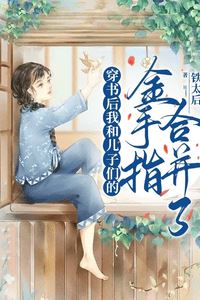
My Sons’ Golden Fingers Merged with Mine After Transmigration
+Add to Custom List
Genres:
Novel Info

Summary

... Read More

Qiu Yinuo was a successful but terminally ill CEO in her previous life, suffering from pancreatic cancer and betrayed by her ambitious nephew. After faking her death in a car crash to escape her painful end, she transmigrated into the body of a villainess in a 1970s novel. She became the overweight, widowed wife of Shao Chengyuan, a soldier declared dead in action, and found herself giving birth to twin boys in a rural hospital. The original owner of the body had been sold into marriage after losing her memory, and upon regaining it, had abandoned her children to return to her childhood sweetheart, leading to her tragic downfall in the novel.

Qiu Yinuo, possessing the combat skills and business acumen of her past life, immediately took charge of her new reality. She faced the immediate challenge of raising two infants alone with no family support, as her in-laws had disappeared and her own parents were abusive. With the help of a kind neighbor, Auntie Cai, and a capable young woman named He Ziqing, she navigated the hardships of postpartum recovery and the scarcity of the era. Her life was further complicated by a traumatic incident where a child trafficker attempted to steal one of her sons from the hospital. Qiu Yinuo fought the trafficker with brutal efficiency, displaying the martial arts prowess she had inherited from her original body’s training, and successfully rescued the child with the help of the police.

A significant turning point occurred when Qiu Yinuo discovered that she had brought a magical space with her, known as the Library Pavilion. This space contained a healing spring and a vast library that was gradually unlocking new levels. She used the spring water to improve her health, boost her milk supply, and enhance the quality of food for her family. Meanwhile, her eldest son, Shao Xingchen, realized that he had also transmigrated into the body of a baby. He retained his adult consciousness and was horrified to find himself dependent on his mother, yet he gradually warmed to the maternal care she provided. He also discovered that his space was now shared with his mother, a revelation that distressed him initially but eventually led to a complex bond between them.

As the twins grew, Qiu Yinuo began to plan for their future and her own financial independence. She utilized her knowledge of future economic reforms to prepare for business opportunities, aiming to secure a comfortable life for her children. She built relationships with neighbors and local officials, leveraging her gratitude for the help she received. Her cooking and maternal skills earned her respect in the community, and she started to establish a reputation as a capable and kind woman despite her tragic circumstances. The narrative follows her daily struggles and small victories as she adapts to life in the 1970s, balancing the demands of motherhood with her long-term goals.

The story also introduces the military background of her husband’s family. Shao Chengyuan, who was not actually dead, was involved in a secret mission and had been presumed dead. His mother had disappeared after a car accident, and his father’s death had left him with deep emotional scars. The narrative hints at future reunions and the unraveling of the mysteries surrounding his survival. Qiu Yinuo remains unaware of his true status, focusing instead on raising her twins and building a stable life. The tension between her past life’s trauma and her current responsibilities drives her determination to protect her children and create a new identity for herself, separate from the villainess role she was destined to play in the novel.

Throughout the early chapters, Qiu Yinuo’s character evolves from a desperate survivor to a confident matriarch. She learns to appreciate the simple joys of life, such as good food and the company of her children, which she had neglected in her previous life. Her interactions with He Ziqing and the neighbors highlight the social dynamics of the era, providing a glimpse into the community life of 1970s China. The story sets the stage for a narrative of resilience, family bonding, and the gradual accumulation of wealth and power, as Qiu Yinuo prepares to seize the opportunities that will come with the changing times.

Latest Release
DateGroupRelease
2026-08-11shanghai fantasy c32
2026-08-11shanghai fantasy c31
2026-08-11shanghai fantasy c30
2026-08-11shanghai fantasy c29
2026-08-11shanghai fantasy c28
2026-08-11shanghai fantasy c27
2026-08-11shanghai fantasy c26
2026-08-11shanghai fantasy c25
2026-08-11shanghai fantasy c24
2026-08-11shanghai fantasy c23
2026-08-11shanghai fantasy c22
2026-08-11shanghai fantasy c21

Community Reviews

Rating(3.6 / 5.0, 20votes)
5 stars
4(20%)
4 stars
7(35%)
3 stars
6(30%)
2 stars
3(15%)
1 stars
0(0%)

Popular reviews

... Read More
Okay so I just finished this batch and I am NOT ready for the plot pivot we just got. Let me process this. The first half is this grounded, almost domestic story—Qiu Yinuo dealing with her in-laws, discovering her mother-in-law left her savings, her brother finding out she's a widow. It's quiet, it's real, it's the kind of thing that makes you feel like you're actually living in this world. The money scene hit me hard—93 yuan, 4 jiao, 7 fen, hidden under a pillow. That detail! The fact that she counted it all out and felt like a mountain was on her chest. That's not just plot, that's emotional weight. And then—THEN—the twins disappear into a space. A SPACE. I literally gasped. I went from rural family drama to fantasy in three paragraphs. And not just any space—a space with a LIBRARY and a PANDA. A panda. That fought in battles with Chi You. I am not making this up. The way the author just… drops this on you. Qiu Yinuo lifts her foot to go to the library and sees a black-and-white ball rolling down the hillside. One moment she's thinking about reading to her kids, the next she's grabbing her children and bolting because apparently there's a wild panda in her secret dimension. The contrast is absolutely wild. But here's what I love—the author doesn't abandon the domestic plot. The panda reveal is sandwiched between the Ding Zixu confrontation and the village drama. It's like the story is saying: yes, your protagonist is a widow raising twins on a shoestring budget, AND she has a magical space with endangered species. Both things are true. I need to know what else is in that space. What's the origin of it? Why can the twins enter but not adults? Is this connected to her transmigration? The stakes just went from 'will she survive poverty' to something way bigger, and I'm HERE for it.
... Read More
I keep coming back to that money scene. 93 yuan, 4 jiao, 7 fen. Coins. Food coupons. Milk powder tickets. Egg vouchers. All hidden under a pillow while Cheng Hongying slept, slipping bills one by one like she was stealing from her own daughter to give to her. The stakes here aren't about life and death—they're about survival. Qiu Yinuo is a widow in a rural setting with twin babies. She has no husband, no family support (her own mother barely helps), and a mother-in-law who just gave her everything she had and walked home in the dark. The suffocating weight she feels isn't just gratitude—it's the terror of knowing exactly how thin the margin is between feeding your children and not. "She couldn't always sacrifice herself just for the child. Besides, a little salt wouldn't hurt." This line about the soup is deceptively simple. It's about autonomy. Cheng Hongying won't let her put salt in the food for the baby's health, so Qiu Yinuo does it secretly. It's a tiny rebellion, but it's THE only rebellion she has. She can't fight the father-in-law who beat her. She can't fight the village gossip. She can fight the soup. And then the stakes escalate in two directions simultaneously. Externally: Ding Zixu is showing up, his mother is hostile, An Xin exists, and the village is watching. Internally: she has a magical space she doesn't understand, her children can enter it, and there's a panda in there that fought mythical warriors. The internal stakes are about discovery and danger—what if the government finds out? What if the space is a trap? What is she actually protecting? The genius is that both sets of stakes feed each other. The more she discovers about the space, the more she might be able to provide for her children. The more dangerous the space proves, the more vulnerable her family becomes. Every advantage is also a liability. And Qiu Qianjin with that cleaver? He's raising the external stakes to life-or-death levels while simultaneously showing that the family has someone who will fight for them. The conflict isn't just happening TO Qiu Yinuo anymore—she has allies. That changes everything about how the story can escalate.
... Read More
The pacing in this batch is absolutely ruthless and I respect it. Let me walk through it because the author is doing something really clever with structure. Chapter 20 opens with the most intimate, quiet moment—Qiu Yinuo eating loofah soup, her mother-in-law's message about not being stingy with herself. It's warm. It's domestic. You're settling in, right? You're thinking, okay, this is a story about a widow building a life. Then the money is discovered. The emotional weight drops. Cheng Hongying's POV—two hours walking home in the dark, leaving everything she had for her daughter. This section is heavy, slow, deliberate. You're supposed to feel the suffocation. Then—BAM. Qiu Qianjin finds out his sister is a widow. Tears. Then the village scene with the search party. Then Ding Zixu carrying An Xin through the village like some kind of romantic drama protagonist. Qiu Qianjin SLAMS the door. The tension spikes. Next morning, Ding Zixu shows up at dawn. The confrontation with his mother. The cleaver scene. Maximum volume, maximum energy. And then—immediately after the climax of the Ding family confrontation—we cut to Qiu Yinuo completely unaware, slipping into the space with her sleeping children. The quiet returns. But it's a different kind of quiet. It's ominous. She sees the panda. Panic. Grab the kids. Exit. The author uses the space sequence as an exhale after the village drama, but it's not a true release—it's a hook. The panda isn't cute. It's described as "downright terrifying." The fact that it "fought in battles with Chi You" implies this space has a history, a mythology, and Qiu Yinuo is just barely beginning to understand what she's walking into. The chapter titles also do interesting work. Chapter 21 is about Ding Zixu wanting to see Yinuo. Chapter 22 is about the twins entering the space. The structural shift from romantic drama to fantasy mystery is jarring by design. The author is widening the genre with each chapter, and it's working because the emotional throughline—Qiu Yinuo protecting her children—stays constant.
... Read More
I need to talk about Qiu Qianjin because THIS character just became my favorite and I didn't see it coming. At first he's just the goofy younger brother who freeloads at his grandparents' and jokes about his nephews looking like him. Cute, a little self-centered, the kind of kid who gets away with everything because he's the baby of the family. But then— "Get out! If you come to my house again and insult my sister, I'll kill your entire family." *Swings a cleaver.* I SCREAMED. I actually yelled at my phone. This boy went from 'worst case we'll just go freeload off Grandma and Grandpa' to protecting his sister with a kitchen weapon in the same chapter. And the way the author sets it up—Ding's mother is going off about how shameless Qiu Yinuo is for still having feelings for Zixu, and Qiu Qianjin just snaps. The cleaver swishes past Ding's mother's ear. That's not a threat, that's a performance. He's making a point. But what makes him actually GOOD writing is the backstory the author weaves in. His father only saw Qiu Yinuo as a bargaining chip. Qianjin tried to speak up and got beaten. So he started acting out, hoping his father would dislike him less—but it didn't work. Instead, his sister resented HIM. Even though he wanted to get close to her, she didn't want anything to do with him. That line wrecked me. He was trying to protect her and she couldn't even look at him. And now here he is, cleaver in hand, saying what no one else would say to Ding's family. The arc from neglected brother to fierce protector is beautiful. And then there's Ding Zixu—oh, Zixu. He comes to the house at dawn, pale and shaken, and Cheng Hongying tells him Yinuo doesn't remember him. Doesn't remember HER either. And he just... leaves. Doesn't even know how he got home. The guilt is eating him alive. "During her hardest times, he hadn't been by her side." But here's the thing that keeps me up at night: An Xin. She's not just a plot device. She FEELS something when she sees him looking toward Yinuo's house. "Her heart inexplicably sank." She knows she's not winning. And Zixu uses her injury as an excuse to rush to the hospital—not just because of duty, but because he can't stand the thought of Yinuo suffering alone. The triangle is so much messier than I thought.
... Read More
good book unfortunately it has come to an end without proper conclusion please we need another chaptes
... Read More
Quite I'm loving this book. The story and the character itself is not just good but awesome. Trading something for the needs people want... How I wish that you'll update faster... hehe
See all reviews

Characters

See all characters

Custom lists

Oops…There is nothing here.