Summary

... Read More

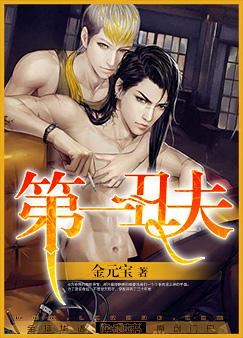
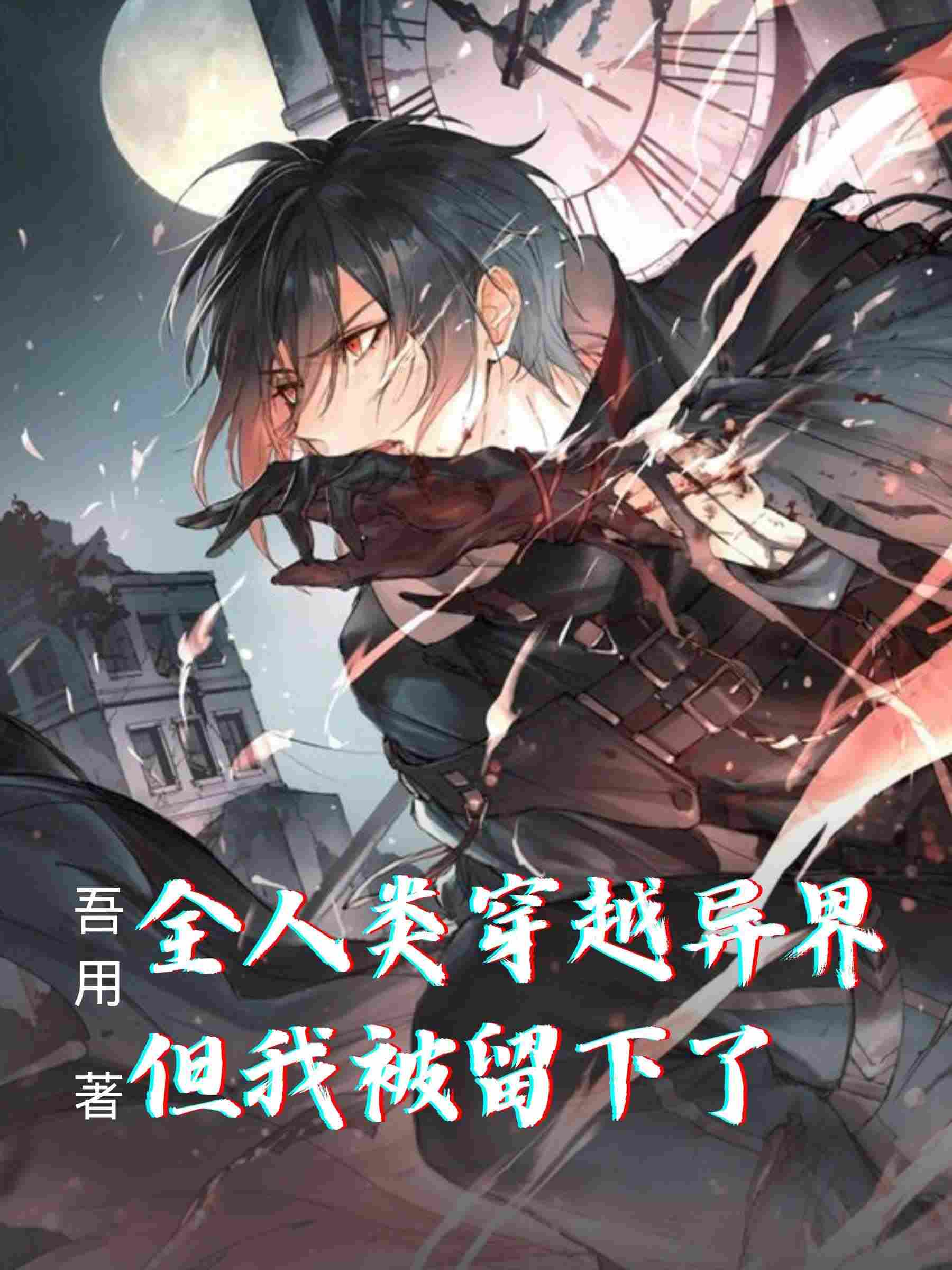
Zhou Mu, a demon with partial human heritage raised in a human-populated region, enrolls in Hualing Academy, a prestigious institution primarily attended by non-human students. Upon arrival, he navigates a campus filled with grotesque dangers, including pit traps and aggressive spectral entities, while struggling to conceal his demonic aura to avoid prejudice and predation. His orientation is immediately interrupted when he encounters Chun Shijiu, a ferocious demon who finds Zhou Mu’s scent intoxicating and attempts to nibble on him. The situation escalates when Zhou Mu falls into a hidden pit, revealing his concealed talisman and drawing the attention of You Qi, a towering, reclusive student known as the incarnation of a primordial beast. You Qi rescues Zhou Mu but displays predatory interest in him, prompting the school director to intervene and apply a protective concealment talisman.

Dormitory assignments force Zhou Mu to room with You Qi, a decision that terrifies him due to You Qi’s dangerous reputation and physical restraints, specifically a rune-inscribed muzzle designed to suppress his violent urges. Zhou Mu briefly considers transferring to the dorm of another masked student, You Qi’s roommate, but ultimately remains with You Qi after the director warns Chun Shijiu against harming him. Inside the dorm, Zhou Mu attempts to normalize their living situation by caring for You Qi’s plant, the Guardian Grass, which proves to be a vocal and aggressive security system. He discovers his mentor, Luhai Sanren, is actually the historical figure Luo Guanzhong, leading to cultural adjustments regarding the nature of demons and history.

The narrative shifts during an orientation tour where Little Howl, the academy’s divine beast, detects Zhou Mu’s true scent after a talisman is torn during a scuffle. This revelation triggers a mass frenzy among students and faculty, all driven by an instinctual urge to consume the exceptionally fragrant outsider. You Qi responds by unleashing his suppressed beast aura, terrifying the crowd into submission, and swiftly extracts Zhou Mu from the chaos. He carries Zhou Mu to the clock tower, where he inadvertently reveals his own concealment talisman to protect Zhou Mu from further detection, despite his overwhelming hunger and desire to devour him.

Back in the dorm, the dynamic between the two shifts as Zhou Mu treats You Qi with unexpected trust rather than fear. Zhou Mu cooks a tiger eagle, a beast killed by You Qi during a field excursion, and shares the meal with his roommate. The act of sharing food and physical proximity begins to alter You Qi’s perspective, moving him from pure predatory instinct toward a complex sense of possession and care. Zhou Mu explicitly asks You Qi to protect him, reasoning that the restrained You Qi is the safest person on campus because he cannot eat Zhou Mu without breaking his bindings. You Qi agrees to this symbiotic arrangement, promising protection in exchange for not being consumed himself.

As the semester progresses, Zhou Mu’s presence causes ongoing disruption due to his appealing scent, attracting unwanted attention from various species, including ghost cultivators and other demons. Despite the constant danger and the school’s near-disaster incidents, Zhou Mu maintains a naive optimism, viewing Hualing Academy as a place of learning rather than a hunting ground. The story establishes a central tension between Zhou Mu’s vulnerability and his resilience, and You Qi’s struggle between his beastly nature and his growing attachment to the human-raised demon, setting the stage for a relationship defined by mutual dependence amidst a hostile supernatural environment.

Latest Release
DateGroupRelease
2026-09-26knoxt c41
2026-09-26knoxt c40
2026-09-26knoxt c39
2026-09-26knoxt c38
2026-09-26knoxt c37
2026-09-26knoxt c36
2026-09-26knoxt c35
2026-09-26knoxt c34
2026-09-26knoxt c33
2026-09-26knoxt c32
2026-09-26knoxt c31
2026-09-26knoxt c30

Community Reviews

Rating(3.8 / 5.0, 52votes)
5 stars
13(25%)
4 stars
18(35%)
3 stars
19(37%)
2 stars
2(4%)
1 stars
0(0%)

Popular reviews

... Read More
There's a passage in these chapters that I can't stop thinking about. "Compared to demons, humans were seemingly at the bottom of the food chain, often scared out of their wits at the sight of monsters. But paradoxically, they were also the most audacious beings. They dared to fall in love with demons. They dared to fall in love with ghosts… And in cases like this—one moment frozen in fear, the next already scheming to eat the whole thing." Let that sink in. The author is explicitly drawing a parallel between romantic audacity and culinary audacity. Zhou Mu freezes when the tiger eagle dives—that's the instinctual human response. But then his brain immediately switches to: "How do I profit from this? How do I consume this? How do I make this mine?" It's the same impulse that drives him to open himself to You Qi despite being terrified. The fear doesn't disappear; it just gets overridden by something bolder. That's the thesis statement of this entire novel, wrapped up in a demon beast carcass. The tiger eagle itself is symbolically rich too. It's wild, dangerous, a predator. And Zhou Mu—this half-human with 5% real pulp, according to Yan Xingke's fruit drink logic—subdues it not through combat but through sheer will and practicality. He doesn't fight the beast. He repurposes it. He makes it useful. That's the human superpower right there: adaptability, audacity, the refusal to accept that something is only one thing. And then there's the principal's warning about desire staining the sacred land with blood. Is the author suggesting that Zhou Mu's desire—for food, for profit, for connection—is the very thing that makes him dangerous? Or beautiful? I think it's both.
... Read More
There's a theme running through this entire passage that I want to pull on, and it starts with those holes. Xu Tianyi mentions them with zero drama: walk around them, they get filled monthly, new ones appear, Jinjiang Road has more. This is presented as routine. But symbolically, what is a school built on holes that regenerate every month? It's an institution founded on instability, maintained by constant repair, accepted as normal by everyone who lives there. The founder himself was a hybrid — half-human, half-demon — rejected by both sides, who somehow built an entire academy that embraces what the world would normally cast out. The mismatched wall colors of Chuanfang Tower tell the same story. Years of damage, years of patchwork repairs with different materials, each layer visible. This building doesn't hide its history of violence — it displays it as architecture. The aesthetic is literally the accumulation of survival. Then there's the Howling Celestial Dog, described as having "the most sensitive sense of smell in all of heaven and earth." A creature whose defining trait is detecting what shouldn't be there. It lives in a school where students deliberately throw frisbees in front of it to mess around. The academy doesn't tame this dog — it coexists with it, knowing exactly what it is and accepting the risks. And Tian Qi, the elementary schooler who already knows how to organize, negotiate, and climb social hierarchies. He sees Zhou Mu as an older presence to recruit. Even the youngest students in this world have learned to navigate a system where strength and cunning matter more than age or tradition. The six desires reference in Zhou Mu's defense of You Qi is interesting too. If You Qi has "zero appetite" for the six desires, what is he motivated by? The text suggests he's not driven by normal human cravings — which makes him dangerous, yes, but also makes him fundamentally different from the world around him. Zhou Mu, by contrast, seems to navigate everything through loyalty and practical concern. These are different kinds of strength. Hualing isn't a school that fixes problems. It's a school that keeps repairing them, keeps adapting, keeps surviving despite constant disruption. That's the thematic core — resilience without resolution.
... Read More
The symbolism in this passage is so rich I could write a thesis about it. The MUZZLE. You Qi wears it as punishment, as control, as a boundary imposed by others. But Zhou Mu reframes it completely—it becomes a PROOF of safety. The very thing meant to contain You Qi's danger is what makes him trustworthy. It's a beautiful inversion of shame into protection. Then there's SYMBIOSIS. You Qi literally pulls from biology textbooks while hugging this creature he barely understands. A tarantula protecting frog eggs. Sea anemones and hermit crabs. The Bìjiān Beast from ancient texts—three creatures that cannot survive alone, only together. What is the story saying about danger and desire? That the things we fear most about ourselves might be exactly what someone else needs? You Qi is dangerous, yes, but he's ALSO the only one who can keep Zhou Mu safe from everyone else who wants to eat him. The paradox is beautiful. And Zhou Mu's species mystery—the fact that he's something rare enough to qualify for a minority demon scholarship—adds another layer. In a world where everyone is a predator, being prey shouldn't be survivable. Yet here he is, trusting the wrong person, and somehow it works. The sunlight backlighting Zhou Mu on the railing is almost religious imagery. For a brief moment, You Qi sees a curve of a smile before the world goes dark again. Hope? Or the calm before something worse?
... Read More
Okay can we just talk about Chun Shijiu for a second because THIS GUY. Like, the internet forum warned OP that Hualing is brutal, you know the kind of dramatic setup where everyone's warning you not to go, right? And then the FIRST person Zhou Mu meets is this towering green-eyed demon who literally picks him up with one hand and SNiffs him. Not a handshake. Not a greeting. A SNIFF. And then he says "What a delicious-smelling classmate" while licking his lips. This man has zero chill and I am obsessed. But what's actually brilliant is that Chun Shijiu isn't a flat predator character. He cackles when the ghost senior flirts with Zhou Mu — he notices the director's unusual protectiveness, he picks up Zhou Mu's fallen luggage and talisman and does a good deed despite being terrifying. There's layers here. He's wild, yes, but he's also observant and apparently capable of basic courtesy, which makes him infinitely more interesting than your average "edgy demon boy." The director is equally fascinating. Everybody knows he's usually indifferent to student shenanigans, but here he is practically GASPS for Zhou Mu's safety, slapping a concealment talisman onto him mid-registration and lecturing about racial weaknesses in combat class. That's not normal concern. That's HISTORY. I have so many theories about why this director specifically cares about this transfer student. And the ghost senior! She's genuinely sweet in her own creepy way — "No student has ever refused to befriend me in the summer!" That line made me laugh out loud. She's using cold aura as a social tool because she's lonely, not because she's mean. The social ecosystem of this school is actually surprisingly nuanced. Every interaction reveals something about power dynamics, hidden agendas, and who's protecting whom. My favorite moment has to be Chun Shijiu's reaction when called out — he immediately drops Zhou Mu, straightens his robe, and puts on this perfect innocent act for the director. Smooth. TOO smooth. But those green eyes stay locked on Zhou Mu even after. That stare says everything: he's not letting this go. I genuinely cannot wait to see how their relationship develops. Will Chun Shijiu be a threat or something more?
... Read More
Okay so here's what's wild about these chapters — on the surface, it's just a guy cooking ribs in his dorm. Sounds ridiculous, right? But that's exactly how the author hooks you. The whole section about Zhou Mu roasting ribs with You Qi watching silently, then Chun Shijiu showing up demanding food because he caught the smell — it reads like a mundane scene but it's doing a million things at once. The subtext about Zhou Mu being the only outsider among students who've been promoted from branch campuses or the main school hits differently after you read those cafeteria scenes. Chun Shijiu's entire motivation in this stretch — he's drinking liquor because the little monster is avoiding him, he's trying to figure out why — that's a character-driven subplot disguised as casual drama. And the ending with the orientation training announcement? Perfect cliffhanger padding. They tell us Hualing has held for hundreds of years and new students die from triggering taboos, then immediately cut to "what grade are you in, how did you get so tall?" from a first-year elementary student. The worldbuilding drops in the most natural way possible while the actual danger looms in the background like a storm cloud. The plot doesn't force anything. It lets you breathe between reveals. That's rare.
... Read More
I think what hits me most about this text is how natural the dialogue sounds despite being between creatures who are fundamentally not human. You Qi's Guardian Grass going off is unhinged in the best way—the sheer volume of creative curses in one paragraph is impressive. But it's not just chaos for chaos's sake. Each character has a clearly distinct voice. Zhou Mu's lines are these small, almost resigned observations. "…I live here." That's it. That's the whole line to the Guardian Grass, and it says everything about his personality. He's the straight man in a world that refuses to be straight. Yan Xingke's voice carries this awkward, flustered energy that matches his physical comedy. The toe-digging scene is pure visual humor translated into prose without a single line of dialogue needed from him. And then when he's buried in a hole apologizing while Zhou Mu is chasing after him, the voice is there in the action itself. The worst moment—and I mean best moment—has to be: > Zhou Mu hesitated before answering, "I… I've slept—" > Yan Xingke: "???" > Zhou Mu forced a laugh and clarified, "Uh, hahaha, I meant… I'm his roommate." This is peak accidental innuendo and Yan Xingke's silent horror is the funniest reaction shot in prose I've encountered. The author understands exactly how comedy works—the pause before the clarification, the forced laughter, the cold air intake from the other character. It's not just funny, it's crafted.
See all reviews

Custom lists

See all custom Lists