Summary

... Read More
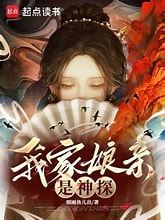
Yun Shuang, a modern police officer known as the Iron-Blooded Police Flower, is shot in the line of duty and awakens in the body of a woman with the same name in the ancient Kingdom of Da Qi. The original host was a low-ranking magistrate's daughter who eloped with a deceitful scholar, was betrayed and assaulted, and subsequently gave birth to twins in poverty. After years of despair and illness, she died, leaving her five-year-old children, Yun Erya and Goudan, malnourished and struggling to survive in a dilapidated shack in Xiazhou, a military household settlement near the border. Yun Shuang quickly assesses her dire situation: the family possesses only ten copper coins and no food. She rejects the passive despair of her predecessor, using her modern knowledge and police training to stabilize her household. She cooks a nutritious meal from foraged mushrooms and fish, earning her children's tentative trust. Her son, Goudan, is fiercely protective but traumatized by years of neglect, while her daughter, Erya, is sweet but naive. Yun Shuang begins to teach the children survival skills and moral principles, aiming to raise them with dignity despite their poverty. The local social dynamics are hostile. Sister Miao, the village chief's wife, repeatedly attempts to pressure Yun Shuang into marrying her intellectually disabled son, intending to use Goudan as a future laborer and military substitute. Yun Shuang firmly rejects these advances, exposing the mutual utility of her presence in the village to the village chief. Meanwhile, Liu Pei'er, the village's most beautiful girl and Yun Shuang's rival, harbors jealousy and spreads rumors about Yun Shuang's past. Yun Shuang handles these threats with cold logic and sharp wit, refusing to be bullied. A significant turning point occurs when garrison soldiers arrive to arrest a deserter, Wu Chengqi, who had previously harassed the original Yun Shuang. Yun Shuang observes the search at the Wu household and notices inconsistencies: yellow mud on the parents' shoes and greasy dishes indicating recent heavy cooking. She approaches the commanding officers, Deputy Commander Yan Fang and Captain Chen Ye, and provides precise intelligence about the deserter's hiding place at Doghead Mountain. The soldiers capture Wu Chengqi, and Yun Shuang is rewarded with two strings of cash by General Jiang Xiao, the ruthless commander of the Xiazhou garrison. The encounter with General Jiang Xiao leaves a lasting impression on him due to Yun Shuang's unusual composure and directness. He had been searching for a woman from six years prior who saved his life, and her resemblance to his memories intrigues him. Yun Shuang uses the reward money to buy ingredients and plans to start a small business, discovering a grove of hawthorn trees that she intends to process into candied snacks, a delicacy not yet popular in the border region. However, her plans are interrupted when Erya falls severely ill with a high fever, forcing Yun Shuang to confront the immediate dangers of healthcare in an ancient setting while navigating the growing attention of the powerful general.

Latest Release
DateGroupRelease
2026-08-11shanghai fantasy c200
2026-08-11shanghai fantasy c199
2026-08-11shanghai fantasy c198
2026-08-11shanghai fantasy c197
2026-08-11shanghai fantasy c196
2026-08-11shanghai fantasy c195
2026-08-11shanghai fantasy c194
2026-08-11shanghai fantasy c193
2026-08-11shanghai fantasy c192
2026-08-11shanghai fantasy c191
2026-08-11shanghai fantasy c190
2026-08-11shanghai fantasy c189

Community Reviews

Rating(4.5 / 5.0, 4votes)
5 stars
2(50%)
4 stars
2(50%)
3 stars
0(0%)
2 stars
0(0%)
1 stars
0(0%)

Popular reviews

... Read More
Let's be real for a second—the handkerchief scene is peak mystery setup and I am NOT okay with how well it works. Fan Youliang's panic over a handkerchief that appeared on his bed? That's not just a plot device, that's a masterclass in showing guilt through physical reaction. The text says he was "no longer composed, turned pale and stammered" and his defense was so weak—"I don't know where that handkerchief came from!"—that you can practically hear the narration rolling its eyes. Yang Yuanyi's sly half-smile when he says "Shanyang isn't that big" is the look of a man who already knows he's caught someone in a lie. But the real stakes here go way beyond a missing Lady Luo or a framed county official. Yun Shuang is walking into a situation where she's negotiating with a military commander she doesn't fully trust, potentially a spy from another kingdom, while trying to solve a case that could get her killed if she fails—or if she succeeds and threatens the wrong people. And the danger is REAL. The text explicitly tells us that before Jiang Xiao arrived, bandits broke into inns and robbed guests. The cheaper inns? The owners might BE the bandits. Yun Shuang is considering booking an inn for herself and two children in a town where this is a documented problem, and she's clutching her nearly-empty pouch like a lifeline. She's making calculations about sixty or seventy wen per night like her life depends on it—because it might. What's brilliant is how the author layers the stakes. On the surface, it's a missing person case. But underneath, there's the Luo family's political vulnerability, the garrison's financial dependence on them, Fan Youliang's possible guilt, and Yun Shuang's own precarious position as a woman with no protection navigating a world full of people who could hurt her. The handkerchief is just the first domino. And Yun Shuang knows it. That's why she's so careful with Jiang Xiao—why she proposes a deal instead of asking for help, why she keeps her distance even as she gets closer. She understands the game they're playing, even if neither of them has said the rules out loud. Also, the suspense around whether they'll actually FIND Lady Luo is keeping me up at night. Because if they do, what happens next? And if they don't—well, I'm not even thinking about that possibility.
... Read More
Okay so I need to talk about this ONE scene. The one where Jiang Xiao ruffles Goudan's hair. That's it. That's the tweet. We've spent chapters building this man up as this ice-cold, intimidating warlord-type who makes everyone nervous. Even Goudan, this kid who just wanted someone to be kind to him, was terrified. And then—bam. Softest smile, gentlest gesture, and I'm sitting here like... what just happened? But here's what really got me: Goudan's entire internal monologue after that moment. He compares Jiang Xiao to a Buddha statue in a temple. Powerful, noble, revered. And himself? A beggar who can't even cross the threshold. "Maybe a child like him was never meant to gaze upon the Buddha in the temple." I actually had to put the book down. That's not just sad—that's devastating. This kid has been through so much hardship that he's internalized the idea that kindness from someone "above" him is something he doesn't deserve to keep. And Yun Shuang? She notices. Of course she notices. She sees Goudan staring at Jiang Xiao's back and immediately understands what's troubling him. That's the kind of maternal instinct that doesn't need to be written—it just exists between them. The bond between these two feels so real, so earned. Meanwhile, the romantic tension between Yun Shuang and Jiang Xiao is simmering under every interaction. She's cautious, calculating, always keeping distance. But she keeps finding reasons to stay close. And he—well, he notices everything. The calluses on her fingers. The way she looks at him. He's playing along with this dance too, even if neither of them will admit it out loud. That scene where he laughs? I swear to god, the text says his cold edge softened and he appeared "brighter, more striking than ever." I was not prepared for that level of vulnerability from a character who's been stone-faced this entire time. And Yun Shuang's reaction—confused, slightly annoyed that he's not taking this seriously—felt so genuinely human. Like, of course she'd be thrown off when someone she's been treating as a potential threat suddenly shows warmth. I keep waiting for one of them to just SAY something. Anything. But the author is clearly enjoying torturing us, and I am HERE for it.
... Read More
Let me just say this upfront: Yun Shuang's dialogue is my favorite thing in this entire novel. She talks like a fox who just found a particularly delicious chicken coop and is already plotting how to get inside without getting caught. "General Jiang, I'd like to propose a deal with you." That's it. That's all she says. No preamble, no softening, no fake modesty. She just drops the bomb and watches him react. And the best part? She's completely aware of what she's doing. The text literally describes her eyes as curving "like a sly fox in the forest" when she twists her way into getting what she wants. Jiang Xiao's voice, on the other hand, is all sharp edges and dry amusement. His line about bribery—"Is Miss Yun… attempting to bribe me?"—is delivered with this perfect deadpan that makes you picture his face: completely serious, absolutely deadpan, while internally he's probably amused as hell. And then he LAUGHS. A full low chuckle. The text says his features were "sharp and serious—handsome in an austere way" but that brief moment of laughter softened everything. This man doesn't smile often, and when he does, it's devastating. The banter between them is genuinely excellent. Watch this exchange: "If you're worried others will accuse you of taking a bribe, I can donate the five hundred taels to the Xiazhou garrison instead." She's literally offering to redirect the money to avoid the appearance of impropriety, and his response is just... laughter. He's not even mad. He's entertained. That's the kind of dialogue that makes you want to reread paragraphs just to feel the rhythm of it again. And then there's Yan Fang, who exists purely to provide comic relief with his excitable energy. "Miss Yun is so clever, she'll surely figure out how to find Lady Luo! And now, the General finally took my advice!" Bro, you did not give advice. You were standing there while they negotiated. But his enthusiasm is so genuine and unfiltered that you can't help but love him. His dialogue is loud, unpolished, and completely authentic to a simple-minded but loyal soldier. Goudan's lines are sparse but loaded. "Thank you… for earlier." Just that. Stuttering, nervous, barely above a murmur. After everything this kid has been through, the fact that he can muster even those two words to express gratitude to someone who intimidated him so badly that he considered biting him earlier? That's not bad writing—that's restraint done right. The author's narrative voice is also worth praising. It slips into Goudan's POV sometimes and the shift in tone is remarkable. When we're in his head, the prose becomes more visceral, more emotional, less analytical. It's a subtle but effective technique that I wish more authors would use.
... Read More
I need to talk about Goudan's temple metaphor because it's the single most important symbolic moment in this entire batch, maybe the whole novel. "That uncle was like a Buddha statue in a temple, revered and worshipped — powerful, noble. Yet Goudan himself couldn't even pass through the temple gates. Every time he tried to enter, the people inside would glare at him with contempt, drive him away, and curse at him — Where did this little beggar come from? Don't defile the purity of the temple!" This is not just a kid's poetic imagination. This is a searing commentary on class, on who gets to belong and who doesn't, on how society treats people based on where they come from rather than who they are. The temple represents everything Goudan is excluded from: safety, dignity, kindness from people of status, the simple act of being seen as worthy of respect. And Jiang Xiao? He's the Buddha statue. Not because he's divine, but because from Goudan's perspective, he occupies a space that's literally inaccessible. Goudan can see him, can feel his warmth, can even receive a gesture of kindness (the hair ruffle), but he can never cross the threshold into that world. The metaphor is heartbreaking in its simplicity. But here's what makes it even more layered: Jiang Xiao himself doesn't seem to understand the metaphor. He's just being kind. He's not performing charity—he genuinely helped Goudan without expecting anything in return. The tragedy isn't that Jiang Xiao is cruel or dismissive. The tragedy is that Goudan has been so systematically dehumanized by society that even genuine kindness feels like something he can't process, can't internalize, can't believe is real. "Maybe a child like him was never meant to gaze upon the Buddha in the temple." That line. That absolutely devastating line. It's not just about class. It's about internalized oppression. Goudan has absorbed the world's contempt for him so completely that he now polices his own belonging. He's the one driving himself away. There's also the recurring motif of money and survival. Yun Shuang carefully haggles, counts every wen, buys things in moderation, and worries about appearing too wealthy. Meanwhile, she's negotiating a thousand-tael reward with a general. The contrast between her day-to-day poverty and her intellectual/capital value is itself a theme—what we're worth versus what the world allows us to appear as. The Luo family's donations to the garrison, the military's dependence on their wealth, the power dynamics embedded in every transaction—these aren't just worldbuilding details. They're the architecture of a society where everything has a price and everyone is positioned by what they can give or take.
See all reviews

Characters

See all characters

Custom lists

See all custom Lists