My Master Is the Tragic Second Male Lead - Reviews

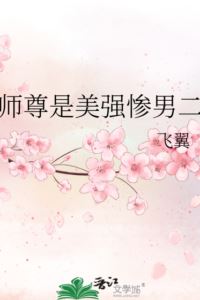
My Master Is the Tragic Second Male Lead
+Add to Custom List
Sort
Add review
... Read More
Can we just take a moment to appreciate how absolutely chilling Old Wang's dialogue is? The man says the most horrifying things with the calmest, most reasonable tone possible. Let me just drop some quotes because they deserve to be remembered: "All beings are bound by destiny. If one alters the heavenly mechanism, exchanging the fates of two people, then whenever anyone seeks to divine the truth, Heaven itself will reveal Yu Xian'er as our Princess." He's explaining fate theft like he's discussing crop rotation. Like it's a normal agricultural technique. "Oh yes, we'll just swap their destinies, no big deal, Heaven's very accommodating about this sort of thing." And then: "It was your own will to claim all that belonged to Yu Xian'er. In today's rite, had you felt even the slightest unwillingness, the fate could not have been exchanged." His words laid the truth bare, enough to shame. SHAME. He makes Xianzhu feel SHAMED for being complicit. She wanted this. She cried and agreed and pressed her forehead to the ground and now Old Wang is basically telling her this is HER fault for being greedy. The man is a masterpiece of manipulation. But the dialogue that got me the most was Yu Xiu's exchange with Old Wang about the missing wealth: "You were my father's confidant. Do you know where the wealth Jing Chonghua brought lies?" And Old Wang just… plays dumb. "Was it not given to Your Majesty?" Perfect timing. Perfect innocence. The narrative literally tells us his gaze says "I know you refused to return it to your daughter, so now you pretend you never received it" and Yu Xiu can't even defend himself. The author's voice in this section is so sharp — every line of dialogue does double or triple duty. Old Wang isn't just advancing the plot, he's revealing character, power dynamics, and moral rot all at once. And Yu Xiu? His dialogue shifts from commanding sovereign to whining son in two seconds flat. The man cannot handle not getting his way.
... Read More
The atmosphere in this chapter is absolutely filthy in the best way. I'm talking about scenes so vivid I could feel the cold stone beneath my feet and hear the cypress trees whispering. Let me start with Wei Li hiding among the cypress trees, clutching his blade, waiting for midnight. The text describes the tomb as having an "oppressive stillness" where "the silence itself felt suffocating." That is such a specific, crafted detail. It's not just quiet—it's the kind of quiet that presses against your eardrums. And then he moves through it, silent, his handsome face hardened, going straight to the courtyard he scouted earlier. The whole sequence reads like a wuxia film—every frame composed with deliberate care. Then the ambush hits and the prose goes cinematic. "A flash of silver streaked past, and a scream split the night. His blade clattered to the ground." Short sentences. Sharp images. You feel the suddenness of it. The binding spell freezes him mid-motion, and then from the darkened room, Yu Sangsang steps out with a smile. A beautiful, gentle girl. Smiling. While holding a sword that has just pierced his dantian. The black mist scene is where the worldbuilding really shines. The text describes it as "thick and suffocating, carrying whispers that seemed to murmur from the abyss." It swallows the night itself. It slips past protective talismans like they don't exist. And then—here's the detail that made me sit up—when it enters Yu Sangsang's body, it transforms. "Spiritual energy and black mist alike transformed into a milky-white vapor, swirling within her core." This is important worldbuilding. Whatever she is, whatever she has become, it has the power to purify or transmute even the darkest energies. That's not just a power-up. That's a statement about the nature of this character and this world. And then the figure above. Standing on clouds. Watching. The text says: "Though the person was too high to see clearly, somehow Yu Sangsang knew—they were watching her from midair." You don't need to see the face to feel the presence. The cultivation world here feels vast and layered, with masters hovering above mortal conflicts like gods observing ants.
... Read More
Let me just say this: Yu Xiu is a piece of work. A absolute piece. The moment he walks in, the narration makes it clear — he's resentful, insecure, and deeply bitter about his late wife overshadowing him. And now his daughter looks exactly like her mother? That's not fatherly pride, that's trauma triggering. The contrast with how he treats Xianzhu is brutal. One daughter gets gentle strokes and whispered apologies; the other gets called ill-mannered for not bowing fast enough. But here's what actually got me — Yu Sangsang's interaction with the mausoleum attendants. Old Wang, the gaunt nurse, the gardener, the cook. These people raised her when her own father abandoned her at three years old. And her response? A genuine bow, sincere gratitude, blessings for their futures. She could have been cold and distant, but she isn't. That says everything about who she is versus who her father is. The author is building this moral contrast so sharply I can practically hear the soundtrack. And Yu Sangsang's line — "Never had a father to teach me" — when he scolds her for lacking manners? Chef's kiss. That's not rude, that's a factual indictment. Fourteen years. He chose not to come. Don't blame the child for the parent's absence.
... Read More
There's a phoenix phantom in the bracelet. A carved phoenix on silver. Phoenixes in Chinese literature aren't just pretty birds — they symbolize rebirth, nobility, and the feminine principle. Yu Sangsang is literally carrying her mother's legacy and her grandfather's protection in a space that only she can access. The bracelet is a womb-like treasure, a hidden world of resources that will fuel her transformation. And the name Jing — her mother's family name — appearing on a pill bottle base, engraved deliberately, not accidentally. This is about lineage reclaiming itself. The Jing clan was once among the most renowned. They fell. But the treasures remain. The knowledge remains. The bloodline remains. Meanwhile, the mausoleum itself is a powerful symbol — a place of death and forgetting where a living princess has been hidden away for fourteen years. Her father wants her to stay buried, literally and metaphorically. But she's cultivating. She's growing stronger. The mausoleum is supposed to be her tomb, but it's becoming her training ground. And the father's insecurity about his late wife — how her nobility made him feel like 'a mongrel at a goddess's feet' — that's the theme of inherited shame versus inherited strength. One man lets his resentment define him. The other, through his daughter, is about to let his legacy redefine everything.
... Read More
Okay, so this section hits with a massive plot reveal right at the start. The silver bracelet? It's not just some trinket. It's a spatial treasure containing heaven-level resources — spirit pills, cultivation manuals, mountains of spirit stones. And here's the kicker: some of it was gifts from her main account to her side account in the game, but the rest is her mother's family legacy. The Jing clan. That name alone tells me there's a whole bloodline mystery brewing here. The author is layering reveals carefully — first the bracelet opens, then the pill bottle with her mother's surname, then the realization that her grandfather and mother had connections to powerful sects. Meanwhile, the father's visit isn't just a family reunion (ha, right). He's clearly after something, and the way he brings up Immortal Shangyong of the Danxia Sect feels like the start of a quest hook. Fourteen years of absence, then suddenly shows up asking about a secret conversation? Yeah, that's not coincidental. The plot is setting up multiple threads — the treasure, the mother's clan, the sect connection — and they're all converging. I'm invested.
... Read More
"From now on, you will remain here in the imperial mausoleum forever… behave yourself, don't harbor wild ambitions, and don't even dream of competing with Xianzhu." I need a moment. I actually need a moment. This is a father talking to his biological daughter. His actual child. And what does he give her? A threat. A warning. A reminder that she is not allowed to exist near the girl he actually loves. There is not one single word of affection in everything he says to her. Not one. And the worst part—the absolute worst part—is that the body she's in has already spent over ten years feeling nothing. The original Yu Xian'er gave up on this man so long ago that her emotional response is just… emptiness. "How strange. She herself was not his daughter, so his attitude only went into her mental ledger as: 'One day, when I return in strength, we'll see how you die.'" I love that Yu Sangsang processes this entire heartbreaking interaction and her conclusion is basically: cool, cool, I'll kill you later. That's the transmigration advantage right there. The original girl was too broken to even hate him properly, but Yu Sangsang? She's got a whole ledger of grievances and she's not above adding to it. But then—then the author throws us this gut-punch about Jing Chonghua. The dead wife. The one who made Yu Xiu swear to protect their daughter, to return her to Taisu Sect, to pass down the Su Xin Manual. And Yu Xiu broke every single one of those promises. Not because he didn't care about his wife's memory, but because he cared more about the other woman, the other daughter, the one he could love openly without the suffocating constraints of a political marriage. "She insisted I swear to pass down her clan's legacy—the Su Xin Manual—to her child, and to return her daughter to Taisu Sect." Yu Xiu says this almost fondly, like he's remembering a sweet moment. Like he's the victim here. And I want to scream. The emotional core of this entire passage is betrayal—not just the obvious identity theft, but the deeper, quieter betrayal of a mother's dying wish, a daughter's birthright, and a father's sacred vow. And Yu Sangsang, standing in the ashes of all of it, is the only one who sees the full picture. No wonder she's planning revenge.
... Read More
I need to talk about this moment because I have not stopped thinking about it since I read it. Yu Sangsang gets hit by this terrifying black mist—this stuff that Wei Li himself was afraid of, this energy that should turn anyone into a soulless monster—and what does she do? She absorbs it. Completely. And then she burps. "It tasted rather good." I literally gasped out loud. This girl just consumed what is clearly some kind of demonic or dark energy, something that made Wei Li scream "You should have turned into a monster!" and her response is basically "thanks, that was delicious." And then her cultivation jumps straight to mid-stage Qi Refining. She doesn't even flinch. She doesn't question her morality. She just... takes it. This is the emotional core of the entire chapter for me. Everything about Yu Sangsang's character is contained in that single burp. She is not a traditional hero. She is not pure. She is not the kind of girl who would weep over injustice and then fight bravely for righteousness. She is a transmigrator who knows the story, who has calculated every risk, who swallows spirit pills and waits for nightfall and then ambushes a mid-stage Qi Refining cultivator in his own trap. And yet—there is something genuinely moving underneath all of this cold calculation. When she thinks about the real Yu Xian'er, the one who was banished to the tomb, the one who was kind and gentle and deserved better—the text says: "For the sake of the true Yu Xian'er, she would stand up." That line hit me harder than any battle scene. She is wearing someone else's face, living someone else's life, but she feels this fierce protectiveness toward the original owner of that body. That is not nothing. That is actually really beautiful in a weird, twisted way. The scene where Wei Li is laughing bloodily as the black mist engulfs her, convinced she is doomed, and then she just... isn't? That shift in power, that moment where the hunter becomes the hunted and then the predator becomes something even the predator fears? The emotional whiplash is incredible.
... Read More
Let me just lay out the stakes because they are INSANE for someone who can't even cultivate yet. Sangsang is in a body with max stats but zero cultivation method. She's in a kingdom where the strongest person (her father) is only Foundation Establishment — which, in cultivation novel terms, is basically nobody. But Old Wang? He's clearly a cultivator too, and he has a Spirit-Revealing Sphere, which is apparently an heirloom of the entire dynasty. She is outgunned, outmaneuvered, and one wrong move away from being exposed as a transmigrator — which in a world this superstitious could easily mean death. But here's what makes the conflict so gripping: it's not just physical danger. It's the existential terror of being fundamentally ALONE. No allies. No cultivation manual. No money. No way to contact the outside world. Her 'cheat' — max-level game stats — is basically useless without a cultivation method to channel them. She's a level 99 character stuck in a level 1 zone with no gear. The frustration is palpable. And the suspense is maintained so well because every scene raises the stakes. Chapter 1: she's trapped in a mausoleum. Chapter 2: someone suspects she's possessed and has a magical artifact that could prove it. Each revelation is a new layer of danger. The author never lets us breathe — just when you think 'okay, she passed the test,' Old Wang is already asking for the sphere back like he's planning his next move. What I love most is that the author makes us CARE about this powerless princess. We're not watching a chosen one who's guaranteed to win. We're watching someone who has to outsmart people who are genuinely more powerful than her. That's the kind of tension that keeps you reading at 2 AM.
... Read More
Okay so let me just say this: Wei Li is one of the most chilling characters I have ever encountered in a cultivation novel, and I don't use that word lightly. Here is this guy who is described as handsome, talented, proud, and utterly devoted—and that devotion is directed entirely at Xianzhu. But the second he senses that Yu Xian'er (our protagonist, currently occupying that body) is afraid of being exposed, his entire worldview snaps into place like a trap closing. He doesn't see her as a person. He sees her as an obstacle. A threat to his princess. And so he decides to murder her in the dead of night, all while fantasizing about flying on swords beside Xianzhu. The text literally says: "To him, she was nothing but an obstacle in his fairy's path." And then later: "For her sake, he had rushed back, hiding in the tomb, waiting for midnight when all within would sleep, so he could strike down the hidden threat." What gets me is that he genuinely believes he is the good guy here. He remembers Xianzhu crying, clinging to his hand, saying "I didn't mean it"—and instead of feeling sympathy for the girl in the tomb, he feels nothing but contempt for her. He calls her a cultivator pretending to be mortal and says "too shameless!" as if moral consistency matters in this context. Meanwhile he is the one who planned a midnight assassination. The most disturbing part? In the original story, Wei Li is supposed to be a hero. A loyal guard who rises in power and becomes Xianzhu's most faithful sword. The narrative frames his devotion as romantic, noble even. But Yu Sangsang—our narrator here—sees it for what it is: "Could such ruthless devotion be called anything but loyalty?" Yes. It can. It's called obsession. It's called danger. And the text drops this incredible detail: Wei Li threw a brocade pouch at Yu Sangsang and even HE seemed wary of it. He was so afraid of his own weapon that he tossed it aside and scrambled away like a stray dog. That tells you everything about the kind of person he is—someone who carries darkness he himself cannot control, and uses it recklessly because he thinks the ends justify the means.
... Read More
Let's talk about Old Wang for a second because THIS MAN is a whole vibe. The way the author writes him — bowing and scraping on the surface while his eyes are doing math, calculating whether this princess is worth keeping around — is absolutely delicious. He's not a cartoon villain; he's a fallen servant who's bitter about his own decline and taking it out on the one person he can still intimidate. And yet, there's this weird moment of humanity when he actually remembers the former king fondly. That's the kind of character writing that makes me pause and go 'huh.' But the real star here is Yu Sangsang herself. The duality of her character is everything. On the outside, she's playing the role of the naive, gentle princess — the one who actually shows kindness to a servant who's clearly scheming against her. But inside? She's a max-level demon queen who's already plotting to storm the palace and make her father taste exile. The contrast between Yu Xian'er's genuine kindness and Sangsang's ruthless pragmatism is fascinating. And the fact that they share the same body and there's zero rejection? That's either the smoothest transmigration ever or the most sinister setup I've ever read. The relationship between Sangsang and the body's former owner is also intriguing. Yu Xian'er chose to stay in the mausoleum to honor her ancestors. Sangsang would've burned the whole palace down. Who is this body really belonging to now? Is Sangsang going to corrupt Yu Xian'er's goodness, or is there a chance the princess's kindness will soften the demon queen? I need to know. And can we appreciate how the author handles the father-daughter dynamic in just a few paragraphs? One sentence — 'I don't want to see her again' — and we've got a complete emotional backstory. That's how you write a villainous parent without needing a thousand words of exposition.
... Read More
I need to just sit with this for a moment because the author absolutely murdered me with one paragraph. "The day before, her father had smiled gently at her. But the moment her mother breathed her last, he seemed relieved, and his gaze turned cold." That's it. That's the whole thing. Two sentences and I was emotionally compromised. The speed of that transition — from warm father to cold exile-caster — it's so brutally efficient. It captures the exact moment a child's world shatters, and it does it without a single tear being shed on the page. The grief is in what's NOT there. And then there's Yu Xian'er's choice to stay in the mausoleum. Fourteen years of isolation, meager provisions, forgotten by the world — and she stays because her grandfather and her mother's memorial tablet are there. That kind of devotion, that fierce loyalty to the dead when the living have abandoned you, it broke something in me. She's a ghost in her own life, and yet she chooses to haunt the place where her family rests rather than flee somewhere safer. That's not weakness. That's the most powerful kind of love there is. The contrast with Sangsang's reaction is what makes this even more devastating. Sangsang thinks: I'm gonna seize the throne and exile MY father. But Yu Xian'er? Yu Xian'er just wants to sit by her mother's tablet and remember. Two souls, one body, completely different responses to the same abandonment. I'm not crying, you're crying. Also, the grandfather memory — the one where he holds her and insists every minister praise his beloved granddaughter — that little flash of warmth makes the current desolation hurt even more. What a cruel world to take that away and leave only silence and stone tablets.

Leave a comment

You must be logged in to leave comments. or
