Summary

... Read More

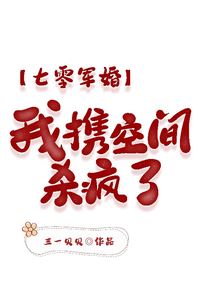
Xin Xiu, a 26-year-old modern office worker, finds herself transmigrated into the body of a fifteen-year-old girl with the same name after a suicide attempt at a well. The original Xin Xiu had endured abuse from her stepmother, Hong Xiang, and her father, Xin Da, in a poor household near the city gate. Following the incident, the girl appeared to lose her mind, acting defiantly and striking back against her abusers, which frightened Hong Xiang into suspecting an evil spirit possession. Unaware of the supernatural implications, Xin Xiu navigates this new life with a pragmatic attitude, missing modern conveniences while trying to survive in an unfamiliar historical setting.

The narrative shifts when Hong Xiang takes Xin Xiu to the LingZhao Immortal Temple for an exorcism ceremony. During the festival procession, a mysterious door of white light appears before Xin Xiu under a sacred osmanthus tree. Drawn by an inexplicable force, she walks through the portal and vanishes from the mortal realm, leaving her stepmother collapsed in shock and the crowd believing she has been chosen for ascension. She arrives on a gigantic lotus leaf in a spirit realm, joining eight other children of varying ages and backgrounds, including a proud young master, a cold aloof girl, a one-armed boy, and a timid village girl.

A senior brother named Cai Xing explains that they have been selected by LingZhao Immortal to enter Mount Shuling for a year of training. The group must navigate the surreal landscape, learning to survive by building shelter, finding food, and mastering elemental magic through practical tasks like forging, cooking, planting, and swimming. Xin Xiu naturally assumes a leadership role, organizing the children and using her modern knowledge to create delicious meals from the strange ingredients available, such as grilled fish and spicy bean curd strips. Her culinary skills quickly gain the respect of the group, solidifying her position as their protector and big sister.

As they settle into their routine, the children discover their spiritual affinities through mysterious booklets that assign them elemental tasks. Xin Xiu receives both Metal and Fire manuals, indicating a dual aptitude suitable for forging and cooking. The seemingly simple tasks reveal deeper cultivation mechanics, with dreams providing instruction in mystical incantations. The narrative occasionally cuts to the observers in the Cloud Pavilion, where senior disciples watch the newcomers through a magical basin, commenting on their progress and potential. The reclusive artifact master Shentu Yu makes a rare appearance, casting a house into the basin as a gift, signaling his interest in one of the children.

Conflict arises when The Third, the cold aloof girl, is severely injured by a giant crayfish in the lake. Xin Xiu leads a coordinated effort to hunt and defeat the beast, using teamwork and simple tactics to capture it. They roast the lobster claws over a forge, sharing the meal with a visiting immortal senior sister, Gui Xin, who heals The Third’s wound. This event highlights the growing bond among the children and their integration into the cultivation world. Meanwhile, The Fifth, the former beggar, demonstrates a rare talent for manipulating spiritual energy, healing Xin Xiu’s minor scratch and revealing his potential as a genius cultivator.

The story explores the dynamics of survival and growth within a restrictive yet wondrous environment. The children face physical challenges and emotional adjustments as they leave their troubled pasts behind. Xin Xiu’s protective nature extends to all nine members, creating a surrogate family structure. The presence of immortal observers adds a layer of mystery, suggesting that the children’s actions are part of a larger design. As the year progresses, the group prepares for the eventual transition from the testing basin to full discipleship under various masters on Mount Shuling.

Key turning points include Xin Xiu’s initial transmigration, her selection by the immortal force, the assignment of elemental tasks, and the bonding experiences through shared hardship and celebration. The arrival of senior disciples like Jing Chengzi, who chooses The Fifth as his disciple, marks the beginning of their formal cultivation journey. The narrative concludes with the group strengthened by their trials, ready to face the next stages of their immortal education under the guidance of their new masters.

Latest Release
DateGroupRelease
2026-09-26akknovel c7
2026-09-26akknovel c6
2026-09-26akknovel c5
2026-09-26akknovel c4
2026-09-26akknovel c3
2026-09-26akknovel c2
2026-09-26akknovel c1

Community Reviews

Rating(4 / 5.0, 51votes)
5 stars
18(35%)
4 stars
16(31%)
3 stars
16(31%)
2 stars
1(2%)
1 stars
0(0%)

Popular reviews

... Read More
Okay so I need to talk about how this author pulled off this transition. You've got this whole domestic cooking montage going on, Xin Xiu's just like hammering iron sheets and making dried fruit and chili strips, super cozy village-woman energy. And then BAM, this ancient cultivator named Jing Chengzi phases through his skin like a goddamn smoke screen and just WALKS INTO THE KITCHEN WHILE KIDS ARE EATING SOY MILK. The plot literally goes from a food show to a job interview in like two pages. And I'm still not over the framing. She doesn't even treat it like a sacred immortal recruitment ceremony. She says, 'What kind of disciple are you looking for? First, the zodiac signs must match, right? What's your field?' She's PITCHING KIDS TO AN IMMORTAL LIKE SHE'S AT A TALENT FAIR. She pulls The Fifth in by the arm and goes, 'I recommend the most. Look at his aptitude, I'm not exaggerating, it's definitely top-notch among us.' And the kid is just sitting there being described like a product on a shelf. The plot works because it earns this tonal shift through the earlier worldbuilding. You understand what the World in a Basin IS, you understand that the outside cultivators watch through this jade container, so when Jing Chengzi just... dissolves into blue smoke and plops down drinking soy milk while stuffing spicy strips in his beard, it's not jarring. It's consistent. The escalation is quiet. Nobody says 'the outside world has entered.' He just sits down, eats, and accidentally becomes a father figure to a group of mud-rolling children. I keep thinking about how the plot will handle The Fifth now. Is he gone? Does he get pulled out of this little world into the big scary cultivation sect? Or does he stay and just have a new mentor popping in? And more importantly, does Xin Xiu get paid for 'training' him? Because that HR comment really set that tone, didn't it?
... Read More
I need to talk about the relationships in this chapter because THEY HIT DIFFERENT. First, the dynamic between Xin Xiu and The Second is pure comedy gold. She's steady as an old dog, he's excited as a mad dog—they complete each other. The banter: "Don't worry, boss. You're the one who needs to be careful. I've escaped from that lobster's claws several times already!" "You seem pretty proud of yourself, kid. Let me show you what real skill looks like!" I was howling. This isn't just filler dialogue; it shows us they have HISTORY together. She trusts him enough to let him lead with the sword, and he respects her authority but also teasingly pushes back. That's a real bond. Then there's Xin Xiu herself. The narrator says "She wasn't exactly a well-behaved child herself" when she dives in to help instead of waiting for the plan. Love that for her. She's strategic but also impulsive when it counts. But the moment that got me—the one I re-read three times—was Gui Xin. She arrives as this beautiful, kind immortal, heals The Third's arm with zero fanfare, and then when she sees the half-eaten lobster, she just... lets her guard down. "I've been cultivating for many years and haven't tasted such mortal delights in a long time." There's genuine loneliness in that sentence. She's been isolated in her cultivation, and this simple act of sharing a meal with mortal children is almost more powerful than any magical technique. Xin Xiu immediately making room for her—no hesitation, no awe-struck paralysis—just "Why don't you join us for a bite?" That's the emotional core of this whole passage. Food as communion. A cultivator and some kids, sitting together, equal for once.
... Read More
Okay so Xin Xiu is twenty-six years old trapped in a fifteen-year-old's body with eight actual children, and the fact that she feels zero shame about bossing them around is both hilarious and secretly heartbreaking when you think about it. She's playing this role — the responsible eldest sister — but there's something bittersweet about an adult forced into caretaking against their will, trying to convince herself it's no big deal. But then there's the Little Beggar scene and honestly I was not prepared for that one. This kid keeps saying 'I'll go to the side, I'm dirty' and Xin Xiu just... picks them up. One arm. Like they weigh nothing. And when the kid protests about bathing, Xin Xiu laughs and calls them shy, completely missing the trauma underneath. Then she slips, the kid falls in the water, and what follows is this whole sequence where Number Two is scrubbing away and giggling 'so small, just like a little girl, haha' while the fish eats the mud. It's funny on the surface but my chest actually tightened reading it. This child is so used to being treated like dirt that their default response to kindness is terror. Xin Xiu doesn't seem to fully grasp this yet, and that's what makes their dynamic so raw. She's trying — God, she's really trying. She's organizing everyone, making plans, protecting the little ones, refusing to let the Beggar isolate themselves. But she's also a teenager in an adult's mind, doing her best with incomplete emotional tools. The bond forming here isn't polished or sentimental, it's messy and real. These kids are already assigning themselves roles — the adventurous Number Two, the capable Little Village Girl who says matter-of-factly 'at home I have many brothers and sisters, we all squeeze together to sleep' — and each of those lines hits differently depending on whether you read them as worldbuilding or as quiet cries for help. The CP angle here isn't romantic at all, but the found-family chemistry between these kids is genuinely moving. Especially when the Cold and Aloof Girl follows the Little Village Girl without a word, and the Proud Young Master grousingly tags along even though he lost the ranking argument. They're a weird little ecosystem forming under pressure.
... Read More
Here's the thing I noticed. This whole section is basically ONE LONG MONTAGE of Xin Xiu cooking, and the author knows it and LEANS INTO IT. It's not rushed. It's not a skip-forward-time device that makes you feel like you missed twenty chapters. It reads like you're just... hanging out in this kitchen for a while. She makes iron sheets. She roasts fruit. The Fifth brings food. Everyone piles up edibles. Spicy strips get invented. Soy milk gets boiled. Bean curd gets pickled. Each dish is its own little beat, and you get the rhythm of daily life without any of it feeling like filler. The pacing trick is that every dish INCREASES the stakes of the community. First it's just Xin Xiu and Little Ninth by the furnace. Then The Fifth shows up with fruit. Then it's everyone. Then it's a whole dining table with a new task system. The world expands through FOOD, which is so much more natural than 'and then they discovered the eastern cave and the western spring.' Then Jing Chengzi arrives and the pacing DROPS the needle for a second, because suddenly it's not a food documentary, it's a scene with dialogue and character interaction and a tiny bit of tension. The kids are waiting. The old man is eating their snacks. Xin Xiu is pitching. It's almost a comedy sketch in the middle of a slow domestic sequence, and the tonal whiplash is the whole point. The author knows when to speed up (the cooking montage can be breezy, each dish gets three lines) and when to slow down (the actual 'interview' gets full attention, every child gets a description, Jing Chengzi's chewing pace is noted). One thing that bugged me though, the transition from 'only a few people watching daily' in the Cloud Pavilion to Jing Chengzi just deciding to walk in feels a little unearned. Like, he's been snacking through the jade basin for days, sure, but the author doesn't quite give me his motivation for the physical entry. I get it emotionally, but structurally there's a small gap. Whatever. The spicy strips were better than the gap.
... Read More
I have to start by saying: Xin Xiu's internal voice is infectious. The narrator has this dry, witty, slightly sarcastic tone that makes reading feel like hanging out with your funniest friend who has the best observations. Take this moment, for example—when she's confronted by Hong Xiang in the temple and just casually says 'It's lively here, so I came to see the excitement.' Deadpan. No defensiveness, no excitement. Just... casual. And then her internal reaction: 'She then turned back to the young woman with a smile'—the fact that she's performing politeness while completely unbothered internally is so satisfying to read. Her interaction with the sleazy man is another highlight. 'Oh, it's so crowded. I accidentally stepped on you when you squeezed over. Why don't you move away? Otherwise, I might step on you again.' This is peak Xin Xiu energy—assertive, slightly cheeky, and utterly unapologetic. The author gives her a voice that feels modern and sharp without breaking the historical/fantasy setting. It's a delicate balance and she nails it. The dialogue between the children is also great because each one has a distinct sound. The crying toddler ('started wailing as soon as he appeared'), the little girl with missing teeth ('Wow! Such... such big flowers!'), the haughty young master (implied by his golden lock and jade pendant—his dialogue probably reflects his status). Even the beggar has a presence despite not speaking yet. Cai Xing's lines are perfectly calibrated too. 'Everyone's here'—simple, authoritative, with this underlying kindness. And his explanation about Master being 'short-handed' has this casual warmth that makes him feel like a genuine senior disciple rather than a stiff authority figure. The way he crooks his finger to help the fallen village girl shows his personality through action more than words. One thing I noticed: the narrative voice occasionally breaks into modern sensibilities ('According to international convention, smiling eyes usually meant the person was not to be underestimated') which creates this fun anachronistic humor. It's a stylistic choice that could either work or fall flat depending on the reader, but I think it's brilliant—it keeps the tone light and accessible while still treating the world with respect.
... Read More
Okay so I sat here for a while after finishing this section going... why is my brain so soft about a group of kids dealing with a crustacean. But that's exactly the point, right? The whole structure here is this tight little domestic loop: they're having a good time at the lake, someone gets hurt, they handle it with what they've got, and then a brand new capability surfaces that recontextualizes everything. And I mean that last part is the real meat. The Fifth just casually mentioned he was planting trees and reciting lessons and accidentally stuck some green light spots into a broken sapling and it grew back. That's it. That's the whole reveal. No dramatic monologue, no thunderclap. Just this shy little guy fidgeting in the corner, voice getting smaller and smaller, and Xin Xiu going "keep your head up and speak louder" like a mom who's already figured out her kid's a prodigy. The way it connects back to the larger plot is subtle but important — they're here because of Jing Chengzi's visit, they're all waiting for the immortals to show up and maybe take them as disciples, and suddenly one of them just... worked. Without training. Without being taught. By accident, basically. So now the question hanging over everything is: when those immortals finally do come, are they coming for the group, or are they coming specifically for The Fifth? And does that change how Xin Xiu protects him? Because she's already said "don't think about healing The Third now, your skills are still shallow, don't exhaust yourself" which is protective, yeah, but also... controlling? In a big-sister way that I can see turning into something more complicated later. The crayfish itself is almost irrelevant plotwise except as the catalyst that gets everyone in one room, makes The Third vulnerable, and gives The Fifth an audience for his little demonstration. Clever. Really clever. I keep thinking about how the author could have made this a monster attack or a spiritual beast and it would've been way more "Xianxia" but instead it's a crayfish that cut a kid's arm and now everyone's planning to cook it. "It hurt my sister, so we'll eat it!" — that line stuck in my head and I can't get it out. Makes me wonder if the next chapter is actually just them trying to build a net out of curtains and failing spectacularly? Do you think that's where it's heading or am I just projecting my need for a chaotic Saturday afternoon onto the plot?
See all reviews

Custom lists

See all custom Lists