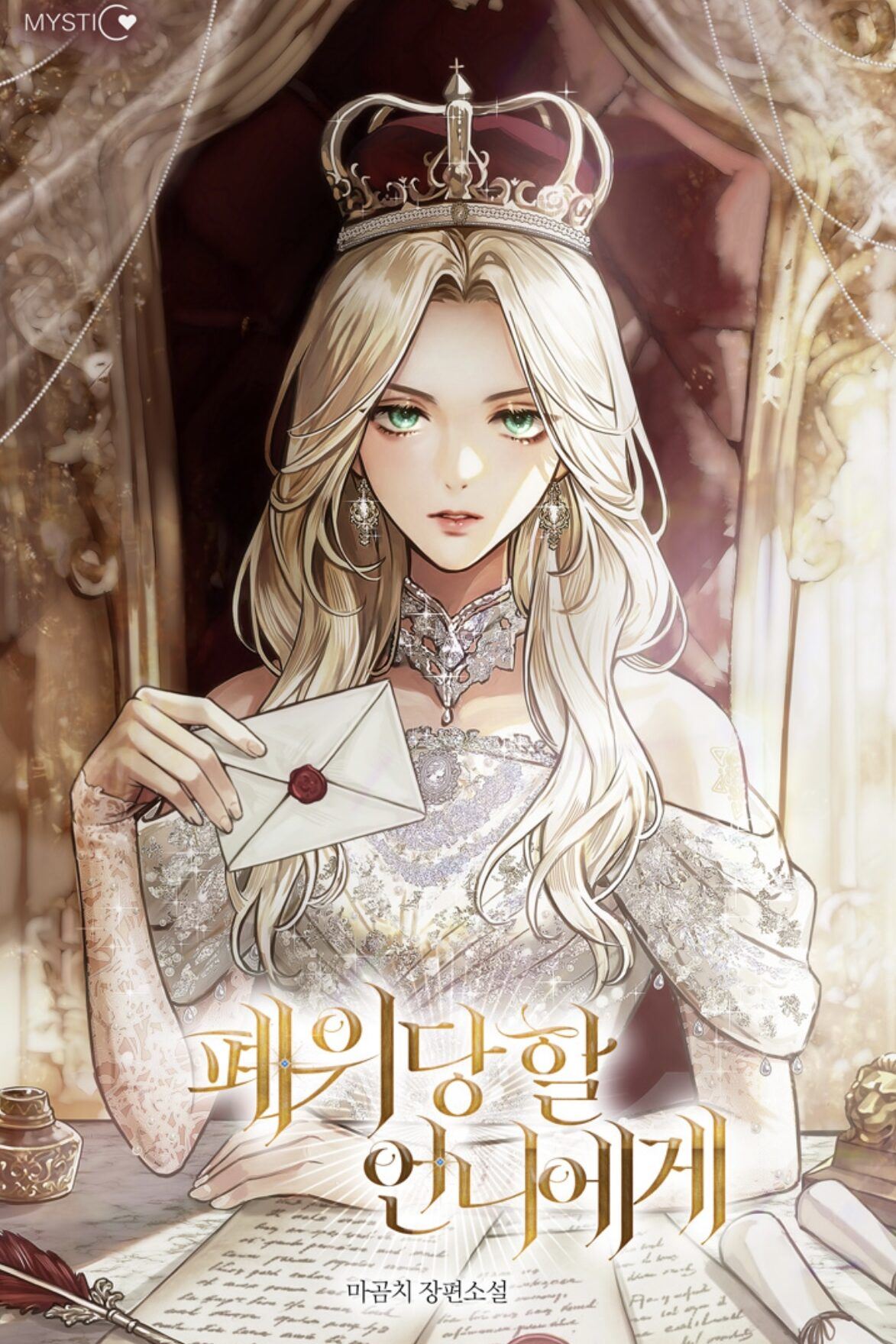
My Lord, You Said I Just Had to Bear Your Child and Leave!
+Add to Custom List
Genres:
Novel Info
  • Author:
  • Status:Ongoing

Summary

... Read More

Karin, a hardworking woman from modern-day Korea, falls asleep reading a web novel and wakes up inside the story as Karin Wendis, the villainess destined to obstruct the romance between the male lead, Luke Serade, and the female lead, Alicia. Rather than following the original plot toward her inevitable destruction, Karin resolves to step aside and allow the protagonists to meet naturally, hoping to avoid her tragic fate. However, her plans are immediately disrupted by an imperial summons that forces a union between her house and Luke’s, the long-time rivals of the Serade family. The Emperor decrees that Karin and Luke must marry and that their firstborn child will inherit the disputed Corbin lands, effectively merging the two warring ducal houses under imperial mandate.

Struggling to adapt to her new reality, Karin feigns amnesia following a head injury to buy time and manipulate those around her. She requests a meeting with Luke before the wedding, hoping to establish boundaries, but instead encounters his cold hostility. Their interaction reveals deep-seated animosity between their families, rooted in a decade-long dispute over territory and historical betrayals. When Karin learns that the original female lead, Alicia, has already married Anton—a knight and sub-male lead from the story—her strategy collapses. Realizing she cannot simply fade into the background, Karin confronts Luke directly during their second meeting, proposing a pragmatic arrangement: they will marry, produce an heir, and then divorce, allowing each to live independently thereafter.

Months pass with minimal interaction between Karin and Luke, as he respects her wish for limited contact while she focuses on managing the household dynamics. Tensions arise among the staff from both families, who harbor deep grudges against one another. Karin demonstrates her political acumen by discerning a plot against Alicia, calmly handling the situation without escalating the conflict between the servant factions. Meanwhile, Luke begins to reconsider his assumptions about Karin, realizing that her current behavior contradicts the manipulative villainess he remembered from his childhood. He notices her competence and fairness, leading to a subtle shift in his perception of her character.

Despite the external stability, internal conflicts persist. Karin grapples with the reality of her situation, feeling trapped in a body she does not fully understand while navigating a world where fate seems resistant to change. She acknowledges her growing physical attraction to Luke but suppresses it, determined to maintain emotional distance. Luke, similarly conflicted, finds himself drawn to Karin’s authenticity, which contrasts sharply with the superficial women he usually encounters. Their relationship evolves from one of mutual dislike to a complex partnership defined by unspoken respect and lingering tension.

As the narrative progresses, the original plot’s influence begins to wane, replaced by the unpredictable dynamics of Karin and Luke’s evolving bond. Both characters face the challenge of reconciling their past identities with their present realities, unsure whether they can escape the roles written for them or forge a new path together. The story ends with them standing on the precipice of a future neither can predict, bound by marriage yet separated by history, each waiting to see if their union will lead to destruction or something unexpectedly genuine.

Latest Release
DateGroupRelease
2026-10-03dusk blossoms c21
2026-10-03dusk blossoms c20
2026-10-03dusk blossoms c19
2026-10-03dusk blossoms c18
2026-10-03dusk blossoms c17
2026-10-03dusk blossoms c16
2026-10-03dusk blossoms c15
2026-10-03dusk blossoms c14
2026-10-03dusk blossoms c13
2026-10-03dusk blossoms c12
2026-10-03dusk blossoms c11
2026-10-03dusk blossoms c10

Community Reviews

Rating(0 / 5.0, 28votes)
5 stars
0(0%)
4 stars
0(0%)
3 stars
0(0%)
2 stars
0(0%)
1 stars
0(0%)

Popular reviews

... Read More
Okay so this section hit me differently. We get this entire subplot about Clever Augustus showing up as some 'family friend' who practically raised Luke, and at first glance it reads like the classic villain introduction—suddenly someone you thought was neutral gets painted as a snake. But the real twist isn't that Clever is manipulative. Anyone with a pulse could see that. The actual plot turn is Luke himself coming out and saying "I came to thank you" after Karin throws the guy out. Like. He didn't come to scold her. He came to thank her. That reversal completely reframes everything we knew about their dynamic up to this point. All those cold, transactional interactions—the whole 'just have a child and leave' arrangement—it suddenly has this underneath layer where Luke was actually watching how she handled his family's parasites and quietly approving of it. And then he goes and tells her about his parents too. Not in a romantic way. More like... he forgot she was there for a second and just blurted out the loneliest thing anyone's ever said about wanting someone on their side. "They never thought about me at all." And then he ran away from it immediately. That's not a plot armor move. That's character. The story is doing something really smart here by making the political marriage arrangement the surface-level conflict while the real emotional arc is two people who are genuinely afraid of being vulnerable with each other. The subtext is doing all the heavy lifting.
... Read More
I just finished this batch and my hands are shaking. Not in a bad way—in the way they shake when you read something that JUST WORKS structurally. Let me break down why this sequence is genuinely masterful pacing. The chapter opens with Karin climbing the stairs, frozen in dread, hoping he'll slip and die. Immediate identification with her fear. Then he bursts in, damp hair, robe, acting like nothing happened—she's waiting for the threat to materialize and he's just... existing casually. That gap between her terror and his normalcy is delicious tension building. When he finally starts touching her, the scene doesn't rush. It lingers. Every beat has space: the gown coming off, the breathing exercise, the hands warming, the gradual escalation. And then when he actually enters her, the pacing SHIFTS. Shorter sentences. Fragments. "Ahh!" "Mm, ahm...!" The prose itself becomes breathless. You can feel the rhythm accelerating. But the realest pacing achievement is the AFTERMATH. The author could have ended it there—a satisfying, if intense, scene. Instead: days pass. Silence. Physical consequences (back pain, walking weirdly). Then the clinical realization that this is going to repeat for MONTHS. And THEN the bathroom moment where her body betrays her memory. That structure—tension, release, consequences, complication—is the exact framework that makes a reader stay up until 3 AM. The chapter doesn't just describe intimacy; it maps its emotional geography with surgical precision.
... Read More
I need to talk about this moment where Luke finally goes slow. Like, actually goes slow. Up until then Karin is shaking so hard I thought the book was vibrating. She's trying to hold onto this cold, calculating transmigrator persona—"this is just duty, this is just a scene in the novel, I can endure it"—but her body is completely betraying her composure. And Luke, for all his earlier roughness, notices. He doesn't just plow ahead. He tells her to breathe. He warms his hands before touching her. He literally feels her heartbeat against his palm and compares it to a bird she used to hold. The scene where he asks "Why should I stop? When you're dripping with arousal every time I suck" hit me like a truck. Part of me wanted to throw the phone across the room because of COURSE she's aroused, her body is doing exactly what bodies do when stimulated by someone skilled—but the other part of me, the part that's been reading romance novels since I was fourteen, just... melted. The way the narrative holds space for her internal conflict without judging her for it. She can resent him AND want him. She can call him a sexual harasser AND get wet thinking about it later. That complexity is RARE in this genre. And the ending of the chapter where she has to look in the mirror and realize she enjoyed it? That's not just a sexy moment—that's the beginning of a genuine emotional arc. She's going to have to untangle duty from desire, fear from attraction, and that's SO much more interesting than just "she fell in love because he was hot." The chemistry isn't built on sweetness here; it's built on this raw, almost violent honesty between two people who don't trust each other.
... Read More
Let me just talk about the dialogue for a second because this author has a real gift for making silence do the heavy lifting. The most powerful lines in this entire passage are the ones that are NOT said out loud. Luke never tells Karin directly that she does not need to manage the household. We only learn about it through the butler's hesitant reporting. The insult lands in the gap between what is spoken and what is meant. Karin's line "Just leave her to do things her way" when speaking about household management is deceptively simple. On the surface it sounds generous—she is giving Luke credit for being considerate. But the subtext is razor sharp. She knows what his words actually communicate: you are not my wife, you are a vessel. And she pretends not to notice because pointing it out would make her look bitter. That performance of ignorance is exhausting to read and painfully accurate. The maid's dialogue is a masterclass in feigned vulnerability. "Please do not scold Ludden too harshly"—she is trying to look compassionate while simultaneously ensuring Alicia gets punished. The way she cries, kneels, pleads—it is all calculated performance. And Karin sees through it instantly because this is a woman who has read this story before. She knows exactly what kind of person Alicia is. Her knowledge becomes her weapon. Luke's internal monologue about Karin's body is uncomfortably direct. "Her slender waist that made him want to pull her into his arms, her soft white skin, her pretty breasts that yielded softly when grasped in one hand." There is no romantic filter here. He is describing a woman he refuses to speak to as a collection of body parts. The dialogue between his thoughts and his actions creates this horrifying dissonance—he misses her physically while refusing her emotionally. And then the tea request. "It has been quite a while since I asked for tea to be brought. Why has it not come yet?" Just that. Twenty words that contain an entire world of neglect. She is not yelling. She is not crying. She is stating a fact with polite confusion. But the fact that no one brought her tea for an hour speaks louder than any argument ever could. The author trusts the reader to feel the weight of that small, unanswered question.
... Read More
"Crash! With a sharp sound, the tray fell and rolled around while teacups and tea service shattered, sending fragments and hot tea water flying in all directions." This moment is doing SO much work and the author knows it. I love how this seemingly random accident actually reveals everything about every character in that room. First, the setting itself — the Hurion ducal mansion's reception room. We're told Luke deliberately loosened security to catch the saboteurs who kept trying to ruin the carriage. So this whole meeting is happening in a house that is already full of spies and hidden enemies. The grandeur of a ducal mansion feels less like opulence and more like a trap. Every shadow could be watching. Then the maid who drops the tray immediately slaps Alicia. Not apologizes to her, not checks if she's okay — SLAPS HER. And Alicia still apologizes even though it wasn't her fault. That one tiny action tells you more about the power dynamics and social hierarchy than any chapter of exposition ever could. Alicia has gone from noble-born heroine to a married woman serving as a servant, and the whole world treats her accordingly. Karin's reaction is also incredibly revealing of her position. She's the daughter of the Aselidia house, visiting her future husband's territory, yet she's the one who steps in to defend a servant. She doesn't care about protocol or appearances — she just reacts. And Luke notices this. Of course he notices. He's described as having this cold, bored look like she's not even worth hostility, and yet he's absorbing every single thing she does. The scene is claustrophobic, tense, and absolutely electric.
... Read More
There is this one line that I cannot stop thinking about. Luke says about the spies who sabotaged his carriage: "Well, I imagine they're probably traveling down some river in a sack by now." Not detained. Not interrogated. IN A SACK. At the bottom of a river. This is the entire theme of the story in one sentence. In the original novel, Rachel describes Luke as "arrogant, despicable, and ruthless." But the text itself shows us WHY. This isn't a man who throws tantrums or makes scenes — this is someone who quietly decides that threats to his household should cease to exist. Permanently. And he says it almost casually, like discussing the weather. And then there's Alicia. She changed her surname from Devrill to Ludden. When Karin asks why, Alicia kneels and calls it a "mortal sin" because she left her post during Karin's accident to get married. The original story had her as the pure, devoted heroine. Now she's a married woman hiding behind a borrowed name, serving as a maid in the house she once belonged to. Her changed surname is a symbol of everything that was taken from her — her status, her identity, her place in the narrative itself. Karin keeps trying to steer the story back to its original path, but every time she tries, the world resists. The metaphor here is almost cruel: you can't force a story to happen the way it was written when the characters inside it have their own wills, their own loves, their own choices. Alicia choosing to marry Anton isn't a plot hole — it's the story fighting back against the transmigration.
See all reviews

Custom lists

See all custom Lists