Summary

... Read More

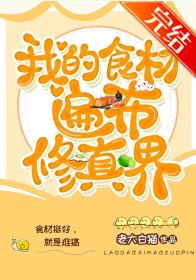
Du Heng, a modern university student preparing to inherit his family's private restaurant, awakens in an unfamiliar cave to face a two-meter-tall aggressive rooster. After a brief struggle, he kills the bird, only to learn from Yun Zhonghe, an inner disciple of Medicine King Valley, that the creature was the spiritual pet of the Demon Lord Yan Buhui. Du Heng realizes he has transmigrated into the body of a dull outer disciple who shares his name. This original owner had accidentally swallowed the Phantom Sky Pearl, a treasure the Demon Lord sought to refine into an elixir for breaking through to the Out-of-Body Stage. Trapped in the Demon Realm, Du Heng faces immediate execution, but Yun Zhonghe, who harbors guilt for his role in the abduction, stalls the Demon Lord's orders.

While imprisoned, Du Heng uses his culinary skills to cook the Brahma Chicken, creating a meal that inadvertently triggers a breakthrough for Yan Buhui. The Demon Lord, now on the verge of transcending his cultivation limits, decides to test the loyalty between Yun Zhonghe and Du Heng by forcing them to fight to the death with a Soul-Severing Blade. During the ensuing thunder tribulation that accompanies Yan Buhui's breakthrough, Yun Zhonghe and Du Heng escape through a hidden cave passage, leaping from a cliff into a freezing river below. They are rescued by Fang Lin and other senior disciples from Medicine King Valley, who had coordinated a rescue mission.

Upon reaching safety, the cultivators face a difficult reality: Du Heng possesses a treasure coveted by powerful enemies, making him a liability to the entire sect. Medicine King Valley lacks the patriarchal protection necessary to defend against the Demon Lord or other factions seeking the Pearl. Consequently, they decide they cannot take him back to their sect. Yun Zhonghe provides Du Heng with talismans, a storage bag, and directional guidance, urging him to flee eastward toward the Dongji Mountains, which serve as the boundary between human territory and the demonic realm. Du Heng accepts this abandonment, understanding it is the only way to ensure the safety of his former sect brothers.

Du Heng travels alone for half a month, enduring the harsh winter and the dangers of the wilderness. He eventually reaches the base of the Dongji Mountains, where he sets up a temporary shelter. His solitude is interrupted when a fluffy yellow chick, named Xiao Xiao, wanders into his hut seeking food. Du Heng feeds the chick, unaware that it is a demon cultivator. Shortly after, a tall, handsome man named Xuan Yu arrives, revealing himself as Xiao Xiao's guardian. Xuan Yu is a member of a powerful demonic clan. After Xiao Xiao devours Du Heng's entire supply of chicken soup and rice, Xuan Yu offers compensation for the consumed food.

Du Heng, lacking resources and protection in the hostile demonic territory, accepts an invitation to accompany Xuan Yu and Xiao Xiao back to their village. The journey reveals the vast wealth and power of Xuan Yu's family, as they travel in a spacious, magically expanded carriage pulled by a spirit beast ox. Du Heng, a mere Qi cultivator with no combat prowess, finds himself in the company of high-status demon cultivators. His primary asset appears to be his cooking ability, which has already endeared him to the young chick. As they travel, Du Heng must navigate the complex politics of the demonic realm while hiding the location of the Phantom Sky Pearl within his body, all while trying to survive in a world far more dangerous than the one he left behind.

Latest Release
DateGroupRelease
2026-08-11shanghai fantasy c12
2026-08-11shanghai fantasy c11
2026-08-11shanghai fantasy c10
2026-08-11shanghai fantasy c9
2026-08-11shanghai fantasy c8
2026-08-11shanghai fantasy c7
2026-08-11shanghai fantasy c6
2026-08-11shanghai fantasy c5
2026-08-11shanghai fantasy c4
2026-08-11shanghai fantasy c3
2026-08-11shanghai fantasy c2
2026-08-11shanghai fantasy c1

Community Reviews

Rating(3.8 / 5.0, 4votes)
5 stars
1(25%)
4 stars
1(25%)
3 stars
2(50%)
2 stars
0(0%)
1 stars
0(0%)

Popular reviews

... Read More
There's a theme running through these chapters that I can't stop thinking about, and it's about the relationship between value and danger. Everything Du Heng touches becomes both a blessing and a death sentence, and I think that's the core of what this story is actually about. The Phantom Sky Pearl. Du Heng swallowed it. It made his mind clearer, it helped him slay that Brahma Chicken, Yun Zhonghe even acknowledges 'Honestly, you're much stronger than the average Qi cultivator.' But that same pearl is what makes him a target. 'Even an innocent man is guilty of possessing a treasure.' That line—whether it's Du Heng's thought or the narrative's—captures the entire paradox of his existence in this world. His value is his vulnerability. And the umbrella. The Thousand Manifestations Umbrella. It saved both of them from the cliff. It swayed and creaked but held. And now Du Heng is walking alone without it, or maybe with it in his bag, a symbol of the last moment when two people were sharing protection. The umbrella covered two. Now there's only one person underneath it, and the wind is infinitely stronger. Then there's the Demon-Removing Jade. Yun Zhonghe gives it to Du Heng specifically to conceal his presence, but warns that 'this kind of Demon-Removing Jade is not very effective and can easily be detected by higher-level beings.' So the very object meant to protect him is fundamentally inadequate. Everything in this world is inadequate for keeping Du Heng safe. The talismans, the pills, the jade, the umbrella—they're all band-aids on a wound that needs surgery. The winter setting itself is symbolic. Frost, snow, icy water, leaden clouds. Du Heng is physically cold and his heart is 'as cold as his face.' But this isn't just atmosphere—it's the externalization of his situation. He's been thrown into a world that is literally and figuratively freezing. The Demon Realm shattered its restrictions through tribulation thunder, and the natural world is responding with the harshest season. Everything is harsh here. Nothing is warm except the brief moments between people. Yan Buhui's thunder tribulation is another layer of this. The Demon Lord is ascending, becoming more powerful, and the thunder is destroying the landscape—'the hilltop they had jumped from had vanished.' Transformation through destruction. And Du Heng? He swallowed a pearl and became a target. His transformation is equally violent but entirely passive. He didn't choose this. He didn't cultivate to this. He just... exists, and his existence is the problem. The most powerful symbolic moment though is probably the Qigong Pill. A legendary item that should be miraculous, and it tastes like bran. The gap between expectation and reality. Du Heng imagined something wonderful and got something bitter. Isn't that exactly what his entire experience in the Taixu Realm has been? He came here expecting adventure or at least meaning, and he got survival. The legendary becomes mundane, the miraculous becomes disappointing, and the only real thing left is the cold wind and the friend who's walking away.
... Read More
Okay so can we just talk about Du Heng's internal monologue for a second because the author has crafted something genuinely special here. This guy sounds like a real person who got isekai'd into a cultivation novel, and the contrast is hilarious and heartbreaking at the same time. The moment he bites into that Qigong Pill and it tastes like 'bran, bland and slightly bitter' and his internal scream of 'Big liar, give me back my feelings!'—I literally laughed out loud. I was expecting some magical candy bean that would keep me full for three days, and instead I get a bitter pea-sized disc that tastes like dog food. And Du Heng's reaction is so perfectly modern, so perfectly 'I read the web novel but the novel did not prepare me for this.' The narrative voice here is doing something really clever. Du Heng's thoughts are full of contemporary references—private restaurant with his dad, meeting a girl after graduation, the whole 'bright future' speech. But then you've got Yun Zhonghe speaking in this completely different register: 'You can hide on the first day, but not on the fifteenth.' These two voices are from different worlds, and the friction between them is where the comedy and the pathos live. Fang Lin's dialogue is also fantastic. 'Other outer disciples would die for the inner disciples, but you, on the other hand, only cause us trouble.' That's such a specific, sharp, in-your-face accusation. It's not polite. It's not filtered. And it's exactly what you'd expect from a senior brother who's worried but also genuinely frustrated. He's cursing Du Heng while carrying Yun Zhonghe on his back across snowy terrain. That's commitment. Du Heng's line to Yun Zhonghe—'My mom always said I can't talk, but you're even worse than me!'—when Yun Zhonghe delivers that brutal truth about hiding. This is the kind of deflection that real people use when they're scared. You make a joke instead of letting yourself feel the terror. And Yun Zhonghe actually smiles at it. 'Yun Zhonghe finally raised his eyes and looked at Du Heng.' Just that small physical detail tells you everything about their relationship at this moment. The dialogue also does this incredible thing where it reveals power dynamics without ever stating them outright. When Fang Lin asks 'How did you protect Junior Brother Yun?'—that's not a genuine question. That's an accusation wrapped in concern. And Yun Zhonghe's immediate deflection 'Don't blame Du Heng. He did his best.' tells you everything you need to know about where his loyalties lie. And Du Heng's forced cheerfulness throughout—'Oh, thank you,' 'Thank senior brothers for me'—it's so clearly a performance. He's acting fine because if he stops acting, he'll break. The author never says 'Du Heng was pretending' but you know it because of how he says things. The exclamation marks are too enthusiastic. The gratitude is too immediate. He's performing gratitude like a professional. The narrative voice itself—third person limited, stuck firmly in Du Heng's head—lets us hear both his modern sensibilities and his growing acceptance of this brutal new world. The tone shifts from comedic ('Were all umbrellas in the cultivation world this powerful?') to devastating ('He wanted to go home. He hoped this was just a nightmare') in a single paragraph, and it never feels jarring because we're experiencing it through Du Heng's own fractured perspective. He doesn't have time to process the comedy before the tragedy hits him again.
... Read More
Let me just say this outright: I have never felt more anxious for a character's survival than I do for Du Heng right now, and the terrifying thing is that the author never once raises the volume. There are no dramatic declarations, no swelling orchestral music in the prose. Just a quiet, methodical dismantling of every safety net Du Heng had. The stakes are established almost casually. Yun Zhonghe says Yan Buhui is undergoing his tribulation, and that's the perfect window to escape. But if they're slow? If the tribulation takes longer? Then the Demon Sect's men will pursue them. The thunder tribulation is both their salvation and a reminder of what's behind them. Every flash of lightning in the northern sky is Yan Buhui getting stronger, and every second he spends ascending is a second Du Heng is getting further from safety. But the real conflict isn't external—it's the one Du Heng has with himself. He stands at the cave entrance, guarding while the others discuss what to do with him. He overhears them. He knows he's a burden. And here's the thing that makes this scene so tense: he doesn't protest. He doesn't demand to come along. He says 'I've heard you all. I've already caused you all enough trouble. I can't burden you any further.' He accepts the abandonment before they can even deliver it. That's not strength. That's the devastating clarity of someone who has already calculated his own expendability. The physical stakes are brutal too. Icy water. A broken leg. Snow-covered terrain. Du Heng is a Qi cultivator at the bottom of the food chain, and he has to walk out of the Demon Realm on foot while transcendent beings are fighting thunder tribulations above them. Fang Lin can barely contain his frustration: 'How long will it take for us to escape the Demon Realm on foot?' The answer is: long enough to be dangerous. And then the parting. The fork in the road. Du Heng holding that guiding talisman while Yun Zhonghe gives him directions to demonic territory—'The east is the territory of the demon race, and human cultivators generally don't set foot there. No matter how powerful Yan Buhui is, he wouldn't dare to challenge the demon race.' This is supposed to be the safe route. The safe route is into demon territory. The only place a human cultivator might survive is among demons. The irony is so thick you could cut it with that invisible dagger Yun Zhonghe threw into the bag. What makes the tension unrelenting is that Du Heng knows the odds. 'He felt that with his abilities, he might not survive more than three days.' Three days. That's the timeline. That's the entire rest of the story condensed into a single sentence of quiet despair. And he says it without drama, without self-pity, just as a factual assessment. That's what makes it so much worse. The author also does something brilliant with the tribulation clouds. They're visible the entire time Du Heng is escaping, a constant reminder that the world is changing around him, that power is shifting, that the balance is tilting in ways he can't control. Every thunderclaw is a countdown. Every flash of light is a reminder that he's running from something that's getting stronger by the minute. I'm not sleeping tonight. I need to know if Du Heng makes it to the Dongji Mountains. Three days. Please let it be more than three days.
... Read More
I need to talk about Yun Zhonghe because this guy is quietly the most emotionally complex person in this entire story. On the surface he's the gentle, herb-scented medical cultivator, but the way he handles Du Heng throughout these chapters is genuinely devastating. Think about it. Yun Zhonghe just had his cultivation sealed by a Demon Lord. He's injured, his leg is broken, he can barely swim in freezing water—and the very first thing he does after Du Heng pulls him to shore is give his talisman to Du Heng. Not because he has extras. Because he literally only had one on himself. He said he placed it on Du Heng, and Du Heng noticed immediately. That detail hit me like a truck. And then the parting scene. Oh god, the parting scene. Yun Zhonghe comes to tell Du Heng they can't take him back, and Du Heng literally says 'I've heard you all. I've already caused you all enough trouble.' He's fifteen or whatever age he is and he's already internalized that he's a burden. And Yun Zhonghe—Yun Zhonghe can't even look him in the eye. He's guilty. He knows they're abandoning a fellow disciple, and he knows it's the right decision but it still tears him apart. The way he piles everything into that storage bag though... talismans, an umbrella, demon-removing jade, spiritual herbs, an invisible dagger. He's giving Du Heng everything he has. Everything his senior brothers pooled together. And then he keeps talking, keeps giving instructions, because he doesn't know how else to say 'please don't die.' 'Don't look like that. Look, I'm fine, aren't I?' Du Heng's line made me want to scream. He's forcing a smile while his whole world just collapsed. And Yun Zhonghe's response—'You can hide on the first day, but not on the fifteenth'—is the most honest thing anyone has ever said to him. That's not cruelty, that's love. That's someone who actually cares enough to tell you the truth instead of letting you walk into a grave with false hope. What breaks me is that Yun Zhonghe has never left Medicine King Valley before. His longest journey was getting captured. He's giving survival advice like a seasoned wanderer when he's basically a sheltered kid himself. But he does it anyway. He pushes through his own guilt and fear because Du Heng needs it. I keep thinking about that umbrella scene at the beginning. The Thousand Manifestations Umbrella, swollen and creaking, carrying both of them like weights. Yun Zhonghe saying 'I hope it can cover both of us.' It felt like a promise. And now here they are, parting ways in the snow, and that umbrella is probably the only thing Du Heng has left that reminds him he wasn't abandoned out of cruelty. He was abandoned out of necessity. There's a difference, but it doesn't make it hurt any less. Is there a friendship in xianxia fiction that hits this hard? I don't think so. These two just met and already Yun Zhonghe is the first person in this entire world who treated Du Heng like he mattered. And now Du Heng has to survive alone. I'm not okay with this.
See all reviews

Characters

See all characters

Custom lists

See all custom Lists