Summary

... Read More

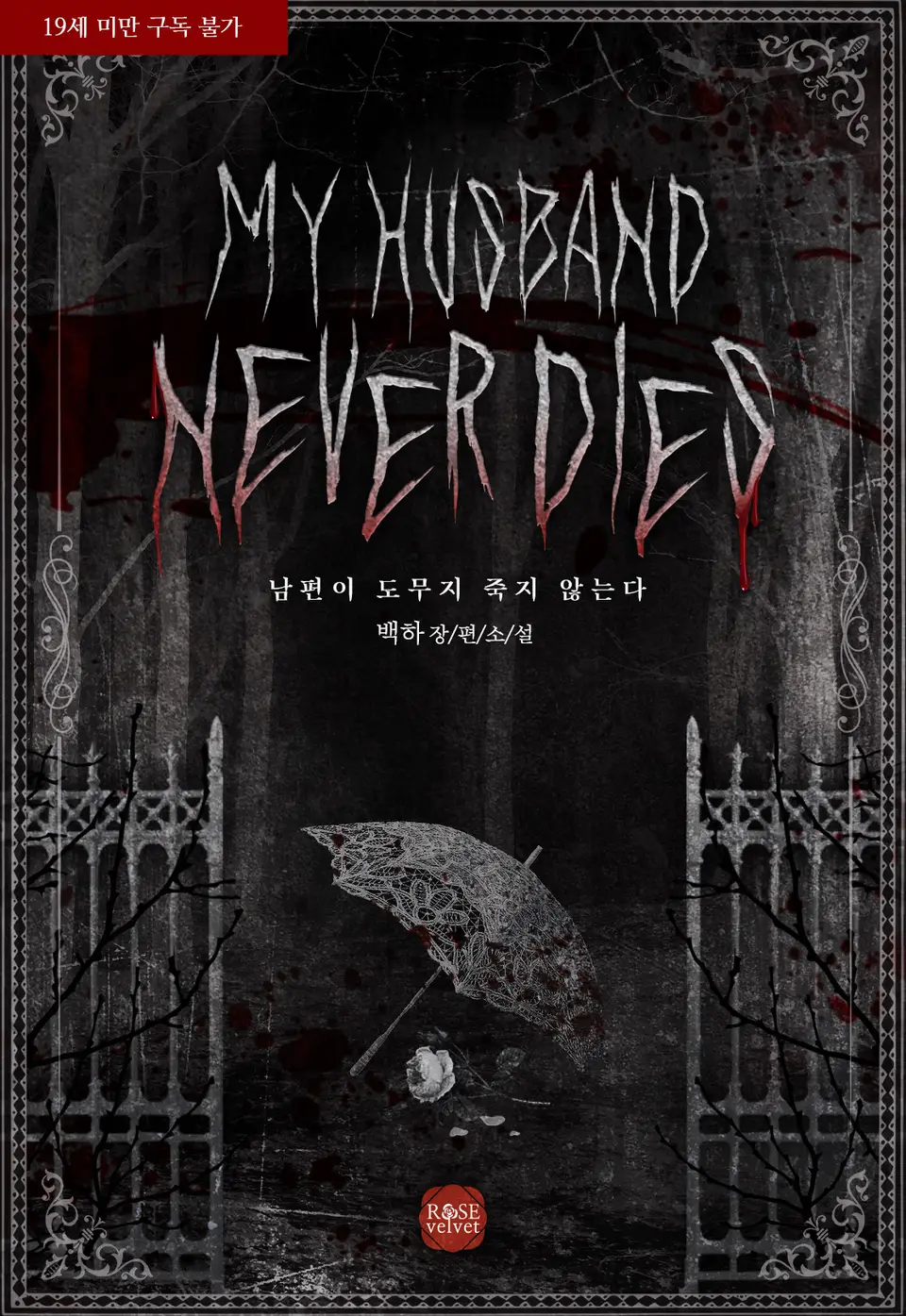
Evelia Locke is a notorious assassin and fugitive imprisoned in Zelakent, a death-row prison, after being convicted of regicide — the murder of Prince Adrian, though she denies it. Plagued by guilt and exhaustion from years of killing, she has grown numb to violence, yet clings to survival. The crown prince, Adrian’s cousin, visits her with an offer: escape prison and assume a new identity if she agrees to marry and assassinate Calix Brumfield, the enigmatic Duke of Brumfield, who has never appeared in public despite inheriting a vast northeastern territory. Evelyn accepts, not out of loyalty but necessity — freedom is all she wants.

Emerging from Zelakent, Evelyn is transformed into Lady Evelyn Dalebury, supposedly the illegitimate daughter of the mad Princess Rowena. Bathed in luxury and trained in noble etiquette, she marries Calix Brumfield in a hushed, expedited ceremony at the king’s command. The duke is nothing like the corpulent noble she expected — he is strikingly beautiful, poised, and unsettlingly calm. Their first night together reveals the true nature of her mission: Evelyn poisons his tea with a rare southern toxin, believing him dead when he collapses. She prepares to dispose of the body, assuming her contract fulfilled.

But the next morning, Calix returns unharmed. He reveals he knew of the assassination plot from the start, referencing the prince’s name and mocking Evelyn’s attempt at deception. Rather than executing her, he claims her as his wife, refusing to let her flee. Terrified, Evelyn attempts escape, only to be recaptured in a suffocating forest fog — a phenomenon that seems to bend to the duke’s will. He retrieves her effortlessly, stating plainly that she will no longer run.

Back at Brumfield estate, Evelyn discovers the household is dominated by madness. Servants speak in delusions; her maid Laura treats a severed eyeball — sent as a “gift” from the duke after the prince’s death — as a lovely trinket. Evelyn realizes the prince is dead, killed not by her but likely by Calix himself, who now holds absolute power over the estate and its inhabitants. The duke’s immunity to poison and apparent supernatural abilities render traditional assassination impossible. Evelyn’s only recourse is survival within his grasp, though she continues to scheme silently.

The central conflict crystallizes around Evelyn’s struggle for autonomy against a husband who is simultaneously captivated and controlling. Calix watches her with intense fascination, probing her past and mocking her attempts at defiance, yet refuses to destroy her. He acknowledges her skills, comments on her restraint, and insists she endure as his wife — not as a prisoner, but as something he considers precious. Evelyn, haunted by the impossibility of killing him and the horror of the fog-shrouded world he commands, finds herself trapped in a gilded cage where escape is futile and obedience is demanded.

As the narrative progresses, Evelyn’s objective shifts from assassination to investigation. She seeks to understand the nature of Calix’s power, the origins of the fog, and the truth behind the prince’s death. Each attempt to flee or rebel ends in recapture, each time revealing more about the duke’s dominance. Meanwhile, Calix grows increasingly possessive, intertwining affection with threat, demanding her presence and loyalty while offering no path to freedom. The story direction points toward Evelyn’s gradual realization that survival under Calix’s rule requires not escape, but navigation of his unstable world — one where the boundaries between love, obsession, and madness are indistinguishable.

Latest Release
DateGroupRelease
2026-09-27citrus aurora c88
2026-09-27citrus aurora c87
2026-09-27citrus aurora c86
2026-09-27citrus aurora c85
2026-09-27citrus aurora c84
2026-09-27citrus aurora c83
2026-09-27citrus aurora c82
2026-09-27citrus aurora c81
2026-09-27citrus aurora c80
2026-09-27citrus aurora c79
2026-09-27citrus aurora c78
2026-09-27citrus aurora c77

Community Reviews

Rating(0 / 5.0, 44votes)
5 stars
0(0%)
4 stars
0(0%)
3 stars
0(0%)
2 stars
0(0%)
1 stars
0(0%)

Popular reviews

... Read More
What happens when the person who can't die decides someone has to try? That's the conflict burning through this entire passage, and the stakes keep climbing. Evelyn has tried to survive by playing along—by becoming Evelyn Brumfield, the dutiful wife, the pretty doll in the gossamer gown. But the dream sequence cracks something open. She spits out that eyeball—the symbol of everything she's been forced to endure—and for one raw moment, she remembers who she was before Brumfield consumed her. The external conflict is obvious: a woman trapped in a mansion by a man who cannot be killed, surrounded by people who either don't remember or refuse to remember anything outside their assigned roles. But the internal conflict is where it really hurts. Evelyn's pride won't let her surrender, but her fear tells her there's no escape. Every attempt to hold onto herself—her mission, her identity, her body—gets stripped away by Calix's relentless presence. And yet. The ballroom scene is coming. The king, the queen, the two princes, ten attendants, the crimson rug. This is where the stakes elevate from personal horror to something geopolitical, something that could actually shift the power structure. Evelyn may be trapped, but she's not blind. She notices things. She remembers things. And she's starting to wonder—if he can rise from poison, what else is he vulnerable to? The question isn't whether she'll act anymore. It's when, and what will it cost her?
... Read More
I picked this up thinking it would be a slow burn political marriage romance and instead got handed a plot that moves at the speed of light. Let me walk through how the pacing works because it's honestly masterful. Chapter 7 opens with their first meeting — polite, surface-level, both performing. Then the king announces the wedding could happen 'as soon as tomorrow.' We go from strangers to married couple to departing for the duchy all within a few pages. The author doesn't waste time. There's no filler, no unnecessary exposition about noble etiquette or family histories. Just forward momentum. Then Chapter 8 — the wedding itself. Brief, bleak, almost clinical. No relatives, only royal delegates. The atmosphere is 'downright bleak' yet the visual of them walking down the aisle together creates this stunning image that everyone whispers about. The pacing here slows just enough to let us FEEL the surrealness of what's happening before plunging into Chapter 9. Chapter 9 is where the real engine kicks in. Arrival at the duchy, the bath scene, the tea preparation, and then — the duke appearing out of nowhere. The chapter builds from quiet domesticity (bathing, dressing, drinking tea) to this devastating confrontation where the power dynamic completely flips. Evelyn thought she was the predator. She is not. The pacing between chapters is what gets me. Each one ends on a note that demands the next. The transition from 'I'm going to kill him' to 'HE KNOWS' is possibly the best turn in any novel I've read recently.
... Read More
I need to talk about Laura first because honestly she made me both adore her and worry for her existential sanity. This girl is genuinely trying to be helpful — she brings Evelyn gifts, worries about her health, gets excited about potential pregnancy news (WHICH IS HORRIFYING IN THIS CONTEXT). She sees the Duke as some loving husband and completely misses the fact that he sent Evelyn a severed eyeball. Laura's innocence is both heartwarming and terrifying in this setting. Evelyn's relationship with Laura is fascinating. For the first time, Evelyn finds herself depending on someone. The text says 'For the first time in her life, Evelyn found herself depending on someone else' and that line hit me because it shows how isolated and self-reliant she's always been. But here's the thing — can she really trust Laura? Laura clearly works for the Duke and may not fully understand the danger Evelyn is in. The Duke-Evelyn dynamic is pure nightmare fuel. He visits her chambers nearly every day. He sends her gifts that are actually threats wrapped in velvet. He clearly knows about her secret contract with Prince Adrian and is using that knowledge to torment her. When Evelyn sees the eyeball, her internal monologue is absolutely visceral — she'd rather cut open her own stomach than carry his child. That's not fear, that's pure survival instinct. And then there's the ghost of Prince Adrian throughout all of this. He's dead, his eyeball is sitting in a box, but his presence shapes every decision Evelyn makes. She ran because of him, she's being hunted for allegedly killing him, and she admits 'whether that conniving bastard of a prince was dead or not, she couldn't care less' — but clearly she still cares enough to want to flee the place where he died.
... Read More
Let me just be honest—the structure of these chapters is ruthless and I'm here for it. The author doesn't give you a single breath between scenes and that's exactly what keeps you scrolling at 3 AM. Chapter opening drops us mid-dream, full tilt into the intimacy scene, and then—'It was a dreadful nightmare.' Bam. We wake up with Evelyn. One paragraph later, she's looking at the empty bed beside her and realizing the body is gone. That's it. The transition from sensual dream to existential horror happens in basically three sentences. No buffer, no comfort. Then we cut to the letter scene. The prince's obsequious correspondence is such a sharp tonal pivot—from the Duke's physical menace to political snake-oil—that it actually gives you momentary relief. You're like 'oh thank god it's just a annoying letter now' and then the author immediately reminds you that this is all connected. 'So this was fraud, plain and simple.' The contract was a lie. Adrian knew or didn't care. She's trapped. And then—the escape. Which I want to spend more time on because the pacing here is actually a masterclass. Evelyn leaves in silence, no attendants, no drama. Just a fugitive doing what she's always done. The walk south, the stars disappearing, the fog rolling in—that's the slowest part of the whole sequence, and it's deliberately slow. The author lets the dread accumulate through environmental details rather than action. She's not being chased yet. She's just lost. And that's worse, because there's no enemy to fight, only the landscape itself turning against her. The footsteps appear. She freezes. She calculates. Every nerve is taut. And then—immediate grab, immediate capture. No drawn-out confrontation, no last-minute rescue. The whole escape arc takes maybe two pages and ends with 'her first escape ended in failure.' Period. No dramatic music, no cliffhanger question. Just the cold statement that she's back where she started. The rhythm of these chapters is basically: hope → destruction → false hope → destruction → repeat. And it works because the author trusts you to keep up without explaining every beat.
... Read More
The stakes in these chapters escalate so fast I barely had time to process what I was reading. Let me walk through the hierarchy of problems Evelyn faces, because each one makes the next one infinitely worse. Problem one: She's married to a man she tried to assassinate. That's already catastrophic. But then the Duke reveals he survived on purpose—'You remember it all, don't you?'—which means he knew about the poison, he knew about the attempt, and he let it happen. Or worse, he orchestrated it. The power imbalance here is absolute. She brought a knife to a conversation with a god. Problem two: Her escape attempt fails within hours. Not days, not weeks. She leaves the manor, walks into fog, and gets caught. The Duke tracks her through conditions that defeated her survival instincts. This establishes that she can't outrun him physically, which raises the stakes from 'she might get caught' to 'there is literally no physical escape from this man.' Problem three: The prince's contract was a lie. Adrian didn't tell her what kind of man the Duke actually is. So not only is she trapped by the Duke, she's betrayed by her own side. The royal household she thought was her employer—her protector, the one who pulled her out of Zelakent prison and gave her a clean identity—sent her to kill something she can't kill. 'This was beyond the skills of even the best assassin.' And here's what makes the conflict so compelling: Evelyn's entire identity is built on control. She's a professional killer. She assesses targets, plans routes, eliminates variables. Every chapter systematically removes her control. The poison doesn't work. The bed isn't hers anymore. The fog defeats her navigation. The Duke knows her childhood nickname. Each failure strips away another layer of her competence, and the reader feels that degradation viscerally. But the internal conflict is what really hooks me. Evelyn 'wanted to live.' That's it. That's the sum total of her motivation. She's not fighting for justice or revenge or love. She just doesn't want to die. And the Duke—this impossible, undead man—has decided she's his wife. The conflict isn't just external. It's existential. He's giving her a role she didn't ask for, a fate she can't escape, wrapped in tenderness that's somehow more terrifying than any threat. What does she stand to lose? Everything she's built. Her freedom. Her identity. Her life. And the author makes you feel every single one of those stakes in real time
... Read More
Calix is the most disturbingly compelling character I have ever encountered in this genre. Let me start with the banquet scene: he calls Evelyn 'my Eve' with this voice that's described as 'sweet yet chilling.' He's married to her now—she tried to kill him in the prison, and yet here he is, watching her with what the narration calls 'a tenderness that unnerved her.' The man is insane. I love him. I fear him. I cannot look away. But Evelyn herself—holy shit. There's a moment where she realizes she's become someone who 'couldn't even defy the jailer of Brumfield.' The girl who swore she'd kill every prison guard in Lovent is now too broken to stop Calix from undressing her. This isn't growth; this is erosion. Every trial, every escape attempt, every act of defiance has chipped away at something irretrievable inside her. And what about Adrian? He sent her a letter. He calls the dead Rowena 'happy and at peace' like he genuinely believes it. Is he being manipulated too, or is he complicit? The fact that he casually asks about Zelakent like he doesn't remember sending her there in the first place—that line 'Why the hell didn't you just leave me in that fxcking Zelakent?' hits different when you realize Adrian might genuinely not remember. Either he's faking, or something has already gotten into his head. The Duke's power extends beyond Evelyn.
See all reviews

Custom lists

See all custom Lists