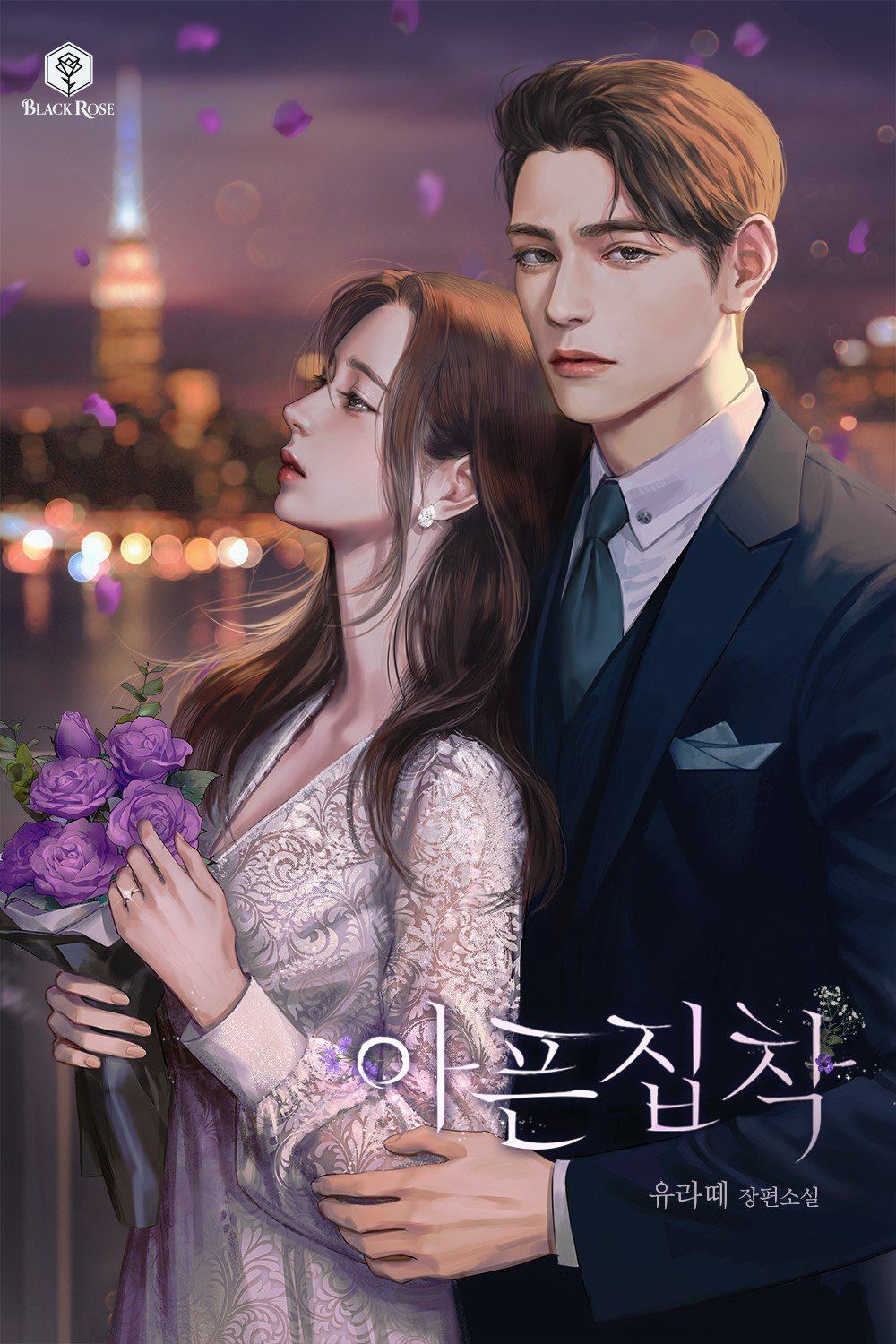
Summary

... Read More
Lin Jue is a twenty-four-year-old graduate student living in a modest apartment in Suzhou with his mother and younger sister. He works part-time at a bookstore while pursuing his master's degree, earning barely enough to cover his expenses. His daily life is characterized by quiet routines and financial constraint until a series of events disrupts his ordinary existence. One evening, while walking home from the bookstore, he encounters a violent altercation involving a young woman named Su Yanzhi. Despite his initial reluctance to involve himself, Lin Jue intervenes when he recognizes that Su Yanzhi is being harassed by a group of aggressive men connected to a local triad.

Su Yanzhi is the daughter of a wealthy business owner whose company has recently become embroiled in a power struggle within the criminal underworld. Her father has made enemies who seek to eliminate him and seize control of his operations. When Lin Jue saves Su Yanzhi from the attack, he inadvertently draws the attention of these hostile forces. They begin to view him as either a liability or a potential ally, depending on who discovers his involvement first.

The immediate aftermath of the incident forces Su Yanzhi to seek refuge. With her family under surveillance and her home compromised, she approaches Lin Jue with an unusual proposal. She offers him a substantial sum of money in exchange for temporary shelter. Lin Jue hesitates but ultimately accepts, recognizing that the situation extends beyond a simple crime. His quiet life is now irrevocably linked to hers, and he must navigate the dangerous waters she has entered.

As Su Yanzhi stays at Lin Jue's apartment, the two begin to understand each other better. She learns about his academic ambitions and his desire to escape his circumstances through education. He learns about the corrupt business practices and familial betrayals that have shaped her life. Their growing connection complicates Lin Jue's position, as he finds himself emotionally invested in her safety and well-being.

Meanwhile, the criminal factions involved in Su Yanzhi's father's conflict become more aggressive. Rival groups send enforcers to track down Su Yanzhi, believing she possesses information or leverage that could tip the balance of power. Lin Jue finds himself protecting her from multiple threats, using his knowledge of the city's layout and his limited combat experience to stay ahead of their pursuers.

A key turning point occurs when Lin Jue discovers documents hidden within Su Yanzhi's belongings. These papers reveal evidence of illegal activities orchestrated by her father, including money laundering and extortion. The documents serve as a double-edged sword: they could protect Su Yanzhi by providing leverage against her enemies, or they could implicate her in crimes she had no knowledge of committing.

Lin Jue faces a critical decision regarding what to do with the evidence. Consulting with a lawyer friend from university, he learns that possessing the documents without reporting them could expose him to legal complications. However, surrendering them might endanger Su Yanzhi further if the wrong people obtain them first. The moral dilemma weighs heavily on him, forcing him to reconsider his role in this conflict.

As tensions escalate, Su Yanzhi's father attempts to resolve the situation through negotiation. He offers deals and compromises to the rival factions, hoping to buy peace. However, his negotiations are sabotaged by internal betrayal within his own organization. A trusted lieutenant turns out to be working with the opposition, leading to a violent confrontation that leaves Su Yanzhi's father injured and imprisoned.

With her father incapacitated, Su Yanzhi becomes the de facto head of the family business. She must now make decisions that affect not only her own safety but also the livelihoods of hundreds of employees. Lin Jue supports her through this transition, offering practical advice and emotional stability as she navigates boardroom politics and criminal threats simultaneously.

The story progresses as new allies emerge from unexpected quarters. A retired police officer who once investigated Su Yanzhi's father agrees to help, motivated by a desire for redemption. He provides intelligence on the criminal networks operating in the city and helps Lin Jue and Su Yanzhi develop a strategy to expose the corruption without becoming victims themselves.

Conflict intensifies when the rival triad launches a direct attack on Lin Jue's apartment. Suspecting that he is hiding Su Yanzhi, the attackers storm the building. Lin Jue and Su Yanzhi escape through a fire escape, barely avoiding capture. The incident proves that there is no safe place for them, and they must go on the run.

During their time in hiding, Lin Jue and Su Yanzhi's relationship deepens. They share personal histories and vulnerabilities, forming a bond that transcends the circumstances that brought them together. Lin Jue admits his fears about his future and his inadequacy in facing such powerful enemies. Su Yanzhi confesses her loneliness and the burden of living under constant threat.

The narrative reaches a climax when the evidence Lin Jue discovered is leaked to the media. The scandal rocks the city's business community and triggers investigations by federal authorities. Both the Su family and their rivals are implicated, leading to widespread arrests and restructuring of the criminal landscape.

In the aftermath, Su Yanzhi chooses to cooperate with investigators, providing testimony that dismantles her father's empire. She agrees to enter witness protection to ensure her safety. Lin Jue accompanies her, having decided that he cannot leave her side. They begin a new chapter together, far from the dangers that previously threatened them.

The story concludes with Lin Jue returning to his studies, though his perspective has fundamentally changed. He is no longer the passive observer of his own life but someone capable of making bold decisions. Su Yanzhi starts anew in a different city, rebuilding her identity apart from her family's legacy. Their connection remains strong, sustained by the trials they have endured and the trust they have built.

Latest Release
DateGroupRelease
2026-09-27citrus aurora c16
2026-09-27citrus aurora c15
2026-09-27citrus aurora c14
2026-09-27citrus aurora c13
2026-09-27citrus aurora c12
2026-09-27citrus aurora c11
2026-09-27citrus aurora c10
2026-09-27citrus aurora c9
2026-09-27citrus aurora c8
2026-09-27citrus aurora c7
2026-09-27citrus aurora c6
2026-09-27citrus aurora c5

Community Reviews

Rating(4.3 / 5.0, 16votes)
5 stars
9(56%)
4 stars
3(19%)
3 stars
3(19%)
2 stars
1(6%)
1 stars
0(0%)

Popular reviews

... Read More
There's this one image that shows up again and again and at first I thought it was just aesthetic but now I'm pretty sure it's the whole point of the story disguised as atmosphere. You know those objects in books that seem decorative until you realize they're actually carrying the theme? This is that. I won't spoil what it is specifically, but once I noticed the pattern, I couldn't unsee it. Everything recontextualized. The author is clearly embedding deeper meanings into the physical world of the story — not heavy-handed, not preaching, just these quiet echoes that build up. By chapter 7 I'm starting to understand what the story is *actually* about beneath the plot events. It's about memory and what we choose to carry forward. It's about the things we pretend don't matter until they matter too much. And it's about how people use objects and places to hold feelings they can't articulate. There's a line near the end of chapter 6 that I underlined three times and I still don't fully get it. Which means it's doing exactly what it should be doing.
... Read More
Honestly, what gets me about this book isn't some big dramatic confession or a sweeping romantic gesture. It's those tiny, almost careless moments where characters reveal everything without meaning to. Like when one of them notices the other's hands shaking and just... doesn't comment on it, but slides a cup of tea across the table instead. That's the kind of emotional writing that sticks with me. The romance here isn't loud. It breathes. You feel it in the silences between sentences, in the way characters hover just a little too long before saying something important, in the guilt that follows a harsh word spoken in frustration. The emotional arc between the main pair isn't a straight line from dislike to love. It's messy, it doubles back on itself, and sometimes I caught myself re-reading passages because I needed to sit with how good it hurt. One moment in particular — I won't spoil it — left me sitting in bed at 2am just staring at the ceiling, processing. The story understands that the deepest feelings aren't always the ones shouted. Sometimes they're the ones we bury so deep even we forget they're there. And when they finally surface? That's when the page stops being paper and becomes something else entirely.
... Read More
Okay, I need to talk about this one character dynamic because it's been stuck in my head since I finished chapter 7. The way these two move around each other — like they're orbiting the same thing but neither will admit it — is *chef's kiss*. There's this scene where one of them notices the other hasn't eaten and just slides food over without saying anything. No big speech, no dramatic pause. Just... food. And it hit me harder than any love confession ever has in fiction. What makes it work is that they've known each other forever, right? So there's this weight behind every small gesture. It's not fresh-flame energy, it's the kind of closeness where silence is its own language. I keep thinking about what happens when that silence finally breaks. Also, can we discuss how the side character keeps showing up at the worst moments? Not in a villain way — more in a 'person who knows exactly which buttons to press' way. Their history with the protagonist is barely explained but I already hate/love them.
... Read More
I need to process what I just read because the stakes in this book are not what I expected. At first glance it looks like a story about school politics and complicated relationships — surface-level stuff that could be resolved with a conversation. But the longer I read, the more I realized every conflict is really about something much deeper, and that's what makes it so tense. Characters aren't just fighting over who's right or wrong, they're fighting over their sense of self. When one character makes a choice that betrays someone else's trust, it's not just a plot point — it's an existential crisis dressed up as drama. The external conflicts keep escalating but the internal ones are where the real violence happens. There's a moment in Chapter 16 where a character has to decide between staying silent and speaking up, and the author doesn't resolve it cleanly. Neither option feels right. Both options feel like losing something irreplaceable. That's what makes you grip the pages. The suspense isn't built on 'what will happen next' — it's built on 'whatever happens, someone is going to be permanently changed.' I found myself physically tense reading certain scenes, heart rate up, like I was watching someone walk a tightrope and knowing the net wasn't going to catch them this time. And the worst part? I couldn't stop reading. Every chapter raises the question: how much more can these people carry before something breaks? And none of them are ready for the answer.
... Read More
OK so this book has me in a chokehold emotionally and I'm not mad about it. The romantic tension? The friendship? The way grief shows up in this story? All of it is weaponized perfectly. There's a moment between two characters where they're literally just sitting in a room together and nothing 'happens' — no dramatic confession, no touching, no nothing — but I was absolutely wrecked. Because it was everything unsaid. The author understands that the most powerful emotional moments aren't always the loudest ones. Sometimes it's a glance across a crowded room. Sometimes it's someone remembering how you take your coffee three years after the last time they saw you. The romance here develops at a pace that feels REAL. No insta-love nonsense. These people are figuring each other out while the world around them is falling apart, and that contrast is doing SO much heavy lifting. Also the platonic love in this book? Don't get me started. Some of my favorite moments are between friends, not lovers. The scene where someone shows up at 2am without explanation and just... stays. That's the kind of love that makes fiction worth reading.
... Read More
I did not plan to stay up until 2 AM reading this book and yet here we are. Chapter 15 is a masterclass in how to manipulate reader engagement without ever breaking the fourth wall. The author starts slow — very deliberately slow — with quiet conversations and small gestures, and then just when you think things are settling into a comfortable rhythm, BAM, everything shifts. It's not just plot twists, it's structural shifts. The way the scene cuts from one character's point of view to another in the middle of an emotionally charged moment is so sharp it almost hurts. You're suddenly pulled out of one person's head and dropped into someone else's experience and the contrast hits you like a wall. I kept catching myself re-reading passages because the pacing was designed to make you feel disoriented, and that disorientation IS the point. There's a section in the middle of Chapter 16 where everything seems to stop — no dialogue, no action, just pure internal monologue — and I was genuinely worried the story had lost its momentum. But then it picks up again so efficiently that the earlier slowdown felt necessary, like the author was loading a spring. The cliffhanger at the end? I'm not even going to describe it. Let's just say I immediately opened the next chapter and had a whole new set of feelings I didn't sign up for. The pacing here doesn't follow a traditional curve — it's more like a heartbeat, speeding up, slowing down, occasionally skipping a beat and making you clutch your chest.
See all reviews

Custom lists

See all custom Lists