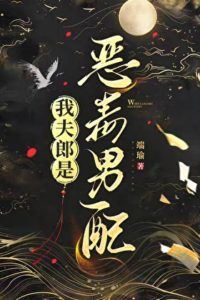
My Husband is a Villainous Male Supporting Character
Novel Info
  • Author:
  • 端瑜
  • Status:Ongoing

Summary

... Read More

Zheng Shanci, a modern library worker, transmigrates into the body of a cannon-fodder character in a novel titled Secret Affair. In the story, he is destined to marry Yu Lanyi, a spoiled and arrogant young master from the prestigious Changyang Marquis Mansion, after a scandal forces the union. The original plot dictates that Zheng Shanci will eventually conspire to kill Yu Lanyi, only to be discovered and executed, clearing the path for the novel's protagonists, Ye Yunchu and Yu Shiyan, to live happily ever after. Upon waking in a private room at a banquet hosted by Assistant Minister Pei, Zheng Shanci realizes he has been locked in with Yu Lanyi, who intended to trap the male lead, Ye Yunchu, but was instead deceived by a bribed maid who swapped the target.

The incident causes a public scandal that threatens the reputation of the Changyang Marquis Mansion. Yu Lanyi, furious and humiliated, believes Zheng Shanci schemed against him to climb the social ladder. However, faced with the pressure to restore family honor, the Changyang Marquis and Yu Fulang decide that the only solution is to marry Yu Lanyi to Zheng Shanci immediately. Zheng Shanci, aware of the original tragic ending and possessing a pragmatic mindset, accepts the arrangement to survive. He understands that resisting would likely lead to his death at the hands of the powerful Marquis family, so he agrees to the engagement, hoping to navigate the situation with minimal conflict.

As the engagement proceeds, the dynamic between the two men remains tense. Yu Lanyi continues to view Zheng Shanci with suspicion and hostility, while Zheng Shanci maintains a polite but distant demeanor, focusing on securing an official position through the Ministry of Personnel. The Changyang Marquis imposes a strict condition on Zheng Shanci: he is not allowed to take concubines or mistresses until he is thirty years old and has produced no heirs. This arrangement, intended to protect Yu Lanyi, is accepted by Zheng Shanci, who has no interest in a polygamous household and values his own principles of loyalty.

A key turning point occurs when Yu Lanyi, having his confinement lifted, goes horseback riding in the suburbs with his friend Lü Jin. He encounters Zheng Shanci fishing by the river. A sudden rainstorm forces them to seek shelter in a nearby pavilion. During this encounter, the hostility between them slightly eases as they share a moment of quiet companionship. Zheng Shanci helps Yu Lanyi avoid getting wetter and ensures he stays warm, demonstrating a level of care that confuses the young master. After the rain stops, Zheng Shanci departs quietly to avoid further gossip, leaving Yu Lanyi with mixed feelings about his future husband.

The story follows Zheng Shanci as he prepares for the Ministry of Personnel assessment, competing against other scholars for the position of County Magistrate in Xinfeng County. Despite the political intrigue and the lingering tension with Yu Lanyi, Zheng Shanci remains focused on his career and survival. The narrative sets the stage for a complex relationship where both men must navigate societal expectations, family pressures, and their own prejudices. While the original plot suggested a tragic end, Zheng Shanci's presence introduces uncertainty, as his modern perspective and deliberate actions begin to alter the course of events, potentially changing the fate of all characters involved.

Latest Release
DateGroupRelease
2026-08-11shanghai fantasy c11
2026-08-11shanghai fantasy c10
2026-08-11shanghai fantasy c9
2026-08-11shanghai fantasy c8
2026-08-11shanghai fantasy c7
2026-08-11shanghai fantasy c6
2026-08-11shanghai fantasy c5
2026-08-11shanghai fantasy c4
2026-08-11shanghai fantasy c3
2026-08-11shanghai fantasy c2
2026-08-11shanghai fantasy c1

Community Reviews

Rating(3.4 / 5.0, 17votes)
5 stars
1(6%)
4 stars
5(29%)
3 stars
11(65%)
2 stars
0(0%)
1 stars
0(0%)

Popular reviews

... Read More
I need to talk about how natural the dialogue feels, especially between Zheng Shanci and Yu Lanyi. The exchange when Yu Lanyi approaches Zheng Shanci at the river is comedy gold: 'How many fish have you caught, sir? My father also likes fishing, so I wanted to ask. I hope you don't mind my intrusion.' Zheng Shanci: '?' 'Three.' 'One for steaming, one for braising, and one I haven't decided yet.' Yu Lanyi: '…' This is perfectly calibrated. Yu Lanyi tries to make small talk, fails spectacularly, and Zheng Shanci responds with the most practical, food-focused answer possible. The silence that follows is hilarious. And then later, when the horse eats the fish, Yu Lanyi throws ten coins at Zheng Shanci 'in a pretty accurate throw. It even formed a parabola' and says 'It's not like I'm broke. I just got out of confinement and haven't asked my dad and father, or my brother for money yet.' The man is defensively generous and it's adorable. Lü Jin's dialogue also has a distinct voice—he's the teasing, observant friend who says things like 'How did you two end up meeting? I took a peek, and he's quite handsome and capable. His status might be low, but who knows what the future holds?' while Yu Lanyi responds with 'I have no fate with him! We were forced together.' The contrast between Lü Jin's romantic speculation and Yu Lanyi's flustered denial is exactly the kind of dialogue that makes a book unputdownable. And the gossiping officials at the beginning—'Did you take money from Young Master Zheng?' 'Yeah, yeah, are you talking about a poor jinshi? Maybe you had too much breakfast'—this is such natural, overlapping, slightly rude conversation. It sounds like real people talking, not characters delivering exposition.
... Read More
"In the darkness, senses were heightened, and Yu Lanyi's heart pounded with fear." This line. This single line contains the entire emotional architecture of this chapter. Let me start with what I felt while reading the wedding night scene, because honestly it wrecked me in the best way. Not the fake part—the real part. The part where both of them are lying in bed, fully clothed, pretending to sleep, both unable to close their eyes. Yu Lanyi's emotional journey in this chapter is from panic to defiance to something he can't name. He enters the bridal chamber already defeated—"not taking the marriage seriously at all" while eating grapes. That's not confidence; that's armor. He's so uncomfortable with the situation that he deflects with humor and food. Then Zheng Shanci comes back with the food box, and suddenly Yu Lanyi is the one covering the veil, the one pretending to be obedient. The role reversal is subtle but devastating. He's been reduced to performing compliance while his heart pounds like a drum. And then—the hand kiss. I have to talk about this moment because it's the emotional core of everything. Zheng Shanci leans in, Yu Lanyi braces for impact, and instead gets a hand. The text says: "There was no warmth from another person on his lips, only the heat from his palm." That's not just physical description. That's the entire emotional thesis of the book right there. Two people who want connection but don't know how to reach each other, separated by nothing more than a hand's width and a lot of pride. Yu Lanyi touching his own lips afterward, secretly, when he thinks no one is watching—that's the moment that got me. He's not angry. He's not even really embarrassed. He's... processing. Remembering the heat of Zheng Shanci's breath, the way his collarbone felt, the fact that he was a hand's width from being kissed properly. The next morning, Yu Lanyi calls Jin Yun in and immediately deflects with arrogance about how "once was enough for many times." But we know he didn't sleep well. We know he's lying. The emotional honesty is in what he doesn't say. And Zheng Shanci? He's the one who tells the servants NOT to wake Yu Lanyi. He's the one who stays behind instead of going to the Ministry. He's the one reading Confucius in the garden like nothing happened, while internally he's thinking about Yu Lanyi's waist and regretting placing his hand there. "But taking his hand away now would seem like he was trying to cover up." This is romance written at the speed of almost-touching. And it's perfect.
... Read More
The way this author builds the world through the wedding night scene is genuinely masterful. Let me walk through why the setting works so well. First, the bridal chamber itself. It's described as "a separate residence set up by the Changyang Marquis Mansion specifically for Yu Lanyi's wedding." This isn't just a room—it's a statement. The Marquis prepared this space, which means the family is invested in the marriage performing correctly. The stakes are architectural. The details are so specific and culturally grounded that I felt like I was actually there. The red veil. The grapes on the table. The peanuts and longans scattered on the bed "symbolizing the wish for many children." Zheng Shanci picking them up and putting them in an empty cake plate because "sitting on them was uncomfortable"—this is such a perfect detail. It shows both his practical nature and his discomfort with the ritual, while also showing that he noticed the symbolism and chose to remove it. The food box scene is worldbuilding at its finest. Zheng Shanci goes to the kitchen and picks dishes—Kung Pao Chicken, Water Lotus Shrimp, Lamb Hoof Bamboo, Tom Yum Soup, Osmanthus Shark Fin. These aren't generic wedding foods; they're specific, curated, and they tell us about Zheng Shanci's character (he knows what Yu Lanyi likes) and the world (this is a household with access to diverse cuisine and the budget to provide it). The moonlight scene outside the door is pure cinematic worldbuilding. "Two shadows in the moonlight" pressed against the door, Jin Yun unable to bear it anymore, the attendants blushing and walking away. The world around them is watching, judging, waiting. The marriage isn't just between two people—it's a public performance in a society that demands proof. And the next morning—the red silk still being taken down, the chef preparing breakfast, the gift list spanning ten pages. These details paint a world where marriage is economic, social, and political, not just personal. The fact that Zheng Shanci marvels at the food and thinks "he understood why so many envied him for marrying into the Marquis Changyang's family" grounds the entire story in a specific social reality. The garden pavilion scene at the end, with Zheng Shanci reading "The Doctrine of the Mean," is the perfect bookend. Ancient philosophy in a modern marriage situation. The world feels lived-in, historically grounded, and emotionally specific all at once.
... Read More
There's a recurring image in these chapters that I can't shake: confinement. Yu Lanyi is literally locked in his room, his father threatens to lock him in the ancestral hall, he tries to hang himself with curtains, and when he tries to leave, 'two strong servants stood at the door, blocking the way with knives.' He's a young man surrounded by people who love him and control him simultaneously. The Marquis Mansion isn't a home—it's a gilded cage, and the curtains he almost dies with are the bars. Then there's Zheng Shanci's alley house. It's 'remote and poor,' the walls might crumble if you touch them, but it's THE ONLY PLACE where he has any autonomy. He cooks for himself, he copies books on his own schedule, he makes his own decisions. The contrast between the two spaces is the novel's central theme in miniature: freedom versus security, survival versus comfort. And the name 'Zheng Shanci' itself is doing symbolic work. He's a third-class jinshi—a scholar who passed the exam but at the bottom of the hierarchy. In a story about power and positioning, his low status is both his armor and his prison. He's invisible enough to survive but visible enough to be controlled. The Xinfeng County Magistrate position represents escape—a chance to leave the cage entirely, even if it means going to the 'northwest wilderness.' The food imagery is also worth noting. Zheng Shanci's pork and rice, the meat soup, the cakes—he's building a life through domestic acts. In a world of political scheming and forced marriages, cooking is his rebellion. It's small, quiet, and deeply human.
... Read More
This chapter is a masterclass in maintaining tension through the absence of physical intimacy. Let me explain why the stakes feel so high even though nothing explicit happens. The external conflict is straightforward: Yu Fulang sent people to watch the bridal chamber. If Zheng Shanci and Yu Lanyi don't produce evidence of a consummated marriage, there will be speculation, gossip, and potentially political consequences. The servants are literally pressed against the door, waiting for sounds that will confirm the marriage is real. But the internal conflict is where the real stakes live. Yu Lanyi is trapped between his pride (he doesn't want this marriage) and his fear (he's never been with anyone, and the situation is overwhelming). Zheng Shanci is trapped between his sense of duty (he read the whole damn diagram book) and his respect for Yu Lanyi (he's not going to force anything). The moment that crystallizes the conflict for me is when Zheng Shanci leans over Yu Lanyi, and Yu Lanyi tries to resist. The text says: "In the darkness, the other's breath paused, but his body still slowly pressed down." This isn't aggression—it's tension. Both men want to stop, but neither can. The conflict isn't good vs. evil; it's desire vs. restraint, and both are winning and losing simultaneously. Then comes the performance. Zheng Shanci says "Make some noise for them to hear," and Yu Lanyi's response is to kick him, which causes Zheng Shanci to fall on top of him. They're not having sex—they're having a wrestling match that somehow becomes more intimate than actual intimacy would have been. The stakes shift from "will they consummate" to "will they survive this night without either of them breaking down." The fake noises—the bed kicking, the kissing sounds, the heavy breathing—are a perfect metaphor for the entire relationship. Everything that looks like passion is actually performance. Everything that looks like indifference is actually care. And the morning after? Zheng Shanci decides to delay his departure to Xinfeng County. Why? Because "having just married, he should stay by Yu Lanyi's side." The external conflict (prove the marriage is real) has become an internal conflict (I can't leave him yet). The stakes have escalated from social reputation to emotional vulnerability. The author never lets us forget that these two men are both terrified and both trying their best. That's what makes the conflict so compelling—it's not about who wins, it's about whether they can survive being honest with each other.
... Read More
I need to talk about Yu Lanyi and Zheng Shanci because the way this author handles their relationship is genuinely remarkable. Let's start with Yu Lanyi. On the surface, he's the arrogant young master—eating grapes in his wedding veil, pacing around like a caged animal, telling Zheng Shanci to "make noise too." But the text keeps peeling back layers. When Zheng Shanci brings him food, Yu Lanyi's immediate reaction isn't gratitude; it's panic about reputation. "If someone sees him leaving the bridal chamber, or not returning all night, where will my face go?" This isn't just pride—it's fear. He's terrified of looking weak, of looking like he cares. But then there's the moment where he grabs Zheng Shanci's collar and pulls him close, saying "You can make noise too, why not you?" That's not aggression. That's him taking control of a situation he's completely uncomfortable with. He's redirecting the performance because he can't handle being the one performing. And Zheng Shanci—oh, Zheng Shanci. This guy looked at the "Avoid Fire" diagram, got to a few pages, couldn't take it, but forced himself to finish because "once he started, he had to finish, or he'd be restless at night, unable to sleep." That is such a specific, human detail. He's a straight man trying to prepare for something he's clearly nervous about, and the fact that he reads the whole book shows both his sense of duty and his anxiety. The most revealing moment for me is when Zheng Shanci covers Yu Lanyi's mouth and kisses his own hand instead. He sees Yu Lanyi's "panicked eyes" and feels "at ease." Not satisfied—*at ease*. He's not trying to take advantage; he's trying to protect Yu Lanyi from the very situation they're both trapped in. And then he thinks, "Yu Lanyi was too arrogant," with what I can only describe as affectionate exasperation. The power dynamic between them is constantly shifting. Yu Lanyi has social status; Zheng Shanci has emotional control. Yu Lanyi acts like he's in charge; Zheng Shanci actually is, in subtle ways. By the end of the chapter, both are lying awake unable to sleep, both thinking about the other. That's not a relationship that's going anywhere simple.
See all reviews

Characters

See all characters

Custom lists

See all custom Lists