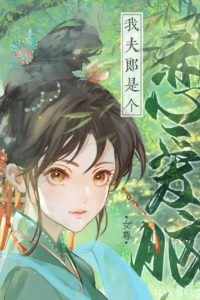
There's a moment in Chapter 7 where Shi Ruyi catches a fresh green leaf and the narration says: "Spring has arrived, and it's time for a new beginning." I need to sit with that for a minute.
Because this novel is obsessed with seasons and cycles, and spring here isn't just weather — it's a promise. Shi Ruyi has been in a kind of winter. Confined, pained, processing trauma, watching the man she loves choose someone else. And now spring is here, and the leaf in her hand is small and green and fragile, but it's ALIVE. The author is telling us that this character is about to enter a new phase, and that phase won't be gentle, but it will be movement.
The peach blossoms are another layer. "After a night of spring rain, thousands of peach blossoms burst into bloom. The fallen petals spread across the ground, creating a unique spectacle." This is beautiful, yes, but it's also melancholic. These flowers are at their peak AND falling at the same time. That's Shi Ruyi's position — she's at the height of her power as Crown Princess, and she's also losing everything she thought she wanted. The peach orchard becomes this liminal space where old attachments die and new ones are born.
And then there's COLOR. This is where the symbolism gets really sharp. Wen Youan is dressed in RED — the color of passion, of danger, of celebration. Su Linjing is in GREEN — the color of spring, of new growth, but also of envy and of the common people. Shi Ruyi herself is associated with green (Wen Youan notices Su Linjing's green and thinks: "Could it be that she likes wearing the same color as her?"). The color coding here is doing SO MUCH WORK. Red vs. green — fire and nature, passion and patience, the boy who would climb walls and the man who would endure twenty-nine lashes. Both are trying to reach her. Both are fundamentally different.
The candied haws are a symbol I can't stop thinking about. They're sweet, they're traditional, they're the kind of thing a pampered young master would carry as a snack. And when they fall to the ground and ants gather around them, it's this tiny moment that says: even the smallest things matter when you're in love. Wen Youan doesn't care about the haws anymore because something more valuable has appeared. But the ants don't care about love — they just see food. The world keeps turning regardless of human emotion.
Wen Qing's line about the stars and the moon is almost mythological in its imagery. A mother offering to strike down the moon for her son — that's not just parental love, that's the kind of love that exists outside normal moral frameworks. It's dangerous. It's the kind of love that could destroy everything.
And the rumors — the false rumors about Shi Ruyi being cruel and heartless — these are like invisible petals falling. You can't see them landing, but they cover everything. They're the shadow side of the spring imagery: new beginnings, yes, but also decay, rot, things hidden beneath the beauty.