Summary

... Read More

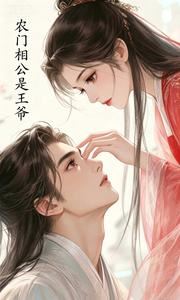
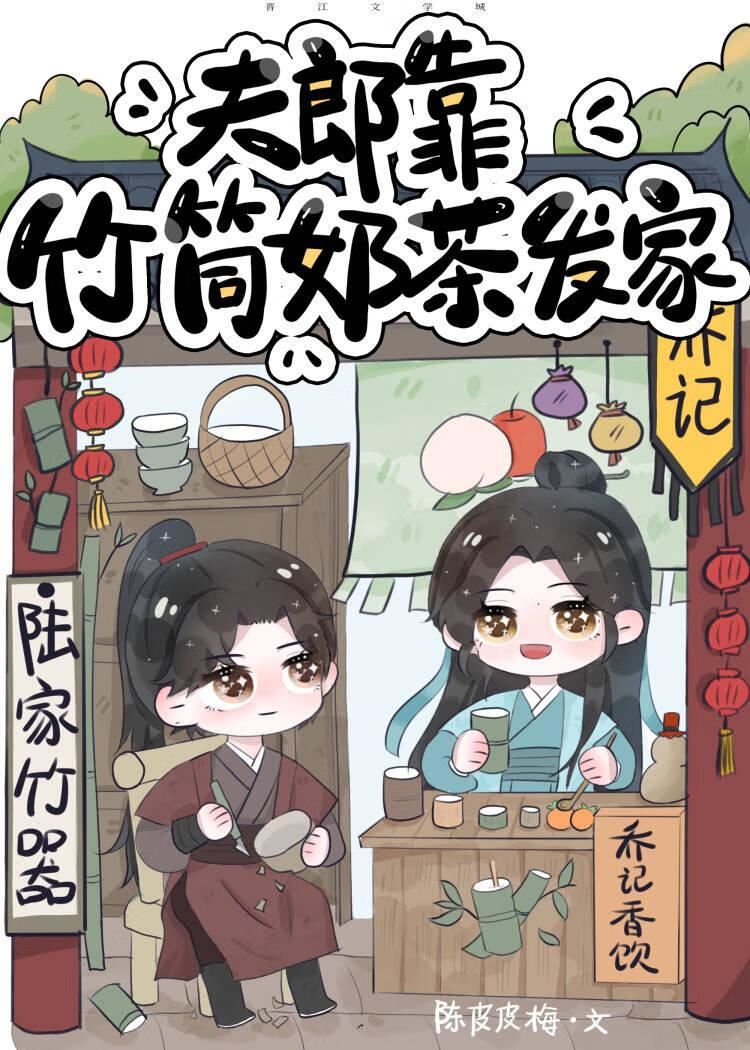
Qiao Suiman is a young man from Xiahe Village, living with his elder brother Qiao Ruifeng and brother-in-law Qin Yu after their father squandered the family fortune and their grandmother passed away. As a ge'r, Suiman is skilled at foraging for wild mushrooms and vegetables, which he and Qin Yu sell as herbal drinks at the local market to support the household. The village is recovering from recent floods and harsh weather, forcing residents to rely on foraging for sustenance. Suiman is well-liked by neighbors like Chen Xuesheng but suffers from malicious rumors started by gossips like Lin Xiuhua, who claims he is cursed and responsible for his mother's death.

The story begins with Suiman foraging in the mountains with his dog, Heijin. He encounters a tall, stern stranger named Lu Dongqing, who warns him about snakes nearby. Lu Dongqing is a refugee from the north who had fled with his family after losing everything. Chen Xuesheng later reveals that Lu Dongqing is connected to a scholar from Yunlang Academy and is gathering herbs for medicinal purposes. Suiman returns home to find Lin Xiuhua visiting his family. She arrives not to offer kindness, but to propose a marriage match between Suiman and her nephew, a known gambler and drunkard from Hexi Village, in exchange for a small betrothal gift.

Qiao Ruifeng and Qin Yu vehemently reject the proposal, recognizing their neighbor's true character. Enraged by the refusal, Lin Xiuhua becomes violent, throwing a bowl that injures Ruifeng's forehead and cursing Suiman viciously. The confrontation escalates into a physical altercation, with Ruifeng and Qin Yu driving Lin Xiuhua out of their home. The noise draws a crowd of villagers. Lin Xiuhua attempts to manipulate public opinion by claiming she was attacked while trying to help them, but Qin Yu and Ruifeng expose her scheme. They reveal that her nephew recently broke a girl's leg while harassing her, and she was desperate to offload him onto another family.

The brothers confront Lin Xiuhua at the Wang family residence, where her husband Wang Qing is embarrassed by her actions. Public pressure and the exposure of her lies lead to Lin Xiuhua being disciplined by her own family. Wang Qing, furious at his wife's disgrace, beats her and locks her away. The incident strengthens the bond between the Qiao brothers and the villagers, who had previously been swayed by Lin Xiuhua's rumors. Ruifeng promises to share the herbal drinks with the community to repair their reputation.

Back home, Suiman prepares a large batch of drinks to share with the neighbors who supported them. His dog Heijin surprises everyone by catching a large carp in the river, providing a rare meal of fish and mushrooms for the family. The story concludes with the Qiao household returning to their daily routine, having successfully defended their dignity against gossip and exploitation, while the mysterious Lu Dongqing remains an ongoing presence in the village background.

Latest Release
DateGroupRelease
2026-09-25knoxt c122
2026-09-25knoxt c121
2026-09-25knoxt c120
2026-09-25knoxt c119
2026-09-25knoxt c118
2026-09-25knoxt c117
2026-09-25knoxt c116
2026-09-25knoxt c115
2026-09-25knoxt c114
2026-09-25knoxt c113
2026-09-25knoxt c112
2026-09-25knoxt c111

Community Reviews

Rating(4 / 5.0, 342votes)
5 stars
113(33%)
4 stars
106(31%)
3 stars
123(36%)
2 stars
0(0%)
1 stars
0(0%)

Popular reviews

... Read More
Honestly, what got me most in this chapter wasn't some big dramatic moment—it was the way Qiao Suiman and Qin Yu just exist together in this little house after everything they've been through. I mean, Qin Yu comes home, sees Qiao Suiman's face "scrunched up like a steamed bun," and just... pinches his cheek? That's not something you write as a throwaway line. That's the whole relationship right there. The fact that Qin Yu doesn't push when Qiao Suiman can't articulate what's bothering him—that he just laughs softly and goes to make dinner? That's the kind of quiet, steady love that makes me want to re-read the whole arc again. And then there's the Lu Dongqing thread, which I think is supposed to be romantic tension but honestly feels more like... I don't know, longing for connection? Qiao Suiman lies awake until the early hours thinking about whether Lu Dongqing will agree to partner with him. He's not just worried about money or business—he's worried about being rejected by someone who matters to him. When he finally makes up his mind and tells his brother, there's this moment where Qiao Ruifeng just says "I think he'll agree" without explaining why, and Qiao Suiman is both confused and relieved. That trust in his brother's intuition! That's the kind of family bond the story keeps building toward. The line that wrecked me though—this might sound stupid but hear me out—was when Qin Yu says "Our lives will only get better." Not some grand declaration, not even really optimistic, just... stated as a fact. Like he's convincing himself as much as Qiao Suiman. That's the emotional core of this whole section: two people who've survived terrible things deciding to build something ordinary and good. The fact that Qiao Suiman still worries about money, still can't quite sleep, still feels the weight of his past—that's not a flaw in the writing, that's the point. Healing isn't linear. The tenderness between these characters, the way they protect each other without making it dramatic, that's what stays with you.
... Read More
There's something quietly profound about a chapter that's mostly about selling lanterns, and I think the author knows it and is using it to say something bigger without ever saying it directly. Let's talk about the lanterns first, because they're everywhere in this chapter and they mean more than just merchandise. Each lantern is hand-carved, each one tells a story — Zhong Kui the demon-queller, towering mountains, landscapes of flowing water. These aren't random designs. The mountain lantern, for instance — a scholar chooses it because "my master often says a man should stand tall like a mountain, standing tall and firm." The lantern becomes a vessel for philosophy, for aspiration, for the values these educated men carry with them. Every purchased lantern is someone taking a piece of meaning home to hang in their house. And then there's the sheepskin parchment itself — translucent, delicate, requiring careful pasting where not a single sheet was damaged. Forty lanterns from eighty sheets. There's something almost spiritual about the craftsmanship here, the patience required, the way raw material is transformed into something that carries light. The silver is another layer I can't ignore. Money flows through this chapter like a current — three mace of silver tossed casually by a wealthy scholar, two mace carefully counted by a meticulous one, Qiao Suiman weighing the money pouch and finding joy in its weight alone. This isn't just commerce; it's about dignity, about two people who've had little suddenly holding real value in their hands. The financial transformation mirrors their social transformation. But the deepest symbol might be the leaves. Qiao Suiman and Lu Dongqing gathering leaves from the mountains, cleaning and pressing them flat to line their display. They're bringing the natural world into their商业 space, creating beauty from something ordinary. The rustic elegance they create stands in contrast to the plain wooden boxes at the neighboring stall — different approaches to the same problem, different philosophies of value. This chapter is about making something beautiful and meaningful out of nothing, about finding your place in a world that seemed to have no room for you. And it does it through lanterns.
... Read More
What I love about this section is how the stakes never go above fifty-five taels of silver but somehow feel genuinely heavy. Shopkeeper Hu has been running this shop for years. He and his wife took time to decide before buying it. They wanted something bigger for their children's futures—not vanity, he explicitly says, just a smoother path forward. And now someone with money and connections is blocking that path because of a kid who aced an exam. That's actually heartbreaking when you sit with it. Meanwhile Qiao Suiman and Lu Dongqing are on the other side of this problem, hoping to buy a similar space for themselves. Their stakes are smaller but real too—they're building a life together, carving bamboo tubes and saving up twenty-five wen at a time. The parallel between these two sets of people is the kind of quiet conflict that doesn't need shouting or threats. It's just... people trying to exist in a world that keeps making it harder. And I'm already worried about what happens when that twenty-fifth comes around and the answer isn't what they hope for.
... Read More
I need to talk about Chen Xuesheng for a second because the author gave him one line and I've been thinking about it for an hour. 'Is that ointment effective?' whispered in the middle of a meat market, pulled Qiao Suiman aside like it was the most important thing in the world, and then... nothing. No answer. No continuation. Just Qiao Suiman walking away saying 'You'll find out for yourself if you try it' while Chen Xuesheng calls after him from the street. This is dialogue as storytelling. Not exposition, not character development through monologue—just two people exchanging information the reader can barely grasp, and suddenly the entire chapter gains a secret dimension. What ointment? Who needs it? What problem was Chen Xuesheng dealing with last year that required an ointment? The author trusts the reader enough to let this mystery breathe without immediately explaining it. And Qiao Suiman's refusal to engage on the spot? That's not poor communication—that's a character choice. He's in his element now, cooking for his husband's birthday, and he's not going to let some mysterious ointment conversation hijack the moment. The rest of the dialogue throughout this batch is similarly distinct. Lu Dongqing speaks in short, practical sentences. Miao Lianhua's lines carry warmth and experience. Even the dog has a voice—Heijin communicates through 'whining,' 'barking in protest,' and 'grievance in his eyes.' The narrative voice itself is warm without being saccharine, observant without being judgmental. It has the rhythm of someone telling you a story around a fire, not a narrator delivering a report. And honestly, that's rare. Most authors can write good dialogue but lose the narrative voice. This one maintains both consistently.
... Read More
I need to talk about this scene for a minute because my heart is NOT okay. Qiao Suiman comes home exhausted, can barely function, and what does he do? He leans back into Lu Dongqing's embrace and rests his head against his shoulder while telling him about making fifty wen a day. That's it. That's the moment. That is the entire romance genre in one gesture. And Lu Dongqing—oh god, Lu Dongqing. He's already carved ten bamboo tubes that same day, is probably just as tired, but his first instinct is to watch Qiao Suiman eat and wipe food from the corners of his lips. 'He kept piling food onto Qiao Suiman's plate.' This man is expressing love through carbohydrate distribution and I am HERE FOR IT. The warmth in this chapter is not accidental. It's earned. They've been grinding—literally working side by side, building something together—and every small gesture between them carries the weight of that shared effort. When Qiao Suiman says 'fifty wen a day' with sparkle in his eyes again, that's not just about money. That's two people building a future and believing they can actually have it. Miao Lianhua's massage scene with Qiao Suiman adding 'No need for thanks between us'—family love hitting just as hard. This chapter is a buffet of tenderness and I am not mad about it.
... Read More
The sugar-water eggs. Let me sit with that symbol for a moment because it's doing so much heavy lifting. Red sugar water staining the eggs a deep crimson. Two whole eggs in one bowl — a abundance that Qiao Suiman notes he's never experienced in his life. This isn't just a culinary tradition; it's a statement. The Lu family is telling Qiao Suiman, through food, that he is valued. That his presence in their home is a cause for celebration, not toleration. Two eggs means double prosperity. The color red means luck, joy, continuity. The sweetness means a life without bitterness ahead. But here's what makes the symbol complicated: Qiao Suiman's reaction isn't pure gratitude. He's embarrassed. He's shy. He deflects with humor. The tradition is meant to welcome him, but it also marks him as different — as the fulang, the one who enters a family rather than being born into it. The eggs are a blessing, yes, but they're also a reminder that he occupies a specific, somewhat precarious role. The bed curtains he sees when he wakes up — unfamiliar — symbolize his new reality. He's in a space that belongs to Lu Dongqing's family, not his own. The makeshift kitchen, the small bathroom, the thatched cottage — these details ground the story in a world of limited means, which raises the stakes of the family's generosity. They don't have much, but they're giving him the best of what they have. Then there's the line about Qiao Suiman being "completely possessed by him inside and out." The word possession is loaded. It speaks to themes of ownership, autonomy, and the vulnerability of entering someone else's life. Is he possessed out of love? Out of duty? The ambiguity is intentional — and it's the source of the story's deeper tension. Being chosen is wonderful until you wonder whether you're being chosen for who you are or for the role you fill. The mother-in-law's opening reflection — that she won't use her position to make things hard — is the story's thematic thesis in miniature. This narrative is about power, about who holds it, and about the difference between kindness that's freely given and kindness that's strategically displayed.
See all reviews

Custom lists

See all custom Lists