Summary

... Read More

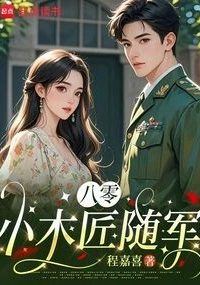
Bai Ruanruan, a modern woman with the same name and family structure as a fictional character, transmigrates into a 1970s novel after a physical altercation with her real-life cousin, Gu Zhenxi. In the book, Bai Ruanruan is portrayed as a manipulative "green tea" antagonist destined for a tragic death in the countryside, while her cousin Gu Zhenxi is the favored heroine who steals her identity to escape that fate. Upon arriving in the story, Bai Ruanruan discovers she is scheduled for rural labor shortly after her grandmother’s relic, a space necklace, was stolen by Gu Zhenxi under the pretense of safekeeping. Recognizing that the original plot forces her into a fatal environment due to her frail health, she resolves to alter her destiny by avoiding the countryside at all costs.

With job acquisition nearly impossible in the rigid economic climate of the era, Bai Ruanruan devises an unconventional strategy: she intends to force a marriage to secure her urban residency. Donning a black cloth to conceal her identity, she takes to the streets in an attempt to ambush men she deems suitable husbands. Her first encounter involves a weak scholar who mistakes her for a robber, but her true target emerges when Zhou Hongyu, a tall and muscular regiment leader, investigates a report of suspicious activity. Instead of fleeing, Bai Ruanruan boldly propositions him, demanding he marry her to avoid the countryside. Zhou Hongyu, initially intent on arresting her for public disorder, is disarmed by her delicate appearance and tearful pleas, ultimately releasing her with a warning.

Unwilling to accept defeat, Bai Ruanruan continues her street campaigns the following day, only to cross paths with Zhou Hongyu again while attempting to coerce another man. This time, Zhou Hongyu refuses to let her go, but her dramatic performance and revelation of her fragile health trigger a deeper recognition in him. He identifies her as Ruanruan, a girl he had protected and cherished over a decade prior. Simultaneously, Bai Ruanruan’s mother arranges a blind date with a suitable military candidate to prevent her from being sent away. The date reveals the shocking reality that the proposed husband is none other than Zhou Hongyu, the same man who had caught her twice.

During the blind date, Zhou Hongyu confirms Bai Ruanruan’s identity and proposes a marriage of convenience. He understands her desire to avoid rural labor and offers his military status and income as a solution, while she appreciates his frequent deployments as a way to maintain distance in a pragmatic union. Both parties agree to the arrangement, prioritizing their immediate needs over romantic development. Bai Ruanruan secures her future by marrying Zhou Hongyu, thereby nullifying the order for countryside relocation. The narrative shifts toward their adjustment to married life within the military compound, as Bai Ruanruan prepares to reclaim her stolen belongings and confront the cousin who orchestrated her original misfortune.

The story explores the dynamics of a contract marriage set against the backdrop of 1970s China, where social constraints and family obligations drive the protagonists together. Zhou Hongyu’s long-standing affection for the girl he remembered contrasts with Bai Ruanruan’s calculated approach to survival, creating a tension between duty and emerging emotion. As they navigate the bureaucratic requirements of military marriage and the scrutiny of their families, the couple establishes a partnership that challenges the predetermined fate of the novel. Bai Ruanruan’s transition from a doomed cannon fodder character to a woman actively shaping her destiny marks the central arc, as she leverages her marriage to Zhou Hongyu to protect herself and her family from the hardships that awaited her in the original plot.

Latest Release
DateGroupRelease
2026-08-11shanghai fantasy c46
2026-08-11shanghai fantasy c45
2026-08-11shanghai fantasy c44
2026-08-11shanghai fantasy c43
2026-08-11shanghai fantasy c42
2026-08-11shanghai fantasy c41
2026-08-11shanghai fantasy c40
2026-08-11shanghai fantasy c39
2026-08-11shanghai fantasy c38
2026-08-11shanghai fantasy c37
2026-08-11shanghai fantasy c36
2026-08-11shanghai fantasy c35

Community Reviews

Rating(4 / 5.0, 30votes)
5 stars
10(33%)
4 stars
9(30%)
3 stars
11(37%)
2 stars
0(0%)
1 stars
0(0%)

Popular reviews

... Read More
The pacing here is actually really well controlled. Chapter 1 drops us right into the action—Bai Ruanruan is already in costume, hiding in a corner, planning to 'rob' a husband. No lengthy exposition dump. The backstory comes through in her internal monologue as she waits, which feels natural because she's literally killing time before her operation. The author is smart about how much information to give you at once. Then Chapter 2 shifts gears completely. The encounter with Zhou Hongyu moves fast—she spots him, she acts, he counters in seconds. The tension spikes when he takes her stick, when he pulls out his military ID, when she realizes she's in over her head. And then it drops again when she starts crying and he's caught off guard. That rhythm of tension and release keeps you reading. The chapter ends on a classic cliffhanger with her saying 'I really can't go to the countryside' and him having words stuck in his throat. You want to know what happens next. Will he take her to the police? Will he help her? The author knows exactly how to hang you on a moment. What I appreciate is that the exposition doesn't slow things down. Even though we get a lot of backstory about the novel, the cousin, the necklace, the space—it all comes through in a way that feels urgent rather than informational. This is a woman who needs to escape death and she's doing it in the most unconventional way possible. The pacing matches her energy: frantic, clever, and slightly unhinged.
... Read More
Okay so I need to talk about this one scene where Bai Ruanruan is walking with her mom Fu Shiting and she deliberately drops the bomb about her name being on the countryside list. This is the first time we really see the mother-daughter bond shift from generic warm to actually meaningful. Fu Shiting is this soft-hearted person who's been turning a blind eye to her sister's family taking advantage, and here's her daughter basically saying 'Mom, I see what's happening and I'm not the naive girl you thought I was.' The way she hesitates before revealing it, the little performance of furrowed brows and soft sighs — she's manipulating the situation but in a way that makes her mom realize the truth. And then the mom's reaction? She's furious but also heartbroken. She's thinking about all the times she fed her niece and gave her things, and the niece still wanted to destroy her daughter's life. That line where Fu Shiting says 'I'm afraid that she will sell you out and you'll have to help her count the money' — that's not just warning her daughter, that's a mother recognizing the depth of the betrayal. It made me actually feel something, you know? Like the warmth between them is real and it's what's at stake here. This isn't just about revenge or getting jewelry back, it's about protecting the one person who actually loves you unconditionally.
... Read More
Let me just say — the atmosphere in these chapters is *chef's kiss*. I know that sounds weird for a romance plot, but the setting details are what make this world feel so real and lived-in. The scene where they meet at the store is so vividly described. It's summer, there's a big umbrella on a table blocking the heat, and Zhou Hongyu is already there waiting. The ice milk detail is everything — two bottles of cold milk, him silently opening hers and putting in the straw. That small gesture says so much without any dialogue. It's 1970s China and this simple act of buying ice milk together feels incredibly intimate. And Bai Ruanruan's outfit! A soft white short-sleeved shirt, light blue jeans, black leather shoes — described as "very fashionable in that era." I love how the author uses clothing to ground us in the time period without needing exposition dumps. The tricycle ride to her aunt's house, the military compound lifestyle, the 200 yuan salary that blows her mind compared to her father's 80 yuan — all of these details paint a picture of a specific time and place. The aunt's house scene was also really well done atmospherically. Half past nine in the morning, the sound of the tricycle outside, the aunt cleaning the house and then quickly pouring water with a forced smile. You can practically feel the tension in that room. The author doesn't need to say "the atmosphere was tense" — they just show the aunt's reaction and the water being poured. What I appreciate most is how the world feels alive. It's not just a backdrop for the romance — the political situation (countryside sent-down program), the military system, the family dynamics, the economic realities — all of these shape the characters' decisions and create real stakes. When Bai Ruanruan says she needs to get the marriage certificate before she goes to the countryside, it's not just a romantic plot point, it's a survival strategy in a world where going to the countryside could ruin her life. The visual imagery throughout is consistently strong. I could picture every scene clearly — the umbrella, the ice milk bottles sweating in the heat, the mother and daughter traveling by tricycle. This is worldbuilding that serves the story rather than just decorating it.
... Read More
Let's talk about what's actually at stake here because this isn't just a rom-com premise. Bai Ruanruan transmigrated into a body that, according to the original novel, dies within six months of arriving in the countryside. She gets sick repeatedly and passes away. That's not a minor inconvenience—that's a death sentence. And she has no way to opt out through normal channels because the system is rigged against her. The stakes are layered. On the surface, she needs to avoid the countryside. But underneath that, her cousin has stolen her identity, her grandmother's necklace (which contains a magical space), and is living her life as if nothing happened. The original owner was kind to a fault—she never doubted her cousin even when things felt wrong. Our MC inherited that trust but also inherited the consequences of it. What makes this compelling is that every choice she makes is a high-wire act. She can't just go to the authorities and say 'my cousin forged my paperwork' because in this era, questioning the system could get you labeled a capitalist. She can't buy a job because the book's logic prevents it. So she has to improvise, and her improvisation involves robbing strangers to force marriage. The risk-reward is insane: if she gets caught, she goes to the Public Security Bureau. If she succeeds, she might actually survive. And that necklace—Gu Zhenxi won't open the space inside it for over a month. That's a ticking clock. Once she does, the power dynamic shifts. Bai Ruanruan needs to secure her position before her cousin becomes untouchable with that space ability. The conflict isn't just personal—it's strategic.
... Read More
I have to talk about this one scene because it's so VISUAL. Fu Xiujun and Gu Zhenxi showing up at Fu Shiting's door in their PAJAMAS. Like, literally in their sleepwear, running through the courtyard in the morning, and the author just drops this detail and I was SCREAMING. It's such a powerful image of how far these two have fallen — they don't even care about dignity anymore. And then the neighbors! Oh my god, the neighbors are the BEST worldbuilding element here. "Who are these two people? Why are they out in their pajamas?" "I even saw eye boogers!" This is how you show social judgment without being preachy about it. The whole courtyard is watching, everyone's talking, and these two women are completely exposed. It's like a movie scene. The poverty of Fu Xiujun's home is described so vividly too. After the robbery, they have nothing — no food, no clothes, just the beds they're sleeping on. The passbook hidden under the pillow, the thirty yuan left, the fact that they had to withdraw money in advance for National Day gifts and then it all got stolen. Every detail paints this picture of a family that's one bad day away from complete collapse. The era feels so real — the passbook system, the salary waiting half a month, the dowry customs, the educated youth being sent to the countryside. This world is alive.
... Read More
Let me just say this — the conflict in these chapters is ABSOLUTE CHAOS and I loved every second of it. You've got the robbery itself (external conflict), the family argument about whose parents to ask for help (domestic conflict), the financial desperation (survival conflict), and then Fu Shiting vs. her sister and niece (moral conflict). It's like four conflicts happening at once and they're all feeding into each other. The stakes keep rising and rising. First it's "we have no food" — that's bad. Then "we have thirty yuan" — okay, that's something. Then "we need more than thirty yuan" — now it's desperate. And finally, Fu Shiting offers five dollars and the aunt and niece are SHOOK. Five dollars! In that era that's real money, and they're acting like it's an insult. But the real stakes are emotional, not financial. Fu Shiting is protecting her daughter. Gu Zhenxi framed Ruanruan — that's not a small thing, that's trying to DESTROY someone's life. And Fu Shiting drawing this line in the sand? "No matter how good-tempered I am, I would never go past my own daughter." That line hit me like a truck. The tension between family loyalty and self-preservation is what makes this story so gripping.
See all reviews

Characters

See all characters

Custom lists

See all custom Lists