Summary

... Read More

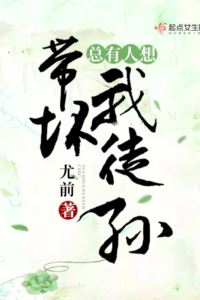
Yan Xi, a woman from the twenty-first century, dies of a heart attack caused by overwork and transmigrates into the body of a fat, abusive woman in 1983 China. The original owner, also named Yan Xi, had blackmailed a military captain named Fu Wen into marriage after he rescued her from water. She treated his two adopted orphans, Fu Caihe and Nuannuan, with cruelty, starving and beating them until she accidentally died when pushed by the boy during a fit of rage. Upon waking, Yan Xi finds the two terrified children hiding in the corner, expecting punishment. Instead of retaliating, she protects them from a nosy and malicious neighbor, Fan Fuying, who is eager to see the children harmed so she can introduce her own niece to Fu Wen. Yan Xi realizes the children are traumatized and starving, so she cooks them noodles with fried eggs, a gesture that confuses and frightens them due to years of abuse.

Yan Xi quickly assesses her financial situation, discovering that the original owner spent all of Fu Wen’s allowance on herself while the children went hungry. Determined to support herself and the children until she can divorce Fu Wen, she decides to start a business. She recalls the popularity of spicy strips, a snack that would not become common until the 1990s, and resolves to make and sell them in the nearby town. She buys ingredients and begins producing the snack, which she calls spicy noodles. The next morning, she takes the earliest bus to town, encountering Fan Fuying and other sisters-in-law who mock her. Yan Xi cleverly turns the tables by insulting their hygiene, causing the other passengers to distance themselves from them.

At the market, Yan Xi sets up a stall and offers free samples. The unique, addictive flavor of the spicy strips attracts a crowd, and she sells out her entire stock within hours, earning nearly fifty yuan. She uses the profits to buy clothes and pajamas for Fu Caihe and Nuannuan, as well as personal hygiene items like cups and toothbrushes. When she returns to the compound, she publicly gifts the new clothes to the children, shocking the other residents who are accustomed to the original Yan Xi’s neglect. Fan Fuying, jealous and angry, tries to undermine her, but Yan Xi remains unfazed and continues to build a friendly relationship with other neighbors, particularly Yuan Jingui, who helps her establish a routine for selling the snacks.

Meanwhile, Fu Wen is on a military mission in the border woods. His comrade, Lin Haocheng, urges him to divorce Yan Xi, noting that she is a burden and that Fu Wen deserves a better life. Fu Wen agrees that he must end the marriage when he returns, citing the abuse he suspects the children suffer. Back at home, Yan Xi continues her daily routine of cooking, selling spicy strips, and caring for the children. She teaches Nuannuan how to brush her teeth and ensures both children eat regular meals. The children begin to trust her slightly, though Fu Caihe remains guarded and suspicious of her sudden kindness. Yan Xi is aware of his distrust but focuses on her goal of financial independence and eventual divorce, planning to use her new business to secure her future.

As days pass, Yan Xi’s business grows, and she starts making enough money to buy better ingredients and even considers purchasing a bicycle to increase her carrying capacity. She also begins to lose weight, struggling with the physical demands of her new lifestyle but motivated by health concerns. The dynamic in the compound shifts as Yan Xi treats the children with genuine care, contrasting sharply with the original owner’s behavior. Fan Fuying continues to spread rumors and plot against her, but Yan Xi handles the hostility with wit and composure. The story follows Yan Xi’s adaptation to her new life, her efforts to build a livelihood in a restrictive era, and her gradual earning of the children’s trust while navigating the complex social dynamics of the military compound.

Latest Release
DateGroupRelease
2026-08-11shanghai fantasy c20
2026-08-11shanghai fantasy c19
2026-08-11shanghai fantasy c18
2026-08-11shanghai fantasy c17
2026-08-11shanghai fantasy c16
2026-08-11shanghai fantasy c15
2026-08-11shanghai fantasy c14
2026-08-11shanghai fantasy c13
2026-08-11shanghai fantasy c12
2026-08-11shanghai fantasy c11
2026-08-11shanghai fantasy c10
2026-08-11shanghai fantasy c9

Community Reviews

Rating(4.5 / 5.0, 13votes)
5 stars
7(54%)
4 stars
5(38%)
3 stars
1(8%)
2 stars
0(0%)
1 stars
0(0%)

Popular reviews

... Read More
Okay so this section is fascinating from a pacing standpoint because it basically does a complete 180 on the story's energy. You start with this incredibly domestic, almost slice-of-life scene — Yan Xi making dumplings, the kids delivering them door to door, the whole neighborhood reacting. It feels warm, slow, comfortable. And then — BAM — suddenly she's making latiao (spicy strips) and planning to sell them at the market the next day. The shift is jarring in the best way. I think what's really clever here is how the author uses the dumpling delivery as a kind of bridge scene. It's not just 'look how nice Yan Xi is being now.' It's a structural pivot that reorients the entire power dynamic of the household. By having Fu Caihe and Nuannuan deliver the dumplings themselves, the author forces the children to become active participants in this new reality rather than passive recipients. Every time they knock on a door, the reader gets a little beat of satisfaction — Feng Lingling's shock, Yuan Jingui's reciprocation, Shuai Shuai's outrage. These mini-scenes build a kind of ripple effect that makes the neighborhood feel alive. Then the latiao scene hits and suddenly we're not just in a domestic drama anymore — we're in a story about a woman with big plans. The author knew exactly what she was doing. She let us breathe through the dumpling sequence, made us invest in these small moments of connection, and then flipped the switch to entrepreneurship. It's like the narrative equivalent of a plot twist that doesn't feel like a twist because the groundwork was already laid. The chapter ending is also smart — Yan Xi offering the kids latiao, Fu Caihe's suspicion flaring up again, Nuan Nuan's desperate hunger. It creates this tiny cliffhanger of 'will they trust her or not?' while also being deeply relatable because honestly, have you ever tried to resist food? The author understands that sometimes the highest stakes aren't life-or-death — they're 'this spicy strip might be poisoned or it might be the best thing you've ever tasted'.
... Read More
Food in this text is NOT just food. I've read enough novels to know that when an author spends this much time on cooking scenes, something deeper is going on. And it is. The dumplings are the first major symbol, and they represent something enormous: a reversal of roles. The original Yan Xi used to bring the kids to neighbors' houses to mooch food. She turned them into instruments of her own entitlement. The new Yan Xi makes hundreds of dumplings and sends the kids to GIVE food to those same neighbors. The gesture is identical on the surface — kids going door to door with food — but the meaning is completely inverted. It's about taking something that was once an act of exploitation and transforming it into an act of community. That's not subtle, but it's also not meant to be. It's thematic muscle-flexing. The latiao is a different kind of symbol though. It's Yan Xi's 'first pot of gold' — her ticket out of whatever situation she's trapped in. In the text, it explicitly says this food 'was invented in the 1990s' and became popular over the next 20-30 years. The author is telling us that Yan Xi isn't just cooking for today — she's cooking with knowledge of the future. She's an outsider in more ways than one. The latiao represents her hidden advantage, her secret weapon, her way of using foresight as capital. And then there's Fan Fuying's bad buns — the incident where she gave the kids stale, possibly spoiled buns and then lied about it. Food as poison. Food as a tool of cruelty disguised as kindness. This mirrors the dumplings perfectly: the same object (food given to children) carrying opposite meanings depending on who's giving it and why. The recurring motif of eating together also strikes me. Every major scene involves food — dumplings, latiao, the neighbors' reactions, Shuai Shuai demanding dumplings. Eating is how characters relate to each other. It's how trust is built or broken. The compound is basically a food ecosystem, and whoever controls the food controls the social dynamics.
... Read More
Fan Fuying: 'When Captain Fu comes back, I will let him know how badly you treated them!' Yan Xi: 'Then you can introduce your niece to Fu Wen and climb up to Fu Wen's high branch.' That is a one-liner that deserved an Oscar. She didn't even raise her voice. She just named the woman's entire scheme in one sentence and watched her face turn purple. I replayed that moment three times. And her bus dialogue with Fan Fuying? 'If I had known that Sister Fan wanted to break the rules and cut in line to get on the bus first, I would have let you go.' She makes it sound like she's doing Fan Fuying a favor. The passive-aggressive politeness is so sharp it could cut glass. But what I really love is how the kids speak. Fu Caihe saying 'Don't eat!' like it's a military command. Nuannuan whispering 'Brother, there are eggs in the bowl! Two of them!' like she's seeing a miracle. Each character has a completely different voice and the author never lets them blur together. Even the sisters-in-law on the bus have distinct personalities just from their dialogue — you can tell who's the instigator and who's the follower. The narrative voice itself is also doing a lot of work. It's close third person, always anchored in Yan Xi's perspective, and it has this dry, almost wry humor that matches her personality perfectly. She observes everything with this calm, calculating energy that makes every scene feel like she's three steps ahead.
... Read More
I need to talk about this one scene because I genuinely felt something here. Yan Xi notices Nuannuan's dry lips, asks if she drank water, and when the girl won't answer, Fu Caihe reveals the truth — she's afraid of wetting the bed. And Yan Xi's reaction is not to get frustrated, not to scold, but to share her own vulnerability. She tells Nuannuan she wet the bed too. Whether it's true or not (the narrator hints it might be a useful lie), the effect is immediate. Nuannuan's "big eyes like black grapes" blink with curiosity and confusion — she can't reconcile this version of her aunt with the one she feared. The moment where Yan Xi almost touches Nuannuan's head and then pulls back? That's the emotional core of the entire passage. It's a gesture of affection that's been withheld for so long that even the giver hesitates. And Nuannuan's whisper to Fu Caihe afterward — "I think my aunt is different now" — is such a small line but it carries so much weight. This child, who has every reason to be skeptical, is tentatively allowing hope. Fu Caihe's response is more guarded, and I respect that. He's protecting his sister. The tenderness in this scene contrasts so sharply with the public drama of the market, and I think that's intentional. The real story isn't about sending people to the police station — it's about two scared children learning whether they can trust the woman who's supposed to care for them.
... Read More
The way this author builds the world without any exposition dumps is actually insane. You get the whole picture just from Yan Xi walking to the bus stop. The shuttle bus that only runs three times a day. The state-owned restaurants. The closet full of the original owner's new clothes and the food cupboard full of snacks she bought for herself instead of feeding the kids. The 100 yuan Fu Wen left that got spent on herself. You don't need a single paragraph of worldbuilding notes — the details DO the work. I love the bus scene. The way the sisters-in-law squeeze Yan Xi from both sides to push her down, and she just uses her own body weight to knock them both to the ground. There's something so satisfying about a fat woman weaponizing her fatness in a world that tells her she's useless. She literally says 'I was queuing to get on the bus' and turns their own cruelty against them in front of all those villagers. The public shaming element is chef's kiss. The compound itself feels alive — you can hear the gossip through the walls, you can feel the judgment, the way everyone waits for Fu Wen to come back so they can decide whether to respect Yan Xi or not. It's a microcosm of an entire society in one neighborhood, and the author never once stops to explain it. You just know how it works.
... Read More
I need to talk about how each character in this text has a completely distinct voice, because that's honestly not easy to pull off. Let me just dump some examples because they're too good. Nuan Nuan's dialogue is basically pure id — she says exactly what she's thinking and feeling with zero filter. 'Brother, please tell me! My saliva is about to flow onto your clothes!' This kid sounds like an actual six-year-old who cannot contain herself. And the author keeps coming back to her physical comedy — stretching out both hands to show the number twenty, her little mouth red with chili powder. It's not just dialogue, it's performance. Fu Caihe, on the other hand, speaks in short, guarded sentences. 'What is this?' 'Stop eating!' 'We didn't lie.' He's the suspicious one, the protector, and his dialogue reflects that — terse, defensive, always testing. Even when he caves and eats the latiao, he doesn't say 'this is good.' He just eats it. His actions do the talking. Then you've got Fan Fuying, and oh boy. Her dialogue is pure villain energy wrapped in self-justification. 'It's because Yan Xi can't bear to see our family doing well that she doesn't send it to us.' BRO. She literally poisoned the kids with bad buns and then convinces herself SHE'S the kind one. 'There are only a few sisters-in-law in the compound who are as kind-hearted as me.' The audacity is staggering and I love it. Yan Xi's voice is the most interesting because it's layered. She lies to the kids ('I want to lose weight') with such casual confidence, and the narrative notes 'The corners of Yan Xi's mouth twitched. This child is quite perceptive.' She knows she's been caught but plays it off anyway. That's a character who's been through shit and learned to deflect with humor. The narrative voice itself is also worth mentioning — it's close third person, mostly anchored to Yan Xi's perspective, but it dips into other characters' thoughts when it serves the scene. The tone has this dry, wry humor that never takes itself too seriously. It reads like someone telling you a story at a dinner table, not like a novel trying to be literary.
See all reviews

Characters

See all characters

Custom lists

See all custom Lists