Summary

... Read More

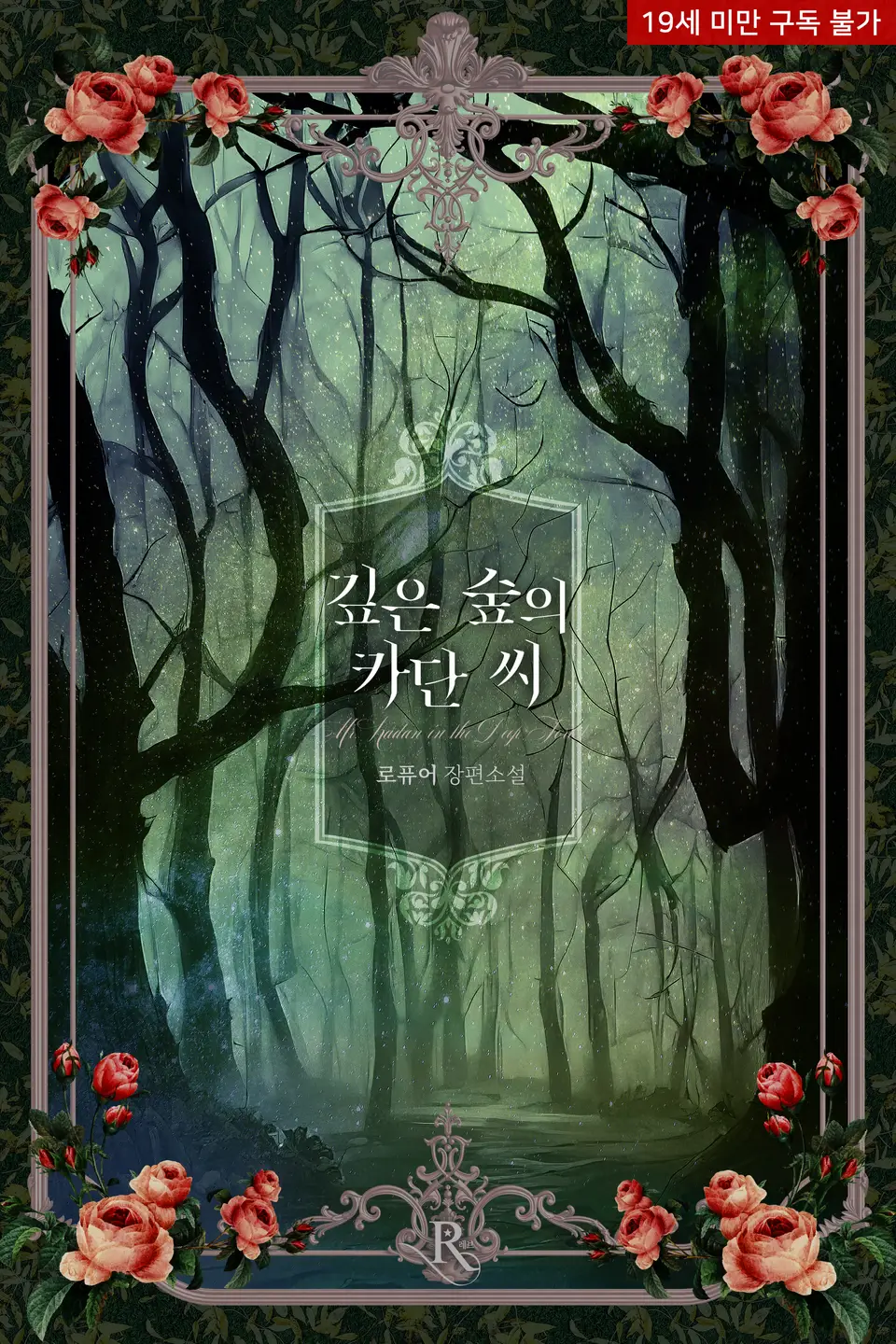
Luna Dheim was born with ancient red runes etched across her body, a mark considered a curse by the Brillan Kingdom. The daughter of Count Dheim, she was locked in a dark cellar for eighteen years after her ancestor swallowed a mysterious stone from the northern forest. When her father was executed for conspiring with the Inut Empire, a barbarian people beyond the northern border, Luna was stripped of her nobility and sold into slavery. After enduring abuse and being blamed for the death of her slave trader, she was sold as a sacrificial bride to the creatures of the northern forest. Left tied to a tree in the freezing wilderness, Luna accepted her death until a massive, beast-like man named Kadan discovered her. Instead of eating her, he saved her life, bringing her to his remote cabin in the woods.

Kadan, known locally as a monster hunter, treated Luna with a hesitant kindness that she had never experienced before. He warmed her frozen body, fed her, and allowed her to stay in his home. For the first time, Luna found peace, assisting with chores and teaching Kadan how to read and write. She named him Kadan after a hero from a fairy tale, a name he grew to cherish. As their bond deepened, Kadan struggled with his overwhelming physical desire for Luna, fearing his own strength might harm her fragile form. This tension culminated in an intimate encounter where Luna guided Kadan through their first sexual experience, leading to a complex relationship built on care, longing, and Luna’s past trauma as a slave.

The fragile tranquility of their life in the cabin was shattered by the arrival of Ruth, a vain and predatory villager who served as an intermediary between Kadan and the local community. Ruth recognized Luna and revealed that he had seen her before, hinting at her past as a sacrifice. His presence exposed the danger Luna faced, not just from the villagers who might want her dead, but from his own lecherous intentions. Kadan’s protective instincts flared violently, resulting in a physical confrontation where he brutally subdued Ruth, marking a significant shift in his demeanor from isolated hunter to possessive partner.

Meanwhile, the political landscape of the world was undergoing a drastic change. The Inut Empire, led by the formidable Second Prince, had launched a full-scale invasion of the Brillan Kingdom. The Empire’s superior technology and strength led to a decisive victory, toppling the kingdom and capturing the fleeing king. The Second Prince, a man of immense power and cold calculation, entered the fallen Brillan capital and began a ritual to select hostages from the royal women. It was during this ceremony of subjugation that the Prince detected a familiar scent among the trembling captives.

The narrative reveals that Luna is the woman the Prince has been searching for. He recalls a past encounter with her in a cabin, a memory he had long dismissed or suppressed. Upon lifting her veil, he confirms her identity, addressing her as Luna and immediately asking about the baby he believes she is carrying. Luna insists she has never been pregnant, yet the Prince touches her abdomen, convinced that seeds he sowed previously have taken root. His use of the common tongue shocks his soldiers, highlighting his unusual connection to Luna. The Prince’s sudden appearance transforms Luna’s personal survival story into a geopolitical crisis, as she becomes the center of attention for the conqueror of her homeland.

The discovery creates an immediate and volatile conflict. Luna is now a hostage of the Inut Empire, removed from the safety of Kadan’s cabin and placed under the direct gaze of a ruthless military leader. The Prince’s questions about the baby suggest a complicated history between them that predates the war, involving separation and potential betrayal. As the Inut consolidate their control over the conquered land, Luna must navigate the treacherous politics of the new regime while hiding her true past from the Prince. The story moves toward a confrontation between her loyalty to Kadan and her forced proximity to the empire’s ruler, setting the stage for a struggle that involves both personal survival and the fate of the occupied kingdom.

Latest Release
DateGroupRelease
2026-09-27citrus aurora c80
2026-09-27citrus aurora c79
2026-09-27citrus aurora c78
2026-09-27citrus aurora c77
2026-09-27citrus aurora c76
2026-09-27citrus aurora c75
2026-09-27citrus aurora c74
2026-09-27citrus aurora c73
2026-09-27citrus aurora c72
2026-09-27citrus aurora c71
2026-09-27citrus aurora c70
2026-09-27citrus aurora c69

Community Reviews

Rating(3.8 / 5.0, 45votes)
5 stars
12(27%)
4 stars
16(36%)
3 stars
13(29%)
2 stars
4(9%)
1 stars
0(0%)

Popular reviews

... Read More
'Don't have any pointless hopes.' Four words that absolutely destroyed me. Luna is literally crouching in a corner like a frightened animal while other women bring him food, and she's convincing herself to be ready to leave when he 'naturally' loses interest. Meanwhile he's finding engagement rings and building custom beds. The emotional asymmetry here is so sharp it could cut glass. But then—the moment he lets her touch his hair. 'My hair, do whatever you want.' For a guy who 'hated having his hair touched, like an untamed beast,' this is basically the romantic climax of the entire arc. Not the sex, not the ring. The hair. That's the real confession. And Luna's reaction? She doesn't gush. She just gently runs her fingers through his hair and says 'let's wash your face first.' That tenderness hits harder than any dramatic declaration ever could. The line 'You're a good woman too. A woman I'd want to marry' muttered under his breath—Kadan barely even says it out loud but the reader catches it. And Luna hears it. Her face goes from white peach to red apple. It's painfully sweet and also kind of tragic because neither of them fully believes this could last. She's already rehearsing her exit strategy while he's planning their future. That gap between them? That's where the real tension lives. Not in the bedroom scenes, though those are fine, but in all those quiet moments where they're both saying something and also not saying it at all.
... Read More
Let's discuss pacing because this chapter is a textbook example of how to control reader heartbeat. The author opens with Kadan's desperate self-pleasure—short, punchy sentences mimicking his ragged breathing. "Haa." Just two letters. Then Regret pools in the furrow of his brow." One sentence that carries entire chapter's worth of internal conflict. Masterful compression. But then—bam—the morning scene. Time jump handled so smoothly you don't even notice. We're back to reality with Luna crouched beside him, and suddenly the pacing shifts from internal frenzy to external interaction. The dialogue here is deliberately slow, almost glacial. They circle each other like predators and prey, both afraid to make the first move. That tension between her question about why he didn't come inside and his frantic denials—it's pacing as emotional warfare. Then when she offers to help, the tempo changes. Sentences become longer, more flowing, mirroring the sensual rhythm they're establishing. The author uses paragraph breaks like musical rests—those spaces where the reader's breath catches. And the climax of the scene isn't just physical; it's structural. Watch how the pacing accelerates during the intimacy: fragmented thoughts, run-on sentences, punctuation breaking down into breathless exclamations. Then—suddenly—quiet. The chapter ends mid-action, with just his hand pressing downward. No resolution, no closure, just... continuation. It's brilliant. The pacing doesn't just serve the plot; it becomes the plot. Every syllable breathes with intention. I swear the author has a metronome embedded somewhere in their nervous system.
... Read More
Let's talk about the hair. Kadan hates being touched, especially around his head—it's a boundary he's maintained since he was abandoned in that forest, a last remnant of control over his own body. When he offers it to Luna, he's not just letting her cut it. He's surrendering something fundamental. The fact that he does this while half-asleep, while still processing trauma from the previous night, makes it even more significant. His body chose her before his mind caught up. The ring is loaded too. It's a 'proposal that women like' according to Ruth—which means Kadan has been studying romance through a third party, treating courtship like a skill to master rather than something instinctive. But the ring fitting 'perfectly' despite being mass-produced? That's the author telling us fate is involved. This wasn't planned; it was always going to fit. And the strawberry jam—from another woman, offered by someone named Daisy, meant to please Kadan's 'craving for sweet foods.' Luna notices the jam and feels sadness, not because she's jealous, but because she recognizes it as evidence that someone else is trying to win him over through domestic care. She doesn't want to compete. She just wants to be the only one. The jam represents every other woman's attempt at nurturing him, and her rejection of it (his promise not to bring such food again) is his way of saying she's different without having to say it out loud. These three symbols—hair, ring, jam—form a trilogy of intimacy, possession, and choice that runs beneath the entire romance.
... Read More
I want to talk about the conflicts in these chapters because on the surface they seem low-stakes—woman gets rescued, heals up, learns to read. But the underlying tension is razor-sharp. On the external level, there's the threat of Luna's past. She was a slave. She mentions the trader and what she 'learned' there in language that's deliberately vague but clearly traumatic. The fact that she's prepared herself for worst-case scenarios with Kadan shows how deeply she expects betrayal. Every act of kindness from him is almost painful because her survival instincts keep screaming that this can't be real. Internally, Kadan is waging his own war. He's a man who's accepted being called 'Monster'—he's built walls around himself so completely that genuine human connection feels foreign and threatening. Watch how he physically moves AWAY from Luna as the days pass. He sleeps on the floor instead of the bed. He avoids touching her even when helping. He's fighting his own attachment and losing. The stakes become clear when Luna finally calls out to him after wrapping her bandages. This small moment—asking for help with a knot—is actually enormous. It's her reaching across the distance he's created. It's him CHOOSING to respond by immediately abandoning his task. What I find most compelling is that the author never tells us exactly what will happen. Will Luna go back to the world that enslaved her? Will Kadan's isolation crack completely? The beast hunting, the gemstones, the winter setting—all of it creates atmosphere but the real suspense is emotional. Can two broken people learn to trust again? The final line cuts off right as Kadan turns to look at her. Whatever happens next, the power dynamic has already shifted. She named him. She reached out. And he came running.
... Read More
The stakes in this section are fascinating because they operate on three completely different levels simultaneously. On the surface: Kadan is threatened with being 'eaten up by someone like the tailor's Madam' over Luna. That's a romantic rivalry threat, played mostly for laughs. In the middle: the villagers are armed with shovels and pickaxes, watching Kadan like he's a live bomb. Ruth notes they call him a monster because 'they don't want their fear to show.' That's a societal threat—a community that depends on him but despises him, waiting for an excuse to turn on him. And underneath everything: Kadan's internal conflict about what he wants. He says 'I'm not trying to win her over' but his entire body language says the opposite. When Ruth suggests he should 'live up to your size' and actually try to keep Luna, Kadan's jaw twitches. He clenches his teeth. He's genuinely terrified of losing her, even though he claims she's free to leave. Then Ruth crosses the line—'I'll take her'—and the external conflict detonates. Kadan lifts him by the collar, eyes bloodshot, says 'I'll kill you.' The villagers are already wary of him; now their worst fears are being confirmed in real time. But Luna is the reason. Not power, not territory, not pride—her. "I'll kill you." Four words that change everything about how these people see him.
... Read More
Okay so this batch of chapters is a WHIRLWIND and I am here for it. The pacing starts at maximum velocity—literally. We open mid-act, no preamble, just Kadan going full throttle and then THREE KNOCKS at the door. That's it. The author doesn't slow down to set the scene or establish mood; they drop you straight into the chaos and you just… you go with it. Daisy's voice coming through the door saying she wants strawberry jam while inside there's absolutely chaos happening. The contrast is so sharp it's almost comedic. Then the structure does this incredible pivot. Instead of resolving the Daisy situation and moving on, it lingers. We get the whole peeping Tom sequence, the voyeurism, the self-pleasure, the jar smash. It could've been two paragraphs. It takes pages. And it works because the tension never drops—it just shifts from sexual tension to something way uglier. After that devastation, the pacing slows noticeably for the bath scene. The heat dissolves into tenderness. Kadan washing her tattoos, tracing the runes, the quiet vulnerability of Luna breaking down. This is the breath between sprints. The author knows exactly when to let the reader exhale. Then IMMEDIATELY back into high gear—forest trek, beast fights, the countdown before Kadan splits the massive beast in half ("10, 9, 8, 6, 5" by the way, who counts down mid-fight like this is a video game), reaching the monument, the emotional collapse, and then—cut to black with a stranger appearing. The chapter structure here is like a heartbeat monitor. Fast, fast, slow, FAST, crash. There's no dead air. Every scene either escalates tension or deepens character, and I couldn't put it down once I started. One question though: did the bath scene need to be quite so long, or was I just enjoying the downtime?
See all reviews

Custom lists

See all custom Lists