Moving All Her Assets to a Remote Island, the Pampered Young Lady Won Big - Reviews

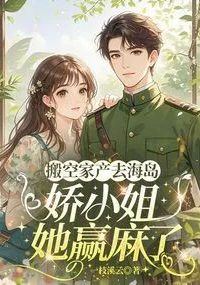
Moving All Her Assets to a Remote Island, the Pampered Young Lady Won Big
+Add to Custom List
Sort
Add review
... Read More
I'm not going to lie, there was a moment in Chapter 2 that actually got to me. When Qiao Yu finally finds the jade bracelet in the bottom drawer of Qiao Xiang's room, the text says her heart raced and her hands trembled. Not because she's scared, but because this bracelet was the last tangible connection to her biological mother—the one person who actually loved her before everything fell apart. "Only after holding the jade bracelet did Qiao Yu let out a deep sigh of relief." That sigh. That's the whole emotional core of the first two chapters right there. Everything else—the revenge, the money, the spatial dimension—is secondary. At her core, this is a story about a girl who lost her mother and has been surviving in a family that treats her like an outsider. The bracelet represents her mother's love, and the fact that her stepsister stole it and unlocked its secret first? That's the real injustice. I also appreciated the emotional beat when Qiao Yu calls Liu Shuhong "Aunt Liu" instead of "Mom." It's a small detail but it carries so much weight. She's maintaining a polite distance, refusing to acknowledge any familial bond with the woman who's been poisoning her life. The father-daughter relationship is where the emotional complexity really shines though. Qiao Yu puts on an "obedient act" when asking him to sign the severance document, and the text notes that Qiao Zhenhua feels a "complex mix of emotions." He's being manipulated, sure, but there's also a flicker of genuine paternal feeling underneath all that selfishness. That ambiguity makes the relationship feel real.
... Read More
I just finished chapters 8 through 10 and I need a minute because the author does not waste time. Chapter 8 is basically one long arrival scene — Qiao Yu gets off the boat, sees Gu Shaoyuan training, they meet under a tree, he gives her the tour of the family quarters, meets his mom, gets shown to her room, and then she discovers her Spatial Dimension with the Spirit Spring. That's a LOT for one chapter but it never felt rushed because each beat has a different emotional texture. The training scene is intimidating, the tree meeting is awkward-flustered, the mom scene is warm, and the Spatial Dimension reveal is pure wonder. Chapter 9 pivots hard into conflict with Liu Cuicui's introduction. The rebirth backstory drops in a single flowing paragraph — we learn she died on the streets, Gu Shaoyuan never married, and she's determined to change her fate. Then she tries to insert herself between them at dinner and fails immediately. The chapter ends with Gu Ling confronting Qiao Yu, which sets up Chapter 10 perfectly. Chapter 10 resolves the Gu Ling conflict quickly (Qiao Yu shuts her down, done) and introduces the father figure Gu Jianhua, who adds family history and warmth. The chapter closes on a domestic note — eating together, the mother apologizing for the simple food. It's a gentle landing after the tension of the previous chapters. The pacing rhythm here is: tension → conflict → resolution → warmth. That's a healthy cycle. Some web novels drag out the first meeting for twenty chapters. This one has them meet, have family drama, and share a meal all within three chapters. I'm here for it.
... Read More
I need to talk about Qiao Yu because this girl is absolutely fire. From the very first scene, she's not the victim the original story painted her as. When her stepmother Liu Shuhong tries the fake affection routine—taking her hand, calling her a silly girl—Qiao Yu pulls away in disgust. That one gesture tells you everything about her character. She's not playing along. And her negotiation with her father? Chef's kiss. She doesn't just demand money; she demands the money IN CASH and ration coupons because she's already thinking three steps ahead about surviving on that remote island. Most transmigrator protagonists would just accept whatever they're given, but Qiao Yu is like, no, I'm taking everything my mother left me, and I'm cutting ties with you too. The relationship with her father is particularly interesting. Qiao Zhenhua sold her mother's dowry, carried on with another woman, and treated his daughter like an obstacle. And Qiao Yu knows all of this. She's not naive. When he says "I am the head of this household," she doesn't argue—she just internally sneers and plans to empty his warehouse. That's the kind of quiet, calculated revenge I love. Liu Shuhong is also well-drawn as a villain. Her internal calculation of how to split the money (ten thousand for Qiao Xiang, two thousand for Qiao Yu, rest for herself) shows she's been planning this for a while. She's not a cartoon evil stepmother; she's a calculating woman who's been grooming her own daughter for this family's resources.
... Read More
I have to admit, I was worried at first. Transmigration stories often spend the first few chapters just explaining the rules and the backstory, and I was bracing for that. But this? This moves. Chapter 1 establishes the premise, the conflict, and Qiao Yu's decision in one sitting. By the end of it, she's already agreed to the marriage swap on her own terms. No dragging, no filler. Chapter 2 is where the spatial dimension reveal happens, and the pacing here is really well controlled. Qiao Yu tries the meditation approach first (which fails), then remembers the blood activation method from novels she's read, and boom—spatial dimension unlocked. The author doesn't linger on the mechanics; she gets to the good stuff quickly. What I appreciate most is how the author balances action with information. Qiao Yu isn't just reacting; she's actively planning. She checks the time difference between the spatial dimension and the real world, she counts the money her father gives her, she notes that Qiao Zhenhua is already trying to figure out how to get the money back. Every scene advances both the plot and her strategic position. The cliffhanger at the end of Chapter 3 with the father-daughter severance document is perfect. It raises the stakes, creates emotional tension, and makes you want to keep reading. The author knows exactly when to pause and when to push forward.
... Read More
This batch moves at a really good clip. We go from the Qiao family backstory setup in Chapter 14 (the Gu Shaoyuan injury mention, the Spirit Spring reveal) straight into the Liu Cuicui seduction attempt, then immediately into the mother confrontation, then a breather scene at the market, then back to the political stakes. The author knows when to push and when to let the reader catch their breath. The market scene with Auntie Li is basically a palate cleanser — low stakes, warm interaction, worldbuilding. It comes right after the tension of Liu Cuicui scheming and the mother confronting Gu Shaoyuan, which is smart pacing. You don't want the reader exhausted from constant conflict. But what I really appreciate is how the author handles the information reveals. We learn about the Qiao family's impending investigation in three different ways: first through Qiao Yu's internal monologue about her past life memories, then through Liu Cuicui's scheming narration, then through Zhang Xiulian's confrontation with her son. Each reveal adds a new layer of tension. By the time Gu Shaoyuan says "The marriage report has already been submitted. I won't withdraw it," we already know he's been one step ahead the whole time. That's good structural control — the reader feels smart for keeping up, not confused by missed details. The chapter endings also work well. Chapter 15 ends on a sweet but understated romantic note (Yang Zhongcheng realizing his commander is in love), and Chapter 16 ends on a note of political tension with the mother still worried. Both pull you into the next chapter.
... Read More
The stakes in this batch operate on two levels and I think that's what makes it work. On the surface, Liu Cuicui is trying to destroy Qiao Yu's reputation and marriage prospects. That's personal, intimate, petty — the kind of conflict that feels like high school drama except everyone's wearing military uniforms. But underneath that, there's the political stakes: the Qiao family being investigated as capitalists, which could ruin Gu Shaoyuan's career if he marries into it. What's interesting is that Gu Shaoyuan has already resolved the political conflict internally — he told Qiao Yu he wouldn't cancel the engagement, and he tells his mother the same thing. So the external conflict (mother worrying, Liu Cuicui scheming) is really just noise. The real tension comes from whether Qiao Yu will find out about Liu Cuicui's schemes and whether the political investigation will actually happen. The stakes feel real because they're tied to something bigger than just romance — career, family reputation, political survival in a specific historical context. But they're also grounded because at the end of the day, it's about whether two people who barely know each other can trust each other enough to build a life together. I'm also curious about the Qiao family subplot. Qiao Xiang refused to marry Gu Shaoyuan and got involved with Zhang Yu instead, and now the whole family is facing investigation. Qiao Yu seems to have some resentment toward her sister but also seems to have her own agenda with the Spirit Spring. The family dynamics add another layer of conflict that could explode at any moment.
... Read More
I don't usually write about dialogue in my reading notes, but I have to here because the author does something I rarely see in this genre — every character has a distinctly different voice, and it's not just through what they say but HOW they say it. Let me start with Qiao Yu's dialogue, because it's fascinating how she code-switches. With the neighborhood office staff, she's demure and formal: "Thank you, Uncle Liang." She uses honorifics, she plays the role of the virtuous comrade donating to the state. But then when the trafficker grabs her, her language shifts instantly — "Get lost!" — two words, sharp and aggressive, no more performance. And after she kicks him, she turns to the staff member and says, "Scum like him should be arrested!" — back to the formal register, but now it's weaponized. She's using the language of the state to legitimize her violence. That's not accidental writing; that's deliberate characterization through dialogue. Qiao Zhenhua's voice is equally distinct. His dialogue is all aggression and entitlement: "Qiao Yu is my daughter. I have the final say over all her property!" The exclamation marks, the absolutist language — this is a man who has never been told no and it's eating him alive. And then his line to Liu Shuhong: "Without this small Western-style house, we'll sell the things in the old house's warehouse and rent a bigger villa!" He's already planning his next move, and the fact that he's still thinking about property when his family has been humiliated tells us everything we need to know about him. Gu Shaoyuan is the hardest voice to nail, and the author handles him well. He speaks sparingly — "You'd be better off spending that idle energy worrying about my marriage on a few extra laps to get some exercise." That line is perfect. It's dismissive but not cruel, authoritative but not abusive. It tells us he's a military man who values discipline and sees idle gossip as a waste of energy. And then there's the moment where he just presses his lips together and reads the telegram in silence. The author doesn't give him dialogue here, and that silence is more revealing than any line could be. Yang Zhongcheng, the subordinate, is a great example of how the author uses minor characters. His dialogue is eager, slightly nervous, full of half-formed opinions: "Commander, if you ask me, the Qiao family never intended to marry their daughter to you." He's the type of character who talks too much, and that's exactly what makes him feel real. He's not trying to be profound — he's just a young soldier who cares about his commander and doesn't know how to keep it inside. Auntie Li on the island is another standout. Her dialogue is warm and unhurried: "Miss, are you here to see someone?" "What a nice name!" She's the first character who treats Qiao Yu with genuine kindness rather than calculation or suspicion, and her voice reflects that — simple, direct, without the performative formality of the Shanghai characters. The narrative voice itself is also worth discussing. It's third-person limited, mostly following Qiao Yu, but it occasionally dips into Gu Shaoyuan's perspective. The tone is conversational without being casual, observant without being judgmental. There's a dry humor in passages like "She felt like her bottom had turned into an iron seat — numb and senseless" that makes the narration feel like it has personality. One thing I noticed: the author rarely uses dialogue tags beyond "he said" and "she said." No "he thundered" or "she purred" — just clean attribution. This keeps the focus on what the characters are actually saying rather than how dramatically they're saying it. I think that's a deliberate choice that serves the story well. What's your favorite dialogue moment from these chapters? I keep coming back to Qiao Yu's "Get lost!" — two words and the entire power dynamic shifts.
... Read More
Gu Shaoyuan's dialogue is exactly what you'd expect from a man of few words who lets his actions do the talking. His line "I have a fiancée. I can only enter her room" is probably the most talked-about line in this entire batch and for good reason. It's blunt, it's direct, and it shuts down Liu Cuicui's scheme in one sentence while simultaneously making Qiao Yu's entire day. That's efficient writing. Liu Cuicui's voice is also well-differentiated. Her fake pitiful tone — "Shao Yuan, I'm not married yet. How can I let an unrelated man enter my room?" — is perfectly manipulative. You can hear the practiced sweetness in it. And then her internal monologue revealing her actual hatred for Qiao Yu? Classic green tea energy. The author doesn't need to make her cartoonishly evil — her words and her thoughts being completely different says everything. Auntie Li's dialogue is warm and natural. "Yu girl!" and "You're such a good girl, no wonder Shao Yuan likes you so much!" — she sounds like a real neighborhood auntie who means well. Her line about how "everyone on the island knows Commander Gu has boundaries" feels like something a local would actually say, not something an author wrote to explain the plot. The narrative voice itself is pretty straightforward — third person limited, mostly following Qiao Yu's perspective with occasional shifts. It's not trying to be literary, which I appreciate. It gets out of the way and lets the characters do their thing. The only time it really shines is in those small observational moments, like when Yang Zhongcheng detects "a hint of tenderness in his usually stern gaze." One sentence and you know everything.

Leave a comment

You must be logged in to leave comments. or
