Mistaken Hearts
+Add to Custom List
Novel Info

Summary

... Read More

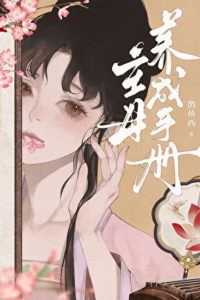
Luo Xinci, a young woman from Linzhou, lives with her mother and uncle after her father abandoned them sixteen years prior. Her life is upended when a series of calamities strikes her household: her mother is poisoned, her uncle is crippled, and her cousin is falsely imprisoned. Luo Xinci discovers these events are not coincidences but deliberate attacks orchestrated by a powerful enemy in the capital. Her only lead is that the mastermind operates from the capital, wielding significant influence. Desperate for justice and lacking allies, she resolves to travel to the capital to uncover the truth, despite her uncle’s warnings about the ruthlessness of capital nobles.

Simultaneously, Ming Niansheng, the illegitimate daughter of Marquis Wuling, is summoned from Linzhou to the capital by her grandmother to pay respects to her father. Ming Niansheng fears her cruel father and wishes to avoid returning to the Marquis’s household permanently. When she learns of Luo Xinci’s plight, the two women devise a dangerous plan: they will exchange identities. Luo Xinci will impersonate Ming Niansheng in the capital to investigate the conspiracy against her family, while Ming Niansheng will return to Linzhou to escape her father’s wrath. Zhou Lin, a guard escorting Ming Niansheng, remains unaware of the switch, believing he is still guarding the Marquis’s daughter.

Upon arriving in the capital, Luo Xinci enters the formidable Marquis Wuling residence. She is immediately restricted to her quarters, Yunshang Pavilion, and is denied access to the main household areas. Her only interaction is with Steward Tang, who suspects nothing, and Zhou Lin, who departs after a few days. Luo Xinci’s attempts to leave the residence to investigate are hindered by her attendants. During this time, she encounters Jiang Liyang, a reckless young master from Prince Ning’s household, who displays open hostility toward her. Luo Xinci’s situation becomes more perilous when she is tricked into entering the Marquis’s study, where she witnesses Ming Yuhe, the Young Marquis, murder a man who claims to be Marquis Wuling.

Luo Xinci is forced to confront Ming Yuhe, who reveals he knows she is an imposter. He explains that the man she killed was a decoy and that the real Marquis is alive. Ming Yuhe reveals a deeper political intrigue: the Marquis is suspected of treason regarding an incident involving the Crown Prince, and his death would invite imperial destruction upon the household. Ming Yuhe coerces Luo Xinci into silence, promising to help her investigate her own family’s troubles if she cooperates and pretends to be his sister. He sets a three-month deadline for her to act against her “father,” a ruse to keep her under control while he manages the household’s secrets.

Luo Xinci’s investigation leads her to spot her betrothed, Zhou Yi, in the capital. He is the Second Place Scholar, a man of high standing. She observes him from a distance, noting his polite demeanor as he helps another young woman, Fan Ning, during a public altercation. Luo Xinci is torn between her suspicion that Zhou Yi might be involved in the attacks on her family and her lingering hope for his innocence. She decides to observe him further before making any moves. Meanwhile, Ming Yuhe continues to monitor her, aware of her connection to Zhou Yi and her true identity. The story ends with Luo Xinci trapped in the Marquis’s household, balancing her dual identity while navigating the treacherous political landscape and her own dangerous quest for truth.

Novel Items

More
Jewelry
Chosen by Xiao Jintong at Langgan Pavilion during the shopping trip.
Accessory
A broad veil of heavy gauze that shields the wearer from head to calf. Ming Niansheng wore it to hide her face due to her coughing illness, and Luo Xinci continued to wear it after the identity exchange to avoid being recognized.
Accessory
A hat worn by Leng Yaoda to conceal her strikingly beautiful appearance and avoid being recognized by the original body's old friends while traveling to Xunyang Street.
Material
Twenty bolts of fine brocade from Shu and Yun that Steward Tang had delivered to Ming Niansheng four years ago during the Old Madam's birthday visit, along with other gifts.
Jewelry
A set of hair ornaments made from agate inlaid with green stone, originating from Silla. The Marquis had specially had them made into jewelry for the Old Madam, delivered four years ago by Steward Tang.
Item
Three glazed folding screens that were among the gifts Steward Tang delivered to Ming Niansheng during the Old Madam's birthday visit four years ago.
Latest Release
DateGroupRelease
2026-08-11shanghai fantasy c3
2026-08-11shanghai fantasy c2
2026-08-11shanghai fantasy c1

Community Reviews

Rating(3.8 / 5.0, 30votes)
5 stars
7(23%)
4 stars
9(30%)
3 stars
14(47%)
2 stars
0(0%)
1 stars
0(0%)

Popular reviews

... Read More
I need to talk about Luo Xinci's transformation because honestly it's one of the most compelling character arcs I've read in a while. This girl starts as someone who literally cannot imagine her own uncle selling her to a brothel. She's sheltered, moral, raised on Confucian virtues—benevolence, righteousness, propriety. And then her uncle tells her the story of Miss Sun, and something in her snaps. The moment that got me was when she thinks to herself: "To deal with villains, one had to be more ruthless than they were. Since she was already guilty of impersonating the Marquis's daughter, she might as well play the role of a thorough villain. Villains never falter." That line gave me chills. She's essentially deciding to become the kind of person who could survive in this world—a person willing to do whatever it takes. And the tragic irony is that she's already lying about her identity, already deceiving an entire household. The line between her and the villains she's trying to catch is thinner than she realizes. Her relationship with Lianxing is also fascinating. Lianxing starts terrified and trembling, but watching Luo Xinci confidently lift her veil and speak to Steward Tang transforms her. She goes from shock to deep admiration. This is a girl who is following a leader, and that dynamic is going to be so interesting as the story progresses. Will Lianxing stay loyal even if Luo Xinci becomes someone unrecognizable? And then there's Ming Yuhe. Just one scene with him and I'm already completely hooked. He's lounging in a chair after killing his father, speaking in that slow, unhurried voice that's somehow both casual and terrifying. When he says "Play a role long enough, and you forget who you are" to a servant—right before Luo Xinci walks in—I swear my skin crawled. Is he talking to the servant, or is he talking to her? He clearly knows something she doesn't. The tension between them is electric, and I can't wait to see how their relationship develops.
... Read More
Let me just say this: the Marquis's dining hall is the most atmospheric scene in this entire novel and I need to discuss it at length. The author describes it as "more spacious than the main hall of an ordinary household"—right away you know this is a place of power and excess. Then there's the painted screen of mountains and rivers, the round dining table, the candles "bright as day." Everything is lit, everything is exposed, and yet NOTHING is honest. I keep coming back to this image: Luo Xinci standing at the curtain, lowering her head to enter, keeping her posture humble. She's trapped in a performance where every movement is calculated and every glance could be misinterpreted. The physical space mirrors her psychological state—she's walking through a gilded cage. And then the reveal. Three people at the table. She expects the Princess and her brother. She gets all three—including the DEAD man. The author doesn't use any dramatic music or flashy descriptions here. Just: "He was staring at Luo Xinci without a word." That's it. Four words and my heart stopped. The corridor scene later is equally masterful. "Watching her shadow shorten and lengthen again" while Ming Yuhe explains the political intrigue. The shadow imagery is perfect—she's literally being consumed by the darkness of this household, her identity shrinking with every step. The author also does something brilliant with the maids. They're always there, always watching, always withdrawing discreetly. The household runs on surveillance. You're never alone, never truly private. Even at your own gate, you're being observed. This isn't just a setting. It's a character. The Marquis's residence is alive, breathing, and it's closing in on Luo Xinci with every chapter.
... Read More
I need to talk about the VEIL. That one moment where Ming Yuhe orders a veil placed over Luo Xinci's head while she's still sobbing and everyone is staring. On the surface it's a small gesture, but it's literally the most significant thing he's done for her in the entire story. He could have let her face the humiliation. He could have walked away. Instead he covers her and shields her from pitying looks. And she thinks he's being kind. Meanwhile, the reader knows he's NOT being kind—he's doing it because he's still trying to figure out what the hell is going on and whether she's a threat or not. The relationship between these two is so messed up in the best way. Luo Xinci is waiting for his praise after her 'scheme,' completely unaware that he already knows she's not actually Ming Niansheng. She's performing gratitude while he's performing concern and neither of them believes the other's performance. And the most tragic part? She genuinely feels grateful for the veil. After everything she's done to him, he still protected her dignity and she's thanking him for it. Also can we discuss how Ming Yuhe looks at her? 'Her eyes, bright with sincerity, rimmed faintly red, still bearing traces of tears'—and he sees right through it. He knows she's a fraud and yet he's still captivated. That's not love, that's obsession, and I'm here for both of them.
... Read More
I have to talk about the dialogue in this text because it's genuinely excellent. Every character has a distinct voice, and the author uses conversation to reveal personality without ever resorting to exposition dumps. The line that haunts me is Ming Yuhe's: "Play a role long enough, and you forget who you are." He's scolding a servant, right? Or is he? The delivery is cool, languid, unhurried—like spring sunshine that warms but still carries a chill. That description alone tells you everything about this character. He's dangerous precisely because he doesn't seem dangerous. He's relaxed, almost bored, and that's what makes him terrifying. Luo Xinci's uncle is another standout. His dialogue is raw and brutal in the best way. The scene where he lays out the hypothetical about selling her to a brothel—"Suppose your cousin fell into gambling debts and squandered the family fortune. To repay them, I decide to sell you to a brothel. What would you do?"—this isn't just plot information. This is a man who has been hurt, who doesn't trust anyone anymore, and who is trying to break through to his niece using the only tool he has: fear. And the way the maids speak! They never give straight answers. "Perhaps somewhat better." "You will know when you arrive, miss." "Steward Tang is busy." This isn't bad writing—it's deliberate. The household has secrets, and the servants are trained (or forced) to never reveal them. Their evasive dialogue is itself a form of world-building. Luo Xinci's internal monologue is also worth highlighting. When she repeats to herself "I am Ming Niansheng" before lifting her veil, that's not just nervous self-talk. It's a mantra. She's convincing herself, and through her thoughts, we understand the psychological weight of her deception. The dialogue throughout these chapters does triple duty: it reveals character, advances the plot, and builds atmosphere. That's craft.
... Read More
I need to talk about how this story paces itself because it's doing something really smart. The first chapter starts almost lazily—spring breeze, apricot blossoms, a journey that supposedly won't encounter bandits because the road is safe and the Marquis's reputation is formidable. Everything seems calm. Peaceful, even. And then—bam. Identity swap. Both girls' entire lives upended in one night. But here's what I love: the author doesn't rush the swap. We get the setup, the problem, the conversation by the lake, the hesitation, the backstory about the Luo family's misfortunes, the four-year-old cousin's tears, Luo Xinci's decision. It all unfolds naturally, like you're actually there watching these two friends figure out an impossible plan. The pacing gives you room to breathe but never lets you get comfortable. Chapter 2 shifts gears completely. Now we're on the road, and the tension ramps up immediately with Steward Tang appearing. This is where the pacing becomes surgical. Every detail Luo Xinci prepared—the jade bangles, the brocade, the Silla ornaments—gets deployed like weapons. The author controls the tension like a master: Steward Tang pauses when he sees the veil, Zhou Lin explains the illness, the thunder rolls at the perfect moment to cut off further questioning. "rumble!"—a spring thunder rolled across the sky, cutting him off. That single onomatopoeia is doing so much work. It's a physical interruption, a narrative deflection, and a metaphor for the storms coming at these characters all at once. The chapter ends on a note of false calm. Steward Tang can hardly press further. They're entering the capital. But we know the real danger is just beginning. The pacing here is brilliant because it gives you a moment to exhale while simultaneously making your stomach drop. You think they made it past the first obstacle, but you also know this is only the beginning. I also appreciate how the author uses Zhou Lin's perspective as a pacing tool. He's the reader's surrogate—suspicious but not quite catching on. His instincts tell him something is off, but he dismisses it. This creates dramatic irony that keeps you turning pages because you're screaming at the page, "HE KNOWS SOMETHING IS WRONG. PAY ATTENTION." The structure also does something really clever with information release. We learn about the Luo family's misfortunes in a single conversation, but it's delivered in layers—first the poisoned medicine, then the maddened horse, then the cousin's framing, then the thug's death. Each revelation raises the stakes without feeling like an info-dump.
... Read More
I need to talk about the dialogue in this chapter because it is ABSOLUTELY vicious and I love it. The way Ming Yuhe and Luo Xinci talk to each other is like a fencing match where both people are pretending they're just having tea. Every line has three meanings: what's being said, what's actually meant, and what they're both desperately trying to hide. Take this exchange: "Niansheng, explain again—if you wanted to steal your friend's fiancé, why would you so readily let him leave the capital?" On the surface, he's asking a logical question. But what he's really saying is: I know you're lying about your motives, and I want to see how far you'll go before you crack. And Luo Xinci's response—this elaborate scheme about waiting to see other candidates before deciding—is her way of saying: I'm still in control here, I'm the villain you think I am, please don't look any deeper. The author's dialogue style is so sharp. Ming Yuhe's lines are always layered with testing and provocation. When he says "Hypocritical, greedy, selfish—yes, that's my good sister," he's not actually complimenting her. He's saying: I see through you, but I'm choosing to play along because I want to see what you do next. It's manipulative in the most elegant way. And Luo Xinci's internal voice? Completely different. Her thoughts are frantic, sarcastic, exhausted. "Who forces someone to take revenge like this?" she thinks when Ming Yuhe is basically handing her a weapon and telling her to use it. The contrast between her calm spoken words and her screaming inner monologue is hilarious and heartbreaking at the same time. The maid scene is also great for voice. Lianxing is all practical energy—"I could first check if any gambling houses are opening wagers. That way I can make acquaintances in advance." She's already three steps ahead, thinking about how to use the betting pools as cover. It shows that even the supporting characters have distinct, useful voices. One line that stuck with me: "Being good was hard, but being wicked was harder still!" That's Luo Xinci at her most honest, and it perfectly captures the entire premise of the story.
See all reviews

Characters

See all characters

Custom lists

Oops…There is nothing here.