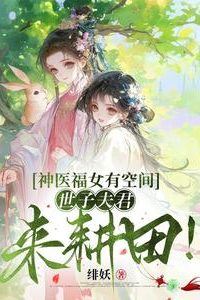
Miracle Doctor Blessed Woman Has a Space, Heir Husband Comes to Farm!
+Add to Custom List
Genres:
Novel Info
  • Author:
  • 緋妖
  • Status:Ongoing

Summary

... Read More

Yu Banxia, a renowned traditional Chinese medicine practitioner from the 21st century, dies in a car accident and is reborn into the body of a young woman with the same name in an ancient agricultural village. The original host was the youngest daughter of the Yu family, known for her laziness, gluttony, and foolish obsession with a neighboring scholar named Xu Xiucai. Xu had exploited Yu Banxia for two years, draining the family’s meager resources to fund his studies while having no intention of marrying her. Desperate to secure funds for his examination journey, the original Yu Banxia attempted to force her fourth sister, Yu Banyue, into becoming a concubine for an elderly squire, an act that led to her suicide. Upon awakening, Yu Banxia finds herself in a body weakened by malnutrition and injury, surrounded by a family that is poor but deeply affectionate despite their struggles.

Yu Banxia quickly assesses her situation and realizes she has brought her spatial artifact and Wood Elemental Power with her, though the spirit within, Xiao Bai, is dormant due to energy depletion. She resolves to change her fate and improve her family’s livelihood. Her first act is to publicly renounce her pursuit of Xu Xiucai and apologize to her fourth sister, shocking her family who had grown accustomed to her erratic behavior. To prove her sincerity and gain trust, she claims to have received a gift from the underworld: a magical bean that sprouts instantly, demonstrating her connection to a higher power. The family, particularly her sharp-tongued but soft-hearted sister-in-law Wu Zhuxiang and her stern but caring grandmother Madam Wu, begins to accept her transformation.

Seeking resources to reactivate her Space, Yu Banxia ventures into the mountains with her third brother, Yu Mancang, and fourth sister. There, she discovers century-old wild ginseng and uses her elemental power to hunt a massive wild boar that attacks them. She demonstrates surprising strength, shooting the boar through the eye with an arrow infused with Wood energy. Rather than selling the boar for profit, she decides to host a communal feast for the entire village, using the occasion to apologize for her past behavior and strengthen community bonds. During the preparations, she teaches her sister-in-law how to cook braised meat using spices she acquires from Doctor Zhao, a local physician she intends to apprentice under.

The narrative shifts to conflict when Xu Xiucai and his mother, Madam Ji, learn of the feast and the lack of meat sent to their home. Xu confronts Yu Banxia, expecting her usual subservience, but she publicly humiliates him, comparing him to a dog and exposing his shamelessness. Yu Meihua, a village girl who previously mocked Yu Banxia, joins in to defend her, revealing her own health issues which Yu Banxia diagnoses on the spot. Humiliated, Xu Xiucai vows revenge. Meanwhile, Xu and his mother plot to use a marriage contract to extract more money from the Yu family before abandoning Yu Banxia once Xu passes the imperial exams.

Yu Banxia anticipates their schemes and takes proactive measures. She commissions a wheelchair from her carpenter uncle to address the leg disability of the squire’s son, aiming to cancel the concubine arrangement for her sister. When Xu Xiucai and Madam Ji arrive with a matchmaker to force the engagement, the Yu family, led by Madam Wu, firmly rejects the proposal. Madam Wu exposes Madam Ji’s past scandal to drive them away, ending the immediate threat. Yu Banxia then travels to town to sell the wild ginseng, intending to use the proceeds to fund her nephew’s education and start a business. She visits a reputable medicine shop, Spring Revival Pavilion, where the clerk recognizes the value of her ginseng, setting the stage for her entry into the local medical and commercial world.

Novel Items

More
Treasure
A half-broken jade pendant that was found by Wang Cuihua when she adopted baby Lin Kexin. It was hung around Lin Kexin's neck for over a decade. Lin Tianci stole it as a gift for a girl, was rejected, and threw it at Lin Kexin's face, breaking it into two pieces. When Lin Kexin's blood touched the jagged edge, it activated a Spatial Spirit Spring mystical space.
Arcane Treasure
Ye Wuyou's special spatial ability discovered after her powers awakened in the apocalypse. It contains supplies and a space beast named Youyou.
Materials
Water from An Ruoyan's space that made her skin white and tender as a peeled egg after drinking it.
Cultivation Methods
A special ability Yu Banxia gained after drinking Spirit Spring Water. It allows her to control plants and can make seeds sprout rapidly, as demonstrated with the yellow bean from the Ghost Realm.
Materials
A small gift given by the judge in the Ghost Realm while Yu Banxia was near death. When she activated her Wood Elemental Power on it, the bean sprouted green shoots at a visible rate. She used this to convince her family of her miraculous encounter.
Medicinal Herb
Two century-old wild ginseng plants found on the mountain by Yu Banxia with the help of her Wood Elemental Power. Xiao Bai took one and planted the other. These rare herbs were hidden in a dead end overgrown with weeds and shrubs that few people ever visited.
Latest Release
DateGroupRelease
2026-08-11shanghai fantasy c10
2026-08-11shanghai fantasy c9
2026-08-11shanghai fantasy c8
2026-08-11shanghai fantasy c7
2026-08-11shanghai fantasy c6
2026-08-11shanghai fantasy c5
2026-08-11shanghai fantasy c4
2026-08-11shanghai fantasy c3
2026-08-11shanghai fantasy c2
2026-08-11shanghai fantasy c1

Community Reviews

Rating(4 / 5.0, 29votes)
5 stars
10(34%)
4 stars
10(34%)
3 stars
9(31%)
2 stars
0(0%)
1 stars
0(0%)

Popular reviews

... Read More
Let me just say this: the scene where Yu Banxia names the baby Jing Wang is genuinely one of those moments that makes you sit up straight. Not because it's earth-shattering plot-wise, but because it's so efficiently layered. The mother sees two shadowy figures—black and white—before Yu Banxia arrives, and then they say 'We can't take this person today.' That's the Grim Reaper, obviously, but the author doesn't need to spell it out. Two lines and we get: near-death, supernatural presence, medical skill as salvation, and a name that carries hope for the future. Four narrative beats in one scene. And then the crowd's reaction—people who mocked the old scholar's family suddenly realizing Xu Xiucai threw away a treasure? That's plot economy right there. The author is weaving in backstory and social dynamics without a single exposition dump. But I do have a question: is the 'lucky star' prophecy mentioned later by the Village Chief foreshadowing something bigger, or is it just village flavor? Because if it's the former, I want to know what's coming.
... Read More
Okay so let me just say this plot move was absolutely brilliant. The author sets up this whole village gossip thread about Yu Banxia being a doctor — villagers are shocked, her family is proud, Zhao Boxian is revealed as her master — and then BAM, midnight emergency. Xu Yong's wife is in difficult labor, Doctor Zhao is drunk, and everyone's scrambling. The tension builds so naturally. You have this old neighbor who's basically the plot device that connects everything, telling Xu Yong to go to the Yu house. And then the real drama kicks in when Yu Banxia arrives and immediately gets blocked by skeptical women. The silver needle moment — she just SHOVES it into the woman's neck and says 'I'll remove it after I save the patient. You're too noisy' — CHILLS. Absolute chills. This is what I live for. The plot doesn't waste a single beat. She cracks open windows despite being told not to, she reads the pulse and diagnoses the abnormal position AND the umbilical cord issue before even looking at the patient, and then she performs the entire delivery herself. The pacing in this section is relentless. One moment you're at a warm family dinner, the next you're in a stuffy room at midnight with a woman dying in labor. And the resolution — healthy baby, grateful family, fifty coins for a life saved — it's satisfying without being cheesy. The author knows exactly when to speed up and when to slow down. I stayed up way too late reading this batch because I literally could not stop. What do you think about the way the plot uses the midnight emergency to validate Yu Banxia's skills in front of the whole village? I feel like this scene is going to come up again later.
... Read More
The sensory details in this batch are absolutely incredible. Let me start with the opening scene — five Eight Immortals Tables set up in the Yu family courtyard. This isn't just set dressing. It tells you everything about the family's rising prosperity. They're celebrating, they're gathering, and the round tables suggest community and togetherness. The villagers walking away chatting about Yu Banxia — you can almost hear their footsteps on the dirt path, see them disappearing into the distance. And then the contrast: Yu Meihua's mother sniffing the air, remembering the leftover meat from last night, trying not to show her envy. The world feels so lived-in. But the scene that really transported me was the midnight emergency. 'A man pounded desperately on Doctor Zhao's door.' The windproof lantern held by the elderly neighbor — you can see the flickering light in the dark. Xu Yong running through the moonlight, not stumbling too much because there's enough light to see. The courtyard in Little Xu Village crowded with anxious faces — the wife's family, neighbors, clan members all pressing against the walls of expectation. And then inside the delivery room: 'A wave of heat struck, carrying the scent of blood. With the doors and windows tightly shut, how could the woman in labor endure this?' The author doesn't just tell us it was hot — we FEEL the suffocating heat, the sweat on everyone's foreheads, the desperation for fresh air. Yu Banxia cracking open the windows despite being scolded for it — this is a doctor who understands the environment matters as much as the medicine. The alcohol she pours into the basin, the porcelain bottle opening with a strong aroma, the basin of water she asks for to wash her hands after. Every detail is purposeful. The midwife's blank-eyed compliance when Yu Banxia tells her to step aside — the power dynamic shifting in real time. Even the baby's cry — 'Wah...' — that single sound transforms the entire atmosphere of the room from tension to relief. The old Xu's cheerful voice from outside asking 'what was born?' — it's such a simple detail but it makes the whole scene feel like a real village, real people, real lives hanging in the balance.
... Read More
The dialogue in this batch is absolutely phenomenal and I need to discuss it because the author has a real gift for making every character sound distinct. Let me start with Yu Hongyu — his voice is immediately recognizable. 'Did you rob a bank or something?' when his niece hands him ten taels of silver. This is a man who has lived through hardship and his first instinct isn't gratitude, it's disbelief mixed with humor. And then his apology when he realizes how he sounded — 'quickly laughed it off, apologizing repeatedly.' He's flawed and lovable. Madam Wu's 'Hahaha, you mischievous monkey' — three words and you know exactly who this woman is. She's the warm, laughing matriarch who sees through everyone's antics. But the dialogue that made me scream internally was Yu Banxia's exchange with the blocking woman. 'This is a matter of life or death… Mmmph!' — the narration does the work there but the implication is everything. And then her calm follow-up: 'I'll remove it after I save the patient. You're too noisy.' She doesn't raise her voice. She doesn't threaten. She just states it as a fact, the way a doctor might tell a patient to hold still for a shot. The woman's reaction — 'stared at Yu Banxia with wide, terrified eyes, as if she wanted to swallow her whole' — is perfect comic relief mixed with genuine fear. Xu Yong's dialogue is also great. He's desperate, he's rude without meaning to be ('What? Yu Banxia, that infatuated girl? Sorry, sorry'), he apologizes constantly. You can feel his panic and his guilt. And the old neighbor — 'Young man, you shouldn't be so disrespectful. He's Scholar Yu—why add old to it?' This is such a natural, slightly grumpy elder voice. The family toast scene has this wonderful collective energy: 'Well said!' the whole family chimed in. It's brief but it creates this sense of warmth and unity. Even the midwife's dialogue is distinct — she's skeptical, traditional, resistant, but ultimately professional enough to step aside when outmatched. 'Since we've invited the young doctor, let's trust her.' She's not happy about it but she's practical. The author never lets any character sound like a mouthpiece for the plot — they all have their own voices, their own priorities, their own ways of expressing fear and hope and gratitude.
... Read More
Can we talk about how distinct every character's voice is in this text? Because I genuinely think the author put work into this. Let me break it down because it's impressive. Wu Zhuxiang — the sister-in-law — she sounds like a real person. Her dialogue is practical, slightly sharp, but underneath it all you can hear her worry. 'He hasn't even started school yet. Where's he going to take the imperial exams?' That's not mean-spirited. That's a mother who's scared and taking it out in the only way she knows how. And Yu Banxia's response — 'Sister-in-law, I've said it before—I will definitely make sure my nephew goes to school as soon as possible' — she doesn't get defensive. She just owns it. That's a really mature dialogue exchange. Then there's Fusheng, the nephew. His voice is completely different — all energy and indignation. 'Hmph, if I could go study, I'd definitely make him eat his words someday.' 'In the future, I'll pass the exam at twelve and show him what's what.' Kid's got opinions. Big ones. And the narration around him is always slightly amused, which tells you the author likes this character. Now contrast that with Xu Xiucai and his mother. Their dialogue is where it gets really interesting because it's layered with hypocrisy. Madam Ji says things like 'What a little hussy! She was the one throwing herself at you' — and she's saying this about the woman they're about to scam. The self-righteousness in her voice is disgusting and perfect. And Xu Xiucai? He's not even pretending to care about Yu Banxia anymore. His dialogue is all calculation: 'At worst, even if we do marry her, what does it matter? There are plenty of stories and plays about top scholars being chosen as sons-in-law by high-ranking officials.' He's already written her off as a stepping stone. The dialogue between him and his mother is almost too smooth — they finish each other's thoughts because they're the same kind of person. Meanwhile, the village women's dialogue is full of local color and attitude. 'You from Xiaoxu Village, you better scram quickly, or I'll greet you with a broom in a moment.' That's not just dialogue — that's a whole personality in one sentence. And Yu Hongyu, the uncle? His voice is warm, practical, slightly amazed. 'Xiaxia, when did you learn to do this? And with such detail.' He sounds like a craftsman who's just been handed a treasure. Every character has a rhythm, a vocabulary, a way of being that's recognizably theirs. No one sounds like everyone else.
... Read More
I've been thinking about this Ghost Realm concept the author introduces and it's honestly more layered than I expected on a first read. On the surface it's just worldbuilding—cool supernatural element, gives the protagonist a special ability, whatever. But the more I sit with it, the more I wonder if the Ghost Realm is meant to reflect the human world back at us. Yu Banxia describes it to her sister: 'The Ghost Realm was actually divided into several areas, and the lives of ordinary ghost citizens weren't much different from those in the human world. They also needed money to buy supplies for living, and they needed to eat, otherwise they would starve.' Money. Food. Social order. The evil ghosts imprisoned in eighteen layers of hell. The unjustly dead in their own city. It's basically a bureaucratic afterlife that mirrors every aspect of the living world. And then there's the time dilation: 'One day in the human world is a year underground.' This isn't just a cool mechanic—it's symbolic. It suggests that transformation and growth happen on a different timescale than we perceive. Yu Banxia was unconscious for a day but experienced nearly a year in the Ghost Realm. She came back different. Stronger. Wiser. The physical world barely registered the passage of time, but internally, she lived an entire lifetime of training and learning. The soul space itself is another symbol I can't shake. It's called a 'soul space'—it belongs to her spiritual self, not her physical body. And it contains high-grade medicinal herbs of considerable age. These are things that took centuries to grow, stored in a space that exists outside of normal time. The idea that her spiritual growth has unlocked access to resources that the material world can't easily provide... that's pretty loaded symbolism for a story about a woman who was literally dead and came back. The wild ginseng they find in the chapter is also interesting. Century-old plants hidden in a dead end, overgrown with weeds, rarely visited. It takes someone with special perception to find them. Isn't that kind of how talent and opportunity work in the story? Hidden in plain sight, accessible only to those who've developed the right abilities.
See all reviews

Characters

See all characters

Custom lists

Oops…There is nothing here.