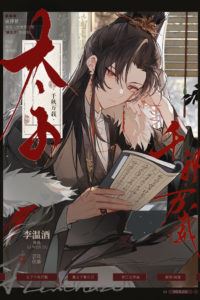
May the Crown Prince live for a thousand autumns and ten thousand years
+Add to Custom List
Genres:
Novel Info

Summary

... Read More
Ying Fusheng, the Sixth Prince of the Great Yuan Dynasty, endures a life of torment in the Cold Palace after being framed for treason by the new Emperor and Consort Dowager Ning. Betrayed by his loyal eunuch Song An, who dies trying to save him, Ying Fusheng drinks poisoned wine and dies with his eyes fixed on the palace walls, filled with resentment. He awakens to find himself back in his childhood body in the Weiyang Palace, fifteen years prior to his death. The year is the sixteenth of Taiyuan, and he is merely ten years old. He quickly realizes he has been reborn and must navigate the treacherous palace politics that destroyed him in his previous life. In this new timeline, Ying Fusheng discovers that his physical frailty and chronic illness are the result of years of secret poisoning administered by Consort Ning, his adoptive mother. She raised him to be weak and unambitious so he would not threaten her biological son, who is secretly the true Crown Prince, swapped at birth with Ying Fusheng’s real identity. His biological mother is Empress Xu, the legitimate wife of the Emperor, but she remains unaware of the swap. Ying Fusheng’s only ally is Song An, the young eunuch who served him faithfully in his past life. Together, they begin to plot their survival and revenge. The central conflict centers on the upcoming Empress Dowager’s birthday banquet, a pivotal event in Ying Fusheng’s memory. In his past life, this banquet was where his fake brother stole the spotlight, cementing his status as the favored heir while Ying Fusheng remained a neglected, sickly prince. Determined to change his fate, Ying Fusheng feigns a lingering fever to avoid suspicion while secretly preparing. He sends Song An to the Moon-Viewing Pavilion, the banquet venue, to scatter Silver Vine powder, a substance that drives felines into a frenzy. His plan is to disrupt the event and expose the conspiracy surrounding his mother. On the day of the banquet, the beasts in the Imperial Zoo break loose and charge toward the pavilion, causing panic. Consort Ning, who is overseeing the preparations, is implicated and brought before the Empress Dowager for questioning. The atmosphere is tense, with the incident viewed as an ominous sign. Ying Fusheng, despite his illness, leaves his quarters and appears before the Empress Dowager, the Empress, and the Crown Prince. He calmly analyzes the situation, suggesting that the beast attack was not an ill omen but a result of the Silver Vine in the incense, which attracted and agitated the animals. He reframes the incident as an auspicious sign of nature celebrating the Empress Dowager’s birthday, effectively saving Consort Ning from severe punishment while simultaneously drawing attention to himself. His quick thinking and logical defense impress the Empress Dowager, who notes his resemblance to the Emperor in his youth. However, the exertion of the event takes its toll on Ying Fusheng’s weakened body. As he receives praise and is offered a seat, he collapses from exhaustion and fever. The incident marks a significant shift in the palace dynamics, as Ying Fusheng begins to emerge from the shadows, challenging the control Consort Ning has maintained over him for years. The story sets the stage for a long-term struggle for power, identity, and survival within the imperial court.

Latest Release
DateGroupRelease
2026-08-11shanghai fantasy c47
2026-08-11shanghai fantasy c46
2026-08-11shanghai fantasy c45
2026-08-11shanghai fantasy c44
2026-08-11shanghai fantasy c43
2026-08-11shanghai fantasy c42
2026-08-11shanghai fantasy c41
2026-08-11shanghai fantasy c40
2026-08-11shanghai fantasy c39
2026-08-11shanghai fantasy c38
2026-08-11shanghai fantasy c37
2026-08-11shanghai fantasy c36

Community Reviews

Rating(3.8 / 5.0, 9votes)
5 stars
3(33%)
4 stars
1(11%)
3 stars
5(56%)
2 stars
0(0%)
1 stars
0(0%)

Popular reviews

... Read More
Consort Ning had no intention of letting Ying Fusheng stand out. At most, she would be punished or lose a few secret agents by shifting the blame to the servants. But the real magic here is in how each character's voice is instantly distinguishable. The Empress Dowager speaks in commands and challenges—'Are you suggesting someone framed your mother?'—short, sharp, authoritative. The Crown Prince is all razor edges: 'Sixth Brother thinks we are being hasty?' You can hear the sneer. Ying Fusheng's dialogue is the most interesting because it operates on two levels—his spoken words are carefully measured, respectful, almost deferential ('Your grandson wouldn't dare'), but the narration underneath reveals the calculation. 'He knew exactly what would pique her interest.' That gap between what he says and what he's thinking? Chef's kiss. And Consort Ning's voice is pure panic masked as authority—'Child, what nonsense are you talking! Can things from obscure books be taken as truth?' She's grasping at anything to stop him. Even the minor characters have distinct voices: the beastmaster is practical and factual, Physician Chu is cautious and hedging. The dialogue never feels like everyone's just the author's mouthpiece. Each character has their own rhythm, their own vocabulary, their own agenda encoded in how they speak.
... Read More
Let me just go off on a tangent here because I can't stop thinking about the bird imagery in this section. Xiao Qing the falcon — pampered by the Empress Dowager, fed and coddled until it lost all its wildness, sitting there looking like a 'fat ball' instead of the majestic predator it should be. And Ying Fusheng's own falcon from his past life — fierce, loyal, but ultimately wounded and turned hostile toward him. Two birds, two different relationships with their masters, and both of them injured in ways that no one noticed until Ying Fusheng arrived. The falcon is basically a mirror for Ying Fusheng himself — caged in the palace, treated as harmless and insignificant by everyone except the one person who actually understands what's wrong. And then there's the gift-giving motif running through the entire passage. The Crown Prince's mother sends paintings — sparse, traditional, safe. Consort Ning sends herbs and trinkets — calculated, transactional, trying to buy influence. And Ying Fusheng? He asks the Cining Palace eunuch to visit a mountain temple on his behalf, something personal and spiritual, something that can't be manufactured or bought. The birthday banquet keeps appearing like a ghost — everyone is preparing for it, everyone has different intentions, and Ying Fusheng knows exactly how pivotal it will be. In his past life, the Empress Dowager died from illness, power shifted to Empress Xu, and the harem descended into chaos. The birthday banquet isn't just a party — it's the last moment of stability before everything falls apart. Every gift, every gesture, every word spoken in this section is a move on a chessboard where the board itself is about to catch fire.
... Read More
The charcoal braziers in the hall were burning bright, and the heat began to wash over Ying Fusheng. You know what I love about this scene? The author doesn't just tell us it's cold outside and hot inside—they make us FEEL the temperature clash. The freezing weather mentioned later, the snow that would preserve the Silver Vine powder, the charcoal braziers making the hall sweltering... it's not decorative. Every environmental detail is doing double duty. The pavilion itself, Moon-Viewing Pavilion, is such a perfect name for a setting that becomes the center of a political earthquake. It sounds poetic and serene, which makes the chaos of the beast attack so much more jarring. And the Imperial Zoo—the fact that they keep tigers and bobcats in cages, that the beastmaster has a fixed route, that the guards are battle-hardened enough to handle escaped cats... this world feels lived-in. You can picture the snow-covered paths, the incense burners scattered through the pavilion, the cats rolling around obsessively over Silver Vine. The visual of the Empress Dowager playing with her cat while the political drama unfolds below her is cinematic gold. One thing that really stuck with me: the hounds being more excited than usual but finding nothing. That moment where the environment itself seems to be hiding the truth—that's the kind of detail that makes a setting feel like it has agency.
... Read More
"Your Father dislikes luxury; the more one does, the more mistakes one makes." That line from Empress Xu hit me like a truck. Here's this Crown Prince — heir to the throne, supposedly the most powerful young man in the palace — and his own mother can't even be bothered to help him craft a proper birthday gift for the Emperor. She sends paintings. PAINTINGS. After his father just won a major military victory. And he knows it. He knows she's being rigid and outdated, but he also knows she'll never change, so he just... accepts it. Turns around and says "back to the palace" with this cold, defeated energy. The Crown Prince's relationship with his mother is this beautifully tragic thing — she dotes on him in the most controlling way possible, sending clothes because he was "dressed lightly," monitoring every detail of his life, while emotionally keeping him at arm's length. And Ying Fusheng? The text keeps showing how differently people perceive him. To Empress Xu, he was just "a dull, quiet soul" she rarely heard rumors about. To the Crown Prince, he's suddenly this threat who appeared out of nowhere and stole the Empress Dowager's attention. The moment where the Crown Prince grabs the Eighth Prince's hand to silence him — that's not brotherly concern, that's damage control. He's protecting his own position by keeping the Eighth Prince from making things worse. And yet, when Ying Fusheng later teaches Song An to grind ink, there's this almost paternal tenderness in his voice that the Crown Prince has clearly never experienced from anyone.
... Read More
I'm still buzzing from how many layers of conflict are happening simultaneously in these chapters. On the surface, it's just a falcon getting injured at Cining Palace, right? Wrong. This single incident ripples outward and touches literally everyone. The Crown Prince's entire strategy for the birthday banquet just got disrupted because Ying Fusheng showed up unexpectedly. The Eighth Prince's attempt to please the Empress Dowager backfired completely. Consort Ning's plan to keep Ying Fusheng isolated in Weiyang Palace just failed — he's now eating dinner with the Empress Dowager and receiving fox fur cloaks. And the stakes? They keep escalating. First it's about favor in the inner palace. Then it's about the Emperor's upcoming birthday and who gets to present the best gift. Then the text drops this bomb about the Empress Dowager's future illness and the power vacuum that follows. Ying Fusheng is playing a game where the prize isn't just survival — it's preventing the exact catastrophe that destroyed him in his past life. The most tense moment for me was probably the dinner scene between the Crown Prince and Empress Xu. She asks him directly: "Do you dislike this imperial brother of yours?" And he has to perform this incredible act of emotional suppression — hiding the darkness in his eyes, serving her food, changing the subject to the birthday gift. He's one wrong word away from exposing how much Ying Fusheng's rise threatens him. Meanwhile Ying Fusheng is sitting in his side hall, calmly discussing temple visits and ink grinding, completely unaware that every move he makes is being watched and calculated by people who would see him dead. The suspense here isn't about whether there will be conflict — it's about when and how badly it will explode.
... Read More
Rebirthing at this specific moment left him in a passive position. Leaving Weiyang Palace was nearly impossible; only through Consort Ning's downfall could he find a way to maneuver. Doing so was a risk—a single slip could burn him—but he had to come. This one sentence contains more stakes than most novels manage in an entire arc. Let me break down what's actually at risk here, because it's not just 'will Consort Ning get punished.' Ying Fusheng is kneeling in front of the most powerful woman in the empire, his voice weakened by illness, his mother's fate in the balance, and he's making a public challenge to BOTH the Empress Dowager's judgment AND the Crown Prince's investigation. If he fails, Consort Ning dies or is exiled, and he goes down with her. If he succeeds too boldly, he looks like a threat to the Crown Prince. If he's too timid, his mother is sacrificed without a fight. The author makes every single moment feel like the outcome is genuinely uncertain. Even when the Empress Dowager's expression softens, Consort Ning isn't relieved—she's terrified. 'She looked at Ying Fusheng with cold eyes.' Because she realizes her son is using her as a pawn in something bigger. And the most brilliant conflict layer: the beast attack itself. Is it an ill omen against the Empress Dowager? A political assassination attempt? A framing job? The author keeps all three possibilities alive until the very last moment, and even then, Ying Fusheng has to reframe it as auspicious to survive. The stakes escalate, de-escalate, and then hit you with a physical collapse at the end. Absolute perfection.
See all reviews

Characters

See all characters

Custom lists

See all custom Lists