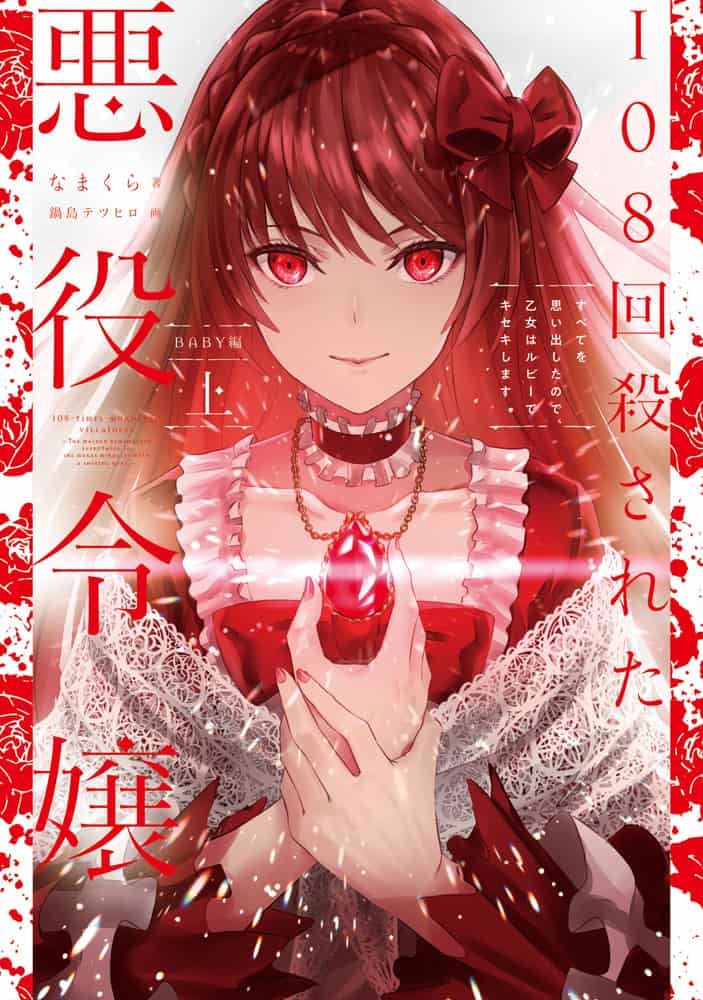
May My Death Be a Blessing to You
+Add to Custom List
Genres:
Novel Info
  • Author:
  • Status:Ongoing

Summary

... Read More

Estelle Arcis, the only daughter of a declining noble family, once obsessively loved Lexion de Herais, the Crown Prince and a wielder of holy power. Despite her family's poverty and social ruin, she maintained her dignity while secretly pining for him. Eight years prior, she had chased his affection with little hope, enduring ridicule and heartbreak. However, Estelle is not experiencing this timeline for the first time. She possesses the ability to regress to the past, having died and returned multiple times in previous loops. Her current objective is not romance, but survival and revenge against Lexion, who betrayed and tormented her during their brief marriage. She seeks to reach the imperial holy relic, an hourglass that grants the power of time return, to change her fate.

On the day of the Founding Ceremony Ball, rumors swirl about Lexion’s secret lover, and his former flirtation, Maria Widro, remains in the palace. Estelle attends the ball with her father, Count Merlin, dressed in a simple white gown chosen from a cheap shop. She aims to avoid Lexion entirely, but he notices her hostility—a rare reaction from her—and follows her to a terrace. Unlike in previous timelines where he ignored her, Lexion feels an inexplicable pull toward her and physically detains her, demanding her name. In a moment of recklessness, Estelle slaps him and insults him before escaping to the clock tower where the holy relic is kept.

Estelle climbs the tower to touch the relic and trigger her regression, but her foot is injured, slowing her descent. As guards close in, she jumps from the window to kill herself and restart time. However, Lexion uses his special ability to stop her fall, catching her in mid-air. This intervention prevents her death, causing her soul to awaken the blessing of the Goddess Verdi. She becomes the Empire’s Saintess, a title that marks her as a living object meant to stabilize the powers of the Guardians. The news spreads instantly, causing political turmoil among the five ducal families who compete for control over her.

Estelle is confined to the imperial palace under Lexion’s watch. He refuses to let her leave, citing her suicide attempt and her duty as Saintess. Their interactions are tense and hostile; she despises him for his past cruelty, while he is intrigued by her defiance and hatred. Lexion’s behavior shifts from indifferent to obsessively attentive, monitoring her every move and even moving into the guest quarters to supervise her. Meanwhile, Jeff Alexis, the Duke of the East and Estelle’s only friend from the past, visits her. He discovers that his mind-manipulation abilities do not work on her and is captivated by the holy power she radiates. He promises her safety in his territory when it is her turn to rotate among the Guardians.

The Emperor confronts Lexion, warning him that the Saintess diminishes the imperial family’s value by making the elixir dependent on her. He orders Lexion to eliminate Estelle quietly to prevent war with the dukes. Lexion appears to agree, but his true intentions remain unclear. Back in his chambers, Lexion observes Estelle, noting her resilience and the unique way she challenges him. When Maria confronts Estelle in jealousy, Lexion intervenes, revealing a possessive nature that confuses Estelle. The story concludes with Estelle trapped in the palace, caught between Lexion’s erratic obsession, the Emperor’s assassination order, and the political machinations of the Guardians, all while struggling to find a way to touch the holy relic and regain her agency.

Latest Release
DateGroupRelease
2026-10-03dusk blossoms c144
2026-10-03dusk blossoms c143
2026-10-03dusk blossoms c142
2026-10-03dusk blossoms c141
2026-10-03dusk blossoms c140
2026-10-03dusk blossoms c139
2026-10-03dusk blossoms c138
2026-10-03dusk blossoms c137
2026-10-03dusk blossoms c136
2026-10-03dusk blossoms c135
2026-10-03dusk blossoms c134
2026-10-03dusk blossoms c133

Community Reviews

Rating(0 / 5.0, 33votes)
5 stars
0(0%)
4 stars
0(0%)
3 stars
0(0%)
2 stars
0(0%)
1 stars
0(0%)

Popular reviews

... Read More
Okay, so I just finished this batch and honestly the political maneuvering here is next level. The Emperor isn't just some vague evil guy—he has a SYSTEM. The elixir thing blew my mind a little. Think about it: Guardians are these incredibly powerful people with special abilities, right? But every time they use their powers, their souls crack. And the Emperor? He monopolizes the only thing that stabilizes them. So these supposedly dominant nobles are basically on leashes, and the whole empire pretends it's for their protection. The scene where Jeff calls him out and the Emperor immediately pivots to 'well but precedent!' while we all know he framed the previous Grand Duke—it's beautifully layered. The Emperor's threat about the Saintess being a 'relic of the past' and his implication that she should be eliminated? That got my blood boiling in the best way. And then there's the subplot with Estelle and her memories of Jeff dying—that future knowledge hanging over everything like a ghost. The pacing between the political tension at breakfast and the quieter character moments with Estelle walking among the butterflies felt really controlled. One moment I'm sweating over imperial politics, the next I'm aching for this girl who just wanted to read a book but got trapped in this gilded cage.
... Read More
There's a symbol running through this entire batch that I can't stop thinking about: the leash. Guardians appear to be the most powerful beings in this world—direct recipients of the goddess's love, holders of special abilities that shake empires. But they're on leashes made of elixir, and the Emperor holds the bottle. Jeff literally tells us this: 'powerful Guardians... were in fact no different from unstable beings barely surviving on a leash.' But Estelle is on a different kind of leash, one made of duty and expectation and a body that produces holy power others want to control. She can't leave the palace. She can't choose her dress. She can't even grieve openly because Lexion will pathologize her sadness as jealousy. And then there's the saintess imagery itself—the whole concept. A living relic, someone whose power is useful but whose personhood is irrelevant. The Emperor explicitly frames her this way: 'the saintess is an entity that diminishes the value of our imperial family.' She's a tool that became inconvenient. Edro's painting with the serene goddess smiling over slaughter is another mirror—the empire's religion, like its politics, presents a holy face while hiding bloody machinery underneath. But the most potent symbol is probably that lavender muslin dress. A saintess wearing dead fabric, too long, too loose, belonging to no one. She's being consumed by this world just like those jewels in the lion's eyes will eventually be spent. Unless she changes the ending. Which she intends to do—that's the whole point of the regression, isn't it? The dress is a shroud, but she's determined to tear it apart.
... Read More
Love at first sight took one second. The death of that love took a lifetime — or at least one entire previous life. This is the most devastating character arc I've seen in ages, and it's only in the first seven chapters. Let's talk about Estelle, because this woman is a force of nature. The opening passage where she describes falling for Lexion is written with such raw, almost embarrassing honesty — the newspaper articles she collected, the parties she attended, the way his gaze made her feel like her soul was bound to him. And then? Six chapters later, she's walking past him in the street and feeling nothing but cold resentment. That shift is brutal, and it's earned. But what really blew me away is Laura. This servant girl who stayed through poverty, doing every job — butler, cook, tutor, housekeeper — and still treats Estelle with unconditional loyalty. When Laura gets excited about Lexion passing by, it's not just comic relief. It's tragic, honestly. Laura still believes in the fairy tale. Estelle has to be the one to crush that hope, even gently. Their dynamic gives the whole story a heart that isn't just about romance. And Lexion... oh, Lexion. He's introduced as this almost mythic figure — the Empire's Guardian, impossibly handsome, surrounded by worshiping crowds. But then we get a glimpse behind the curtain: he can't remember Estelle's name until their wedding day. He's careless with people's feelings, treating attention like a casual gesture. Yet Peter's conversation with him suggests there's more going on beneath that crown. The way he handles the herb situation — dismissive, almost reckless — tells us something dangerous about who he actually is. The triangle between Estelle, Lexion, and the ghost of Maria is already set up like a loaded gun. I can't wait to see what happens next.
... Read More
"Who is she who monopolizes the Empire's love?" The newspapers are eating this up, and honestly, reading those headlines while knowing the truth behind Estelle's pain made me physically ache. This story understands something that a lot of romance novels miss: love isn't just the good parts. Estelle's backstory — spending her family's last coins on a tea party invitation, enduring four days of loneliness and crying after Lexion never showed up, maintaining composure while noblewomen eviscerated her — this is the ugly, grinding reality of loving someone who doesn't see you. The author doesn't romanticize it. She shows us the cost. But here's what surprised me: the emotional core of this isn't really about Estelle getting Lexion back. It's about Estelle getting HERSELF back. Watch how she moves through these chapters. She's not bitter in a whiny way — she's calculating. She knows which dress shop to visit because she's been here before. She knows the fashion trends. She knows the ball is where everything changes. That's not revenge. That's survival with intention. The most emotionally charged moment for me was when Laura tries to collect Lexion's discarded trash, thinking it's a blessing. Estelle correcting her — "He wasn't looking at me. It's just a meaningless coincidence" — hit me like a punch. She's protecting Laura from the same delusion she once lived. There's so much love underneath that cold exterior. And that ending line — "Anxiety seemed to be gnawing at her soul" — completely recontextualizes everything. This isn't a victory lap. She's walking into the founding ceremony ball with no guarantee she'll succeed, and if she fails, she has to do it all over again. The emotional stakes are suffocating in the best way.
... Read More
There's a line that absolutely wrecked me: "Who would have thought that asking him for a favor would be so nerve-wracking? She had never been this tense even when taking her own life." Take that seriously. In previous timelines, Estelle chose suicide. She ended her own life. And this — this conversation with Lexion where she needs money, needs a favor, needs to swallow her pride — terrifies her more than death. That's not hyperbole from the narrative. That's character truth. Everything she's endured — betrayal, death, regression — is somehow less destabilizing than having to beg from the man who holds her family's fate in his hands. The stakes operate on three simultaneous levels and they're all tightening. External: a monster from the Black Forest is attacking the capital, and someone may have sent it. Internal: Estelle's desperate for resources but her pride and fear of Lexion keep her frozen. Relational: her father is sacrificing everything for her while she's trapped in a palace she can't escape, lying to protect him and herself. The knights holding the line against something they can't win against — "Hold out until His Highness arrives!" — is a microcosm of Estelle's entire situation. She's holding out. Waiting for someone to save her. But what if he doesn't come? What if the favor she needs comes with a price she can't pay? The tension isn't just about whether she'll get the money. It's about what she'll become if she has to ask.
... Read More
Okay so let me just say from the start — the whole Lexion/Estelle dynamic here is a goddamn masterpiece of toxic romance writing and I cannot stop thinking about it. The proposal scene hits differently because it's SO honest compared to the fake fairy-tale confession she remembers from earlier. The text literally says his image "smiling kindly" asking her to marry him on a day with fluttering flower petals... and then here comes this man who doesn't even pretend. He just says, bluntly, that he cherishes her now, that he realizes his taste is rough and violent, and that she likes him in her heart. The audacity. The sheer, unfiltered confidence. And yet... Estelle's mind is literally racing with the question: what if this time it's actually real? That's the brilliance of it. The author isn't making Lexion a cartoon villain here. He's genuinely trying, in his own completely unhinged way, to win her over. And Estelle — poor, terrified Estelle — is caught between genuine fear and this tiny, treacherous part of her that WANTS to believe him. Then you have the feeding scene and I need a minute. She's pretending to be sick, he's pretending she's actually a patient, and he's feeding her soup like she's some kind of delicate flower while internally she's absolutely fuming. But the moment where he stares at her lips and says "I was just wondering if it would fit inside your mouth since it's rather small" — that is peak flustered romantic tension and I am HERE for it. Even Estelle notices the "clouded gaze" that clings to her lips. The man is losing his mind over her and he doesn't even care to hide it anymore. And then he wipes soup from her mouth with his thumb and licks his finger. Like. Sir. The vulgarness paired with the instant return to a "holy face" is both disgusting and weirdly endearing in a deeply problematic way that this novel absolutely leans into. The Peter conversation later confirms it though — when he casually says "Of course I find her appealing" but deflects with political reasoning, that's not a man who's purely calculating. That's a man who's trying to convince himself as much as anyone else.
See all reviews

Custom lists

See all custom Lists