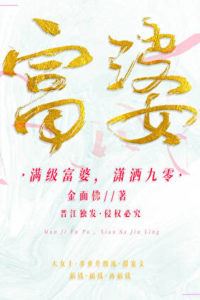
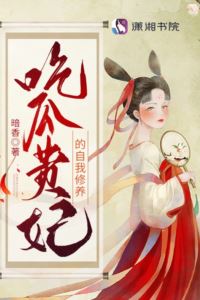
Max-Level Rich Lady, Unrestrained in the 90s Straight to the Bottom
Novel Info

Summary

... Read More

Wang Xiao, a successful entrepreneur in her previous life, finds herself transmigrating into the body of a twenty-one-year-old woman with the same name in the year 1990. The original host was on the verge of marrying Ruan Rui, a divorced man with a young daughter, despite fierce opposition from her family. In the source novel, this marriage leads to the original Wang Xiao’s destruction, as she is exploited by her manipulative husband and ungrateful stepdaughter before being discarded when the husband’s first love returns. Upon waking in the bridal chamber, surrounded by tacky red decorations and her weeping mother, Wang Xiao immediately recognizes the disastrous trajectory of the original character’s life. Rejecting the role of the tragic female supporting character, she decisively cancels the wedding, shocking her family and the assembled guests.

Her refusal to marry triggers immediate conflict with Zhang Yan, the novel’s self-proclaimed best friend and a hidden antagonist. Zhang Yan, who harbors secret romantic feelings for Ruan Rui and has a history of sabotaging the original Wang Xiao’s happiness, attempts to manipulate the situation. Wang Xiao, armed with knowledge of the plot, exposes Zhang Yan’s infidelity by publicly reading a love letter found on a paper airplane, which reveals Zhang Yan’s affair with her own fiancé, Xiang Dong. The public humiliation causes Xiang Dong to end the relationship, removing one of the original host’s primary enablers. Wang Xiao’s father, Wang Tiejun, physically intervenes to protect his daughter, dragging her away from the wedding venue and ensuring she does not encounter Ruan Rui, thereby securing her escape from the marriage.

Seeking refuge and a fresh start, Wang Xiao travels to the countryside to stay with her uncle, Chen Yidong, and aunt, Qian Xuemei, in Zhouzhen Chemical Factory’s surrounding village. Rather than dwelling on her past or pursuing a career in scientific research, which aligns with the original host’s job, Wang Xiao focuses on economic independence. She identifies a market gap in the local area: the absence of braised dried tofu and braised chicken feet in the rural markets, despite high demand for flavorful, affordable food during the busy harvest season. Using her limited capital, she purchases tofu and chicken feet, experimenting with recipes to create a superior product that appeals to local tastes.

Wang Xiao launches her business with the help of her young cousin, Chen Jingjing. They sell their braised goods from a bicycle, targeting both village residents and the night market in the nearby town. The venture proves highly profitable, generating nearly thirty yuan in a single day, a significant sum compared to the monthly wages of local factory workers. Her success establishes a foundation for financial stability and independence. However, the arrival of Lu Gan Grandpa, the original braised tofu vendor from the novel, introduces a new competitive dynamic. As the established vendor returns to the market, Wang Xiao must navigate the challenges of local business competition while continuing to build her enterprise and avoid the pitfalls of the original storyline.

The narrative follows Wang Xiao’s transition from a victim of fate to an active agent of her own destiny. By rejecting the prescribed romantic tragedy and embracing entrepreneurship, she alters the course of her life. Her actions demonstrate a pragmatic approach to survival in the 1990s, prioritizing economic self-sufficiency over social expectations. The story highlights her strategic use of future knowledge to identify opportunities and her willingness to confront antagonists directly. As she establishes her braised food business, Wang Xiao remains vigilant against the lingering threats of the original plot, determined to carve out a future defined by her own choices rather than the constraints of the novel she once read.

Latest Release
DateGroupRelease
2026-08-11shanghai fantasy c168
2026-08-11shanghai fantasy c167
2026-08-11shanghai fantasy c166
2026-08-11shanghai fantasy c165
2026-08-11shanghai fantasy c164
2026-08-11shanghai fantasy c163
2026-08-11shanghai fantasy c162
2026-08-11shanghai fantasy c161
2026-08-11shanghai fantasy c160
2026-08-11shanghai fantasy c159
2026-08-11shanghai fantasy c158
2026-08-11shanghai fantasy c157

Community Reviews

Rating(4.1 / 5.0, 16votes)
5 stars
8(50%)
4 stars
2(13%)
3 stars
6(38%)
2 stars
0(0%)
1 stars
0(0%)

Popular reviews

... Read More
I need to talk about Sister Miao because this character walked in and immediately stole the scene. Her dialogue is so distinct you could identify her lines without any tags. She's got this fierce, almost comical energy—linking arms with Wang Xiao like they're besties, then turning on Director Xiao with the moral authority of a woman who has spent twenty years watching brilliant female chemists get pushed aside. Her line about the men wanting 'all women to become useless so they can take complete control' hit different. That's not just plot dialogue, that's the author letting the theme breathe through a character who genuinely believes it. And the way she physically drags Wang Xiao toward the lab like a warrior queen—'one warrior holds the pass against ten thousand'—the narration itself compares her to that, which shows how much the narrative voice respects her. Then there's Director Xiao's bureaucratic speech: 'every person is a brick in the revolution—we go where we're needed.' The author is satirizing this entire era's language, and it lands perfectly because it's so recognizable. You can hear the dry, hollow cadence of it. And Wang Xiao's internal panic when the long-haired woman warns Sister Miao not to provoke him? That contrast between external compliance and internal screaming is pure gold. The narrator's voice throughout is also doing a lot of work. Lines like 'I swear to heaven, Wang Xiao really didn't intentionally stay put waiting to be taken hostage' and 'the logistics warehouse was great, the logistics warehouse was currently the safest shelter available' give us this witty, slightly sarcastic omniscient narrator who is clearly on Wang Xiao's side. It makes the whole reading experience feel like someone is telling you this story at a café, not like you're reading a novel.
... Read More
I have to praise the pacing here because it's genuinely impressive. The author opens with Wang Xiao waking up disoriented, which could easily have dragged into a long exposition dump about transmigration mechanics. Instead, we get her immediate sensory experience—the crying, the dizziness, the tacky red decor—and then she pieces things together through her own thoughts. The information about the novel, the original host, and her own backstory comes in manageable chunks, woven into her internal monologue rather than delivered as infodumps. Chapter 1 moves at a breakneck pace but never feels rushed. We get the transmigration, the wedding cancellation, the confrontation with Jiaojiao, the exposure of Zhang Yan's love letter—all in one chapter. And yet each beat lands because the author gives each moment just enough space to breathe. The scene where Wang Xiao takes off the wedding dress is quick and matter-of-fact, which is exactly the right tone. She's not having a dramatic moment; she's making a decision and moving on. The transition into chapter 2 is also well-handled. The calendar entry at the end of chapter 1 is a nice meta touch—it breaks the fourth wall slightly and reminds us we're reading a serialized novel, which fits the tone. Then chapter 2 picks up immediately with Wang Xiao turning the tables on Zhang Yan. The pacing never lets up, but it never feels exhausting either. Each scene has a clear purpose, and the tension builds naturally rather than being forced.
... Read More
I cannot stop thinking about Chen Yidong. This man is so protective it's almost comical. He assumes Wang Xiao ran off to find some guy just because she left early to buy ingredients. Like, she's literally a college student doing business, but no — the first assumption is she's eloped or something. And then he can't even let her go to a wedding alone because "she isn't very familiar with the village paths." She's been there for days! The woman has been walking around this village selling tofu! "I need to give a gift anyway. You can have lunch at Xiuyun's place. Don't worry about the braised food—we'll sell it together tonight after we get home." But here's what's actually touching underneath all the comedy — Chen Yidong is a single father who raised a daughter, and he knows exactly how kids can seem well-behaved on the surface while secretly plotting world domination. That's why he can't leave Wang Xiao alone. He's not just being controlling, he's being a responsible guardian in a world where a young woman traveling alone is genuinely risky. And Qian Xuemei — oh my god, the mom energy. She's the voice of reason telling Wang Xiao not to worry about unsold tofu, then immediately pivoting to the universal parent threat: "If you put this much effort into your studies, I'd be laughing in my dreams." Chen Jingjing's face must have been priceless. The whole family dynamic is so grounded and real. Wang Xiao as the transmigration recipient, these three as the found family she's accidentally embedded herself with. There's no drama about her being an outsider — they just accept her and occasionally worry she'll run off. I love it.
... Read More
Let me just say this: the author knows exactly when to drop a bomb. And I don't mean the literal one. Wang Xiao spends an entire chapter building tension—hesitating at the gate, making excuses, being dragged by Sister Miao, desperately trying to find ways to avoid the lab—and then BOOM, glass everywhere, artery spraying, she collapses on the floor. The pacing from 'I'm just going to stand here looking thoughtful' to 'I'd rather die than enter a laboratory' in the span of three paragraphs is masterful. But what's really impressive is how the chapter weaves two completely different storylines without either feeling neglected. The Zhou Town braised food planning (Qian Xuemei making decisions, worrying about in-laws, drafting plans) gets its own complete emotional arc before we cut to Wang Xiao being abandoned at the institute. Then the institute scene has its own mini-arc: reluctance → encounter with Sister Miao → confrontation with Director Xiao → lab accident → escape. Both threads reach satisfying beats. The chapter titles themselves are doing structural work too. 'The Terrible Chemical Institute: Mom, I Want to Escape' sets up the conflict immediately, while 'The First Ten-Year Plan (Catching Bugs): Building the Kingdom of Marinated Dishes' promises a longer arc. The parenthetical 'Catching Bugs' is such a perfect joke—she's literally catching lab bugs she doesn't understand while also trying to catch a break in her business plans. And that ending! Wang Tiejun and Chen Yanqiu appearing at the gate right as she's trying to figure out how to escape on the bus. The author doesn't give us resolution; they give us a collision. I need the next chapter immediately.
... Read More
The author's dialogue writing is genuinely sharp. Let me just drop this exchange between Chen Yidong and Wang Xiao: "Uncle, don't you need to go to work?" "Ah, it's fine. The supply and sales department isn't the production workshop. It's okay if I go a bit late." He literally just admitted to planning to skip work and then tried to play it off like it's no big deal. And Wang Xiao's response — she nearly collapses internally when he suggests she come to the factory and "take a look" at production problems. She hasn't touched chemistry in seven years and they want her to be a technical consultant? The internal monologue is perfect: "Wh-what kind of joke is this?" And then the wedding scene — Wang Xiao's performance of being a lifelong friend with Xiuyun is comedy gold. She pulls out ten yuan, the adults panic because unmarried people don't give separate gifts in rural custom, and she has to awkwardly take it back. The whole thing plays out like a scene from a sitcom. "Your presence is the greatest gift. Sit down now—Auntie will bring some melon seeds and candy. You girls catch up properly." But what I really appreciate is how each character has a distinct voice. Chen Yidong speaks like a practical middle-aged man who's slightly out of his depth with modern concepts. Qian Xuemei is all no-nonsense mom energy. Chen Jingjing sounds like an actual teenager — dramatic, immediate, emotional. And Wang Xiao's internal voice is completely different from her external speech — she's constantly analyzing, calculating, and slightly exasperated by everyone around her. The narrative voice carries that transmigrator's perspective throughout, which gives everything this layer of ironic distance. Even the market research scene with the bride's friends feels natural because Wang Xiao's question-asking is framed as casual gossip rather than interrogation.
... Read More
I need to sit with this for a second. Wang Xiao's backstory about her grandmother is only a paragraph long but it completely reframes everything about her character. Her parents divorced before she was one year old. Neither wanted her. Everyone called her grandmother foolish for raising her, calling her a 'burden and an embarrassment.' And yet—'she was universally acknowledged as the most accomplished' among her generation. The line that destroyed me was: 'telling her to strive? No problem. Telling her to slack off? She'd rather be stabbed.' This isn't just a personality quirk. This is a trauma response. Every bone in her body aches with discomfort when she's not achieving. She can't relax because relaxing would mean proving her parents right—that she was worth nothing. And then she transmigrates into this book body and the first thing she wants to do is quit her job and sell braised food. Of course she does. For the first time in her life, she's in a situation where she CAN rest, where the money is already coming in, where no one is watching her grades. But she can't. The conditioning is too deep. The relationship with her adoptive parents at the end of this chapter is going to be explosive, and I'm not just talking about the wedding drama. Wang Tiejun reaching for her suitcase, afraid she's tired—this is a man who doesn't know how to be close to her, and she doesn't know how to receive it. 'She really wasn't used to such enthusiastic care from male elders.' That sentence hurts because it's so understated. She's not used to care PERIOD.
See all reviews

Characters

See all characters

Custom lists

See all custom Lists