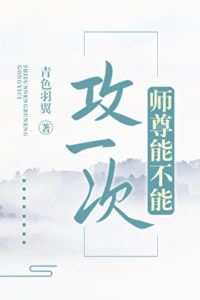
Master, Can You Top Just Once?
+Add to Custom List
Novel Info

Summary

... Read More

Ying Wuchou is a powerful cultivator who spent his final days in a deep slumber within the Hidden Valley, using the turtle breathing technique to preserve his life while his seven disciples managed the sect. Upon waking, he discovers that fifty years have passed and his body, though healed by the accumulated points from a mysterious system that followed him back from transmigration worlds, is significantly weaker than its peak. The system, now bound to a jade slip, provides scanning and narrative functions but often reveals Ying Wuchou’s hidden desires, which he promptly suppresses. His first priority is locating a young Teng Jiao, a mythical snake beast, whose egg he had hidden before sleeping. He finds only fossilized eggshells and a single transparent scale, indicating the creature has already hatched and left the valley. Determined to raise the beast and satisfy his peculiar fascination with scales, Ying Wuchou leaves the valley to search for it.

During his search, Ying Wuchou encounters a man impersonating his youngest disciple, Ning Chengying. This imposter, who calls himself Cen Shuangluo, is actually a human child found frozen under a maple tree outside a local temple eighteen years prior. Cen Shuangluo was adopted by the Cen family but treated poorly after they had a biological child. He was later driven to the abandoned temple, where he cared for a statue that gradually took the form of Ying Wuchou due to the divine scale embedded within it. Cen Shuangluo possesses prophetic dreams that reveal future events, including Ying Wuchou’s awakening. He disguised himself as Ning Chengying to approach Ying Wuchou, intending to manipulate events so that Ying Wuchou would kill the real Ning Chengying, thereby causing him emotional distress. However, Ying Wuchou, though blind and relying on external objects for sensation, is perceptive and detects the deception. He chooses to play along, feigning blindness and weakness to gather information and observe Cen Shuangluo’s true intentions.

Ying Wuchou learns that the temple statue, which resembles him, has become a source of local superstition and is in ruins. He retrieves the missing half of the statue, which contains the scale granting him vision, restoring his sight partially. He also discovers that Cen Shuangluo’s dreams are not merely predictions but fragments of a past life or alternate reality where he was the Teng Jiao. In these dreams, he experienced life as a snake in the Hidden Valley, cherished by Ying Wuchou, before being driven away by the real Ning Chengying, who viewed him as a demon. This revelation complicates Cen Shuangluo’s motives, as he harbors a deep, conflicted attachment to Ying Wuchou, oscillating between resentment and a desire for affection.

The core conflict revolves around Ying Wuchou’s desire to return to a peaceful life with his disciples and the Teng Jiao, while Cen Shuangluo seeks to alter fate to secure Ying Wuchou’s attention and protect himself from the disasters foretold in his dreams. Ying Wuchou, unaware of the full depth of Cen Shuangluo’s past-life memories, begins to take him under his wing, treating him with a mix of masterly authority and unexpected kindness. This confuses Cen Shuangluo, who expected punishment or indifference. Meanwhile, the real Ning Chengying, unaware of the impersonation, continues his cultivation, and the other disciples remain scattered. Ying Wuchou decides to travel with Cen Shuangluo, seeking to understand the changes in the world and find the young Teng Jiao. The story moves toward a complex dynamic where Ying Wuchou’s laid-back teaching style clashes with Cen Shuangluo’s scheming nature, while the looming presence of the other disciples and the true identity of the Teng Jiao create potential for future conflict and resolution.

Latest Release
DateGroupRelease
2026-08-11shanghai fantasy c70
2026-08-11shanghai fantasy c69
2026-08-11shanghai fantasy c68
2026-08-11shanghai fantasy c67
2026-08-11shanghai fantasy c66
2026-08-11shanghai fantasy c65
2026-08-11shanghai fantasy c64
2026-08-11shanghai fantasy c63
2026-08-11shanghai fantasy c62
2026-08-11shanghai fantasy c61
2026-08-11shanghai fantasy c60
2026-08-11shanghai fantasy c59

Community Reviews

Rating(4 / 5.0, 12votes)
5 stars
4(33%)
4 stars
4(33%)
3 stars
4(33%)
2 stars
0(0%)
1 stars
0(0%)

Popular reviews

... Read More
Okay so let me just say this: the reveal that the fake Ning Chengying is actually Cen Shuangluo is one of those plot moves where you immediately want to go back and re-read every single interaction because now everything clicks into place. The way Ying Wuchou played along, pretending to be blind, pretending to be weak—it was such a smart maneuver. He knew he couldn't fight this person at full strength, so he deliberately showed vulnerability to draw out the truth. And the temple scene? Chef's kiss. The old man dropping the entire backstory about Cen Shuangluo like it's just casual small talk while Cen Shuangluo himself is right there chopping wood, losing his composure—that's masterful tension building. The author didn't rush the reveal either. First we get the broken gel, then the fake's odd behavior, then the temple, then the axe splitting in half when he hears his old name. Each beat peels back another layer. But here's what's really got me: the statue. Fifty years of slowly transforming into Ying Wuchou's face because of worshippers' emotional attachment, and then the last four years accelerating because the scale was literally feeding on Cen Shuangluo's devotion instead. The plot is weaving three threads together—the fake identity mystery, the temple's dark history, and Ying Wuchou's missing scale—and they're all converging right now. What happens when Ying Wuchou actually learns who this person is? How does he react to finding out his divine scale was worshipped as a demon by this town? And will Cen Shuangluo ever stop pretending to be someone else?
... Read More
The stakes in this chapter are layered like an onion made of dread. On the surface: Cen Shuangluo vs. Ning Chengying, a disciples vs. master conflict that's been brewing since the beginning. But peel it back and there's so much more. Ying Wuchou is literally dying. He's described as 'a dying flame,' half a step into immortality but barely holding on. Every use of his power consumes his remaining life. And yet he's the one who volunteers to drink the poisonous wine to test Cen Shuangluo's strength. That's not bravery — that's someone who has already accepted his mortality and is choosing how to spend his last moments. Cen Shuangluo is trapped between his mission and his conscience. He came to use Ying Wuchou, but now he's protecting him. He knows Ning Chengying will eventually try to kill him (based on the dream), but he's also at the nascent soul stage — barely enough to handle the dozens of living corpses in this village, let alone the THOUSANDS from his nightmare. The math doesn't work in his favor. And the living corpses themselves? They're caught between existence and non-existence. 'Physically, there's no feeling, but in our hearts, we still feel depressed and need joy.' They're trapped in bodies that don't work but minds that still crave stimulation. The masked man takes them further, refines them — and those who come back are 'more like living people, stronger too.' Is that salvation or a deeper hell? Every character in this chapter is standing on a knife's edge. There are no safe positions.
... Read More
I need to process what I just read about Ning Chengying because this man is SO BROKEN and the author doesn't even need to show us his face to make us feel it. The chapter opens with him having 'the idea of turning his family into living corpses' because he 'deeply felt the ruthlessness of time.' That's it. That's the entire motivation. Time took everything from him, so he decided to cheat death itself. Ying Wuchou tries to reason with him — explains that even the most powerful controlling corpse technique can't stop decay, that a thousand-year drought demon would attract cultivators who'd destroy it, that zombies can't give him 'the warmth of family.' And Ning Chengying... seemed to listen. He stopped digging tombs, cultivated the heart technique, reached Golden Core. But clearly, something snapped. Because now there's an entire village of living corpses, and the woman says 'he knocked me out and took me away.' This isn't about family anymore. This is about power. What kills me is the dream Cen Shuangluo has. Ning Chengying on a bone chair, cold and commanding, an army at his back. That image of Ning Chengying as a cold ruler of the dead — it's the logical endpoint of a man who couldn't accept loss. He didn't just fail to save his family; he became the kind of monster who would turn strangers into puppets because he learned that grief without power is just suffering. I'm genuinely terrified for whoever faces him next.
... Read More
I literally cannot stop thinking about this conversation between Ying Wuchou and the female living corpse. The woman describes her 'evil deeds' as: 'helping childless families adopt a child, finding jobs for girls with no money, helping unmarried pregnant women solve their troubles.' And Ying Wuchou's internal response? 'It was the first time he heard someone describe such heinous acts like child trafficking, forcing women into prostitution, and abortion as so elegant and refined.' THIS. THE NARRATIVE VOICE here is doing SO MUCH WORK. The author doesn't just tell us the woman is evil — they let her describe her crimes in the softest, most euphemistic language possible, and then Ying Wuchou's narration drops the hammer. That contrast between her gentle phrasing and the horrific reality is masterful writing. And the living corpses' dialogue in general? 'We've been bored to death in the village, rarely encountering two living people. Whether you're fools or smart, whether you came to rest or with ill intentions doesn't matter. Once you're here, you must let us have our fun before you die!' This is casual, almost polite, and absolutely menace. They're not even hiding it. The humor is dark enough to make you laugh out loud and then immediately feel guilty about laughing. Ying Wuchou's voice throughout is this perfect blend of feigned frailty and sharp intelligence. He plays the confused old blind man while extracting confessions like a detective. 'Oh? What evil deeds did you do?' asked leisurely, as if he's at a teahouse and not surrounded by murderers. The dialogue never feels staged — every exchange reveals character, advances the plot, or both.
... Read More
Okay so let me just say this: the dream sequence in this chapter is absolutely BRUTAL and I am not over it. Cen Shuangluo has this recurring nightmare where Ning Chengying sits on a bone chair floating in the air, commanding an army of thousands of corpse puppets, and then personally descends to kill him. Only we don't know if in the dream Cen Shuangluo wins or loses — and honestly that ambiguity is so well done. The author doesn't tell us, just leaves us hanging with 'unsure whether Ning Chengying killed him or if he defeated Ning Chengying.' CHILLING. But here's what really got me — the plot twist of the century is that the living corpses in this village DON'T RECOGNIZE Cen Shuangluo as Ning Chengying. His entire elaborate scheme to provoke a confrontation between master and disciple falls apart in seconds because the corpses just... chat with him like normal people. 'Another pretty boy, what brings you here?' I literally screamed at my phone. The plan was SO intricate — disguise as Ying Wuchou, get attacked, lure Ning Chengying out — and it unraveled because these corpses have personalities and memories and apparently zero loyalty to their creator. And then the masked man! Every time someone gets taken and comes back 'stronger,' it's like Ning Chengying is refining them through repetition. That's not just worldbuilding, that's a ticking time bomb of a plot device. The stakes are literally escalating every time someone disappears.
... Read More
Okay, I need to sit with this statue imagery for a while because it is SO much richer than it first appears. The statue starts as a Bodhisattva—something sacred, something meant to inspire devotion. But over fifty years, it slowly transforms into Ying Wuchou's face. Why? Because the townspeople's faith and emotional attachment literally reshaped it. They projected their beliefs onto the divine scale, and it absorbed them. This is the core metaphor of the entire passage: belief shapes reality. What you worship becomes what you see. But then there's Cen Shuangluo. He's the one who stayed behind when everyone else left. He's the one who continued wiping the statue, maintaining it, caring for it even after it had become a "demon" in the eyes of the town. And when the townspeople stopped coming, the scale—this divine object—had to find new emotional sustenance. It found it in Cen Shuangluo. His devotion, his loneliness, his worship of the figure in the statue became the new fuel. So the statue is both Ying Wuchou and Cen Shuangluo's shared obsession. It's a physical manifestation of faith, abandonment, and the desperate human need to connect with something greater than ourselves. And the fact that it's broken in half? That's not accidental. The Cen family beat Cen Shuangluo until he was lame and smashed the temple. The statue cracked down the middle at the same time. Two broken halves—Cen Shuangluo and the statue—both damaged by the same violence, both waiting to be whole again. Ying Wuchou needs to destroy the statue's head because it's becoming a liability. But I wonder if he'll be able to bring himself to do it. After all, that statue is the only physical proof that someone loved him enough to worship him for years, even when no one else did.
See all reviews

Characters

See all characters

Custom lists

See all custom Lists