Summary

... Read More

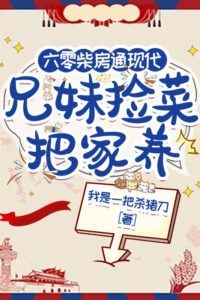
Wang Ying, a doctor who survived the harsh conditions of a post-apocalyptic world, dies during a zombie siege and wakes up in 1969 in the body of an orphaned teenage girl with the same name. The original Wang Ying lived a miserable existence under the care of her eldest uncle and aunt, Li Chunjuan and Wang Yongshun. After their parents split the family property, Li Chunjuan orchestrated the removal of the dividing wall between the two households, effectively seizing control of the martyr’s daughter’s home. Over the past two years, the aunt exploited Wang Ying’s status as a child of a revolutionary martyr, confiscating her annual subsidy of twenty yuan and two hundred work points. She forced the girl to perform domestic labor while providing her with insufficient food and poor living conditions, culminating in the original host’s death from illness and malnutrition.

The new Wang Ying, retaining her memories and a secret spiritual spring from her past life that enhances physical health, finds herself in a surprisingly comfortable environment compared to the apocalypse. The sunlight, fresh food, and abundance of eggs become her primary joys. However, she quickly identifies the exploitation surrounding her. Her uncle is complicit through silence, allowing his wife to abuse the girl while maintaining a facade of kindness. The aunt has stolen the Martyr’s Child certificate, hidden Wang Ying’s belongings in storage, and relegated the girl to a dilapidated room filled with construction materials meant for the aunt’s son’s future house.

Simultaneously, Wang Ying’s cousin, Wang Lingling, has also been reborn. In her previous life, Lingling married Xu Shuang, a handsome chef, only to ruin the relationship through greed and impatience. After driving him to poverty and failing in her own ventures, she died in regret. Upon waking in the past, Lingling resolved to seduce Zhao Jun, a man who would become a tycoon in her future. To achieve this, she devised a plan to frame her cousin Wang Ying by forcing her to marry Xu Shuang, whom she now deemed worthless. Lingling manipulated events to create scandalous situations involving Wang Ying and Xu Shuang, hoping to ruin Wang Ying’s reputation and secure her own path to wealth.

The conflict escalates when Lingling takes Wang Ying to town under the pretext of eating meat buns. During the outing, Wang Ying saves a toddler from choking on candy using first aid knowledge from her medical background. The incident draws the attention of the village chief, Tian Youfu, and reveals Wang Ying’s capabilities to the community. However, upon returning home, Wang Ying confronts the abusive reality of her situation. When Li Chunjuan attempts to beat her after discovering broken household items, Wang Ying refuses to passively endure the assault. She smashes the valuable property herself to provoke a public scene, knowing that as a martyr’s daughter, any severe injury would invite communal outrage.

The resulting confrontation exposes the family’s misdeeds. Village elders and neighbors, witnessing Wang Ying’s bruises and hearing her account of missing subsidies, turn against Li Chunjuan and Wang Yongshun. The village chief investigates and discovers the stolen property, including the Martyr’s Child certificate and various household goods, hidden in the other rooms. Faced with the exposure of embezzlement and abuse, the uncle attempts to shift blame entirely onto his wife, but the evidence of long-term mistreatment and theft is undeniable. Wang Ying demands the return of her certificate and the restoration of her rights, marking a decisive shift in power from her exploiters to herself as she prepares to reclaim her life and autonomy in this new era.

Latest Release
DateGroupRelease
2026-09-26knoxt c157
2026-09-26knoxt c156
2026-09-26knoxt c155
2026-09-26knoxt c154
2026-09-26knoxt c153
2026-09-26knoxt c152
2026-09-26knoxt c151
2026-09-26knoxt c150
2026-09-26knoxt c149
2026-09-26knoxt c148
2026-09-26knoxt c147
2026-09-26knoxt c146

Community Reviews

Rating(4 / 5.0, 28votes)
5 stars
8(29%)
4 stars
12(43%)
3 stars
8(29%)
2 stars
0(0%)
1 stars
0(0%)

Popular reviews

... Read More
God, Wang Yongshun is the kind of man who makes you want to throw the book across the room. Every time he opens his mouth, it is just more deflection. When Wang Ying confronts him about the subsidy, his first instinct is not to take responsibility but to throw Li Chunjuan under the bus like some cowardly puppet master. 'It is not my doing, let them argue about that.' What kind of blood relative says that about a child who lost her father and mother? But here is what really gets me — Wang Ying sees right through him. She does not explode. She does not scream. She just… watches. And slowly, methodically, she lets the villagers see what he has done. The way she suggests asking Aunt about the certificate, knowing full well that Li Chunjuan will not speak with a rag in her mouth — that is cold calculation from someone who should still be a child. She has learned exactly how these people work. And Li Chunjuan, oh God. She is almost worse than her husband because she does not even pretend to care. The moment Wang Yongshun decides to keep her gagged rather than let her speak, you realize she is not his partner. She is his liability. The things she has done — the beatings, the hoarding, the way she treats Wang Ying like household help — it is all laid bare. The narrator says 'even landlords back in the old society were not this cruel' and honestly, that line haunts me. What breaks my heart is Wang Yongshun at the end, trembling, begging. 'Sanya, Uncle was confused… I made a mistake.' He only cares when the crowd is watching. He only performs remorse when his skin is about to be flayed. This man never loved his nephew or his niece or his sister-in-law. He loved what they left behind.
... Read More
The pacing in these chapters is absolutely masterful and I need to break down exactly why it works. It starts slow - Wang Lingling leading Wang Ying through town, the description of the restaurant sign with the missing character. COMICAL. The author is letting us breathe, letting us absorb the setting. Almost mealtime but only a few customers. A waitress picking her nails. This is the texture of ordinary life in this era. Then the inciting incident hits: the meat buns arrive. And suddenly the pacing SHIFTS. Watch how the author accelerates: "By the time Wang Lingling was eating her second bite, Wang Ying had finished one whole bun." "While Wang Lingling was halfway through hers, Wang Ying had already…" The sentence just ENDS there. With ellipses. We don't even need to know what happened next because we've already calculated the math. Wang Ying is eating faster than Wang Lingling can track. The author trusts us to fill in the blank. Then Xu Shuang appears. And the pacing does another pivot - we get this slow, detailed entrance: "Xu Shuang walked in carrying vegetables in both hands, and this was exactly what he saw." First-person POV drifts into Wang Ying's observation, then switches to Wang Lingling's reaction. Three perspectives in rapid succession. And then—BOOM—the conflict erupts. Wang Lingling demands refund. Xu Shuang refuses. The waitress's expression says everything. And the chapter ends mid-tension with "Even when there were a f" — apparently cut off, but that 'f' is hanging there like a cliffhanger. What was she about to reveal about Xu Shuang's principles? About violence? About their past life? The author controls reader engagement like a conductor. Slow build, sudden acceleration, perspective shifts, emotional beats disguised as food descriptions, and then—cut to black at the most dramatic moment.
... Read More
This chapter is a masterclass in pacing because it does not rush. The author could have had Tian Youfu burst in, expose everything in one scene, and moved on. Instead, we get a slow accumulation of details that builds like pressure in a boiler. It starts with the certificate dispute — relatively contained, almost domestic. Then someone notices the wall between the houses is gone. Then Wang Yongshun cannot find the documents. Then the question about whose room is whose. Then the stove room inspection with the meat and the lard. Then the enamel basin. Then Tian Youfu walking toward Wang Ying's room. Each beat adds a new layer of evidence, and each layer makes the previous denial impossible. The structure is essentially a game of Russian nesting dolls — open one problem and inside it is a worse one. Money, then beating, then housing, then the certificate, then the quality of life comparison, then the physical space itself becoming testimony. The pacing also controls the emotional temperature perfectly. Wang Yongshun goes from smug deflection to sweating anxiety to outright panic, and we watch it happen in real time. The villagers go from sympathetic bystanders to furious accusers, and their escalation feels earned because each new detail gives them another reason. The ending lands with such weight because everything has been sown so carefully. When Tian Youfu grabs Wang Ying's documents and delivers his final verdict, it does not feel like a climax — it feels like gravity finally claiming what was always going to fall.
... Read More
So I just finished this batch and honestly? The plot mechanics are sneaky brilliant. We've got two characters who seem to have crossed over or reincarnated—Wang Lingling and apparently Wang Ying herself—and the way the author layers their dual awareness is gorgeous. Remember when Wang Lingling was so proud of her boyfriend at the state-run restaurant? 'During the three-year drought, cooks didn't starve.' That was her worldview, right there. Now she's suddenly pivoting, and Wang Ying notices immediately. The plot doesn't explain WHY Lingling changed her mind, and that's intentional mystery. Meanwhile Wang Ying is quietly building her own power base with this spiritual spring water stuff, and I love how the plot reveals her transformation through small details—the room description, her appearance, how villagers gossip about her thin face versus Lingling's arrogance. The meat bun subplot is genius too. On surface it's just breakfast, but it's really about transactional relationships and leverage. Lingling needs Ying to play along, so she dangles food like a carrot. And Ying? She's playing the long game. 'She wanted to retort, but she was worried that Wang Lingling might back out of the promise to bring her meat buns later.' This is a character who has learned to swallow her pride for survival. The plot is building toward something bigger—I can feel it—but it's doing so through these intimate domestic moments rather than grand declarations. The village gossip scenes throughout are doing double duty too: they reveal world context AND advance the plot by showing us how reputation works in this setting.
... Read More
The detail work in this section is absolutely devastating. The author describes the Wang family courtyard like a crime scene, except the crime is slow starvation disguised as family duty. The courtyard is split between two families now, the dividing wall torn down, and Wang Ying — the child who lost everything — gets shoved into the smallest room on the far east side. The stove room that used to belong to Wang Yongshun's family is dilapidated, while the west-side stove room, which was Wang Ying's, now has water jars and clay pots at its entrance like a statement. Then there is the staging of the discovery. Tian Youfu walks in and the reader sees it through his eyes: Wang Yongshun and Li Chunjuan's room has good furniture and an enamel mug. Wang Lingling's room has a large glass mirror and a dressing table made by the dead father. Wang Yaozong's room is clean, tidy, like something from a city home with new bedsheets. And then — Wang Ying's room. Broken. Falling apart. A pile of bricks and rotten wood in the corner. Her mattress beyond ragged, sheets made of scrap cloth sewn together. The preserved meat in the stove room, the half pot of lard, the sacks of grain in the corner — these objects are not just set dressing. They are evidence. Each one a small accusation. The enamel basin that Tian Youfu himself had handed to Wang Yongshun sitting outside Wang Lingling's room like a trophy. And the visual contrast is so sharp it feels cinematic. East side versus west side. Full bellies versus empty ones. New quilts versus scrap cloth. You can feel the temperature difference between those rooms.
... Read More
Okay so let me just say this: the meat bun. A single goddamn meat bun is what sets off the entire chain reaction here. Wang Lingling offers it, Wang Ying practically salivates just thinking about it — flour mixed with minced meat after the apocalypse when even vegetables are a struggle — and suddenly you realize this isn't some cute cousin outing. It's a trap wrapped in dumpling dough. The plot structure here is fascinating because it works on two levels simultaneously. On the surface, there's Wang Lingling's scheme to hook Wang Ying up with Xu Shuang — classic manipulative relative energy. But underneath that, there's this slowly simmering revenge plot that Wang Ying has been quietly cooking in her head. She calculates everything. The Martyr's Child certificate stolen by Li Chunjuan, the food rationing discrimination (cornmeal porridge for everyone else, a single sorghum bun for her), the pig that was supposed to be hers — she's tallying every single grievance and she's not going to let any of it slide. What really gets me is the pacing. The author could have jumped straight into the revenge, but instead we get this domestic drama — the pig starving, the aunt screaming, the whole miserable household routine — and it makes the payoff infinitely better. By the end of the chapter, Wang Ying has decided tomorrow isn't just about meat buns anymore. It's about settling accounts. And honestly? I can't wait to see what she does.
See all reviews

Custom lists

See all custom Lists