Summary

... Read More

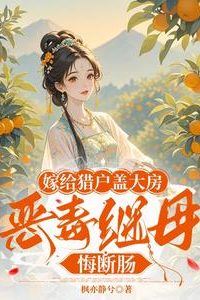
Lu Zhaozhao, a twenty-eight-year-old obstetrician from the twenty-first century, is killed by rioters in a hospital and transmigrates into the body of a ten-year-old peasant girl with the same name. The original owner is sold by her cruel stepmother and useless father to a matchmaker for ten taels of silver. Lu Zhaozhao wakes up in the back of a cart, heading to her new life as a wife in the Gu family. She arrives at a dilapidated thatched house at the foot of Xinghua Village, where she meets her new husband, Gu Yan, a tall hunter with a disfiguring scar on his face. Gu Yan explains that he bought her to help care for his sick mother and two young nieces and nephews, An An and Momo, whose parents died in a flood. He promises they will sleep in separate rooms, and Lu Zhaozhao, relieved by the lack of marital expectations, agrees to stay.

Upon entering the Gu household, Lu Zhaozhao discovers she has been granted a Spiritual Spring Space, a cheat ability that allows her to cultivate plants in a magical dimension. She immediately begins using it to grow wild vegetables, improving the family's diet from thin porridge to nutritious meals. Her cooking skills quickly win over the children and the frail Madam Li. Gu Yan, who had been living a sparse life after his family's fall from noble status in the capital, is surprised by her competence. He hands her control of the household finances, recognizing her practicality compared to his own ignorance of daily management. Lu Zhaozhao takes them to town to sell his hunting goods, where she exposes a local shopkeeper who has been underpaying Gu Yan for years. She negotiates a fair price for snake gall and meat, earning eight taels of silver, which she uses to buy pork, rice, and seasonings.

Back home, Lu Zhaozhao renders lard and makes wild vegetable buns, a meal that brings rare joy to the household. Her kindness extends to their neighbor, Sister-in-law Zheng, whose abusive, alcoholic husband, Wang Daniu, frequently beats her. When Wang Daniu returns home drunk and assaults Sister-in-law Zheng again, Lu Zhaozhao and Gu Yan intervene to comfort the weeping woman. Lu Zhaozhao privately wishes for the man to die, and the next day, Wang Daniu falls into a ditch and dies from a head injury. Sister-in-law Zheng is freed from her torment, and the village accepts his accidental death. Gu Yan begins to suspect that Lu Zhaozhao possesses some form of good fortune, noting how her arrival has transformed their struggling household into one of stability and warmth.

As Lu Zhaozhao settles into her new role, she focuses on nurturing the children and managing the family's resources with her spiritual space. She learns that the Gu family fled the capital due to political troubles, leaving them with hidden enemies and a need for secrecy. Despite the poverty and the scarred appearance of her husband, Lu Zhaozhao finds a sense of peace and purpose. She is no longer the isolated doctor who died tragically but a matriarch building a home. The story follows her efforts to improve the family's livelihood, using her modern knowledge and supernatural gift to overcome the hardships of feudal life while navigating the delicate dynamics of her new relationships.

Latest Release
DateGroupRelease
2026-08-11shanghai fantasy c77
2026-08-11shanghai fantasy c76
2026-08-11shanghai fantasy c75
2026-08-11shanghai fantasy c74
2026-08-11shanghai fantasy c73
2026-08-11shanghai fantasy c72
2026-08-11shanghai fantasy c71
2026-08-11shanghai fantasy c70
2026-08-11shanghai fantasy c69
2026-08-11shanghai fantasy c68
2026-08-11shanghai fantasy c67
2026-08-11shanghai fantasy c66

Community Reviews

Rating(3.8 / 5.0, 8votes)
5 stars
2(25%)
4 stars
2(25%)
3 stars
4(50%)
2 stars
0(0%)
1 stars
0(0%)

Popular reviews

... Read More
I need to talk about the stakes in this passage because they're deceptively simple on the surface but actually quite layered. On the most basic level, the conflict is survival. Gu Yan and Lu Zhaozhao are newcomers in a village, they have limited resources, and they need to feed a family including two children and an ailing mother. The wild boar isn't just dinner—it's money, it's medicine, it's new clothes. Every decision they make is weighted with this underlying tension of 'will we make it?' But the author is smart about how they build stakes. The hunt itself is dangerous—we know wild boars can kill, and Gu Yan barely survived. The dragging back up the mountain is physically exhausting. Every moment could have gone wrong. And then there's the problem of what to do with the meat. This is where the conflict gets interesting because it's not physical anymore—it's social, economic, relational. The scene where the villagers swarm the ox cart is a great example of rising stakes through social pressure. These people are enthusiastic, demanding, already making claims on the meat before it's even sold. 'Save me two jin!' 'I want one jin too!' It's not hostile, but it's overwhelming. Gu Yan doesn't know how to respond. The stakes here are about reputation, about how these newcomers will be perceived, about whether they'll be taken advantage of or become part of the community. Lu Zhaozhao's decision to sell to villagers instead of taking it to town is the pivot point of the entire passage. If she'd gone to town, they might have made more money but lost social capital. If she'd given it away, they'd be heroes but poorer. The choice to sell at market price to neighbors is a third way—pragmatic, community-minded, sustainable. And the stakes of getting this wrong are real: alienate your neighbors, become targets for exploitation, or build the kind of support network that could save your family later. But then—AND THIS IS THE THING THAT GOT ME—the chapter title drops 'The Ungrateful Younger Brother Arrived!' and suddenly everything changes. Who is this person? What did they do? How does this connect to everything we've just seen about community, family, and loyalty? Because here's the thing: everything we've read so far has been about the RIGHT kind of relationships. Uncle Niu helping for free. Villagers buying fair. The old butcher being respected. The children trusting their elders. The mother-in-law approving wise decisions. It's all building this picture of what community SHOULD look like—and then the ungrateful brother appears to show us what happens when that breaks down. The stakes just went from 'will they survive this week' to 'will they survive the people they're related to.' That's a much darker, more personal kind of danger. And I am NOT ready for this. Also, the internal conflict for Gu Yan is underrated. He's strong enough to hunt a boar, but he doesn't know how to slaughter one. He can provide meat, but he doesn't know how to sell it. He's capable in some ways and helpless in others, and that tension—between pride and humility, between independence and reliance on others—is what makes him compelling. He could be arrogant about his hunting skills, but instead he's embarrassed and willing to learn. That's a different kind of strength.
... Read More
I keep thinking about this one detail: Gu Yan deciding to buy a separate basket just for snakes so Lu Zhaozhao wouldn't have to carry them in her food basket. On the surface it's just a practical decision, but honestly? It's one of the most symbolic moments in these chapters. That basket represents everything that's shifted between them. Before, they were strangers cooperating for mutual benefit. Now he's paying attention to her discomforts, anticipating her needs. The scar on his face—that she notices but doesn't flinch from, even thinking they could get it treated later with money—symbolizes how both of them are learning to see beyond surfaces. And the lard! Think about it. Rendering pork fat into something pure and useful—that's basically what Lu Zhaozhao is doing in this world. She's taking whatever raw, difficult ingredients life gives her (a dead body, a hostile family, a unfamiliar era) and transforming them into something nourishing. The crispy pork bits she gives the kids first before they even eat the meal—that's not just cooking, it's her way of saying "you matter, you come first." The children's simple joy over maltose candy versus Gu Yan's guilt about never having thought to buy them sweets before—that's the theme of the whole story right there. It's not about grand gestures. It's about learning to see the small things. The grandmother who can't get out of bed, the children who are thin and pale, the firewood running low—these aren't just plot obstacles. They're symbols of a household running on fumes, surviving but not living. And every thing they acquire—the lard, the rice, the flour, the candy—represents the difference between surviving and actually thriving.
... Read More
Okay, I need to talk about Lu Zhaozhao because THIS woman is everything. Like, she just shows up and immediately takes charge of literally everything—negotiating with villagers, managing the household finances, handling the slaughter logistics—and Gu Yan is just sitting there going along with it like 'sure, you're the boss now.' And I'm here for it. The moment that really sold me was when she stepped in and told the villagers they could buy the meat. Gu Yan was just standing there awkwardly not knowing how to respond, and she just—owned it. Clear voice, confident, already thinking three steps ahead about community relations. And his reaction? Not defensive, not insecure, just 'you're right, I'm not good at this, lead the way.' That's not weakness, that's self-awareness, and honestly it's kind of refreshing in a genre where male leads are usually omnipotent. But what really got me was the scene where he's washing those bloodstained clothes in the yard. She tells him to just throw them away, and he thinks about how the money from the boar will cover his mother's medical expenses AND new clothes for the kids. The man is quietly calculating everything while looking like he's having a moment. That's when I knew he's not just some passive husband—he's carrying the weight of this family on his shoulders and he's doing it silently. And Uncle Niu! Don't even get me started on him. This old man who lost his wife and daughter, lives alone with his ox, and the first thing he does when he sees these kids is offer free help. 'We call it give-and-take. Deal?' That line hit different. He's not just being nice—he's investing in a relationship because he knows what it's like to be alone. The dynamic between all of them feels so natural. No forced drama, no toxic power struggles. Just people who are genuinely trying to survive and build something together. Lu Zhaozhao isn't taming Gu Yan—she's complementing him. And he's not being emasculated; he's letting her shine where she can. I also loved how the kids reacted. An An and Momo going from terrified ("why is there so much blood on you?") to excited ("Little Uncle is amazing!") in about five seconds. Children see through adult bullshit instantly. That scene where they're running around the yard talking about new clothes—pure joy after everything that just happened. Madam Li's approval of Lu Zhaozhao's decision to sell to villagers instead of taking it to town was another subtle but important moment. The older generation recognizing good judgment. It's not about blood relations—it's about respect earned through action.
... Read More
Okay so I need to talk about the lard rendering scene because honestly it was one of the most immersive moments in this whole chapter. The way the author describes the sizzling sound, the crispy pork bits filling the entire yard with aroma—Momo literally sniffs it and asks what she's making. You could practically smell it through the page. And then An An's proud little pile of firewood he carried, his expectant face like "praise me, praise me!"—it's such a vivid, cinematic moment. But what really made the world feel alive to me was the market scene. Lu Zhaozhao walking through the bustling market with money in her pocket, feeling like "a mouse that had fallen into a rice jar." The butcher character! So vividly drawn—burly, bearded, impatient, swinging his cleaver like he could slice anything on a whim. And his dialogue felt so real, like "Young lady, are you buying or not? You've almost asked about everything on my stall." You could hear his voice. The grain shop, the medical clinic with Shopkeeper Wang, the restaurant where the shopkeeper's eyes lit up at fresh snake meat—it's like the author painted a whole world, not just a backdrop. The detail about the original owner's stepmother dragging older women over for gossip and forcing the girl to fetch water and move chairs—that's such a small, almost casual mention but it told me SO much about the social world. The power dynamics, the gender expectations, the way a woman without family backing was vulnerable. Meanwhile, the Gu family's home at the foot of the mountain, quiet and peaceful, away from the village drama. These environmental details aren't just decoration—they're worldbuilding that makes you feel like this world has rules and history and texture beyond the page.
... Read More
The pacing in these chapters is honestly masterful and I need to unpack why. We open at peak physical exhaustion—two people who just dragged a 200-pound wild boar out of a forest, ready to collapse. The author doesn't linger on this for long though. Within a paragraph or two, Uncle Niu appears like a deus ex machina but earned, and suddenly the tension of 'will they even make it home' dissolves into something warmer. That's smart structure—don't let the audience rest too long in one emotional register. Then comes the ride back through the village, which could have been filler, but instead it does triple duty: world-building (we learn about the village, the missing old hunter, the economics of pork), character development (Lu Zhaozhao's business acumen), AND plot progression (setting up the next day's selling scene). Every scene is working overtime here. The chapter breaks are well-placed too. Chapter 25 ends with them arriving home and the kids being scared—that's a mini cliffhanger. Chapter 26 starts with the slaughtering, which is where the real action is, and then Chapter 27 opens with dawn buyers already at the door. The story moves from survival → community → commerce in a way that feels organic, not rushed. But let me talk about the slaughter scene specifically because the author could have glossed over it. Instead, we get this moment where Gu Yan, despite being strong and capable in a hunt, has NO IDEA how to slaughter a pig. Watching others do it seemed simple but now he's just standing there baffled. That's a really smart pacing choice—it creates a brief beat of comedy and humility before the professional steps in. It prevents the narrative from becoming a straight power fantasy. The transition from night (slaughtering, boiling water, cooking dinner) to dawn (villagers already knocking) is where the pacing really shines. Time compression is used perfectly—we don't need to read about them sleeping. Just 'the next morning, just as dawn broke' and we're right back into action. The author respects the reader's time. One thing I will say—the section where Lu Zhaozhao goes to Sister-in-law Zheng's house to find a butcher felt slightly longer than necessary. We get the information (there's an old man who knows how to slaughter pigs), we get the detail about payment (two jin of meat), and we get the journey there and back. It's functional but if I were editing, I might trim it slightly. That said, it does serve the purpose of showing Lu Zhaozhao's network-building skills, so it's not entirely wasted. The chapter titles are also doing heavy lifting here. 'Hitching a Ride' sounds casual but it's actually about survival and community. 'Slaughtering the Wild Boar' is blunt and visceral. 'The Ungrateful Younger Brother Arrived!'—wait, what? That last title is a hook that makes you immediately want to know who this ungrateful brother is and what he's done. Classic chapter-end bait, and it works.
... Read More
Let me be real with you—the pacing in these chapters is absolutely perfect and I don't say that lightly. It starts with the snake gall sale, which is basically an immediate payoff. You've been waiting for Lu Zhaozhao to prove herself, right? And BOOM—six taels of silver, Gu Yan realizes he's been getting scammed this whole time. That's a satisfying beat that hooks you. Then it transitions smoothly into the shopping spree, which is like a reward chapter. The author knows we want to see them succeed, so instead of dragging out more conflict, we get this delightful market exploration. It's not filler—it's breathing room that lets us celebrate before the next wave. And then the lard rendering scene, the family coming together in the yard—it's a warm, cozy beat that slows things down just enough before whatever's coming next. What I love is how the author controls the rhythm. The snake gall negotiation is tight and quick—dialogue-driven, no wasted words. The market scene expands, letting us linger on sensory details. The homecoming with the kids is slower, more intimate. It's like a symphony—fast, slow, fast, slow. No part drags, no part feels rushed. And that transition from the medical clinic to the restaurant to the market—it flows like water. You don't even notice the chapter breaks because the momentum just carries you forward. The author clearly understands that reader engagement isn't about constant tension—it's about varying the intensity and letting moments breathe.
See all reviews

Characters

See all characters

Custom lists

See all custom Lists