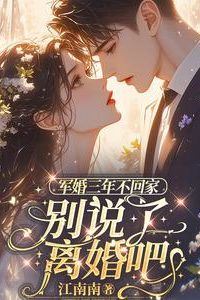
“Married to a Soldier for Three Years Without Coming Home: Forget It, Let’s Divorce
+Add to Custom List
Genres:
Novel Info

Summary

... Read More

Su Luoluo, a modern medical prodigy and disciple of a legendary ghost doctor, transmigrates into the body of a cannon fodder wife in a 1980s period drama. The original owner of this body was infamous for her ugliness, vicious temper, and abusive treatment of her husband’s three children. Su Luoluo awakens in a dilapidated mud-brick house, suffering from a severe allergic reaction that covers her face in red rashes and a prominent birthmark. She quickly realizes she is trapped in a tragic narrative where her family is destined to die or suffer horribly, and she herself is eventually sold into human trafficking. Determined to survive and change her fate, she decides to abandon the original owner’s malicious path and instead care for the three neglected children: the wary six-year-old Xiao Lei, the timid five-year-old Xiao Fan, and the three-year-old Niuniu.

The core conflict arises from Su Luoluo’s struggle to improve her family’s dire poverty while overcoming the deep-seated fear and hatred the children have for her. The original owner had starved and beaten the children, leaving them emaciated and traumatized. Su Luoluo begins by providing them with food, clean clothes, and baths, using her medical knowledge to treat Niuniu’s delayed speech and the family’s poor health. She also addresses her own disfigurement by identifying willow fluff as her allergen, chopping down the tree, and brewing a medicinal ointment to heal her skin. Her actions are initially met with suspicion; the children believe her kindness is a trap and that she plans to poison them or abandon them.

A key turning point occurs when Su Luoluo ventures into the dangerous mountains to gather herbs and set traps. She discovers a decades-old wild ginseng, which she sells at a local pharmacy for five thousand yuan, providing the capital needed to lift her family out of poverty. She also encounters a car accident where an elderly man has stopped breathing. Using the lost Ghost Gate Thirteen Needles technique, she revives the man, earning the gratitude of his son and a promise of a substantial reward. This event also draws the attention of Fu Yichen, a handsome and cold military commander who is present at the scene, marking the beginning of her connection with the male lead of the original novel.

Back in the village, Su Luoluo’s reputation begins to shift. She saves a village child from choking using the Heimlich maneuver, proving her medical skills to the locals. She uses her earnings to buy rice, meat, milk powder, and clothes for the children, gradually winning their trust. Niuniu, in particular, becomes attached to her, calling her “Mama” and seeking her affection. However, external threats persist. Su Luoluo’s own family, led by her selfish sister Ma Zhichan, arrives demanding money and goods, accusing the family of stealing from Su Luoluo. Meanwhile, the original plot’s tragic events loom; the male lead, Fang Shuling, is away on military duty, and his family is left vulnerable. Su Luoluo must navigate these familial conflicts, protect the children from abuse, and prepare for the male lead’s return, all while trying to find a way back to her own world or establish a new life in this era.

The story direction follows Su Luoluo’s transformation from a feared stepmother into a capable provider and healer. She establishes a small business selling herbs and game from the mountains, ensuring financial stability. Her medical expertise allows her to treat various ailments in the village, improving her social standing. As she heals her face and builds a home, the relationship with Fu Yichen develops. He is intrigued by her resilience and skill, contrasting sharply with the delicate female lead of the original novel. Su Luoluo’s ultimate goal is to alter the tragic fate of the children and herself, turning a story of death and despair into one of survival and prosperity.

Latest Release
DateGroupRelease
2026-08-11shanghai fantasy c89
2026-08-11shanghai fantasy c88
2026-08-11shanghai fantasy c87
2026-08-11shanghai fantasy c86
2026-08-11shanghai fantasy c85
2026-08-11shanghai fantasy c84
2026-08-11shanghai fantasy c83
2026-08-11shanghai fantasy c82
2026-08-11shanghai fantasy c81
2026-08-11shanghai fantasy c80
2026-08-11shanghai fantasy c79
2026-08-11shanghai fantasy c78

Community Reviews

Rating(4 / 5.0, 15votes)
5 stars
6(40%)
4 stars
3(20%)
3 stars
6(40%)
2 stars
0(0%)
1 stars
0(0%)

Popular reviews

... Read More
There are so many layers to unpack in this chapter and I'm not even sure where to start. Let's talk about the meat. The entire village is obsessed with the 'aroma of meat' coming from the Yang family's house. In a place where people only taste meat on major holidays, this small luxury becomes a symbol of everything that's wrong with their world. The villagers don't just notice the meat—they resent it. 'You can live miserably, but you can't live better than them, otherwise you will be envied.' That line is the thesis statement of the entire novel, isn't it? It's about how poverty creates a level of social pressure where survival itself becomes a transgression. Then there's the road. The Mu family's 'generous reward' is literally a road—an asphalt road from her home to town. This is such a rich symbol. A road is supposed to connect, to bring opportunity, to be a public good. But in this context, it's a barrier. It's the Mu family's way of saying 'we'll give you something that looks generous but actually benefits us more.' They get the reputation of being philanthropists; she gets a road she didn't ask for and can't monetize. And the two cents for the public toilet? That's the ultimate symbol of Su Luoluo's position in this world. She saves a life, she fights off thieves, she builds relationships with children who need her—and the most she can afford is two cents worth of relief. The belly that the villagers are gossiping about is another symbol—of pregnancy, yes, but also of the original owner's exploitation, of the body as a site of control and judgment. Every symbol in this chapter points to the same truth: in this world, everything has a price, and Su Luoluo is still learning how to navigate it.
... Read More
The chapter structure here is so well calibrated. You start with the family confrontation—tense, emotional, heavy—and then immediately pivot to Su Luoluo getting mugged in an alley. It's like the author looked at the reader and said 'you needed a breather, here's action.' The transition from the restaurant to the pharmacy to the alley happens so smoothly you don't even notice the tonal shift. And the Fu Yichen setup? Perfect. We get his friend's comedic commentary ('she really has a crush on my handsome face') right before the serious moment where he stands up and walks into the alley. The pacing of the fight scene itself is also excellent—quick strikes, one slap at a time, building to the comedic reveal of the thugs' names. The chapter ends on a genuinely funny note with 'Why not call yourself Zhou Liu (Saturday)?' which is such a random pivot but it works because it gives us a moment to breathe before the next wave of drama hits. No dragging, no rushing, just the right amount of everything.
... Read More
Zhuang Huiyi: 'If I'm a country bumpkin, what are you? An old hen?' — I literally gasped. This is the kind of line that makes me want to frame it. Su Luoluo just dismantled an entire power structure with one sentence and then walked away eating. The dialogue throughout this whole section is sharp as hell. Zhuang Huiyi's 'not every country bumpkin can become a phoenix' is such a classic condescending rich mom line, and Su Luoluo's response is perfect because she doesn't even raise her voice—she just smiles sweetly and destroys her. And then the thug scene? 'Your name is Liu Bo'er?' followed by 'You wouldn't be called Long Aotian, would you?' is comedy gold. She's literally making internet meme references in a period setting and I'm wheezing. The author clearly has a sense of humor and isn't afraid to let the protagonist be witty even in dangerous situations. Fu Yichen's 'Shut up' to Lu Xunye also says everything about his character in two words.
... Read More
Okay so let's talk about Su Luoluo because WOW. This woman has completely transformed and I am HERE for it. Remember how the original owner was this pathetic girl who got swindled by Ma Zhichan, gave all her money away to the Su family, and ended up trafficked? Yeah, not anymore. The scene where she chases Ma Zhichan around the yard with a shit-smeared broom is absolutely peak character development. She's not just defending her stuff—she's dismantling years of being treated like garbage by the Su family. And the best part? She does it with a straight face while delivering lines like 'I'm just a legend; don't worship me too much.' The kid dynamic is also so interesting. Niuniu and Jingjing are still scared of her—'their fear of her was ingrained'—but she's actively trying to win them over with candy. That's a mother figure trying to heal, even if she's still figuring it out. And then there's the Mu family scene, which reveals something really sharp about Su Luoluo: she's not naive. She goes to get her reward, waits through six cups of tea while Grandpa Mu philosophizes about 'seeking fame and reputation,' and when she finally realizes they're not giving her any money, she just... leaves. No dramatic confrontation, no begging. She rushes out to find a public toilet and spends two cents. That's a woman who knows when she's been played and chooses dignity over drama. The contrast between how she treats the kids (soft, protective) versus the Su family (brutal, unforgiving) versus the Mu family (patient but ultimately walking away) shows a character who has learned to read people and set boundaries. That's growth, baby.
... Read More
This chapter is a pacing masterpiece and I want to break down why it works so well. The author starts slow — almost deceptively so. We open with the three handsome men bantering, Su Luoluo observing them from a distance, and this light comedic tone. Then we transition to the pharmacy scene, which is calm and businesslike. The bargaining with Boss Cai has a steady, comfortable rhythm. Even the old man encounter, while slightly annoying for Su Luoluo, maintains this measured pace. She's buying meat, going about her day, planning dinner. The author is lulling us into a sense of security. And then — BAM. Wang Fengxia appears. The transition is so sharp it's almost violent. One moment we're reading about Su Luoluo thinking about how perfect braised pork ribs would be with a pot of wine, and the next there's a "bang bang bang" at the door and someone is screaming. The author doesn't ease us into the conflict; they drop us right into it. This mirrors exactly what Su Luoluo experiences — she has no warning, no preparation, just sudden terror. The scene transitions themselves are well-crafted. The market scene flows naturally into the old man encounter, which flows into the cooking scene, which is interrupted by the door knocking. Each transition feels organic, not forced. The cooking scene is particularly effective as a pacing device — it's warm, domestic, almost idyllic. The children are happy, the food smells amazing, Niuniu and Jingjing are cheering. This makes the subsequent violence even more jarring because we've had a moment of peace to appreciate before it's destroyed. The chapter ends mid-action with Wang Fengxia grabbing Xiao Lei, which is a textbook cliffhanger. The author knows exactly when to cut. What happens next? Will Su Luoluo protect the children? How does this confrontation resolve? I need to know immediately.
... Read More
Okay I need to just say it—Zhuang Huiyi is one of the most disgustingly fake people I've encountered in a novel and I mean that in the best way because she's so brilliantly written as a villain. The scene where she sees Su Luoluo and her eyebrows literally jump multiple times? And then she can't even bring herself to say 'I'm your mother' because admitting it would taint her? That's not just cold, that's pathological. She'd rather jump into a river than be associated with this girl. And Du Wanhui? He's not much better—he deliberates over whether Su Luoluo is 'worth the effort' like she's a product he's considering purchasing. The fact that he walks away after seeing her eat 'heartily' and having 'no table manners' is peak classist nonsense. Meanwhile Xiao Yan shows up in her pale yellow dress, snuggling into her mother's arms, and you can literally see the calculation behind her lowered lashes. This family dynamic is so toxic it's impressive.
See all reviews

Characters

See all characters

Custom lists

See all custom Lists