Summary

... Read More

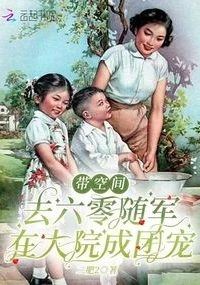
Fu Mingshi, a 28-year-old billionaire CEO and heir to the powerful Shengshi Group, returns from a business trip to Paris where he was mistakenly photographed with actress Xia Ying, sparking tabloid rumors of a romantic scandal. Upon landing at the airport, he is bombarded by reporters before receiving a phone call from his grandfather revealing a liver cancer diagnosis. The family patriarch, Fu Senior, urgently summons Mingshi home, insisting on discussing a critical family matter related to an old promise from decades past.

Grandfather Fu recounts a story from the War of Resistance era when a Lieutenant Zhen saved his life on the battlefield. Dying from wounds, Lt. Zhen asked Fu Senior to marry his children together as a final wish. Although Fu Senior agreed at the time, he later broke the promise due to family pressure and the circumstances of their lives. Now facing mortality, Fu Senior believes this broken vow is karmic retribution, citing the tragic deaths of his own daughter (Mingshi's aunt) in a drunk driving accident and his son's heartbreak. To clear his conscience and fulfill the obligation to his comrade-in-arms, he has arranged for Mingshi to marry Zhen Bao, Lt. Zhen's granddaughter.

Zhen Bao is a 20-year-old village beauty living in a remote mountain valley. She dropped out of school after junior high due to poverty but spends her free time studying using borrowed textbooks, hoping to retake the college entrance exam. The Fu family’s investigators had secretly documented her life, leading Grandfather Fu to select her as the bride. Mingshi, initially skeptical and resistant to the feudal arrangement, travels to the mountains to meet her. He is struck by her natural beauty and spirited nature, though she is wary of his advances, suspecting him of being a scammer or trafficker.

After several attempts, including a humorous encounter where Mingshi is attacked by Zhen Bao's protective geese, the two agree to an engagement. However, the emotional turning point occurs when Grandfather Fu visits the Zhen ancestral graves and breaks down in tears, expressing his deep guilt and regret over the broken promise. Moved by the elder's sincerity and grief, Zhen Bao agrees to accompany Mingshi to the capital, not for money, but to help the old man find peace. Mingshi, in turn, makes a solemn vow to care for her properly.

In the capital, Zhen Bao adapts to urban life while undergoing intensive tutoring for the college entrance exam. Mingshi supports her education and provides for her needs, gradually building a bond between them. Despite the initial contract marriage arrangement, their relationship evolves from stranger to something deeper, with Mingshi dedicated to ensuring Zhen Bao’s future and well-being, while she balances her humble origins with the demands of her new environment and studies.

Latest Release
DateGroupRelease
2026-09-26akknovel c63
2026-09-26akknovel c62
2026-09-26akknovel c61
2026-09-26akknovel c60
2026-09-26akknovel c59
2026-09-26akknovel c58
2026-09-26akknovel c57
2026-09-26akknovel c56
2026-09-26akknovel c55
2026-09-26akknovel c54
2026-09-26akknovel c53
2026-09-26akknovel c52

Community Reviews

Rating(4 / 5.0, 33votes)
5 stars
9(27%)
4 stars
16(48%)
3 stars
6(18%)
2 stars
2(6%)
1 stars
0(0%)

Popular reviews

... Read More
The opening text exchange between Zhen Bao and Fu Ming Shi is such efficient storytelling. Three messages and the author establishes: (1) their engagement might be fake, (2) he insists it's real, (3) there's confusion about living arrangements. That's a complete plot mini-arc in under ten lines. But the real plot turn comes when Fu Ming Shi discovers her textbooks. Up until that point, we might assume he's just taking in a caretaker or a placeholder fiancée. Then he offers to help her take the college entrance exam. This changes EVERYTHING about what this relationship could become. She's not just going to Beijing to nurse his grandfather—she's going to complete her education. The plot just shifted from 'convenient arrangement' to 'transformative journey.' I'm also fascinated by the grandfather's role here. The author drops these details like breadcrumbs: he arranged the private jet for Zhen Bao to see their wealth, he 'hopes' she lives at Fu Ming Shi's place, he's the one who initiated the engagement. He's pulling strings from the shadows, and I cannot stop wondering WHY. What does he gain from this arrangement? The physical journey mirrors the emotional one perfectly—they're literally leaving her old life behind (the 'familiar shabby furniture on the first floor') and heading toward an unknown future. 'She suddenly felt as if in a dream' captures both the plot movement and her internal state in one sentence. But dreams can turn into nightmares, right? Something feels like it's building toward a confrontation or revelation.
... Read More
I need to talk about Fu Mingshi because this guy is fascinating. On paper, he's your typical wealthy male lead: mansion-born, eight-pack abs, workaholic, confident. But watching him get absolutely dismantled by geese? That's where the character depth emerges. He's not just a scammer in expensive shoes—he's genuinely trying to fulfill his grandfather's wishes, even if his methods are terrible. Zhen Bao, on the other hand? She's the real deal. Elegant features, firm words, uses a Nokia phone. She's not playing games. When she says no means no, she MEANS it. The way she switches from gentle with villagers to yelling at Fu Mingshi shows she has boundaries and isn't afraid to enforce them. Their dynamic is pure chaos comedy. He comes in with strategies, she counters with hostility and poultry. He tries compromise, she counters with police threats. The physical confrontation—grabbing her hand, stomping his foot, the pant ripping—reveals so much about their power struggle. I'm weirdly invested in whether these two could ever work. He respects her refusal enough to come back the next day. She's smart enough to see through his facade. But can a city businessman and a rural goose-herder ever find common ground? The potential is there, buried under all this chaos.
... Read More
Okay so I need to talk about this scene where Master Fu just loses it at Commander Zhen's grave because let's be real, up until that moment I thought this was just another forced-marriage trope with a grumpy male lead and a reluctant female lead. But then—he just breaks down. It wasn't manipulation. It wasn't some calculated scheme. The man genuinely believed he owed their family his life, promised his son to Zhen Bao's grandfather as a gesture of gratitude and bond, and then the original betrothed couple (Tong Tong and Da Yong) both met tragic ends. He's been carrying that guilt for years. When he said 'I've let you down, I've also let those two children down' and started crying about how it was retribution—that completely reframed everything. The whole engagement isn't some old man's desperation, it's genuine penance mixed with a lifetime of regret. And Zhen Bao's realization moment where she understands why he was so adamant? That was beautifully earned. She knew her grandfather's sacrifice, knew the money Master Fu gave them when they were starving, and realized there's no debt here—just cause and effect. The plot twist wasn't a reveal, it was an emotional one. And that ending where she says 'I agree, I agree to marry into your family. Please don't be like this anymore'—it wasn't coercion, it was compassion. That's rare in these stories. The author didn't make her cave because she was weak; she caved because she saw through the old man's guilt and recognized her own family's history in it. Master Fu literally couldn't hear Fu Ming Shi's persuasion, only Zhen Bao's words got through. That detail hit me hard.
... Read More
The stakes in this section are layered in a way that keeps you genuinely worried for multiple reasons simultaneously. On the surface, Master Fu is sick — that's the ticking clock. He needs medical treatment in the capital, and the entire reason Zhen Bao has to leave her home is because of this emergency. But the deeper conflict is internal and it's much more interesting: Zhen Bao is caught between her loyalty to her grandfather (or whoever raised her, given the 'old master' language) and this bizarre arranged engagement to a stranger. She doesn't want his money. She doesn't want trouble. She just wants everyone to be okay and then she can go back to her geese. Meanwhile Fu Ming Shi is operating under completely different stakes — he's made a public vow at a gravestone, he's承诺'd to spend his life devoted to her, and somewhere between carrying her drunk grandfather upstairs and watching her count her 2000 yuan savings, he's actually starting to mean it. The external conflict is whether Master Fu recovers in time. The internal conflict is whether these two people will realize they're already emotionally invested before one of them runs away. And the suspense is maintained because we know Zhen Bao's text message is going to break something — either Fu Ming Shi will misinterpret it, or he'll understand it perfectly and that'll be worse. The stakes aren't just 'will they get together' — it's 'what happens when two people who are fundamentally good at pretending they don't care finally run out of ways to pretend'.
... Read More
Let me just say it: this story is about debt and release, and everything in these chapters is working to explore that. The wedding contract itself is a symbol of an intergenerational debt—Commander Zhen saved Master Fu's life, so Master Fu promised his son to the Commander's granddaughter. But the original couple died, and the promise became this ghost that haunts him. The alcohol at the grave—two bottles of Lao Bai, Zhen Bao's grandfather's favorite—is symbolic in multiple ways. It's an offering, yes, but it's also what loosens Master Fu's tongue and forces the truth out. Without the wine, he might have kept pretending for another decade. The paper ingots Zhen Bao grabs a lighter for—ritual offerings to the dead, acknowledging that the living carry burdens left by those who died. And Fu Ming Shi's black suit on the brown hill, looking like an eagle—it's isolation as power. He surveys from above, detached, unable to descend into the emotional mess below. But when Master Fu asks him to kneel and kowtow with Zhen Bao, he does it. That's the theme: obligation transforming into choice. Zhen Bao didn't agree because she owed anyone anything. She agreed because she saw the humanity beneath the guilt. The bandaid moment too—he already applied one himself, symbolizing his habit of self-reliance, but she offered anyway, symbolizing that care doesn't require acceptance to be meaningful. The entire chapter is about debts being settled—not with money or marriage contracts, but with tears, truth, and the courage to say 'I agree' when you finally understand what the other person is carrying.
... Read More
Every scene in this chapter is basically the same fight wearing different clothes. Zhen Bao wants to maintain her independence and dignity. Fu Ming Shi wants to provide and protect. And neither of them will just SAY what they mean. She tries to buy her own phone with 2000 yuan. He buys it anyway. She picks cheaper clothes. He doesn't stop her but makes sure she has enough for Beijing. She spots those white heels she can't afford and walks away — and he has them brought to her anyway. The conflict isn't dramatic. There's no shouting, no betrayal, no external villain. It's this quieter, more exhausting kind of tension where two people keep trying to handle things alone while the other person refuses to let them. What makes this work so well is that the stakes feel genuinely personal. Zhen Bao isn't just embarrassed about money — she's terrified of being seen as a country bumpkin, of making Fu Ming Shi lose face, of being inadequate in his world. When she asks "will you feel ashamed?" that question carries her entire insecurity about class, education, and belonging. And his answer — "Why would I feel ashamed?" followed by that whole lean-in moment — is the first time someone has genuinely defended her worth in front of her. But the real conflict escalation happens at the end. She's mentally planning her future — studying hard, getting a job, earning 2-3k a month, buying hotpot whenever she wants. Very modest. Very safe. And then he casually mentions Beijing housing prices and she instantly abandons the whole plan. The stakes just went from "can I be independent" to "can I survive in a world this expensive" and she doesn't even have an answer anymore. That's when he offers the houses as a joke, and the reader knows this is the turning point where her autonomy starts folding into his world whether she wants it to or not. I was leaning hard for Zhen Bao through all of this. She's trying SO hard to stay grounded and it's both admirable and heartbreaking.
See all reviews

Custom lists

See all custom Lists