Summary

... Read More

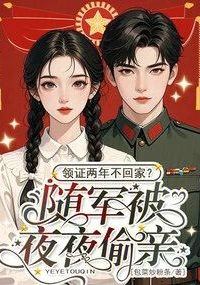
Wen Mingyao boards a train to the Yuncheng military division after two years of separation from her husband, Zhou Zhuo. Their marriage, arranged under family pressure, began on a note of cold indifference. On their wedding day, Zhou Zhuo departed for duty immediately, leaving Wen Mingyao alone. She travels to join him, driven by a five-year unrequited affection and a resolve to attempt a genuine marital life for one year before seeking divorce if it fails. On the train, she befriends Sun Mai and her pregnant sister-in-law Wang Xiaoqin, sharing fruit and conversation while concealing her anxiety about her husband's reception.

Upon arrival at Yuncheng Station, Wen Mingyao is met by Zhou Zhuo, who displays no warmth. He carries her suitcase himself, a gesture that briefly stirs hope in her heart, but his demeanor remains icy. He informs her that while he will provide for her materially and respect her publicly, he cannot offer love. He explicitly states that he despises her family background, labeling her a capitalist's daughter, and insists they live separately. Wen Mingyao accepts these terms, agreeing to stay for only one year before leaving him free.

The couple moves into a modest apartment within the military compound. Zhou Zhuo immediately establishes boundaries, sleeping in the study and treating Wen Mingyao with distant politeness. He brings her a meal the next morning, a small act of care that confuses her, but his underlying resentment remains palpable. He suspects her kindness is a performance, a manipulation to secure her position. Meanwhile, rumors spread through the compound about Zhou Zhuo's true affection for a ballet dancer named Ye Jingjing, casting Wen Mingyao as a mere placeholder.

Tensions escalate when a neighbor's unruly child, Qian Dabao, invades their home and destroys property. Wen Mingyao handles the situation firmly, sustaining a minor injury to her hand. Zhou Zhuo notices the wound and the bruising on her wrist from his earlier grip, revealing a flicker of regret and concern that he quickly suppresses. He buys her favorite canned fruit, but she ignores it, deepening his frustration at her emotional detachment.

Wen Mingyao attempts to cook and create a homely atmosphere, preparing meals that Zhou Zhuo secretly enjoys but never acknowledges. Their interactions are marked by unspoken misunderstandings; he interprets her silence as calculation, while she hides her pain behind a composed facade. A phone call with Zhou Zhuo's mother reveals the family's pressure for grandchildren, which Zhou Zhuo deflects by suggesting his younger brother take precedence. He hangs up on his mother to protect Wen Mingyao from further harassment, though he does not admit this motive.

The core conflict centers on Zhou Zhuo's internal struggle. He is haunted by a photograph of another woman, presumably Ye Jingjing, which he keeps locked away. He believes he does not love Wen Mingyao and is driven by a sense of obligation and a twisted desire to punish her for her family's status. Yet, he finds himself drawn to her resilience and beauty, feeling a confusing mix of anger and protectiveness. He watches her sleep, tracing her features with a tenderness he denies in waking hours.

Wen Mingyao, unaware of the depth of Zhou Zhuo's inner turmoil, continues her plan to endure for one year. She confronts Jiang Yao, a woman who openly admires Zhou Zhuo and mimics Ye Jingjing's mannerisms, exposing Jiang Yao's superficiality. This confrontation solidifies Wen Mingyao's independence and self-respect. She refuses to be a victim, choosing instead to live with dignity despite the coldness she faces.

As the story progresses, the dynamic between them shifts subtly. Zhou Zhuo begins to notice Wen Mingyao's efforts to integrate into military life, her cooking, and her quiet strength. He starts to question his own prejudices and the validity of his hatred. The narrative follows their tentative steps toward understanding, as both characters navigate the constraints of their era and the complexities of their forced union. The one-year deadline looms, creating a tension between Wen Mingyao's desire to leave and Zhou Zhuo's growing reluctance to let her go.

The story explores themes of class disparity, forced marriage, and the slow thawing of emotional barriers. Wen Mingyao's journey is one of self-discovery and endurance, while Zhou Zhuo's is a confrontation with his own biases and hidden vulnerabilities. Their relationship evolves from cold coexistence to a fragile connection, marked by small gestures and unspoken emotions. The narrative sets the stage for a potential reconciliation or a painful separation, depending on whether they can overcome the past and see each other as individuals rather than symbols of their families' histories.

Novel Items

More
Bag
A canvas bag with a red five-pointed star and the word 'Yuncheng' printed on it. Given to Wen Mingyao by her father-in-law before boarding the train. Contained green tangerines and two bright red apples inside.
Food
Prepared by the elders at home before Wen Mingyao boarded the train. Placed in the canvas satchel. Wen Mingyao offered them to Wang Xiaoqin to help ease her morning sickness. Considered expensive and generous given the times.
Food
Two bright red apples packed in the military-green canvas satchel by Wen Mingyao's father-in-law before she boarded the train.
Luggage
Carried by Wen Mingyao during the train journey and at Yuncheng Station. Zhou Zhuo took it from her hand at the station with a cold remark about whether she couldn't walk or carry it.
Items
Tools with 60 slots used for transporting items, considered tools rather than equipment.
Cosmetics
A skincare product made by Lin Erhu and sold through Shopkeeper Feng's cosmetics shop. Delivered in porcelain bottles.
Latest Release
DateGroupRelease
2026-08-11shanghai fantasy c12
2026-08-11shanghai fantasy c11
2026-08-11shanghai fantasy c10
2026-08-11shanghai fantasy c9
2026-08-11shanghai fantasy c8
2026-08-11shanghai fantasy c7
2026-08-11shanghai fantasy c6
2026-08-11shanghai fantasy c5
2026-08-11shanghai fantasy c4
2026-08-11shanghai fantasy c3
2026-08-11shanghai fantasy c2
2026-08-11shanghai fantasy c1

Community Reviews

Rating(3.7 / 5.0, 19votes)
5 stars
3(16%)
4 stars
8(42%)
3 stars
8(42%)
2 stars
0(0%)
1 stars
0(0%)

Popular reviews

... Read More
There's a symbol in this passage that I can't stop thinking about, and it's the canned peaches. Zhou Zhuo buys them because he remembers she used to eat them in Rongcheng whenever she felt unwell. It's an act of memory, of care, of wanting to provide comfort. He goes out of his way—already at his doorstep, he turns back to the office, gets money and ration tickets, rushes to the military service store. This is a man who has never learned how to say "I care about you" and so he says it through fruit in a can. And what happens when he gets home? The cans sit untouched on the table. He stares at them. He places his hand over the lid. He whispers something barely audible. But he never opens them. The canned peaches are everything about this marriage: preserved, sweet, intended as a gift, but ultimately unopened. Both of them are standing at the threshold, hands on the lid, neither willing to twist it open. And it's not just the peaches. It's the study where he sleeps. It's the scrape on her palm that she calls "fine." It's the meal she cooks that he finishes but doesn't comment on. It's the book she leaves behind that he reads the title of with a cold expression. The deeper theme here is about a society—and a marriage—where people are trained to suppress. Wen Mingyao is the daughter of a capitalist family, which in this setting is basically a death sentence for social standing. Mother Zhou's entire interrogation is about breeding, about producing heirs, about capability measured in reproductive terms. "How is his longed-for great-grandchild supposed to magically appear out of thin air?" Everyone in this novel is performing. Qian Dabao performs innocence until he can't take advantage, then flips. The neighbors perform silence. Wen Mingyao performs contentment. Zhou Zhuo performs indifference. And the canned peaches sit on the table, unopened, waiting for someone brave enough to twist the lid.
... Read More
The author knows exactly how to keep you turning pages, and I need to talk about the structural genius of the "one year" deadline. Wen Mingyao declares: "One year. I'll only stay here for one year." This isn't just dialogue — it's a narrative ticking clock. Every scene after this carries the weight of that deadline. The reader is constantly wondering: what happens when the year is up? Will she leave? Will he let her? Will he finally admit something? The chapter structure itself is masterful. You've got the gate scene (social conflict), the apartment confrontation (emotional conflict), the cafeteria scene (romantic tension + rival introduction) — each scene escalates the stakes while revealing new layers. The transition from the gossiping women to Wen Mingyao sitting silently across from Zhou Zhuo is particularly effective. One moment she's the subject of rumor, the next she's facing the man whose feelings she's been dissecting for years. And that cliffhanger ending — Jiang Yao's line about the cultural troupe star — is pure engagement engineering. The chapter cuts right after the most provocative statement, leaving us desperate to know: does Zhou Zhuo actually like someone else? Is Wen Mingyao about to face a real rival? What happens next? There's also this beautiful rhythm of tension and release. Zhou Zhuo gets angry, then flees. Wen Mingyao feels hurt, then powers through. Jiang Yao provokes, then gets shut down. The author never lets the emotional temperature drop for too long before cranking it back up. It's exhausting in the best way.
... Read More
There's this one scene that I keep coming back to, and it's the lunch scene. Not because it's dramatic, but because it's so quietly devastating in how ordinary it is. Wen Mingyao has prepared a whole meal—green beans, corn, potatoes, pumpkin, spare ribs with golden broth. The description of the food is almost too warm, too homey, and that's what makes it hurt. "The fresh aroma of green beans, the light sweetness of corn, and the soft, creamy texture of potatoes and pumpkin all mingled in the air." She's wearing a beige Dacron shirt and black straight-leg pants, hair in two thick braids. She's trying so hard to create this image of domestic normalcy, and Zhou Zhuo literally notices her hand first before anything else. His eyes darken when he sees the scrape. The house itself feels like a character. The curtain she pushes aside when he comes home. The washbasin he uses. The dining table where they sit across from each other like strangers who share a lease. The kitchen where she ends up alone washing dishes while he retreats to his study. And then there's the contrast with the earlier scene—Qian Dabao rolling on the dusty ground, crying at the top of his lungs, while the neighboring households stay eerily silent. The courtyard, the wall, the gate—these spaces are all boundaries. Wen Mingyao locks the courtyard gate and leaves. Xiangxiu presses her body against the inner wall, holding her breath. Everyone is constantly monitoring thresholds, watching who enters and who exits, calculating danger. The world of this novel feels suffocating in the most realistic way. You can feel the weight of political labels, the fear of neighbors, the constant performance of normalcy. But in the kitchen, with the rice steaming and the ribs simmering, there's this tiny pocket of warmth that makes you believe these two might actually figure it out.
... Read More
Okay, can we just talk about how Zhou Zhuo is absolutely NOT over Wen Mingyao? The text literally says his ears flushed when she called him "Zhou Zhuo" instead of "Brother Zhuo" — and then he FLED the room. FLED. A military leader who runs away from his own wife because she used his name in a certain tone? That's not cold detachment. That's panic. And the wrist scene? He grabbed her so hard her skin went from red to purple, then immediately loosened his grip when she winced. The narrative even notes: "Her soft, delicate voice made Zhou Zhuo's heart tremble." His body is doing all the emotional work his mouth refuses to do. But what really got me is the contrast in how he treats people. With Jiang Yao? He doesn't even look at her. Doesn't respond to her attempts at conversation. Two words — "She's not" — just to deny a false implication, and that's the extent of his engagement. Yet with Wen Mingyao, who he claims to despise, he's physically reacting, emotionally flustered, and clearly obsessing over what she's wearing. Wen Mingyao herself is fascinating. She's not the naive girl who used to shake his arm and act coquettish anymore. She's sharp, self-aware, and willing to walk away. When she says "I'll set you free," it's not desperation — it's a power move. She's showing him she doesn't need him, which is exactly what makes him lose his composure. And Su Hemiao? The woman who spits in disdain and decides to like Jiang Yue'e just because Jiang Yue'e dislikes her? That's the kind of side character who's going to cause trouble. I can feel it.
... Read More
The conflict in these chapters is so layered and I keep going back to it. On the surface, there's the love triangle — Zhou Zhuo clearly has feelings for Ye Jingjing, Jiang Yao is obsessed with him, and Wen Mingyao is caught in the middle. But the real conflict is internal, and it's devastating. Wen Mingyao wants to connect with Zhou Zhuo. She genuinely does. She's trying to cook, to make the apartment feel like a home, to plant vegetables in the yard. But every time she reaches out, he pulls away. He sleeps in the study. He gives her cold, clipped responses. And yet she keeps trying. That's the stakes — not just whether she'll win his love, but whether she'll lose herself in the process. Zhou Zhuo's conflict is even more tragic. He's angry at her — something happened between them that we haven't fully learned yet, but it's clearly deep. He calls her heartless. He won't look at her. But then he's applying ointment to her bruises at night and tracing her face like she's something precious. He wants to be close and he's punishing himself for wanting it. The stakes keep rising too — Jiang Yao is getting more desperate, the kid Qian Dabao bursting in at the end of Chapter 8 adds chaos to an already tense household. And underneath it all is this question: can two people who hurt each other find their way back, or are they too far gone? I need to keep reading. I literally cannot stop.
... Read More
Let me just say this upfront: the conflict in these chapters is so good because it's not about grand dramatic events. There's no villain, no external threat, no life-or-death situation. The stakes are entirely emotional, and that's what makes them feel so real. On the surface, the conflict is simple: Mother Zhou wants grandchildren, Wen Mingyao doesn't want to trap a child in a loveless marriage, and Zhou Zhuo is caught between loyalty to his family and this complicated, unacknowledged pull toward his wife. But underneath all of that is the real conflict—both of them want something they can't admit to wanting. The scene where Mother Zhou says 'Once that's done, whether you divorce or live apart, we won't interfere anymore' is the turning point. That's when Zhou Zhuo's entire demeanor shifts. His hand tightens on the receiver. His expression turns to frost. The stakes just went from 'family pressure' to 'she might actually leave me.' And he can't handle it. What's brilliant is that Wen Mingyao is also playing a high-stakes game. She's asking herself whether marrying him was right or wrong. She's considering whether she's 'occupying the position of Zhou Zhuo's wife and delaying him from having children.' She's weighing her own happiness against what she perceives as the greater good. The tragedy is that both of them are willing to sacrifice themselves, and neither will communicate why. The suspense here isn't 'will they or won't they'—it's 'when will they finally tell each other the truth?' And that's infinitely more painful because we watch them dance around it chapter after chapter.
See all reviews

Characters

See all characters

Custom lists

Oops…There is nothing here.